

 Buy with Prime



If you're dealing with that tight, uncomfortable feeling of chronically dry skin, you’re definitely not alone. The good news is that nature often holds the best answers. The most effective natural moisturizers for dry skin are typically well-balanced formulas that contain a trifecta of humectants, emollients, and occlusives, all from botanical sources. Think powerhouse ingredients like shea butter, hyaluronic acid, and jojoba oil—these are famous for a reason, helping to transform dry, tight skin into a complexion that looks soft, supple, and deeply hydrated.
Your Guide to Soothing the Appearance of Dry Skin with Natural Moisturizers
Many of us are turning away from temporary chemical fixes and looking for skincare that supports our skin's appearance with gentle yet powerful natural ingredients. This guide is here to help you cut through the marketing noise and find the best natural moisturizer for your dry skin by focusing on what actually works.
This shift toward natural skincare isn't just some fleeting trend; it's a major movement that has reshaped the beauty industry. Over the past decade, natural moisturizers have gone from niche health food store items to mainstream essentials. Consumers are making it clear they prefer formulas labeled "natural" or "organic." In fact, the organic skincare market hit a staggering USD 9.83 billion globally in 2021 and is projected to skyrocket to USD 21.16 billion by 2030. That’s a huge indicator of where our priorities are heading. You can dive deeper into the growth of organic skincare on grandviewresearch.com.
What You Will Learn
This guide will give you the knowledge you need to choose a product that leaves your skin looking radiant, smooth, and beautifully hydrated. We'll walk through the essentials so you can make confident, informed choices.
Here’s what we’ll cover:
- How to read and understand ingredient labels to spot the truly effective stuff.
- The science behind how different types of moisturizers work their magic.
- The real differences between creams, lotions, and balms, and which one is right for you.
- Tips for creating your own personalized skincare blends right at home.
The real goal here is to find a moisturizer that not only meets your skin’s needs but also aligns with your personal values. By understanding the fundamentals, you can harness the power of nature for visible, lasting results and finally feel good about what you're putting on your skin.
How Moisturizers Actually Work for Dry Skin
To find the absolute best natural moisturizer for your dry skin, it helps to pull back the curtain and see what’s really going on. A great moisturizer isn't just one thing; it's more like a team of specialized ingredients, each with a critical job to do. A well-made formula doesn’t just sit on the surface—it actively works to address moisture loss from several different angles.
The most effective moisturizers are all about creating balance so your skin can look and feel its best. They pull this off by combining three key types of ingredients that work together beautifully. Once you understand these three pillars of hydration, you'll be able to read ingredient labels like a pro and pick a product that genuinely helps your skin’s appearance.
The Water Magnets: Humectants
First up, we have humectants. The easiest way to think of them is as tiny "water magnets." Their whole purpose is to attract moisture—both from the air around you and from the deeper layers of your own skin—and pull it up to the surface. This is what gives your skin that plump, dewy, and hydrated look.
Natural humectants are fantastic for giving your skin that instant hit of refreshment. They are lightweight and absolutely love water, which makes them a non-negotiable in any formula aimed at supporting the look of dry skin.
Some common natural humectants you’ll see are:
- Hyaluronic Acid: A true superstar, famous for its incredible ability to hold many times its weight in water.
- Glycerin: A classic, reliable ingredient that draws moisture to the skin, leaving it feeling soft and supple.
- Aloe Vera: Well-known for its soothing touch, aloe also doubles as a fantastic natural humectant.
If you're interested in a deeper dive, you can learn more about the benefits of natural humectants for skin in our detailed guide.
This infographic is a simple visual roadmap to help you navigate your options, from reading labels to understanding different formulas, on your way to radiant-looking skin.
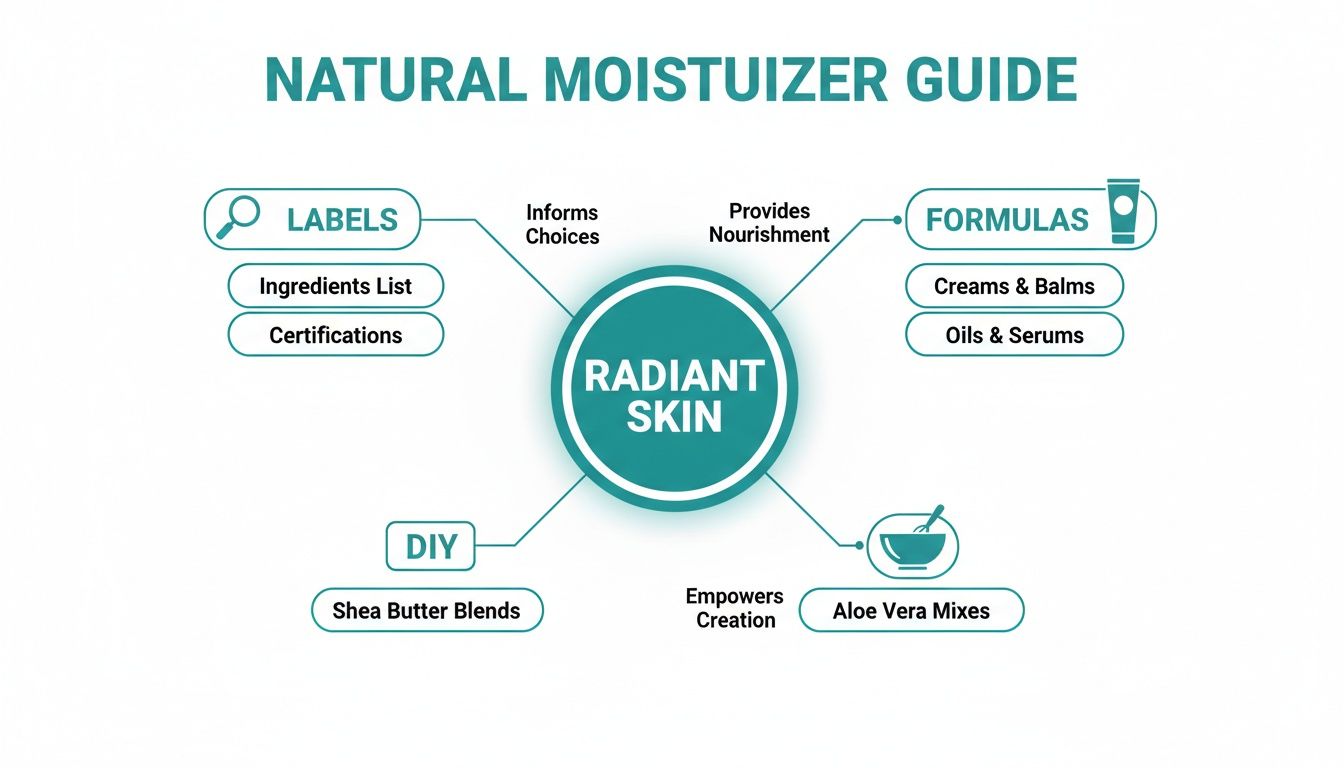
As the map shows, choosing the right product is about more than just one hero ingredient; it's about the synergy between labels, formulas, and even DIY options.
The Surface Smoothers: Emollients
While humectants are busy pulling water in, emollients get to work on the skin's surface. Think of them as "surface smoothers" or "gap fillers." They are usually oils and lipids that settle into the tiny spaces between skin cells, creating a softer, smoother, and more even texture.
If your skin feels rough or looks flaky, emollients are the ingredients that deliver that immediate feeling of comfort and silkiness. They are essential for improving the look and feel of dry skin, making it appear more uniform and pliable. You'll find that many of the best natural moisturizers for dry skin are packed with these botanical smoothers.
An effective moisturizer for dry skin rarely relies on just one type of ingredient. It’s the skillful combination of humectants, emollients, and occlusives that provides a comprehensive approach to maintaining a hydrated appearance.
The Protective Shields: Occlusives
Last but certainly not least, we have the occlusives. Picture these ingredients as "protective shields" for your skin. After the humectants have attracted all that lovely moisture and the emollients have smoothed everything out, occlusives form a very thin, breathable barrier on top.
This barrier is crucial. It locks in all that hard-won hydration and slows down evaporation into the air—a process called transepidermal water loss (TEWL). For skin that’s chronically dry, an occlusive layer is the final, essential step to make sure that moisture stays right where you need it.
Popular natural occlusives are often rich butters and waxes like:
- Shea Butter: A classic choice that creates a nourishing barrier and has emollient properties, too.
- Cocoa Butter: Another rich butter that’s fantastic at sealing in moisture.
- Beeswax: A natural wax that provides a durable, protective layer on the skin's surface.
Getting to Know the Best Natural Ingredients for Dry Skin
Alright, now that we've covered the basics—how humectants, emollients, and occlusives work together—let's get to the fun part. It's time to talk about the specific botanicals that can take a natural moisturizer from good to absolutely amazing. We're moving past the theory and into the powerhouse ingredients that really help dry skin look its best.
Learning to spot these key players on an ingredient list is your secret weapon. It empowers you to see beyond the pretty packaging and marketing hype to find a formula that will actually deliver the beautiful, comfortable-looking skin you're looking for.
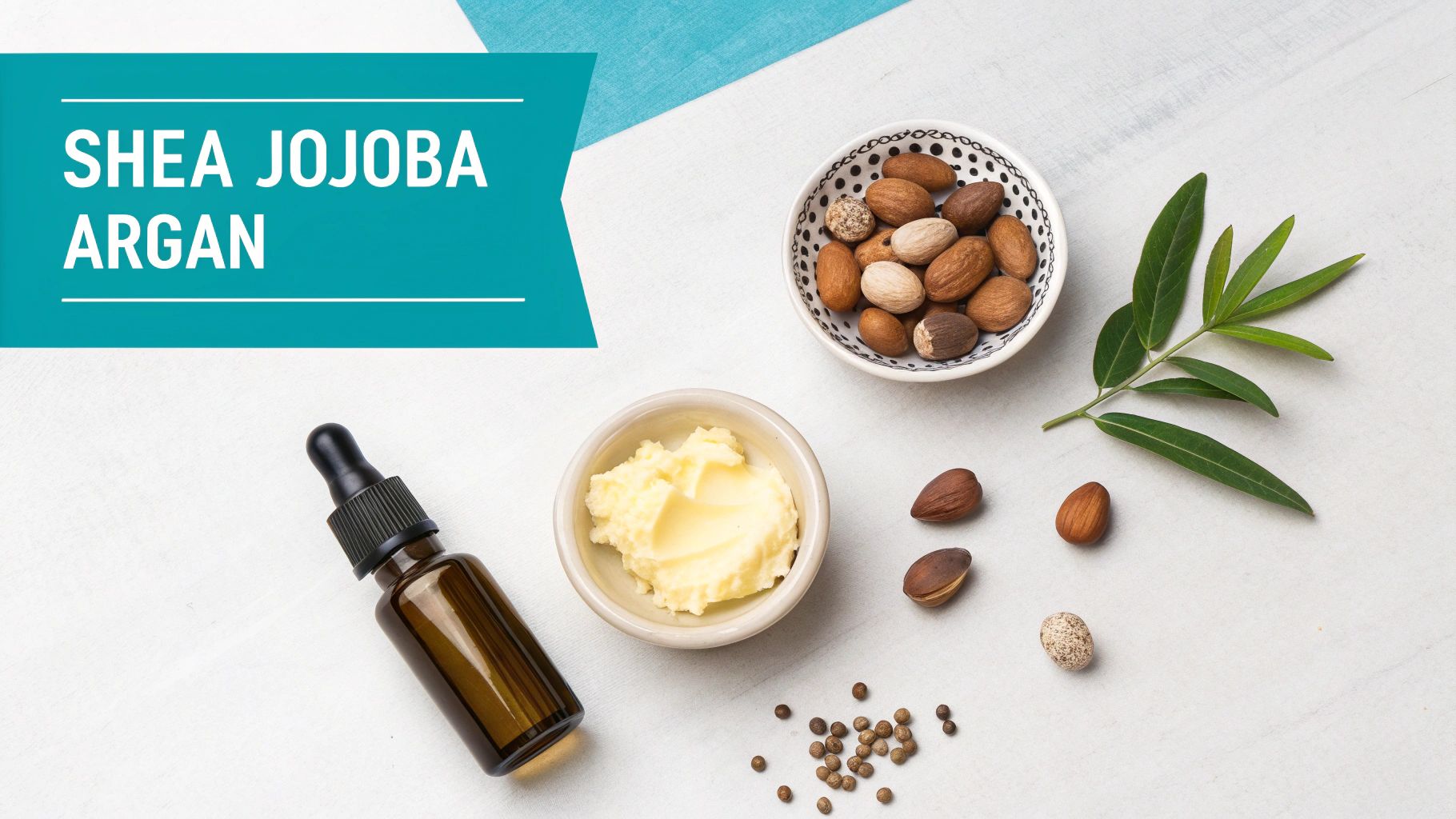
Classic Botanicals for a Supple Look
Some ingredients are legendary for a reason. They just work. These are the reliable, effective botanicals you'll find in the best moisturizers for dry skin, time and time again. They're typically loaded with the fatty acids and vitamins that are known to deeply nourish the skin's appearance, leaving it feeling soft, smooth, and supple.
When you see these on a label, you know you're headed in the right direction:
- Shea Butter: This rich, creamy butter is a true superstar. It’s an incredible occlusive and emollient, forming a breathable seal to lock in moisture while its fatty acids work to visibly soften and smooth the skin's texture.
- Jojoba Oil: What’s so cool about jojoba oil is that its structure is incredibly similar to our skin's own sebum. This makes it a fantastic, lightweight emollient that sinks right in, helping the skin look balanced and hydrated without ever feeling greasy.
- Argan Oil: Often called "liquid gold," argan oil is brimming with Vitamin E and essential fatty acids. It’s a beautiful emollient that improves the appearance of skin elasticity and gives your complexion a healthy, radiant glow.
The Next Generation of Natural Actives
While the classic botanicals are fantastic, the world of natural skincare has also brought us some seriously advanced, science-backed ingredients. These actives work to promote a hydrated, plump, and youthful appearance. This is where nature and science truly come together.
Plant-Derived Peptides are a complete game-changer. Peptides are just short chains of amino acids—the very building blocks of proteins like collagen. When you apply them to your skin, plant-derived peptides can signal it to look and feel firmer, which helps reduce the appearance of fine lines.
Think of peptides as little messengers for your skin. They carry signals that encourage it to maintain a youthful look, helping it appear more resilient and refreshed over time.
Plant Stem Cells are another exciting frontier. Sourced from incredibly resilient plants like Swiss apples or edelweiss, these extracts are packed with powerful compounds. In skincare, they're used to help maintain the skin's vitality, supporting a radiant, age-defying appearance. It's like borrowing a plant's clever survival tricks for our own skin's benefit.
For a deeper dive into what makes certain botanicals so effective, you can explore our guide on the best natural ingredients for skin.
Understanding Botanical Oils
Not all oils are created equal, and choosing the right ones can make a world of difference for dry skin. Botanical oils are fantastic sources of emollients that soften the skin and occlusives that help seal in all that precious moisture. For instance, getting to know one of nature's most celebrated oils is a great start; you can learn all about olive oil's benefits for skin and its deeply hydrating properties.
To make things a bit easier, here’s a quick look at some of the most popular and effective ingredients you'll find in natural moisturizers.
Top Natural Moisturizing Ingredients and Their Benefits
This table breaks down some of our favorite ingredients, what they do, and how they help your skin look and feel amazing.
| Ingredient | Primary Function | How It Enhances Skin's Appearance |
|---|---|---|
| Shea Butter | Occlusive & Emollient | Seals in moisture and visibly softens skin for a smooth look. |
| Jojoba Oil | Emollient | Mimics natural sebum to balance and moisturize the skin's appearance. |
| Argan Oil | Emollient | Rich in Vitamin E, it promotes a radiant and supple look. |
| Peptides | Communicating Active | Signals skin to look firmer and reduces the appearance of lines. |
| Plant Stem Cells | Supportive Active | Helps maintain skin's vitality for a youthful and resilient look. |
By learning to spot these key ingredients, you can turn a confusing ingredient list into a simple roadmap. This knowledge gives you the confidence to choose a moisturizer that’s perfectly formulated to give your dry skin the support it needs to look its absolute best.
How to Choose the Right Natural Moisturizer
Stepping into the world of natural skincare can feel like trying to find your way through a thick forest of options. So many products promise the moon, but how do you find the one that’s actually right for you? Choosing the best natural moisturizer for dry skin is about more than a pretty label—it's about digging into the formulation, knowing what quality looks like, and finding brands you can really trust.
The first step in making a smart choice is simply knowing the different types of moisturizers out there. Each texture is designed for a specific purpose, and what feels like magic for one person might not be the right fit for another. It really comes down to matching the product's consistency and richness to your skin's unique needs and, of course, what you like to feel on your skin.
Creams, Lotions, or Balms: Which Is Best
Think of moisturizer textures like different weights of a blanket—some are light and airy, while others are thick, rich, and cozy.
- Lotions are your lightweight comforter. They have a higher water content, so they feel less heavy on the skin and sink in quickly. This makes them a fantastic choice for daytime use or for skin that just needs a drink of hydration without feeling weighed down.
- Creams are a step up in richness, with a balanced blend of water and oil. Their thicker consistency delivers more substantial moisture than a lotion, making them a go-to for persistently dry skin that needs both hydration and a protective layer.
- Balms are the heavy hitters, like a thick, weighted blanket. They're typically waterless and made almost entirely of rich butters and oils. Balms are incredible occlusives, perfect for sealing in moisture on very dry, rough patches or as a deeply nourishing overnight treatment.
Looking Beyond the Ingredient List
Once you have an idea of the texture you're after, the next move is to look at the brand’s philosophy. A truly great moisturizer comes from a company that’s all about transparency and safety. This is where you can use certifications and ethical practices as signals of quality.
One of the most reliable signs to look for is the EWG VERIFIED™ mark. This seal means a product has passed the Environmental Working Group's toughest standards for health and transparency. It’s your confirmation that the product is free from ingredients of concern and that the company is being totally upfront about what’s inside. Understanding what this and other certifications mean can help you feel much more confident in your choices. For a deeper dive, our guide on EWG VERIFIED™ skincare brands has some really valuable insights.
When you choose a moisturizer, you're not just buying a product; you're supporting a brand's entire process, from how they source their shea butter to their commitment to safe, clean formulations.
Ingredient sourcing and brand ethics are just as important. Look for companies that are open about where their ingredients come from and make sustainable practices a priority. A brand that invests in high-quality, ethically sourced botanicals is far more likely to create a product that delivers the results you’re looking for. To help with your search, you might also find it useful to check out lists of the best natural skincare brands that are recognized for their commitment to quality. This empowers you to pick a moisturizer you can feel genuinely good about using, day in and day out.
Crafting Your Own Natural Moisturizer at Home
For the skincare lover who enjoys getting hands-on, there's a special kind of magic in creating your own products. Making a natural moisturizer at home puts you in the driver's seat, giving you total control over every single ingredient. This is how you ensure your formula is packed with everything your dry skin craves and nothing it doesn't. It’s a truly empowering way to connect with your skincare on a much deeper level.
This isn't just a niche hobby anymore; it's a full-blown movement. The rise of DIY skincare is so significant that analysts are now tracking it as a real headwind for mass-market brands. More and more people want to choose every last oil, butter, and active that goes onto their skin, and that’s a huge opportunity for those of us who supply high-performance ingredients. You can get more insights on this trend and its market impact from this moisturizing cream market report.
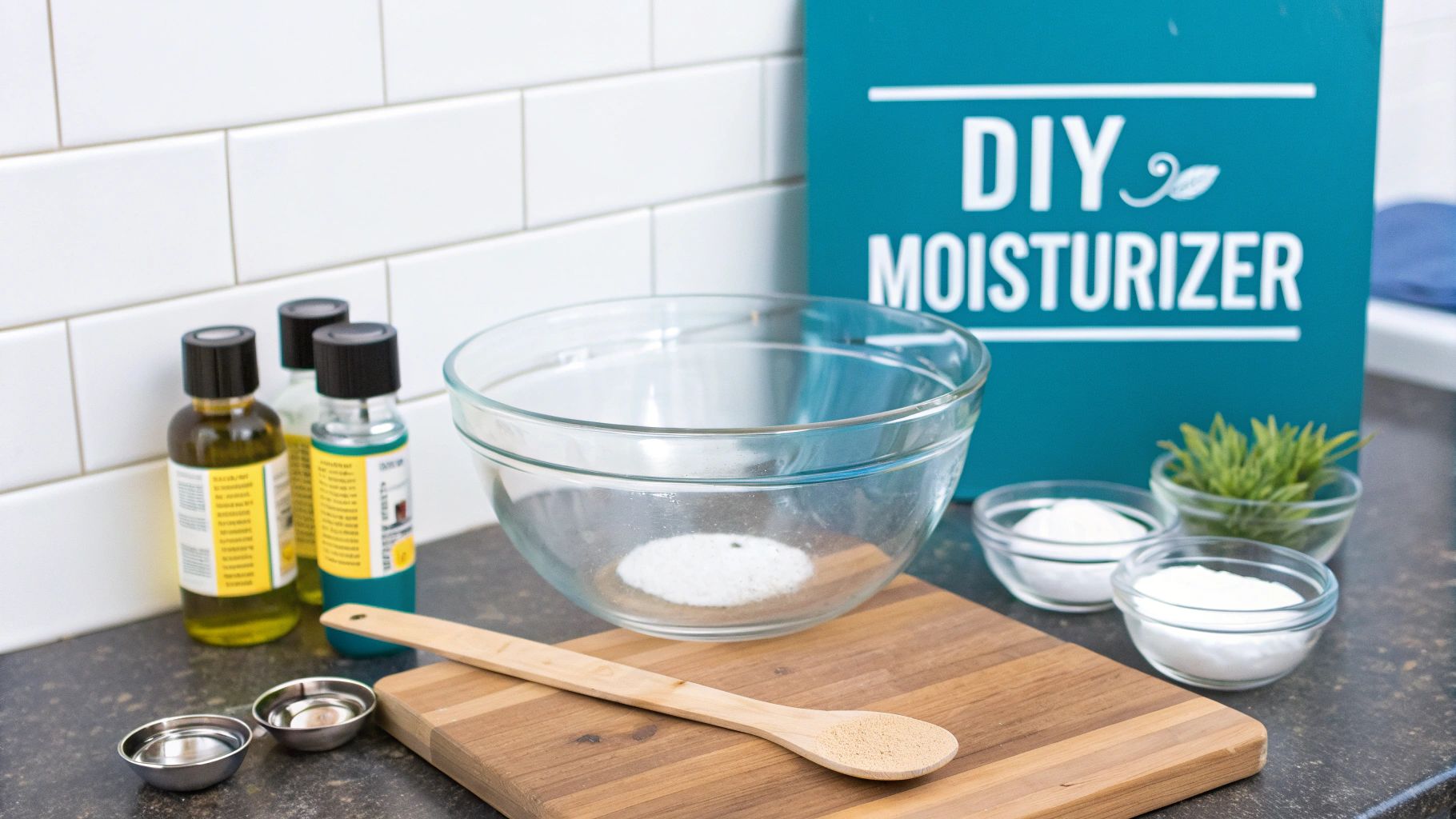
Ready to dive in? We’ve put together two simple but incredibly effective recipes made just for dry skin. Using high-quality supplies, you can create products you’ll absolutely fall in love with.
Recipe 1: Intense Hydration Body Butter
This rich, decadent body butter is your secret weapon against seriously dry-looking spots like elbows, knees, and heels. Because it’s a water-free (anhydrous) formula, it's super concentrated and has a much longer shelf life without needing a broad-spectrum preservative.
Supplies You Will Need:
- ½ cup Shea Butter
- ¼ cup Coconut Oil
- 2 tablespoons Jojoba Oil
- 10-15 drops of your favorite skin-friendly essential oil (like lavender or chamomile for a soothing scent, totally optional!)
- A double boiler (or a heat-safe bowl set over a pot of simmering water)
- An electric hand mixer or stand mixer
- A clean, sterilized glass jar with a lid for storage
Step-by-Step Instructions:
- Melt the Butters and Oils: Gently melt the Shea Butter and Coconut Oil in your double boiler over low heat. Stir every so often until everything is completely liquid.
- Combine and Cool: Take it off the heat and stir in the Jojoba Oil. Pop the mixture in the refrigerator for about 1-2 hours, or until it firms up and looks opaque.
- Whip to Perfection: Using your electric mixer, whip the cooled mixture for a good 5-10 minutes. You'll see it start to get light and fluffy, eventually transforming into a gorgeous, whipped cream consistency.
- Add Fragrance: If you're using essential oils, add them now and give it another quick whip for about 30 seconds to mix them in completely.
- Store Properly: Scoop your beautiful body butter into a clean, airtight glass jar. Keep it in a cool, dark place to help it maintain its perfect texture.
A key tip for success with whipped butters is all about temperature control. If your mixture is too warm, it just won’t whip up. If it gets too hard in the fridge, just let it sit at room temperature for a few minutes to soften before you start whipping.
Recipe 2: Silky Daily Face Cream
This recipe creates a much lighter cream that's perfect for daily use on your face. Because this one contains a water-based ingredient (aloe vera), it absolutely requires a preservative to keep it safe from bacteria and mold. This is a non-negotiable step for any DIY recipe that contains water!
Supplies You Will Need:
- ¼ cup Sweet Almond Oil
- 2 tablespoons Beeswax Pastilles
- 1 tablespoon Shea Butter
- ½ cup Aloe Vera Gel (make sure it's pure, with no additives)
- ½ teaspoon Vitamin E Oil (this acts as an antioxidant)
- A broad-spectrum preservative (always follow the manufacturer's usage rate, which is typically around 0.5% - 1%)
- A double boiler
- A blender or immersion blender
- A clean, sterilized jar with a lid
Step-by-Step Instructions:
- Melt the Oil Phase: In your double boiler, combine the Sweet Almond Oil, Beeswax Pastilles, and Shea Butter. Melt them together over low heat until everything is liquid.
- Prepare the Water Phase: In a separate container, gently warm the Aloe Vera Gel just a little bit. This is a pro-tip to help prevent the mixture from separating when you combine everything.
- Emulsify the Cream: Pour the melted oil mixture into your blender. Let it cool for just a minute, then turn the blender on low. Very slowly, pour the warm aloe vera in a thin, steady stream. You’ll see the magic happen as the mixture turns white and creamy—that's emulsification!
- Add Final Ingredients: Once it's all blended, add the Vitamin E Oil and your preservative. Blend for another 20-30 seconds to make sure everything is mixed in evenly.
- Store for Use: Transfer your fresh cream into its sterile jar. It will continue to thicken up as it cools. Store it in a cool place, and always use clean fingers to apply it to make it last longer.
Creating your own moisturizers is such a rewarding journey into truly personalized skincare. For more detailed guides and advanced techniques, be sure to explore our other resources on how to make your own moisturizer.
Getting the Most From Your Moisturizer
So you’ve found the perfect natural moisturizer for your dry skin. That’s fantastic, but it's only half the battle. How you actually apply it can make a world of difference in the final look and feel of your skin. With a few simple tweaks to your routine, you can get that beautifully hydrated, supple glow you’re after.
It all boils down to timing. The absolute best moment to apply your moisturizer is right after cleansing, while your skin is still a little damp. Picture your skin as a sponge—a damp sponge soaks up moisture much more easily than a bone-dry one. Applying your cream or lotion within two to three minutes of patting your face dry helps trap that surface water before it vanishes into thin air, seriously maximizing the benefits.
Your Application Technique Matters
Once you’ve nailed that perfect window of opportunity, the next piece of the puzzle is how you put the product on. This is all about using the right amount with a gentle touch. For your face, a dime-to-nickel-sized dollop is usually all you need. Slathering on too much can leave your skin feeling heavy or greasy, but using too little just won’t give you the coverage you need.
And please, no vigorous rubbing! Instead, gently press and pat the moisturizer into your skin. Use upward strokes—this method is much kinder to your skin and helps with absorption without any unnecessary pulling or tugging. For bigger areas like your arms and legs, use long, smooth strokes, always moving in an upward motion toward your heart.
Layering Your Skincare Products
A great moisturizer becomes even more powerful when it’s part of a well-ordered routine. Layering your products correctly ensures each one can do its job without being blocked by something else. The golden rule is simple: apply your products from the thinnest consistency to the thickest.
Your moisturizer should be one of the last steps in your routine. It goes on after any water-based serums but before your sunscreen. This allows the lighter, active-packed products to sink in first, with the moisturizer sealing in all that goodness.
Here’s a simple layering guide for a morning routine to get you started:
- Cleanser: Always begin with a clean canvas.
- Toner or Essence: Apply a hydrating liquid while your skin is still damp.
- Serum: Gently press in any targeted serums, like those with peptides or hyaluronic acid.
- Moisturizer: Apply your chosen natural moisturizer to lock in all that hydration.
- Sunscreen: Finish with a broad-spectrum SPF to protect your beautiful skin.
For those of us who love incorporating facial oils, you’ve got a couple of options. Many people like to mix a few drops right into their moisturizer for an extra nourishing boost. Others prefer to gently press the oil on as the very final step to seal everything in. If you want to dive deeper, you can learn more about how to hydrate with facial oils in our dedicated guide.
Your Natural Moisturizer Questions Answered
Stepping into the world of natural skincare always brings up a few questions. To help you feel completely confident about finding the best natural moisturizer for your dry skin, we've put together answers to some of the most common things people ask. Think of this as your final checklist before you start your journey to beautifully hydrated-looking skin.
Can I Use Natural Oils Alone As a Moisturizer for Dry Skin?
This is a great question, and the short answer is: probably not. While natural oils are incredible emollients that soften the skin beautifully, their main job is to lock in moisture that's already there.
For skin that's truly dry—meaning it's thirsty and lacks water—oils alone won't cut it. A complete moisturizer is always going to be more effective because it offers a balanced formula. It should have humectants (like hyaluronic acid) to pull water into the skin, and then emollients and occlusives (like oils and butters) to smooth the surface and seal that hydration in. Oils are a fantastic final step in a routine, but they work best as part of a team.
How Long Does It Take to See a Difference in My Dry Skin?
You’ll likely feel an immediate difference. Your skin should feel softer, smoother, and just more comfortable right after you apply a good moisturizer. But for the visible, lasting changes—that plump, dewy look we're all after—consistency is everything.
Give your skin at least 2-4 weeks of consistent, twice-daily application. This gives it time to adapt and really show you how it's responding. The goal is a sustained improvement, and that kind of beautiful result takes a little time and dedication.
Are Preservative-Free Natural Moisturizers Better?
This is a huge point of confusion, but getting it right is critical for your safety. Any skincare product that contains water—and that includes almost all lotions and creams—absolutely needs a preservative system. Without one, you're creating the perfect breeding ground for harmful mold, yeast, and bacteria.
A "preservative-free" claim on a water-based product is a major red flag.
The key isn't to avoid preservatives entirely, but to choose products formulated with safe, effective, broad-spectrum preservatives. This is especially important if you're making your own skincare. If your DIY cream recipe includes water, aloe, or any hydrosol, adding a reliable preservative isn't optional—it's a must-do to keep your creation safe to use.
Ready to create your own custom moisturizer or find the perfect ready-made solution for your dry skin? At Skin Perfection, we provide premium, high-performance ingredients and expertly formulated products to help your skin look its absolute best. Explore our collection and start your journey to radiant, healthy-looking skin today at https://www.naturalorganicskincare.com.