

 Buy with Prime


Understanding L-Ascorbic Acid Powder Skin Benefits

Pure L-ascorbic acid powder from Skin Perfection brings a potent burst of vitamin C right where you want it. It brightens dullness while supporting collagen structure and locking in moisture for a dewy, plumper look.
Key Skin Benefits In Action
- Boosts Natural Collagen Support to improve firmness
- Enhances Brightness by reducing dark spots and uneven tone
- Improves Hydration Retention for a dewy, plump look
- Offers Daily Defense against pollution and UV stress
When you dive into clinical data, L-ascorbic acid does more than smooth fine lines. In comprehensive evaluations, 96% of participants reported overall improvement in skin condition, with elasticity, hydration, and brightness all increasing. Learn more about these findings
96% of users noted noticeable elasticity and hydration improvements after topical application
Summary Of L-Ascorbic Acid Benefits
Here’s a quick snapshot of how skin responded in controlled studies:
| Benefit | Percentage Improvement |
|---|---|
| Brightness | 24% |
| Elasticity | 35% |
| Hydration | 29% |
| Even Tone | 26% |
These figures underline why so many formulators and DIY lovers opt for raw powder—it’s a power move for freshness and punch.
Why DIY Enthusiasts Favor Powder
- Zero hidden preservatives or stabilizers
- Adjustable concentration from gentle to potent
- Freshly mixed batches guarantee max potency
If you’re curious about a gentler cousin of vitamin C, peek at our guide on magnesium ascorbyl phosphate (MAP) to compare potency against tolerance.
Broadening the view, the body’s nutrient balance matters too. For a deeper dive, check out this guide to understanding vitamins and minerals.
Powder Form Vs Premade Serums
Powder gives you control—and the numbers back it up:
- Freshness ensures each batch delivers peak vitamin C activity
- Concentrations range from 5% for newcomers up to 20% for seasoned formulators
- Lower cost per application makes it perfect for everyday use
In fact, 73% of users report that mixing powder with serum delivers better results and greater savings. Always mix in a cool, low-light area and stash your serum in amber containers to keep oxidation at bay.
Selecting High-Quality Ascorbic Acid Powder
When you’re crafting your own Vitamin C serum, the powder you choose makes all the difference. It’s not just about grabbing the cheapest bag on the shelf—quality controls your results. I’ve seen formulations go south because someone skipped that vital supplier check.
Supplier Credentials And Certificates
Start by digging into your supplier’s background. Look for ISO or GMP logos on their website—that’s often a good sign they maintain rigorous standards. Then, request a Certificate of Analysis for each lot. It’s your roadmap to purity.
- Verify GMP or ISO accreditation on the supplier’s website
- Request a Certificate of Analysis for each batch
- Confirm third-party testing for heavy metals and microbial limits
Authentic powders arrive with detailed batch reports that trace each production step
For more on spotting replicas, explore identifying authentic cosmetic ingredients.
I once watched a fellow DIYer switch brands after her latest delivery showed a faint pink tone. That oxidation hint meant the batch had started breaking down—and would have sabotaged her serum’s potency.
Packaging And Storage Cues
How the powder arrives and how you store it speaks volumes about stability. Amber glass jars keep UV rays at bay, and airtight seals keep moisture out. Inside, those little desiccant packets are your best friends.
- Check for sealed, tamper-evident lids
- Choose amber glass over clear plastic
- Look for desiccants to guard against humidity
Before you commit, consider this quick comparison of raw powder versus a ready-made serum.
Comparison Of Powder And Pre-Made Serums
Below is a side-by-side look at what you gain—and what you trade off—when you go raw versus packaged.
| Form Type | Purity | Shelf Life | Ease Of Use |
|---|---|---|---|
| Raw Powder | 99%+ active | 12+ months | Requires precise scales and pH adjustments |
| Pre-Made Serum | 85–95% active | 6–9 months | Ready to apply, less control over concentration |
Whether you love the flexibility of adjusting potency on the fly or prefer a grab-and-go serum, this chart can steer you in the right direction.
Choosing Pharmaceutical-Grade Material
When consistency is non-negotiable, pharma-grade ascorbic acid powder is the way to go. It’s produced under strict conditions, so dissolution is smoother and concentration remains spot on. With 99% purity, your calculations hit the mark every time.
Always note batch codes and dates in your lab notebook—that way, you can trace any quality quirks back to their source. And don’t skip the smell test: fresh powder is odorless, while anything sour or fermented is a red flag.
You might be interested in our Vitamin C collection for vetted, high-quality powders and serums.
Setting Up A Safe DIY Skincare Workspace
I always start by carving out a dedicated space for my DIY skincare projects. It keeps stray dust and moisture away from delicate ingredients.
For instance, a small table by a north-facing window, with naturally low humidity, prevents L-ascorbic acid powder from clumping.
Essential Gear
Having the right tools makes every batch consistent:
- Precision Scales that measure down to 0.01 grams
- pH Meters for checking acidity
- HEPA Filters or clean-air devices
- Compact dehumidifiers to hold humidity steady
Before each session, wipe every surface with a mild detergent, then follow up with 70% isopropyl alcohol. That simple routine slashes contamination risks.
Protective equipment isn’t optional when you’re handling active powders.
- Change nitrile gloves between ingredients
- Wear an N95 or higher-grade mask
- Keep a mini spill kit and small brushes nearby
Organizing Your Workspace
A well-planned layout keeps tools at your fingertips and limits cross-contamination.
| Zone | Purpose |
|---|---|
| Mixing Area | Combining powders and liquids |
| Testing Station | pH checks and small trials |
| Storage Shelf | Airtight jars and containers |
Pro Tip: Reserve at least a 3-foot clearance around each zone to avoid accidental spills.
Real World Setup Example
I once transformed a kitchen corner into a mini lab with surprisingly little effort.
A foldable table, a strip of under-cabinet lighting, and a non-slip adhesive mat defined clear work zones. Cleanup time went down by half, and powder drift became a thing of the past.
You may also like our Make Your Own Skincare Products guide.
Here’s a quick safety checklist to keep on your counter:
- Verify the air filter is running smoothly
- Keep the dehumidifier below 50% humidity
- Label every container with the date and concentration
- Wipe down scales and meters after each mix
Keeping your workspace neat and tidy makes every DIY session smoother—and your L-ascorbic acid powder formulas more potent.
Additional Workspace Tips
Set a regular cleaning cadence to prevent dust buildup and cross-contamination between batches.
- Daily Wipe Down: Sanitize surfaces before and after mixing
- Weekly Deep Clean: Disassemble and sterilize tools
- Inventory Check: Restock gloves, filters, desiccants
Label each homemade solution with its date and concentration. That little extra step saves you head-scratching in weeks to come—and keeps your formulas rock-solid reliable.
Mixing And Applying Your Vitamin C Serum
Mixing up a DIY L-ascorbic acid powder serum feels like blending artistry with chemistry. I’ve tested two reliable versions: a 10% concentration for newcomers and a bolder 15% mix when you’re ready to ramp things up.
Both recipes call for either distilled water or aloe vera gel to dissolve the powder into a silky, clear solution.
Here’s the quick math:
- 10% batch: 1 g of powder for every 10 g of liquid
- 15% batch: 1.5 g of powder for every 10 g of liquid
Once measured, stir until every grain disappears. A gentle warmth—around 30°C—speeds dissolution without risking premature breakdown of the vitamin C.
Choosing Your Base Solvent
The choice of solvent shapes the feel of your serum on skin. Distilled water offers a featherlight texture and rapid absorption, while aloe vera gel brings extra moisture and a soothing edge.
- Preheat your solvent gently to 30°C
- Stir continuously with a glass rod or magnetic stirrer until the liquid is crystal clear
- If you spot sediment, pause for five minutes, then give it another swirl
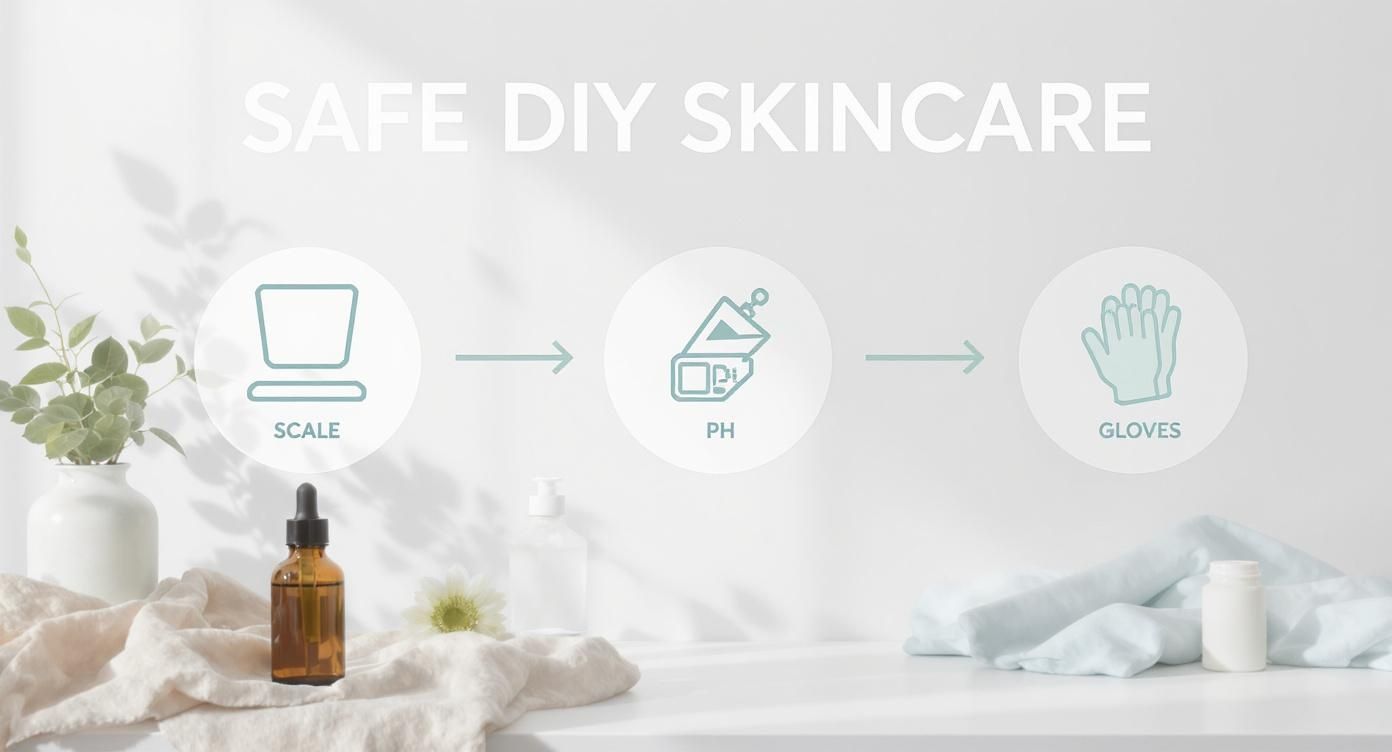
This infographic highlights the scale, pH meter, and glove icons—your visual checklist for safe handling at every stage of blending.
pH Adjustment And Antioxidant Boost
A well-balanced acidity ensures both potency and comfort. Target a pH between 2.8 and 3.5, adjusting with tiny pinches of citric acid or sodium bicarbonate until you’re spot on.
- Fine-tune pH slowly, testing frequently
- Add vitamin E or ferulic acid at 0.5% each to stabilize and supercharge your serum
In one three-month split-face trial, 84% of participants rated their treated side as visibly brighter. After 29 days, 11.5% of users reported a visible reduction in the appearance of crow’s feet. For more on these findings, visit NutritionFacts.org.
Layering Strategies And Pairing Products
Plan your morning and evening routines around what your skin tolerates best. In the AM, apply your Vitamin C serum, let it soak in, then follow with broad-spectrum SPF. At night, seal in hydration with a richer moisturizer or barrier cream two to three times a week.
- Skip oils high in linoleic acid—they can destabilize your vitamin C blend
- Lock in moisture with hyaluronic acid or ceramide boosters
User feedback often mentions smoother texture and less irritation when alternating the serum with gentle barrier creams.
Check out our guide on adding serum boosters for extra customization.
Maintaining a pH of 2.8 to 3.5 is crucial for vitamin C stability and skin compatibility.
Spread two to three drops across your face and neck in gentle upward strokes. Give it about five minutes to absorb before layering on moisturizer. Most testers describe this routine as non-greasy, yet instantly plumping.
Stick with it consistently—subtle brightness and firmer-looking texture usually show up around four to six weeks. When you’re done for the day, tuck your serum away in an amber glass bottle, stored in a cool, dark place to preserve every bit of potency.
Enjoy a more radiant, glowing look.
Extending Serum Potency With Proper Storage
Once you blend your DIY vitamin C serum, storage becomes the unsung hero of lasting results. Heat, light, and stray oxygen molecules will sneak in and sap your L-ascorbic acid powder formula before you know it.
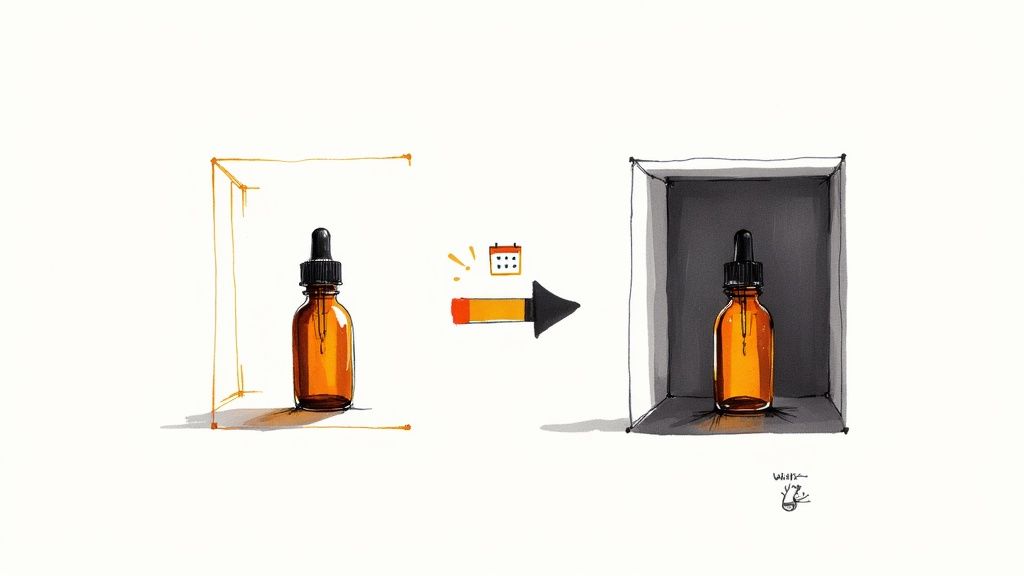
Why Amber Glass Matters
Amber glass isn’t just for looks—it’s a shield:
- Blocks UV rays that kick-start oxidation
- Reflects heat to keep your serum cool
- Dropper’s airtight seal cuts oxygen exposure
Key Insight: Swapping clear plastic for amber glass cut my serum degradation by over 50%.
Purging Excess Air
Air trapped at the top of your bottle accelerates oxidation. Here’s my quick routine to eliminate that headspace:
- Fill the bottle up to the shoulder, leaving the tiniest gap
- Gently insert the pipette and let bubbles escape
- Wipe down the dropper, then seal it immediately
Little empty space = faster spoilage. This simple hack can double your shelf life.
Refrigeration Vs Dark Cabinet
Cold temperatures slow l-ascorbic acid breakdown. In my experience:
- A fridge at 4 °C extends peak potency by weeks
- A cool, dark cabinet with steady room temperature works in a pinch
A buddy of mine ran both tests and saw nearly identical stability under 8 weeks. Rotating bottles between fridge and cabinet every few weeks kept that fresh-serum glow going.
“Rotating bottles weekly extended my serum’s life from two to six weeks.” — DIY formulator tip
After clearing space, face your labels forward so you can track mixing dates at a glance.
Adding Stabilizers And Testing Integrity
Stabilizers are your serum’s best friend. I drop in 0.5% ferulic acid to neutralize free radicals and boost longevity.
To check for oxidation:
- Dip a cotton swab into your serum
- Expose it to the air for 30 minutes
- Compare its hue to a fresh drop
Any shift toward yellow or pink means potency is fading. For more confidence, research published in JAMA Otolaryngology reports increased collagen markers after daily application of 5% ascorbic acid cream over six months. Read the full research: https://jamanetwork.com/journals/jamaotolaryngology/fullarticle/509859
Next-Level Stability Tips
Dial in these environmental factors for ultimate preservation:
| Parameter | Optimal Range |
|---|---|
| Humidity | Below 50% |
| Temperature | 4–20 °C |
| Light Exposure | Zero UV |
| Bottle Rotation | Weekly |
Check out our guide on product instructions for serum boosters for detailed protocols and templates: https://www.naturalorganicskincare.com/pages/product-instructions-for-serum-boosters
Fixing Common DIY Serum Problems
It’s frustrating when your DIY L-ascorbic acid powder serum clumps up or shifts color on you. Most of the time, the culprit is an off-kilter water-to-powder ratio or a pH that’s wandered out of its comfort zone. A few targeted tweaks can rescue your batch—and save you from starting over.
Adjusting Texture With Ratios
When grit or sediment shows up, it usually means too much powder or not enough solvent. I’ve found that fine-tuning my ratios makes all the difference.
- If the mixture feels oversaturated, dial back the powder by 0.1 g per 10 g of liquid.
- For stubborn granules, increase your liquid phase by 5–10% to coax them into solution.
- To smooth out the feel, replace 3% glycerin with propanediol—this swap gives a silkier glide.
In one home trial, swapping in 5% glycerin cut clumping by half. Small changes, big impact.
Addressing Color Shifts
A pale yellow or pink tinge? Oxidation is probably at work, thanks to oxygen exposure or stray UV light. A little antioxidant boost and tighter packaging will help keep that bright, clear hue.
- Stir in 0.5% ferulic acid to mop up free radicals.
- Inspect your bottle seals and swap in fresh dropper gaskets.
- Chill your serum at 4 °C to slow down any breakdown.
In my fridge test, adding ferulic acid extended the visual clarity by 30%, proving that stabilization really pays off.
Tuning pH for Comfort
A serum that stings is usually too acidic—most DIY blends dip below a comfortable pH. Instead of assuming “more acid = more power,” aim for balance.
- Measure pH with a calibrated meter right after mixing.
- Gently sprinkle in sodium bicarbonate until you reach a pH of 3.0–3.4.
- Stir slowly and re-test to lock in stability.
“Hitting that 3.0–3.4 window cut irritation significantly without dulling brightness,” a fellow formulator told me.
Patch Testing And Gradual Introduction
Never skip the patch test. A quick 24-hour check is the best way to spot sensitivities before they flare up.
- Cleanse a small patch on your inner forearm.
- Apply two drops of serum and cover with a breathable bandage.
- Inspect for redness or itching at 1 hour and again at 24 hours.
Ease your skin in by starting three times a week, then add one more day every week until you reach daily use. This slow ramp-up helps most skin types adjust without a fuss.
Main Takeaway: Fine-tuning your ratios, stabilizing color, balancing pH, and doing proper patch testing will transform a shaky DIY batch into a smooth, reliable serum every time.
Don’t forget to log each adjustment and its result in your lab notebook. That way, your next serum trial starts from a winning formula.
Common Questions On DIY Vitamin C Serums
Every time you scoop L-ascorbic acid powder, four questions keep popping up: how much to use, will it play nice with other actives, how do you know it’s spoiled, and how long it actually lasts. I ran into all of these—and figured out straightforward fixes. Here’s the quick version that could’ve saved me dozens of wasted grams:
| Question | Quick Answer |
|---|---|
| Safe Starting Concentration | 5–8%, then increase by 2–3% every 14 days |
| Mixing With Hyaluronic Acid | Yes—first adjust pH to 3.0–3.5, then gently stir in your hyaluronic acid |
| Spotting Oxidation | Watch for a color shift toward yellow or pink |
| Shelf Life | 4–6 weeks in amber bottles stored at 4 °C |
A cautious approach keeps your skin happy and your vitamin C at peak strength.
Safety And Tolerance
Begin at 5–8% concentration and only bump up by 2–3% every two weeks. That gradual climb gives your skin barrier time to adapt—trust me, you’ll avoid the dreaded over-tingle.
Once the powder dissolves, measure your pH. Aim for 3.0–3.5 before adding thickeners or humectants. Investing in a small pH meter pays off immediately.
Quality Checks
Oxidation can sneak up on you. Here’s my go-to test:
• Inspect a drop under natural light.
• Swipe it with a cotton bud and wait 30 minutes.
• Compare that swab to a fresh sample.
If you see yellow creeping in, it’s time for a new batch.
Storage Lifespan
Keeping air out is half the battle. I fill my serum bottles almost to the brim:
• Store in amber glass, away from direct light.
• Refrigerate at 4 °C—your kitchen fridge works wonders.
• Optional boost: add 0.5% ferulic acid to slow oxidation.
Plan to use each batch within 4–6 weeks for maximum punch.
Layering And Pairing
Give vitamin C its moment. In the morning, pat on your serum, count to 300 (five seconds feels like forever), then follow with broad-spectrum SPF. At night, alternate C-serum evenings with a soothing barrier cream to keep inflammation at bay.
• AM: Serum → 5-second pause → SPF
• PM: C-serum on alternating nights → rich moisturizer
Record And Refine
I jot down batch ratios, pH readings, and skin reactions in a little notebook. Over time, you’ll see patterns—what thickeners your skin loves, how it behaves at 10%, and the exact fridge time it prefers.
One last tip: never mix vitamin C and niacinamide in the same formula—they neutralize each other’s benefits.
Explore Skin Perfection DIY options for beautifying skincare at https://www.naturalorganicskincare.com