

 Buy with Prime


If you're looking for the best organic skincare products, you've probably asked yourself: what does "organic" even mean for my skin?
Simply put, it’s a promise. It’s a commitment to ingredients that are grown, harvested, and processed without a laundry list of synthetic pesticides, GMOs, or harsh chemicals. It's about bringing a pure, plant-powered philosophy straight from nature to your bathroom counter.
What Truly Makes Skincare Organic
Let's clear the air. In the skincare aisle, words like "natural," "clean," and "organic" get thrown around a lot, often interchangeably. But they aren't the same. "Organic" is the one with strict rules and regulations behind it.
Think of it this way: you can buy a tomato at any grocery store. But an organic tomato comes from a farm that follows specific, earth-friendly growing methods. That distinction is where the real value lies.
For a product to wear the organic badge of honor, its ingredients have to be sourced from farms that steer clear of synthetic pesticides, herbicides, and genetically modified organisms (GMOs). This isn't just about how the plants are grown; it's about how the entire product is made, ensuring that purity is maintained from the soil all the way to the final formula. The goal is to let the plant's true essence shine through.
Understanding Organic Certifications
To cut through the marketing noise, independent organizations have set up tough certification standards. When you spot one of their seals on a bottle, it’s a guarantee that the product has passed a rigorous inspection. To get a feel for what this involves, it's helpful to look at the principles of organic certification, which apply to everything from your bedding to your beauty products.
These seals are your shortcut to finding the real deal. Two of the most trusted ones you'll see are:
- USDA Organic: This is a food-grade standard right from the U.S. Department of Agriculture. If you see this seal, it means the product contains at least 95% organic ingredients. That's a high bar.
- COSMOS/ECOCERT: A major player in Europe, COSMOS looks at the whole picture—from ingredient sourcing and processing to the product's environmental footprint and even its packaging.
Decoding Organic Skincare Labels
Trying to make sense of labels can feel like learning a new language. This quick guide breaks down the common organic tiers you'll see on packaging, so you know exactly what you're getting.
| Certification Level | What It Means for Ingredients | Example Ingredient List Focus |
|---|---|---|
| 100% Organic | All ingredients (excluding water and salt) are certified organic. Carries the USDA Organic seal. | Aloe Barbadensis Leaf Juice*, Jojoba Oil*, Lavender Oil* |
| Organic | Contains at least 95% organic ingredients. Also eligible for the USDA Organic seal. | A blend of organic oils and butters with a few essential non-organic preservatives. |
| "Made With" Organic Ingredients | At least 70% of the ingredients are certified organic. Cannot use the USDA seal but can list certified ingredients. | Water, Aloe Barbadensis Leaf Juice*, Glycerin, Jojoba Oil*, Cetearyl Alcohol |
| Specific Organic Ingredients | Contains less than 70% organic ingredients. Only specific ingredients can be listed as organic on the label. | Water, Glycerin, Cetearyl Alcohol, Jojoba Oil* |
Note: The asterisk (*) is often used to denote certified organic ingredients in the list.
This table helps you see at a glance how much "organic" is actually in the bottle, empowering you to choose products that truly align with your skincare philosophy.
Why Purity Matters in Formulations
The hunger for transparency in what we put on our skin isn't just a fleeting trend—it's a massive shift in how we think about beauty. The global market for natural and organic cosmetics was valued at a staggering USD 41.65 billion in 2024 and is expected to hit USD 103.23 billion by 2034. That booming growth is fueled by people like you, who are looking for effective solutions that are also kind to the planet.
When you choose certified organic skincare, you're picking products where every single ingredient has a purpose. This intense focus on purity means your skin gets all the good stuff without the unnecessary synthetic fillers.
This dedication to quality is everything. It gives you the power to build a skincare routine that truly beautifies your skin with ingredients you can understand and trust. By learning more about https://www.naturalorganicskincare.com/blogs/category/certified-organic-ingredients-and-organic-skin-care, you can make choices that perfectly match your beauty goals. Here at Skin Perfection, we live by this philosophy, offering both finished products and lotion-making supplies that put high-quality, plant-derived ingredients front and center.
The Powerhouse Ingredients in Organic Skincare
Every truly effective skincare product has its star players. In the world of organic skincare, these aren't synthetic compounds cooked up in a lab, but powerful, plant-derived ingredients that work beautifully with your skin. Think of them as nature's own specialists, each with a unique talent for making your skin look and feel its best.
Instead of just rattling off a dry, scientific list, let’s imagine these ingredients are on different teams, each with a specific mission. Some are masters of hydration, some are experts at calming things down, and others are brilliant at boosting radiance. Looking at it this way helps you understand what an ingredient actually does for your skin.
At Skin Perfection, we're firm believers in the magic of these botanicals. A high-quality formula isn't just a random cocktail of plants; it's a carefully chosen team where every ingredient plays a supporting role to help your skin glow.
Nature's Brighteners and Appearance Enhancers
When your complexion looks a little dull or uneven, certain organic ingredients are fantastic for encouraging a brighter, more luminous look. They work gently to give your skin a refreshed appearance, without any of the harshness you might find elsewhere.
A perfect example is Vitamin C, often sourced from incredible botanicals like the Australian Kakadu Plum. This amazing fruit has an exceptionally high concentration of Vitamin C, a celebrated antioxidant that helps diminish the appearance of dark spots and promote a much more even skin tone.
Another star on the brightening team is Bakuchiol. Pulled from the babchi plant, it's often called nature's answer to retinol. It offers similar visual benefits for fine lines and skin texture but is famously much gentler, making it a beloved ingredient in the best organic skincare products.
The Soothers and Calming Agents
Let's face it, sometimes our skin just needs to chill out. Environmental stressors can leave it looking red and feeling sensitive. This is where nature’s calming crew steps in to help.
Ingredients like Chamomile and Calendula are legendary for their calming abilities. They help soothe the skin, visibly reducing redness and leaving it feeling comfortable and totally serene.
Aloe Vera is another classic hero in this category. Its cool, gel-like substance is incredibly hydrating and soothing, making it a go-to for skin that needs a gentle, loving touch. It’s perfect for when your skin just feels hot and bothered and needs to feel refreshed.
Ultimate Hydrators and Moisturizers
Proper hydration is the absolute foundation of healthy-looking skin. It’s what gives you that plump, dewy glow we all crave. Luckily, organic skincare is overflowing with ingredients that are pros at locking in moisture.
- Hyaluronic Acid (Plant-Derived): This incredible molecule can hold up to 1,000 times its weight in water, acting like a magnet that pulls moisture into the skin. When it's sourced from plants, it provides amazing hydration for a supple, smooth look.
- Shea Butter: Extracted from the nut of the African shea tree, this rich, creamy butter is loaded with fatty acids and vitamins. It delivers deep, lasting moisture and helps support the skin’s natural protective barrier.
- Jojoba Oil: This oil is a bit of a chameleon—it's structurally very similar to our skin’s own natural oils (sebum). This means it can moisturize effectively without feeling greasy, helping to bring everything into balance for a healthy-looking glow.
Getting to know these botanical powerhouses can completely change the way you shop for skincare. And if you're the hands-on type, you can even explore some of the top natural beauty ingredients for homemade skincare recipes to create your own custom blends. By choosing products packed with these kinds of ingredients, you’re embracing a path to visibly beautiful skin that is both gentle and incredibly effective.
Choosing Products for Your Unique Skin Type
Finding the best organic skincare products that actually work isn't about chasing the latest trend—it's about understanding your own skin. Think of yourself as a personal stylist for your face. You wouldn't wear the same outfit for every single occasion, right? Your skin needs that same thoughtful, personalized approach based on its unique personality.
Knowing whether your skin is naturally dry, oily, sensitive, or a combination of these is the most important first step. Each type has its own distinct quirks and thrives with different kinds of support. Once you've identified your skin's profile, you can start picking out organic ingredients that work in harmony with it, helping you get that balanced, radiant complexion you're after.
This is the real secret to building a routine that delivers results. It makes sure every product you choose is a perfect match, helping your skin look and feel its absolute best.
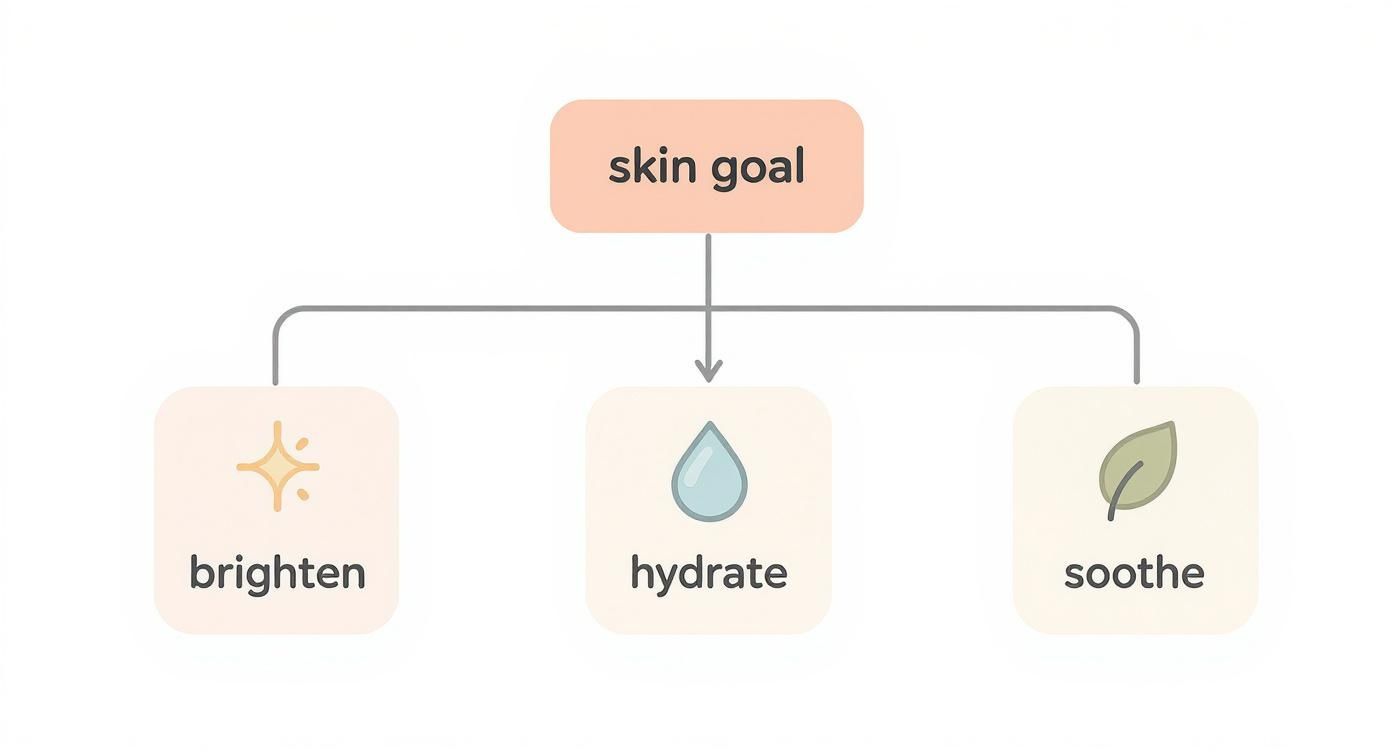
The infographic below gives you a quick visual guide, showing how different goals—like brightening, hydrating, or soothing—can point you toward the right products.
Navigating the world of skin types and ingredients can feel a bit overwhelming at first. To simplify things, we've put together a quick-reference table to help you match the right organic ingredients and product textures to your specific skin needs.
Organic Ingredient Guide for Your Skin Type
| Skin Type | Key Characteristics | Recommended Organic Ingredients | Ideal Product Textures |
|---|---|---|---|
| Oily | Visible shine, enlarged pores, prone to blackheads and breakouts. | Jojoba Oil, Tea Tree Oil, Witch Hazel, Clay | Gels, lightweight lotions, water-based serums, foaming cleansers. |
| Dry | Feels tight, may have flaky patches, looks dull, fine lines are more visible. | Shea Butter, Coconut Oil, Avocado Oil, Rosehip Oil | Rich creams, balms, nourishing oils, hydrating serums, milky cleansers. |
| Combination | Oily T-zone (forehead, nose, chin) with normal or dry cheeks. | Jojoba Oil, Green Tea Extract, Hyaluronic Acid (plant-derived) | Lightweight moisturizers, gel-creams, balancing toners. |
| Sensitive | Easily irritated, may show redness, feel itchy or uncomfortable. | Aloe Vera, Chamomile, Calendula, Lavender Oil | Minimalist formulas, fragrance-free products, gentle cleansers, soothing serums. |
Think of this table as your starting point. As you get to know your skin better, you'll discover which ingredients it truly loves.
Tailoring Your Routine for Oily and Combination Skin
If you're dealing with a noticeable shine, especially in your T-zone (forehead, nose, and chin), you've likely got oily skin. Combination skin is just what it sounds like: an oily T-zone but drier cheeks. For both, the goal is always balance—you want to add moisture without piling on more oil.
Jojoba oil is a true superstar for these skin types. Its molecular structure is incredibly similar to our skin's natural sebum, which means it can moisturize perfectly without feeling heavy or greasy. It's a fantastic trick for helping your skin find a happy, balanced medium.
For oily or combination skin, lightweight textures are your best friends. Stick with serums, gels, and light lotions that sink in fast and leave behind a clean, fresh finish.
Another powerhouse is tea tree oil, which is well-known for its properties that help keep skin looking clear and healthy. When you're shopping, just reach for products that feel refreshing and non-greasy.
Nurturing Dry and Dehydrated Skin
Does your skin often feel tight, look a bit dull, or even have some flaky patches? That's the classic calling card of dry skin. This skin type is thirsty for rich, nourishing ingredients that deliver deep hydration and, just as importantly, help lock that moisture in by supporting the skin's natural barrier.
This is where richer textures become your go-to. Think luxurious creams, comforting balms, and nutrient-packed oils that give your skin the relief it's craving.
- Shea Butter: This is a hydration hero, loaded with vitamins and essential fatty acids. It just melts into the skin, delivering intense moisture that leaves it feeling incredibly soft and supple.
- Coconut Oil: Famous for its deep moisturizing abilities, coconut oil helps to truly nourish dry skin, giving it a much smoother and more hydrated appearance.
Choosing products with these powerful emollients helps restore moisture levels, promoting a plump, dewy look that glows with health. If you want to dive deeper, you can learn more about how to identify and understand what are the 5 skin types in our detailed guide.
Caring for Sensitive Skin
Sensitive skin tends to react to just about everything—from environmental triggers to new products or harsh ingredients. This often shows up as visible redness and general discomfort. The key to caring for this delicate skin type is to be gentle, using soothing ingredients that calm its appearance and bring it back to a happy place.
Simplicity is your greatest ally here. Look for formulas with minimal, pure ingredients to reduce the chance of a reaction.
Some of the most beloved soothing botanicals are:
- Aloe Vera: This plant is legendary for a reason. Its cooling gel texture feels amazing and provides a refreshing dose of hydration that helps calm the skin's appearance.
- Chamomile: Known for being incredibly gentle, chamomile is wonderful for soothing the look of redness and leaving skin feeling peaceful and serene.
- Lavender Oil: It’s not just for aromatherapy! Lavender oil also has soothing properties that contribute to a clearer and more balanced-looking complexion.
By building a routine around these calming agents, you can help your sensitive skin feel comfortable and look beautifully even-toned. It's all about giving your skin the nurturing care it needs to thrive.
How to Build Your Foundational Organic Routine
Switching to an organic skincare routine can feel a bit like learning a new language for your skin. But it's not about throwing a dozen new products on your counter all at once. The secret is to build a simple, foundational framework that lets those high-quality, plant-based ingredients do their best work.
Think of it as your core four-step ritual—something you can count on morning and night. This consistent approach gives your skin the chance to adapt and really respond to the pure, powerful ingredients you've chosen.
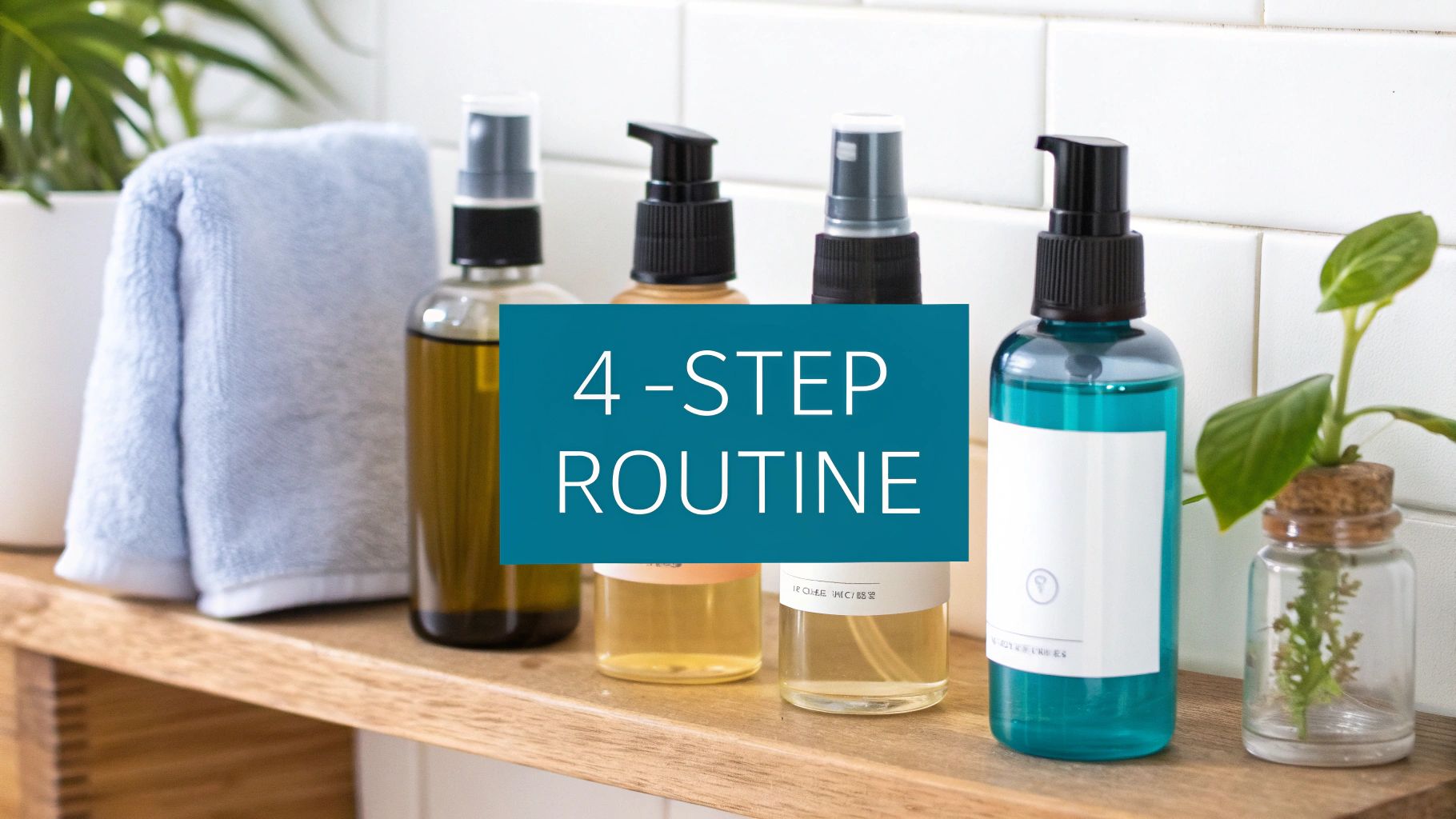
This simple structure—Cleanse, Tone, Nourish, and Moisturize—is the perfect starting point. It works whether you're grabbing expertly formulated products or taking a more hands-on approach with top-tier lotion-making supplies, like the ones from Skin Perfection.
Step 1: Start with a Gentle Cleanse
Every great routine begins with washing away the day without stripping your skin of its natural moisture. A gentle organic cleanser is all about prepping the canvas, making your skin ready to soak up all the good stuff that comes next. You want to look for formulas with soothing botanicals that leave your complexion feeling soft and refreshed, never tight or dry.
- For Oily or Combination Skin: A foaming cleanser with ingredients like witch hazel or green tea extract can help bring a look of balance to your skin.
- For Dry or Sensitive Skin: A creamy or oil-based cleanser featuring aloe vera or chamomile is a game-changer, cleansing while wrapping your skin in a comforting layer of hydration.
This one act sets the stage for everything else, leaving your skin clean, calm, and receptive.
Step 2: Tone and Prep Your Skin
Think of a toner as the primer for your skincare masterpiece. Its job is to rebalance your skin’s pH after cleansing and deliver an initial wave of hydration. This simple move makes every product you apply afterward work that much harder. An organic toner, often a floral water or hydrosol, delivers a delicate mist of pure botanical goodness.
A well-formulated toner helps refine the look of pores and whisks away any last traces of impurities. It’s a quick, refreshing step that can make a huge difference in your skin’s overall texture and glow.
Ingredients like rosewater are fantastic for hydrating and soothing, while something like lavender water provides a calming sensation that's perfect for sensitive skin. It's a small step with a surprisingly big impact.
Step 3: Nourish with Targeted Actives
Now, we bring in the heavy hitters: the serums. Serums are lightweight but packed with a high concentration of active ingredients designed to zero in on specific skin goals. Whether you’re aiming to brighten your complexion, add a serious dose of hydration, or smooth the appearance of fine lines, there’s an organic serum for that.
The demand for pure, effective skincare is absolutely booming, and it's easy to see why. People are tired of synthetic chemicals. In fact, the global organic skincare market is expected to rocket from USD 12.0 billion in 2024 to USD 28.4 billion by 2034 as more of us hunt for cleaner formulas. You can check out the data and more insights about the organic skincare market to see just how fast this trend is growing.
Step 4: Moisturize and Protect
This is the final, crucial step. It's time to lock in all that hydration and nourishment with a high-quality organic moisturizer. This creates a protective barrier on your skin's surface, helping to shield it from daily environmental stressors while keeping it soft, plump, and happy all day long.
Your choice of moisturizer should really sync up with your skin type:
- Lightweight Lotions: Perfect for oily and combination skin. They absorb in a flash without that heavy feeling.
- Rich Creams: A dream for dry skin. These provide deep, lasting moisture with ingredients like shea butter or avocado oil.
- Facial Oils: A fantastic option for most skin types. Oils like jojoba or rosehip can seal in moisture and give your skin a gorgeous, healthy-looking glow.
By sticking to these four foundational steps, you’re creating a complete, effective organic routine that celebrates your skin's natural beauty, day in and day out.
The Skin Perfection Philosophy for Natural Beauty
Here at Skin Perfection, our guiding principle is simple: we want to empower you on your journey to beautiful skin. Think of us as your partner, here to give you exceptional tools and the knowledge you need to feel confident and in control of your skincare routine. This entire philosophy rests on transparency, quality, and a deep respect for your skin's appearance.
Our commitment to you starts with meticulously following established guidelines from the FDA. We formulate our products to beautify your skin and enhance its natural appearance. You’ll never find us stating that our products can fix, repair, or have any effect on skin conditions. This disciplined approach keeps our focus exactly where it should be—on creating high-quality, dependable skincare you can trust to help you reach your cosmetic goals.
Your Partner in Skincare Success
We know that achieving radiant-looking skin is a personal journey, and our goal is to support you every step of the way. That’s why we offer two distinct paths to success, designed for different needs and passions within the world of beauty.
First, we have a complete line of expertly formulated skincare products. These are perfect for anyone who wants effective, ready-to-use solutions featuring the best organic skincare powered by nature-inspired ingredients. Every single formula is crafted to help your skin look its absolute best.
Second, for the creative spirits and DIY enthusiasts, we offer an extensive selection of high-quality lotion-making supplies. This path empowers you to create personalized formulas from scratch, giving you the ultimate control over every ingredient that touches your skin.
Education and Excellence
Our philosophy goes beyond just selling products. We are passionate about customer education and unwavering product excellence because we believe an informed consumer is an empowered one. By providing clear information and exceptional ingredients, we help you make choices that perfectly align with your skincare aspirations.
This commitment is more important now than ever, as people are becoming incredibly savvy about what they put on their skin. The global organic skincare market is projected to hit USD 34.2 billion by 2035, a massive leap from its 2025 valuation of USD 14.1 billion. What's driving this incredible growth? Shoppers are actively seeking out ingredient transparency, with data showing that nearly 74% of consumers now prefer organic ingredients in their personal care.
Our mission is to provide the ingredients and guidance you can trust. We are here to help you achieve a complexion that not only looks beautiful but also reflects a thoughtful, educated approach to self-care.
For a truly holistic approach to glowing skin, it's also helpful to understand and manage internal factors. Learning about natural ways to reduce inflammation can be a fantastic complement to your topical routine, as our overall well-being often shows up in our skin's appearance. Ultimately, our philosophy is about giving you the confidence that comes from using beautiful, well-crafted products designed to help you shine.
Got Questions About Organic Skincare? We've Got Answers.
Making the move to organic skincare is a fantastic step toward a more conscious beauty routine. But like any new journey, it's totally normal to have a few questions pop up along the way. Let's clear up some of the most common ones so you can feel confident choosing the best organic skincare products for your skin.
Is "Natural" the Same as "Organic" in Skincare?
This is a great question, and the answer is a firm "no." These two words get thrown around a lot, and it’s easy to get them mixed up, but they mean very different things.
The term "natural" is pretty much the wild west of the beauty industry—it's almost completely unregulated. A product can slap "natural" on the label even if it only has a handful of plant-based ingredients mixed in with a bunch of synthetic ones.
On the other hand, "organic" is a title that has to be earned. For a product to be certified organic, its ingredients are held to incredibly high standards. They have to be grown, harvested, and processed without any synthetic pesticides, chemical fertilizers, or genetically modified organisms (GMOs). It's a big deal.
The bottom line? To make sure you're getting the pure, potent formula you're paying for, always look for an official certification seal from a group like the USDA or COSMOS. That little logo is your guarantee of quality.
How Long Until I See a Difference with Organic Products?
When you're trying any new skincare, patience really is a virtue. Your skin has its own rhythm, a natural renewal cycle that takes about 28 to 40 days for new cells to make their way to the surface. It’s best to give any new product at least that long to really see how your skin feels and looks.
Organic skincare isn't about quick, drastic results. The whole idea is to work with your skin, nourishing it over time with powerhouse plant ingredients. You're building a foundation for healthy-looking, radiant skin that lasts, not just looking for an overnight miracle.
So, the key is consistency. Using your products every day as directed is the best way to help your skin look its absolute best.
Are Organic Skincare Products Better for Sensitive Skin?
For many people with sensitive or reactive skin, switching to organic can be a great option. Certified organic formulas are often a perfect match because they skip common cosmetic ingredients that can cause the appearance of redness and discomfort.
They typically leave out things like:
- Synthetic fragrances: a top culprit for skin reactions.
- Harsh sulfates: that can strip your skin's protective barrier.
- Certain synthetic preservatives: known to cause irritation.
Instead, they lean on calming botanicals like aloe, chamomile, and calendula to soothe and comfort the skin's appearance. That said, it's good to remember that anyone can be sensitive to any ingredient, natural or not.
That’s why a patch test is always a smart move. Just dab a little bit of the new product on a discreet spot, like your inner arm, and wait 24 hours to see how your skin reacts before putting it all over your face.
Why Can Organic Skincare Be More Expensive?
It’s true, the best organic skincare products can have a higher price tag, and it really comes down to the incredible amount of care and cost that goes into them from seed to bottle.
First off, organic farming is just plain harder work. Without synthetic pesticides and herbicides, farmers have to get creative with pest and weed control, which often means more hands-on labor and smaller crop yields.
Then there's the certification process itself. Getting and keeping an official organic certification is no small feat—it involves rigorous inspections, meticulous record-keeping, and strict adherence to the rules. This all costs time and money, but it ensures the integrity of what ends up in your product.
When you invest in a certified organic product, you’re not just buying a cream or a serum. You're paying for a guarantee of purity—the exceptional sourcing, the meticulous farming, and the careful formulation required to bring that potent, clean product to your shelf. It’s a commitment to quality you can truly feel.
At Skin Perfection, our passion is bringing you beautifully crafted products and the best lotion making supplies available, empowering you to create the skin of your dreams. Take a look at our collections and start your own journey to radiance today.