

 Buy with Prime



Peptides are a huge topic in skincare, and for very good reason—these powerhouse ingredients are true game-changers for keeping your complexion looking vibrant and youthful. Think of them as tiny messengers that help support your skin’s natural functions, leading to a smoother and firmer appearance over time.
What Are Peptides and How Do They Work
When you get right down to it, the science behind peptides is actually pretty straightforward. Peptides are just short chains of amino acids, which are the building blocks of all proteins. Your skin relies on essential proteins like collagen and elastin to give it structure, texture, and bounce.
Here’s a simple way to picture it: imagine your skin's collagen is the sturdy frame of a house. As time goes by, that frame can naturally start to show a little wear and tear. Peptides act like the foremen on a construction site, sending signals that tell the workers (your skin cells) to reinforce that frame, helping it stay strong and solid. When you apply them topically in your skincare, these clever little ingredients simply support the processes your skin already knows how to do.
The Role of Amino Acids
It all begins with amino acids. When they link up in specific sequences, they form a peptide. When those peptides link together in even longer, more complex chains, they become proteins. Different arrangements of amino acids create different types of peptides, and each one has a unique job to do for your skin.
By supporting the skin's natural protein structures, peptides help to improve the appearance of firmness and elasticity. This action is central to achieving a complexion that looks smoother and more youthful.
This is what makes peptides such a valuable addition to any beauty routine. You aren't adding foreign materials; you're just giving your skin the support it needs to do its job beautifully.
How Peptides Beautify the Skin
When you smooth on a product loaded with peptides, they get absorbed into the skin's surface. From there, they can get right to work. Their main cosmetic job is to support the look and feel of your skin in a few key ways:
- Improving the Look of Firmness: By supporting key proteins, peptides help the skin appear more toned and resilient.
- Smoothing Skin Texture: A consistent peptide routine can lead to a softer, more refined skin surface.
- Diminishing the Appearance of Lines: Peptides are fantastic for minimizing the look of fine lines and expression lines, promoting a smoother complexion.
- Enhancing Hydration: They support the skin's barrier, which helps lock in moisture for that plump, dewy look we all love.
Getting a handle on how peptides function is the first step to truly appreciating what they can do for your skin. For a deeper dive into putting them to work, you might be interested in our guide on what a peptide serum does and how it can really elevate your skincare results. This knowledge empowers you to pick products that will actually help you meet your skin goals.
Exploring the Different Types of Peptides
Diving into the world of peptides can feel a bit like learning a new language. But once you get the hang of the different peptide "families," you can really unlock their potential for your skin. It's important to know that not all peptides do the same thing; they're specialists, each with a unique job to help your skin look its absolute best.
Think of them as a team of experts working together. Each one brings a specific skill to the table, and when you know what each one does, you can decode product labels like a pro. This turns you from a regular shopper into an empowered skincare enthusiast who knows exactly what your skin needs.
The infographic below breaks down how simple amino acids build up to form the complex proteins that give skin its structure and youthful look.
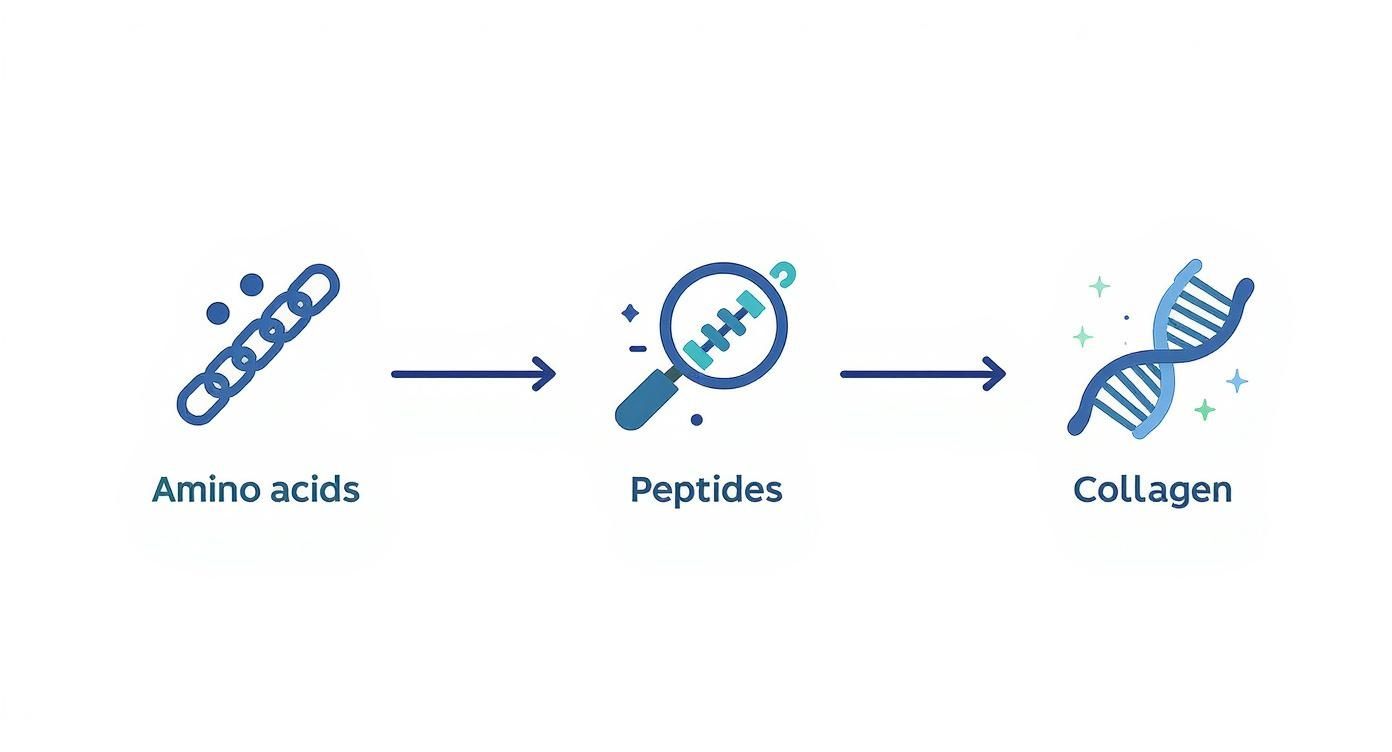
As you can see, amino acids are the building blocks. They link together to form peptides, and peptides are the foundation for essential proteins like collagen that keep skin looking firm and beautiful.
Signal Peptides: The Communicators
Signal peptides are probably the most famous players in the skincare game. Their main job is to act as messengers, sending signals that tell your skin to ramp up its production of collagen, elastin, and other proteins that are crucial for maintaining a firm, smooth look.
Basically, they're reminding your skin how to appear youthful. When you apply them topically, they help promote a complexion that looks more resilient and toned. This is exactly why ingredients like Palmitoyl Tripeptide-5 and Palmitoyl Pentapeptide-4 are staples in so many firming and appearance-enhancing products.
Carrier Peptides: The Delivery Specialists
Next up, we have carrier peptides. These guys are like a dedicated delivery service for your skin. Their primary function is to transport and stabilize essential trace minerals, like copper and manganese, which are vital for maintaining a vibrant and even-looking complexion.
Copper, for instance, is a key component in processes that support skin's brightness and smooth texture. Carrier peptides bind to these minerals and deliver them exactly where they need to go to be most effective. The most well-known example you'll find is Copper Tripeptide-1 (GHK-Cu).
It's no surprise that consumer interest in these powerful ingredients is exploding. The global market for peptide-based cosmetic raw materials was valued at around USD 3.5 billion by 2025 and is only expected to keep growing. This demand is fueled by just how effective signal and carrier peptides are in popular skincare formulas.
Enzyme Inhibitor Peptides: The Protectors
Think of enzyme inhibitor peptides as the guardians of your skin's structural proteins. Over time, certain enzymes in the skin can start breaking down collagen, leading to a loss of firmness and the appearance of fine lines.
These peptides step in to interfere with that process, helping to preserve the collagen you already have. By slowing down this natural degradation, they help your skin maintain a more youthful and resilient look for longer. You'll often find peptides derived from natural sources like soy or rice proteins playing this protective role.
Neurotransmitter-Inhibiting Peptides: The Smoothers
Finally, there are neurotransmitter-inhibiting peptides. You might have heard them called "Botox-like" peptides, but don't worry—their action is purely topical and cosmetic. These peptides work on the skin's surface to help soften the appearance of dynamic wrinkles and expression lines, like crow's feet and forehead lines.
They work by gently interrupting the signals that cause minor facial muscles to contract. This creates a temporary and subtle relaxing effect, making the skin appear smoother. Common examples you’ll spot on an ingredient list include Acetyl Hexapeptide-8 (often called Argireline) and Dipeptide Diaminobutyroyl Benzylamide Diacetate.
To make it even easier to spot these on an ingredient list, here’s a table breaking down the main categories.
A Guide to Common Cosmetic Peptides
This table sums up the key peptide families, what they do for your skin, and what names to look for on your product labels.
| Peptide Category | Cosmetic Function | Common Ingredient Examples |
|---|---|---|
| Signal Peptides | Send messages to support collagen and elastin for a firmer look. | Palmitoyl Tripeptide-5, Palmitoyl Pentapeptide-4 (Matrixyl), Myristoyl Pentapeptide-11 |
| Carrier Peptides | Deliver and stabilize trace minerals like copper to support a radiant appearance. | Copper Tripeptide-1 (GHK-Cu), Manganese Tripeptide-1 |
| Enzyme Inhibitor Peptides | Slow the breakdown of existing collagen to help preserve skin's firmness. | Peptides derived from soy, rice, or silk proteins; Trifluoroacetyl Tripeptide-2 |
| Neurotransmitter-Inhibiting Peptides | Help relax the look of expression lines for a smoother appearance. | Acetyl Hexapeptide-8 (Argireline), Dipeptide Diaminobutyroyl Benzylamide Diacetate (SYN-AKE) |
Getting familiar with these four main categories is your first step toward becoming a true expert on your own skincare.
For anyone ready to go deeper, check out our guide on the best peptides for anti-aging to see how these different types are put to work in powerful, effective formulas.
Visible Benefits of a Peptide-Rich Routine
Alright, now that we've covered the different types of peptides, let's get to the exciting part: connecting the science to the results you can actually see in the mirror. When you stick to a routine with well-formulated peptide products, you're giving your skin the support it needs to look its best. Think a complexion that appears smoother, feels more resilient, and just glows with beauty. These are the real-world improvements that have made peptides such a big deal in skincare.
And it's not just us saying it—the numbers back it up. The global market for peptide skincare products hit USD 1.2 billion in 2024 and is expected to keep climbing. That's a clear sign that people are seeing genuine value in adding these ingredients to their daily lineup.

Promoting a Smoother, More Refined Texture
One of the first things you'll likely notice is a major improvement in your skin's overall texture. By supporting the key proteins that give skin its structure, peptides help create a surface that looks and feels incredibly soft and even. Over time, any rough or uneven patches can start to take on a more refined, almost velvety quality.
This isn't an overnight effect, of course. It’s the result of consistent, daily application. But with continued use, your skin can look more polished and luminous, creating a perfect canvas for makeup or giving you that fresh-faced confidence to go without.
Enhancing the Look of Firmness and Elasticity
Peptides are famous for their ability to help your complexion look and feel firmer. By acting as messengers, certain peptides can signal your skin to maintain its youthful look, helping it appear more toned and supple. This is absolutely crucial for keeping that "bounce" and resilience we all want.
A peptide-rich routine supports the appearance of elasticity, helping your skin look lifted and contoured. This contributes to a more youthful overall appearance by minimizing the look of saggy or tired skin.
This targeted support helps skin hold onto its structural integrity, giving you a complexion that seems plump and robust. It's a key strategy for anyone wanting to maintain a vibrant, youthful look for the long haul.
Visibly Diminishing Fine Lines
One of the most popular benefits is how peptides can soften the appearance of fine lines and those pesky expression lines. Neurotransmitter-inhibiting peptides, for instance, work right on the skin's surface to gently relax the look of dynamic wrinkles, like the ones around your eyes and on your forehead.
The result is a smoother, less-creased appearance without having to go for more invasive procedures. It’s a cosmetic approach that focuses on beautifying the skin's surface for a more rested and serene look.
- Crow’s Feet: The appearance of fine lines around the eyes can be visibly softened.
- Forehead Lines: The look of horizontal lines across the forehead is minimized.
- Expression Lines: Smile lines and other dynamic creases appear less prominent.
Beyond just peptides, taking a holistic approach to a youthful appearance often means looking into other longevity-focused supplements that can support your overall wellness from the inside out, perfectly complementing your skincare.
Supporting a Plump and Hydrated Look
Finally, peptides are key players in promoting optimal skin hydration. They help support the skin’s natural barrier, which is responsible for locking in moisture and keeping your skin hydrated from within. When your barrier is strong, it prevents water loss, leading to a complexion that looks dewy and plump.
When your skin is properly hydrated, it naturally looks more radiant and full. This plumping effect also helps to further diminish the look of fine lines, giving your skin a fresh, beautiful glow that just radiates confidence.
How to Choose and Use Peptide Products
Walking down the skincare aisle can feel a little intimidating, but picking out the right peptide product doesn't have to be. Once you know what to look for, you can start choosing formulas that actually line up with your skin goals and learn how to use them for the best possible results. This guide will walk you through everything, from reading ingredient lists like a pro to pairing peptides with other powerhouse ingredients.
These days, peptides are everywhere, which means we have more options than ever. The market for peptide face creams alone is sitting at around $108 million as of 2025, and it’s only expected to keep climbing. This boom is happening because more and more of us are looking for skincare that’s backed by real science, and peptides deliver those visible improvements people are after. If you want to dive deeper into the numbers, you can read the full market research about peptide skincare.
Decoding the Ingredient List
The first thing you need to do is get comfortable reading the label. An ingredient list is a bit like a recipe—it tells you what’s inside, with the most abundant ingredients listed first.
When you're scanning the list, you want to see peptides listed somewhere in the first half. This is a good sign that the formula has a meaningful concentration, one that’s actually capable of delivering on its promises. If you spot peptides way down at the bottom of the list, chances are there’s not enough in there to make a real difference.
Pro Tip: Don't just look for the generic word "peptide." Keep an eye out for specific names like Palmitoyl Tripeptide-5, Acetyl Hexapeptide-8, or Copper Tripeptide-1. Seeing these technical names is your confirmation that the product contains targeted, high-performance actives.
Selecting the Right Product Format
Peptides show up in all sorts of products, from feather-light serums to rich, decadent creams. The best choice for you really comes down to your skin type and what feels good on your skin.
- Serums: These are typically lightweight, water-based formulas designed to deliver a potent punch of active ingredients. They sink in quickly, which makes them perfect for layering under other products. Serums are a fantastic choice for all skin types, especially if your skin leans oily or combination.
- Creams and Lotions: If your skin is on the drier side, these richer formulas are your friend. They combine peptides with hydrating and barrier-supporting ingredients like emollients and occlusives, giving dry or mature skin that extra dose of moisture it craves.
- Eye Creams: The skin around our eyes is incredibly delicate and needs special care. Eye creams are formulated specifically for this area and often feature neurotransmitter-inhibiting peptides to help soften the look of crow's feet.
If you want to get more specific about which ingredients to look for, check out our article on the 5 must-have anti-aging peptides for mature skin.
Pro Tips for Application
How you put on your peptide product can have a huge impact on your results. A few simple tweaks to your routine can make all the difference.
-
Start with a Clean Canvas: Always, always apply peptides to freshly cleansed skin. This clears away any dirt, oil, or makeup that might get in the way of the product absorbing properly.
-
Apply to Damp Skin: Here’s a great trick: apply your peptide serum or cream while your skin is still slightly damp from cleansing or toning. Think of damp skin as a sponge—it's primed to soak up whatever you put on it.
-
Consistency is Key: The visible peptides for skin benefits don't happen overnight; they're cumulative. To see the best results, you have to be consistent. Use your product every morning and night as a non-negotiable part of your skincare ritual.
Powerhouse Pairings for Enhanced Results
One of the best things about peptides is that they play so well with other ingredients. When you pair them smartly, you can seriously amplify their effects and get that radiant, beautiful-looking complexion you’re after.
Think about combining your peptides with these allies:
- Hyaluronic Acid: This is the ultimate moisture magnet. Paired with peptides, it creates a super-hydrating duo that leaves skin looking plump, dewy, and incredibly smooth.
- Vitamin C: As a powerful antioxidant, Vitamin C is a must for brightening the skin and helping it stand up to environmental stressors. Using a Vitamin C serum in the morning, followed by your peptide cream, is a recipe for a truly radiant glow.
- Niacinamide (Vitamin B3): Niacinamide is a superstar for supporting the skin barrier and refining texture. It works beautifully with peptides to help promote a clear, even-toned appearance.
By understanding how to choose the right product, apply it correctly, and pair it with other ingredients, you can confidently add the beautifying power of peptides to your routine and get that much closer to your skin goals.
Common Myths About Peptides in Skincare
The world of skincare is absolutely buzzing about peptides, but whenever an ingredient gets this popular, a lot of confusion and misinformation tags along for the ride. It’s easy to get lost in the noise of exaggerated claims and honest misunderstandings.
Let's clear the air. Setting the record straight is crucial if you want to add the beautifying power of peptides to your routine with confidence and realistic expectations. Understanding the truth behind the hype helps you appreciate what these incredible ingredients can really do for your skin's appearance.

Myth 1: All Peptides Do the Same Thing
This is probably one of the biggest misconceptions out there. Thinking all peptides are interchangeable is like believing every key can unlock every door—it’s just not how it works. In reality, the peptide world is incredibly diverse, with different types designed for very specific cosmetic jobs.
As we've already touched on, peptides fall into distinct categories, and each one has a unique mission:
- Signal Peptides: These are the communicators, encouraging a firmer-looking complexion.
- Carrier Peptides: Think of them as a special delivery service, helping to promote a vibrant, even skin tone.
- Neurotransmitter-Inhibiting Peptides: These are the smoothers, focused on softening the look of expression lines.
Grabbing a product with a generic "peptide" claim isn't enough. For the best peptides for skin benefits, you need to look for formulas that contain the specific types of peptides that match your skin goals.
Myth 2: You Should See Results Overnight
In our world of instant gratification, it's so tempting to want immediate changes from a new skincare product. But when it comes to peptides, patience isn't just a virtue—it's a necessity. Peptides aren't a quick fix; they're cosmetic ingredients that work their magic cumulatively over time.
They function by supporting your skin's own natural processes, and that requires consistency. While you might notice some hydrating effects right away, the more significant visible improvements—like a firmer appearance and smoother texture—typically require 4 to 12 weeks of diligent, twice-daily use.
The beautifying effects of peptides are built on a foundation of consistent, long-term application. They are designed to support your skin's appearance gradually, not deliver dramatic, overnight transformations. This commitment is key to achieving a complexion that looks truly radiant and revitalized.
Myth 3: Peptides Are a Replacement for Professional Procedures
While certain peptides are known for their ability to smooth the look of expression lines, it's really important to keep expectations in check. Topical skincare products work on the surface of the skin to improve its appearance. They are not, and should not be considered, an at-home substitute for cosmetic procedures performed by a licensed expert.
Peptides are powerful tools in your cosmetic arsenal for maintaining a beautiful, youthful-looking complexion. They can absolutely complement and support the results of professional treatments, but they operate in a completely different ballpark. Think of peptides as part of your daily fitness routine for your skin, whereas a procedure is more like a specialized session with a personal trainer.
Myth 4: More Peptides Are Always Better
It might seem logical to assume that a product packed with dozens of different peptides would be the holy grail, but that's not necessarily true. Skincare formulation is a precise science where synergy and concentration matter far more than just sheer quantity.
A well-crafted formula will use a select few peptides at effective, clinically studied concentrations. These peptides are often chosen because they work beautifully together to achieve a specific outcome. Flooding the skin with too many different types can actually be less effective than using a targeted, thoughtfully formulated product.
So, instead of getting wowed by a long list of peptides on the ingredient panel, focus on the quality and the specific actives that are right for you.
Got Questions About Peptides? We’ve Got Answers.
Diving into the world of peptides can definitely spark some questions. To make sure you feel totally confident adding them to your routine, we’ve put together answers to some of the most common things people wonder about these amazing little ingredients. Think of this as your quick-start guide to getting the most out of your peptide products.
How Long Does It Take to See Results?
When it comes to peptides, patience and consistency are your best friends. While some of the hydrating ingredients in a formula might give you that instant plump, satisfying feeling, the real magic of peptides for skin benefits happens over time.
You can generally start to see real, visible improvements in your skin's texture, firmness, and the look of fine lines after about 4 to 12 weeks of consistent, daily use. Just remember, peptides work by supporting your skin's own natural processes, so sticking with it is the key to seeing those beautiful results.
Can I Mix Peptides with Vitamin C or Retinoids?
Absolutely! Peptides are fantastic team players and get along beautifully with most other powerhouse skincare ingredients. In fact, layering them with other actives can seriously amplify their beautifying effects.
- With Vitamin C: Using peptides alongside an antioxidant like Vitamin C is a brilliant move for enhancing brightness and getting that radiant, even-toned look.
- With Hyaluronic Acid: This combo is a hydration powerhouse. Together, they help give your skin that plump, dewy, and thoroughly moisturized glow.
- With Retinoids: You can definitely use peptides and retinoids in the same routine. Peptides can help support the skin barrier, which makes them a perfect partner for a retinoid regimen. For the best results, always apply your peptide product to clean skin before layering on other serums or creams.
Are Peptides Okay for All Skin Types?
Yes, and that’s one of the best things about them. Peptides are generally very well-tolerated by just about every skin type out there, including sensitive, oily, and dry skin. Since they are just short chains of amino acids—which your skin already has—they are typically non-irritating cosmetic ingredients.
Of course, the gentleness of any product really comes down to the entire formula. Even with a gentle hero ingredient, things like fragrances or certain preservatives could be an issue for highly sensitive skin. It's always a smart move to patch-test any new product on a small, out-of-the-way spot before going all-in. This simple step just makes sure the whole formula plays nice with your skin, so you can use it with total confidence.
At Skin Perfection, our passion is creating high-performance skincare that delivers visible, beautiful results. You can explore our curated selection of peptide-infused serums and creams, or find inspiration for your own DIY creations with our premium lotion-making supplies. Discover the perfect formula to support your skin goals at https://www.naturalorganicskincare.com.