

 Buy with Prime



You're probably here because your skin feels caught between two needs. You want a serum that feels light, hydrates fast, and helps your skin look smoother over time, but every product page seems to promise far more than a cosmetic should promise.
That's where a peptide serum with hyaluronic acid gets interesting. It sits in the middle ground between instant comfort and gradual visible improvement. The key is knowing what it can realistically do, what the evidence shows, and where marketing language starts to drift outside safe cosmetic boundaries.
Skin Perfection sells skincare products and lotion making supplies, and our products are intended to beautify the skin. We follow FDA rules on cosmetic labeling and avoid writing claims that suggest a product fixes, repairs, or heals skin. We also follow Etsy's medical claims policy, which prohibits explicit or implied claims that an item can treat, mitigate, diagnose, or cure serious disease or medical conditions, treat sexual dysfunction or impotence, act like an analgesic, antibiotic, antiseptic, antiviral, anti-inflammatory, steroid, vaccine, or decongestant, function like a prescription drug, or be presented as FDA approved. The FDA also states that a cosmetic becomes a drug when it's intended to treat or prevent disease or affect the structure or function of the body, and that cosmetic labeling doesn't require pre-market FDA approval or an FDA list of approved cosmetic claims (FDA cosmetic labeling guide, FDA cosmetic labeling claims, Etsy medical claims policy).
Table of Contents
- What a Peptide Serum With Hyaluronic Acid Actually Is
- How Peptides and Hyaluronic Acid Work Together
- Visible Benefits for Aging Skin Over Time
- How to Use Peptide Serum With Hyaluronic Acid Safely
- Common Misconceptions About Peptide and HA Serums
- Who Should Consider This Routine and When to Pause
What a Peptide Serum With Hyaluronic Acid Actually Is
At 7 a.m., this is what usually happens. You wash your face, your skin feels a little tight, and you want one product that won't feel greasy under sunscreen but also won't disappear and do nothing. That's the lane where a peptide serum with hyaluronic acid usually fits.
It's a cosmetic serum designed to improve the look and feel of skin through hydration and surface-level smoothing. It isn't a drug, and it shouldn't be described as something that fixes, repairs, or heals skin.
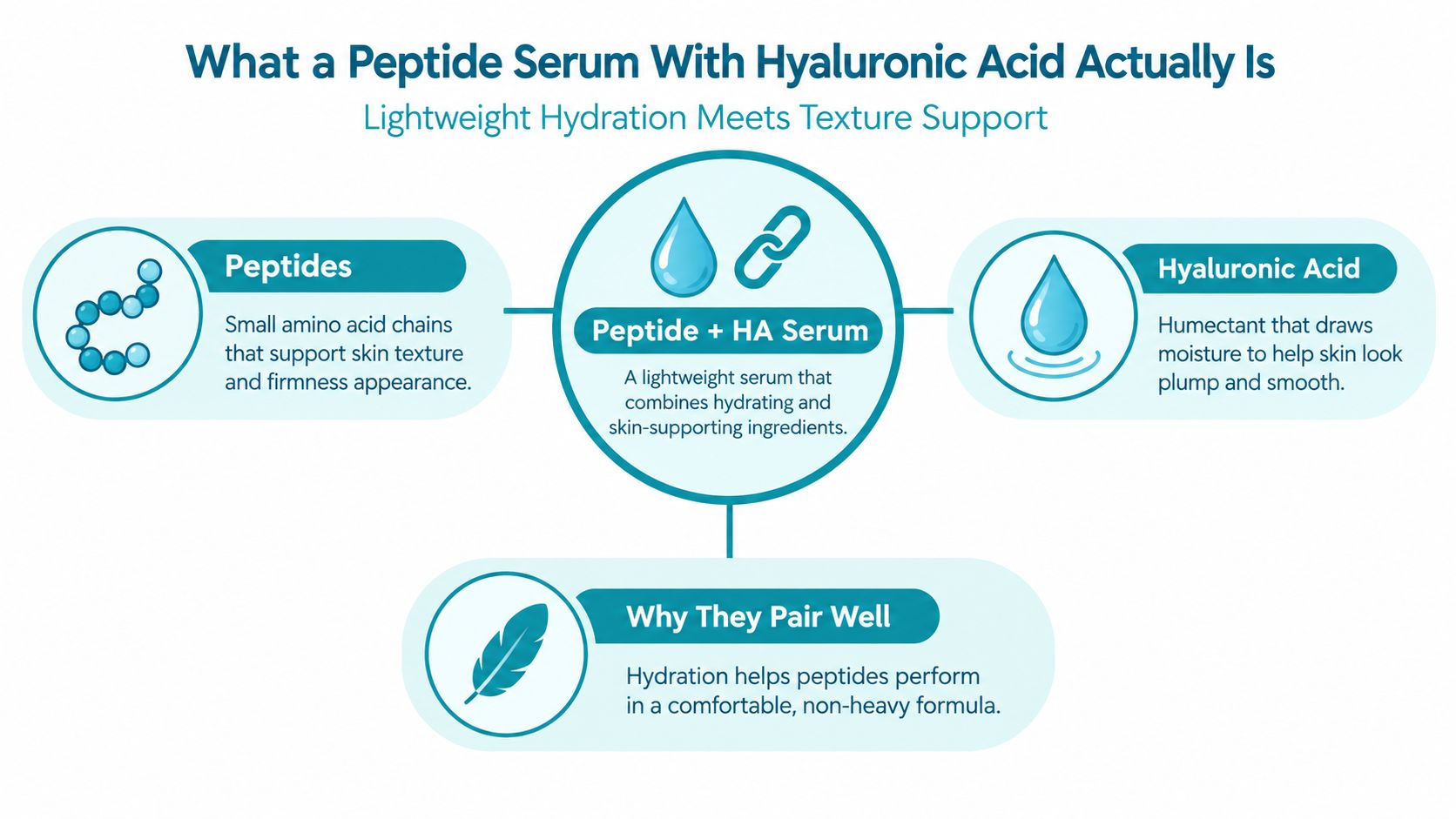
The two parts of the formula
Peptides are short chains of amino acids. In skincare, they're commonly used to support the appearance of smoother texture and firmer-looking skin.
Hyaluronic acid is a humectant. That means it helps attract and hold water so skin looks more comfortable, more hydrated, and often a little fuller on the surface.
If you've been trying to decide between a water-light serum and a richer face product, it can help to think in terms of finish. A peptide and HA serum usually gives the slip and quick absorption of a serum, while something like a nourishing face oil can make more sense when you want extra softness and an occlusive layer over drier areas.
What people often expect, and what's more realistic
A lot of confusion starts when shoppers read words like “firming,” “plumping,” or “age-defying” and assume the product is acting like a procedure. It isn't. A cosmetic can improve the look of texture, dryness, and visible smoothness, but that's different from making medical or structure-changing claims.
Practical rule: If a product is sold as a cosmetic, expect beautifying benefits such as hydration, softness, and a smoother appearance, not body-altering effects.
That's also why careful education matters. If you want a deeper overview of peptide basics before comparing formulas, Skin Perfection's guide to what peptide serum is is a useful starting point.
A good mindset is simple. Use this kind of serum because you want skin to look more hydrated, smoother, and more refreshed. Don't buy it expecting it to function like a drug or a procedure.
How Peptides and Hyaluronic Acid Work Together
The easiest way to understand this pairing is to separate speed from timeline.
Hyaluronic acid tends to give the quick payoff. Peptides tend to ask for more patience. When formulators combine them, they're trying to give skin an immediate cosmetic boost plus a slower, more cumulative improvement in appearance.
Hyaluronic acid handles the fast comfort layer
Think of hyaluronic acid as the moisture manager in the formula. In a 40-subject photoaging study, a topical hyaluronic acid serum increased immediate corneometry by 134% after application, and hydration remained 55% above baseline at week 6. The same trial reported week-6 improvements in smoothness (64%), plumping (60%), hydration (63%), fine lines (31%), wrinkles (14%), and overall global assessment (43%) (clinical HA serum study).
That helps explain why HA serums often feel rewarding right away. Skin may look less dull and feel less tight before you see broader texture changes.
Peptides tend to build the slower part
Peptides usually work on a longer cosmetic timeline. A randomized, double-blind, placebo-controlled peptide study found that twice-daily use for 12 weeks significantly improved expression fine lines, wrinkles, and overall skin health. In another peptide serum usage study, 89.6% of subjects improved by week 12, with 52% reaching moderate-to-marked global improvement (peptide topical review).
That's why a peptide serum with hyaluronic acid can feel more complete than either ingredient alone. One ingredient helps with hydration and surface plumping now. The other is more about gradual visible refinement.
Think of it like painting a wall after you've smoothed the surface. Water balance helps skin look better quickly, while peptides are usually part of the longer cosmetic support story.
If you want a broader look at how these ingredients are often discussed together in routines, this comparison of peptide, hyaluronic acid, and collagen skincare approaches can help frame the differences.
For DIY formulators, Sodium Hyaluronate Powder Pure Hyaluronic Acid is a cosmetic-grade powder used to make water-based serums and creams. Its snapshot notes a High-Molecular-Weight NASHA grade with a stated molecular weight of 800-1500 Daltons, and typical DIY use at 0.1–2% for hydrating serums or thicker gels.
Visible Benefits for Aging Skin Over Time
If your main goal is aging-skin support, the visible payoff usually comes in layers, not all at once. First you notice hydration. Then you may notice that fine lines look softer, rough patches look calmer, and makeup sits better. The harder question is whether a combined formula outperforms using either ingredient alone.
That's where the evidence gets both helpful and incomplete.
What combined studies do show
A 12-week clinical study of a hyaluronic acid-based serum paired with a peptide-rich cream reported that 17 women with a mean age of 52 completed the trial. By week 12, the regimen improved facial skin texture in 79% of participants, lines and wrinkles in 50%, and skin tone in 44%. Neck improvements were also reported in texture (68%), tone (48%), and lines and wrinkles (36%). User satisfaction was high, with 88% saying skin looked more radiant and 82% saying it looked firmer, and no product-related adverse events occurred (12-week HA and peptide regimen study).
A separate prospective randomized, double-blind, placebo-controlled trial looked at a serum containing fractionated hyaluronic acid, peptides, and antioxidants for neck photodamage. It included 31 healthy subjects with moderate-to-severe neck wrinkling and reported improvement in wrinkles, laxity, pigmentation, erythema, dryness, and texture. The authors found that 63% of subjects using the active serum and cream showed improvement in neck skin aging (neck photodamage trial).
What combined studies do not answer cleanly
Here's the part most product roundups skip. Existing evidence still leaves a gap around whether a peptide serum with hyaluronic acid in one bottle adds meaningful benefit over HA alone for most users.
One review of this evidence gap notes that a 2022 study showed improvements from an HA-based serum paired with a peptide-rich cream, but it tested a two-product routine rather than a single combined serum. The same discussion points out that even when peptide serums show cosmetic benefit on their own, that still doesn't fully answer the incremental value of combining peptides and HA in one formula versus layering separate products (evidence-gap discussion).
A combined formula may be convenient and cosmetically elegant. The comparative proof that it always beats separate use still isn't settled.
That doesn't make the category weak. It just means your expectations should stay grounded. If you'd like a deeper read on timeline expectations, Skin Perfection's article on how long peptides take to work is worth bookmarking.
For readers who want ingredient background rather than product roundup hype, this overview of best research peptides for skin anti aging can help you understand why peptide selection matters. Daily consistency, a basic moisturizer, and enough time usually matter more than chasing a dramatic overnight result.
How to Use Peptide Serum With Hyaluronic Acid Safely
You wash your face, apply a hydrating serum, and ten minutes later your skin feels tight instead of comfortable. In many routines, the problem is not the peptide and HA serum itself. The problem is placement, too many competing actives, or treating a humectant like a complete moisturizer.
The safest routine is the one you can repeat without irritation.
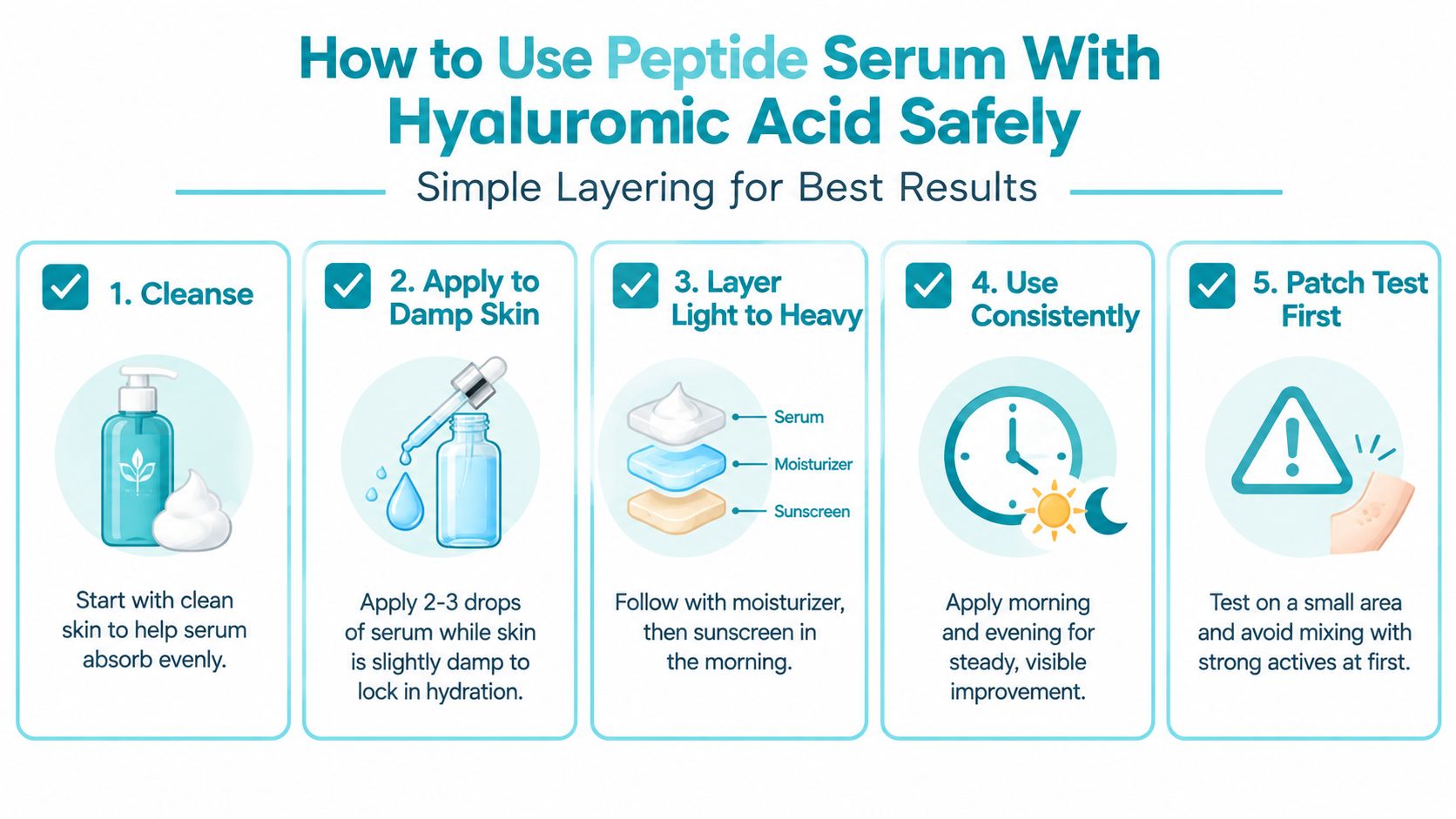
A clear order that works for many routines
Skin care layering works like getting dressed for the weather. Light, water-based steps usually go on first, and creamier products go on after to help hold comfort in place.
- Cleanse first. Start with clean skin so the serum spreads evenly instead of mixing with leftover sunscreen, oil, or makeup.
- Apply to slightly damp skin. Hyaluronic acid binds water, so a faintly damp surface often helps it feel better and sit more comfortably.
- Use a small amount. A thin layer is usually enough for the face and neck. More product does not automatically mean better cosmetic results.
- Follow with moisturizer. This helps reduce water loss. It also matters because HA attracts water, but it does not replace the softening and sealing role of a cream or lotion.
- Add sunscreen in the morning. That keeps the routine practical and protects the overall look of the skin you are trying to maintain.
If layering order still feels unclear, this guide on how to use hyaluronic acid in a skincare routine explains where HA products usually fit.
Morning and evening use
Some routines handle twice-daily use well. Others work better with one consistent application a day, especially if you already use exfoliating acids or retinoid-style products.
- Morning use: Cleanser, peptide and HA serum, moisturizer if needed, then sunscreen.
- Evening use: Apply the serum after cleansing, then follow with a lotion or cream that feels more cushioning.
- If you use acids or retinoid-style actives: Add one change at a time. That makes it easier to tell whether dryness, stinging, or pilling comes from the serum itself or from the combination.
A combined peptide-and-HA serum is usually a support step, not the center of an aggressive routine. You will often get better cosmetic results from a calm routine you can repeat than from a crowded shelf used inconsistently.
Patch testing and routine limits
Patch testing is a smart starting point, especially if the formula includes a new peptide blend, added fragrance, or multiple botanical extracts. Try a small area first, then expand use if your skin stays comfortable.
Pause if repeated use brings stinging, persistent redness, or a hot, overloaded feeling. A well-formulated peptide serum with hyaluronic acid should fit into your routine without drama. If it only feels tolerable when every other product is removed, simplify the routine and reintroduce products one by one.
Common Misconceptions About Peptide and HA Serums
This category gets marketed with a lot of borrowed language from procedures, and that's where confusion starts.
Myth one: it works like Botox
Topical peptides aren't injectables. A cosmetic serum can help skin look smoother, more hydrated, and more refined over time, but it can't replicate the effect of a procedure that works through a completely different route.
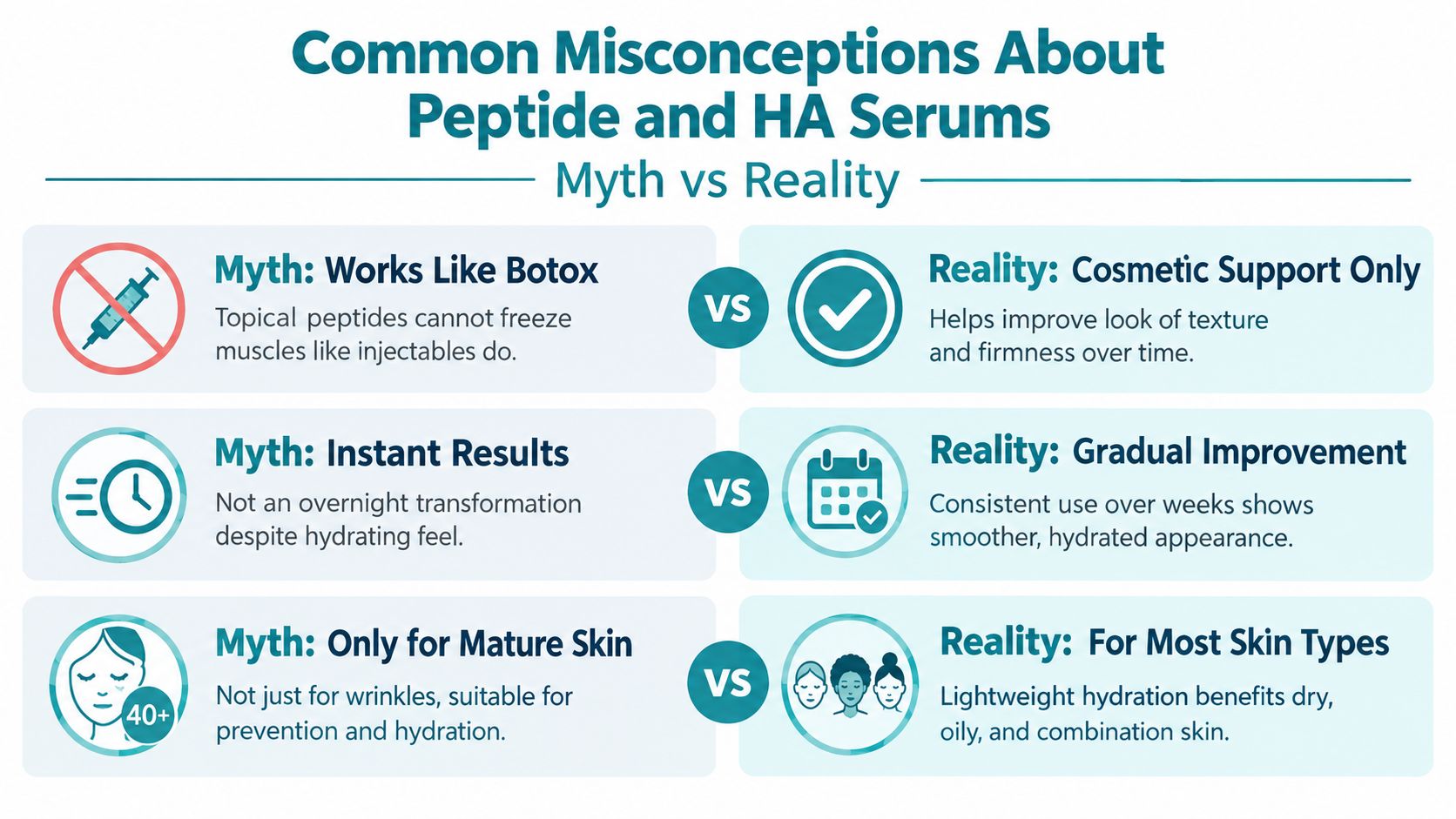
That difference isn't just scientific. It's also regulatory. The FDA draws a line between cosmetics that beautify and products intended to affect body structure or function. If you're shopping carefully, that line matters.
Myth two: stronger is always better
Many people assume that more layers, higher percentages, or more frequent use will always create faster results. In practice, skin often responds better to steady, well-tolerated use.
A peptide and HA serum is usually meant to be a background player in your routine, not an aggressive product you push until your skin protests. If your face feels sticky, tight, or irritated, the answer usually isn't to add even more active products on top.
Myth three: hydrating serums are only for dry or mature skin
Oily and combination skin can still be dehydrated. A well-formulated hyaluronic acid serum is often light enough for people who dislike heavy creams but still want a smoother surface feel.
Here's the more balanced way to think about it
- If your skin feels tight after cleansing: This category may help with comfort and surface plumping.
- If your skin looks dull or textured: The hydration piece may improve how skin looks day to day.
- If you're expecting instant line erasure: That expectation will probably disappoint you.
For more skincare myth-checking in the same evidence-first spirit, Skin Perfection's guide to debunking skincare true or false claims is a useful follow-up.
Good cosmetic skincare usually looks boring on paper. It hydrates well, layers easily, and gets used consistently.
Who Should Consider This Routine and When to Pause
This kind of routine makes sense for people who want more hydration, smoother-looking texture, and a fresher appearance without moving into a heavy cream or a complicated multi-step system. It can also suit many skin types when introduced gradually, especially if you prefer lightweight serums over rich balms.
It's a practical fit when your skin goal is cosmetic improvement, not dramatic intervention. That includes people who notice dehydration lines, uneven surface feel, or makeup that catches on dry areas.
A pause makes sense when your skin is sending clear signals that it wants less, not more. That can include persistent irritation, a burning sensation, or a routine that already includes multiple strong exfoliating steps. If you've recently had an in-office procedure, keep your aftercare aligned with the guidance you were given and avoid improvising with new products until your skin is comfortable again.
The best users of peptide serum with hyaluronic acid are usually the least dramatic about it. They want a product that fits into daily life, respects cosmetic boundaries, and improves how skin looks over time without pretending to be something else.
Skin Perfection offers skincare products and lotion-making supplies for people who want hydrated, smoother-looking skin and for formulators who want more control over their routines. If you're exploring peptide and hyaluronic acid skincare from a cosmetic, evidence-aware perspective, visit Skin Perfection to explore ready-made options and DIY ingredients.