

 Buy with Prime

Vitamin A
-
Best Seller

Ageless Advanced Peptide Moisturizer
Anti-Aging Moisturizer
-

Eye Bright Argireline Cream
Anti-Aging Eye Cream
-
Sale

2.5% Retinol Moisturizer
Reveal a Fresh Comlpexion
-
Sale

2.5% Retinol Serum for Face, Neck & Décolleté | Age-Defying Formula
Redefines Complexions
-

Clear Skin Oil-Free Moisturizer
Non Greasy Gel Hydration
-
Sold out
Sale
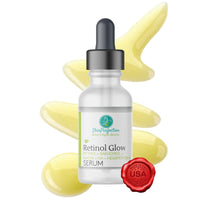
Retinol Glow Radiant Renewal Serum
Redefines Complexions


What Is Vitamin A in Skincare?
Vitamin A in skincare is a family of related ingredients, the retinoids, plus their plant-based precursor, beta-carotene. Retinoids such as retinol are among the most studied ingredients for the look of fine lines, rough texture, and uneven tone. Beta-carotene, the orange pigment in carrots and sea buckthorn, is mainly an antioxidant on the skin; the body converts it to vitamin A when you eat it.
 EWG Skin Deep rating for Beta Carotene (Vitamin A)
Vitamin A Quick Facts
| Property | Details |
|---|---|
| INCI names | Retinol; Retinyl Palmitate; Retinyl Acetate; Retinal; Beta-Carotene; Daucus Carota Sativa (Carrot) Seed Oil |
| Common names | Vitamin A, retinoids, retinol, retinaldehyde, provitamin A, b-carotene |
| Source | Retinoids are made synthetically for purity. Beta-carotene comes from carrots, algae, palm fruit, and sea buckthorn, or is made by fermentation |
| Form | Retinol: pale yellow oil or crystals, usually supplied pre-dissolved. Beta-carotene: deep orange powder or oil dispersion |
| Solubility | Oil soluble (both retinoids and beta-carotene) |
| Typical usage rate | In the EU since 2024: no more than 0.3% retinol equivalent in face and other leave-on products and 0.05% in body lotions. Kafi and colleagues' study (below) used 0.4% retinol. For trade-name retinol blends, follow the supplier's rate |
| pH range | Retinol is most stable at about pH 5-6 |
| Skin types | Normal, oily, combination, and mature skin; dry and sensitive skin should start low and slow |
The Vitamin A Family, From Gentle to Strong
Skin cells respond to vitamin A only once it is converted to retinoic acid. Every step closer to retinoic acid makes the ingredient stronger and also more likely to cause dryness or irritation.
| Form | Steps to retinoic acid | Strength | Notes |
|---|---|---|---|
| Beta-carotene | Converted in the body from diet; little conversion on the skin | Gentlest | Antioxidant; gives products a natural orange color |
| Retinyl palmitate or acetate | Three | Mild | Stable, gentle, slower results |
| Retinol | Two | Moderate | The most researched cosmetic form |
| Retinal (retinaldehyde) | One | Strong | Faster acting cosmetic form |
| Retinoic acid (tretinoin) | None | Strongest | Prescription drug, not a cosmetic |
How Vitamin A Works on the Skin
Retinoids speed up the skin's natural renewal cycle, so fresher cells reach the surface sooner, and they signal the dermis to make more of its support matrix. The result people notice is smoother texture, more even-looking tone, and softer-looking fine lines over several months.
The evidence is strong for retinol. In a randomized, double-blind, vehicle-controlled study, Kafi and colleagues (2007) had 36 elderly adults (average age 87) apply a 0.4% retinol lotion to one arm and a plain lotion to the other, up to three times a week for 24 weeks. Fine wrinkle scores improved significantly more on the retinol arm (-1.64 vs -0.08). In skin samples, they measured more glycosaminoglycans, the water-holding molecules of the dermis, and more procollagen I staining on the retinol side.
Beta-carotene works differently. Most of its skin research is about eating it. In a 12-week supplementation study by Stahl, Sies and colleagues (2000), volunteers who took 25 mg of mixed carotenoids a day had significantly less redness after a solar simulator light test by week 8, with a larger effect when vitamin E was added. Topically, beta-carotene and carrot seed oil act as antioxidants and add a warm color to oils and balms; they do not do the same job as retinol.
How to Use Vitamin A
- Use retinol at night, starting two or three nights a week, and build up to nightly as your skin adjusts.
- Apply a pea-sized amount to clean, dry skin, then follow with moisturizer. Start around the eyes with an eye-specific formula.
- Expect some dryness or flaking in the first 2-4 weeks. Judge results at 12 weeks or more.
- Wear broad-spectrum sunscreen every morning. Retinoids make fresh surface skin more vulnerable to sun.
- Pair with hydrators, peptides, and niacinamide. Use AHAs and strong vitamin C on alternate nights or in the morning.
Formulating Notes
- Retinol breaks down with light, air, and heat. Add it to the oil phase at cool-down, below 40°C (104°F), and work quickly with minimal air exposure.
- Protect it with an oil-soluble antioxidant such as tocopherol (vitamin E) and package in airless or opaque bottles.
- Keep the final pH around 5-6 for stability.
- Beta-carotene and carrot seed oil are oil soluble and color the formula orange; a little goes a long way.
Who Vitamin A Suits
Retinol suits most adult skin types, especially mature skin and skin with rough texture or uneven tone. If you have sensitive or dry skin, patch test first (inner arm, 24 hours), start at the lowest strength and frequency, and work up slowly. A gentler path is a retinyl ester or a retinol alternative such as bakuchiol. Retinoids are generally avoided during pregnancy and breastfeeding; ask your physician.
Frequently Asked Questions
Is vitamin A the same as retinol?
Not exactly. Vitamin A is the family name, and retinol is one specific form of it. Others include retinyl palmitate, retinal, and prescription retinoic acid.
What is the difference between beta-carotene and retinol?
Beta-carotene is a plant pigment the body turns into vitamin A when you eat it; on the skin it mainly acts as an antioxidant. Retinol is a ready-made form of vitamin A that skin converts to its active form, which is why it has a far bigger effect on the look of fine lines and texture.
Which form of vitamin A is best for skin?
Retinol is the most researched cosmetic form and a good starting point for most people. Retinyl esters are gentler, and retinal is stronger and faster acting.
How often can I use vitamin A on my skin?
Start two or three nights a week and build up to nightly as your skin adjusts. If dryness or flaking lasts, go back to fewer nights.
Can I use vitamin A and vitamin C together?
Yes, but usually at different times. Use vitamin C in the morning under sunscreen and retinol at night.
Why does retinol make my skin peel?
Retinol speeds up surface renewal, so some dryness and flaking in the first 2-4 weeks is common. Use a moisturizer, cut back the frequency, and build up slowly.
Can I use vitamin A while pregnant?
Retinoids are generally avoided during pregnancy and breastfeeding. Talk with your physician, and consider a gentler alternative such as bakuchiol.
How long does retinol take to work?
Allow at least 12 weeks of regular use. In the study on 0.4% retinol, fine lines were scored after 24 weeks.
Shop Vitamin A Products
Try our 2.5% Retinol Serum or the Retinol Glow Radiant Renewal Serum, which pairs retinol with bakuchiol and niacinamide. Learn more on our retinol and sea buckthorn pages, and read How to Combine Retinol and Peptides Safely at Home.
Sources
- Kafi R, Kwak HS, Schumacher WE, et al. Improvement of naturally aged skin with vitamin A (retinol). Arch Dermatol. 2007;143(5):606-612. doi:10.1001/archderm.143.5.606
- Stahl W, Heinrich U, Jungmann H, Sies H, Tronnier H. Carotenoids and carotenoids plus vitamin E protect against ultraviolet light-induced erythema in humans. Am J Clin Nutr. 2000;71(3):795-798. Abstract
These statements have not been evaluated by the Food and Drug Administration. These products are not intended to diagnose, treat, cure, or prevent any disease.
About the Author
Written by Kari Thomas, cosmetic formulator and founder of Skin Perfection.