

 Buy with Prime
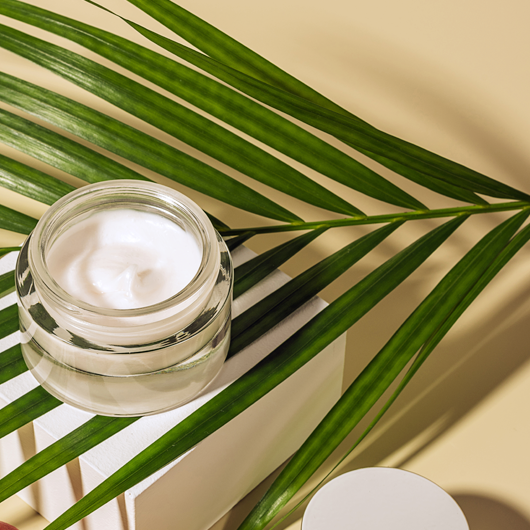


Vitamin A oil is an umbrella term for three very different products, topical cosmetic oils, nutritional fortified oils, and fish liver oils. For adults, the recommended intake is 900 mcg RAE per day for men and 700 mcg RAE per day for women, with a 3,000 mcg tolerable upper intake level for preformed vitamin A (NIH Office of Dietary Supplements).
If you're standing in front of a label, a serum shelf, or a DIY ingredient list and wondering which one matters for skin, hair, or nutrition, that confusion is normal. The term sounds simple, but the chemistry, the use case, and the safety rules change a lot depending on whether the oil is meant to sit on skin, fortify food, or supply dietary vitamin A.
Table of Contents
- What Vitamin A Oil Actually Means
- A Brief History of Vitamin A
- Forms and Concentrations You Will See on Labels
- How Vitamin A Works in the Skin
- Cosmetic Benefits for Skin, Hair, Lashes, and Brows
- Safety, Irritation, and the More-Is-Better Myth
- Pairing Vitamin A Oil with Other Skincare Actives
- DIY Formulation, Application Tips, and Troubleshooting
What Vitamin A Oil Actually Means

The fastest way to avoid a bad purchase is to separate three categories before you do anything else. Topical cosmetic oils contain a retinoid, such as retinyl palmitate or retinol, dissolved in a carrier oil. Nutritional fortified oils are meant to deliver vitamin A through food. Fish liver oils are traditional dietary oils that naturally contain vitamin A and are taken by mouth, not applied like a serum.
Practical rule: if the label is for the face, think formulation. If the label is for a cooking oil, think nutrition. If it's a fish liver oil, think supplement.
That distinction matters because the same word, vitamin A oil, can point to ingredients with very different strengths and goals. A cosmetic oil is built around stability and skin feel, while a fortified oil is built around dose consistency in a food matrix. A fish liver oil sits in a third bucket entirely, and advice about a facial product won't map cleanly onto a food fortifier.
For label-reading, start with a simple decision tree. If the ingredient list names retinyl palmitate, retinol, or retinal, you're probably looking at a topical cosmetic ingredient. If the context is edible oil and fortification, the purpose is nutritional. If the product is sold as fish liver oil, the goal is dietary intake, not skincare.
For anyone learning to read INCI lists, the label itself tells you a lot more than the marketing panel. A good companion guide is how to read a skincare label INCI, because the ingredient name is usually more reliable than the front-of-pack promise.
A Brief History of Vitamin A
Vitamin A didn't start as a cosmetic story. It was first recognized as an essential dietary factor in 1913, its chemical nature was established in 1933, and the first synthesis followed in 1947. The industrial turning point came in 1948, when F. Hoffmann-La Roche produced the first kilograms of synthetic vitamin A acetate, which made large-scale supply possible without relying on natural extraction (historical review).
Why that mattered for formulators
Before synthetic production, vitamin A depended on natural sources, which made standardization harder. Once synthetic material became available, formulators could work with raw materials that were more predictable in purity, supply, and potency. That shift is a big reason modern retinoid products are usually built around stabilized molecules instead of crude animal-derived concentrates.
The historical arc also explains why “natural” and “effective” aren't the same conversation here. A source can be traditional and still be hard to standardize. A synthetic ingredient can be chemically defined, reproducible, and easier to build into a consistent product. In skincare, consistency matters because retinoids are reactive ingredients and small changes in storage, packaging, and exposure can change how the formula behaves.
A useful way to think about it is like this. Early vitamin A was discovered as a nutrient. Mid-century chemistry turned it into a manufacturable ingredient. Modern cosmetic science uses that industrial foundation to create oil-based systems that are far easier to dose and blend than old-style extraction-based materials.
For anyone comparing carrier systems, it helps to look at the oil around the active too. A practical overview of the best carrier oils for skin shows why formulators choose some bases over others when they need glide, stability, and a pleasant finish.
Forms and Concentrations You Will See on Labels
Cosmetic vitamin A lives on a spectrum, and the label usually tells you where the product sits. Retinyl palmitate and retinyl acetate are esters, so they're generally gentler and less immediately active. Retinol sits closer to the workhorse end of the range, retinal or retinaldehyde moves one step closer to the active form, and tretinoin is the prescription end of the ladder. That ladder matters because potency and irritation tend to rise together.
Common retinoid forms in cosmetic oils
| Form | Typical Oil Concentration | Conversion Steps to Active | Irritation Potential |
|---|---|---|---|
| Retinyl palmitate | Low, usually used as a gentler oil phase active | More than retinol | Lower |
| Retinyl acetate | Low, often in stabilized oil blends | More than retinol | Lower |
| Retinol | Varies by formula | Fewer steps than esters | Moderate |
| Retinaldehyde | Varies by formula | One step closer than retinol | Higher |
| Tretinoin | Prescription use, not a cosmetic oil standard | Already active | Highest |
That table is the practical lens. The marketing lens often says “vitamin A,” but the actual question is which molecule the formula uses. A retinyl ester in oil is usually chosen for a slower, more forgiving experience. A retinol serum asks for more tolerance. Prescription tretinoin is a different category and shouldn't be treated like a casual cosmetic oil.
A commercially relevant example is HydroGlow Anti-Aging Night Mask, which shows how a night formula can focus on hydration-support ingredients such as hyaluronic acid, polyglutamic acid, jojoba, and squalane rather than relying on a retinoid-heavy profile. That kind of formula choice matters when someone wants a softer nighttime routine instead of a strong retinoid product.
Reading cue: if the label only says “vitamin A,” you still don't know the strength. You need the actual INCI name to judge the formula.
For a deeper walk-through of ingredient names and category differences, the guide on retinol serum helps put retinoids in practical context without making the term feel mysterious.
How Vitamin A Works in the Skin

Vitamin A works well in topical products because it's lipid-soluble. That means it behaves a bit like olive oil in water, it wants a fat-friendly environment, not a watery one. In a skin formula, the oil carrier helps the retinoid travel more comfortably through the product and into the skin's outer layers.
The cellular idea in plain language
Think of a retinoid as an instruction manual for skin cells. Once it gets into the cell environment, it binds to nuclear receptors and influences gene expression, which is one reason these ingredients are linked to changes in cell behavior over time. The effect isn't instant, and it doesn't work like a surface stain. It works more like changing the settings on the machine.
That's where the lipid carrier matters again. Oil can help protect a reactive molecule from heat, light, and oxygen, which is why packaging and storage are so important. If the ingredient degrades, the formula loses potency before it ever reaches your skin.
Vitamin A oil is not “just oil with a vitamin in it.” It's a delivery system for a molecule that's sensitive to its environment.
This is also where people confuse topical and dietary use. Eating vitamin A supports health through nutrition, while putting a retinoid on skin is a cosmetic application built around surface delivery and cell signaling. The mechanism overlaps in chemistry, but the user experience is very different.
If you want to see how that idea gets discussed in broader anti-aging skincare, the overview at what actually works for anti-aging skin is a good companion read because it keeps the discussion on cosmetic function, not exaggerated promises.
Cosmetic Benefits for Skin, Hair, Lashes, and Brows
Vitamin A products are popular because people want visible, cosmetic changes without making their routine complicated. On skin, the usual appeal is a smoother-looking surface, a more even-looking tone, and a softer appearance of fine lines. Those are appearance goals, not medical ones, and that's the right frame for topical retinoids.
What readers usually notice first
The first change is often texture. When a formula is tolerated well, skin can look less rough and feel more refined under moisturizer or makeup. The next thing people tend to watch is tone, because retinoid routines are often chosen by people who want the complexion to look more uniform over time.
Hair, lashes, and brows are trickier because the claim-safe language has to stay cosmetic. A vitamin A oil used around the hairline or brows is better described as supporting a healthy-looking environment than as “making hair grow.” The same goes for lash and brow routines. The focus is on conditioning, not treatment.
If you're comparing topical approaches with in-office or injection-based beauty services, a resource like vitamin injection treatment shows how different the category really is. A topical cosmetic oil and an injectable service are not interchangeable in method, access, or expectation.
Expectation check: lashes and brows can look better conditioned, but topical oils aren't a shortcut to dramatic density.
For readers who explore brow and lash products, the practical question is less “does it cure thinning?” and more “does it fit into a routine that keeps the area comfortable and presentable?” That's a much better cosmetic standard.
The same logic applies to scalp use. A light oil with a vitamin A derivative may fit into a low-friction grooming routine, but the main goal is usually appearance, manageability, and comfort. If you want more targeted cosmetic reading on lash routines, how to make lashes thicker keeps the framing on appearance and routine design rather than overclaiming.
Safety, Irritation, and the More-Is-Better Myth
A bigger dose of vitamin A does not automatically produce better skin results. In nutrition, the upper limit for preformed vitamin A is 3,000 mcg per day for adults (NIH Office of Dietary Supplements), and the NHS warns that long-term intake above 1,500 mcg/day may affect bones (NHS vitamin A guidance). That is the first reason to read labels carefully.
Oral excess and topical irritation are not the same problem
Oral excess is about intake. Topical irritation is about how skin responds to a formula. A person can use a product correctly and still get dryness, peeling, or redness if the concentration is too strong for their barrier. That reaction is not a cue to keep going harder, it is a signal to slow down.
The adjustment period is often called retinization. In practice, it means the skin may feel tight, look flaky, or become more reactive while it adapts. The myth begins when every reaction gets treated as proof that the product is “working.” Sometimes the product is too strong.
A useful rule is simple. Use it less often before you try using more often. If the skin stays red, stings, or keeps peeling after frequency is reduced, pause and reassess the formula rather than increasing the dose. That approach is safer than chasing faster change.
A similar caution applies to acne routines built around stronger actives. Some acne treatment products are designed around a different ingredient strategy, so they should not be judged by the same expectations as a vitamin A oil.

Pairing Vitamin A Oil with Other Skincare Actives
Vitamin A works best in a routine that leaves it room to do its job. That usually means layering, not mixing everything together in one jar or one night. The cleanest pattern is often vitamin C in the morning, retinoids at night, because that separates antioxidant support from a reactive nighttime step.
Compatibility usually comes down to timing
Vitamin C pairs well in a routine, but I'd keep it in the morning and the vitamin A product for evening use. AHAs and BHAs can be useful, but they add barrier stress, so I'd stagger them rather than stack them on the same night as a retinoid. Niacinamide is generally a friendlier match and can sit in the same routine comfortably. Peptides are usually complementary. Benzoyl peroxide is the one many people need to treat carefully because it can deactivate retinoids if they're used at the same time.

The practical method is simple. Build a routine around one main active at a time, then add support ingredients around it. That keeps the skin calmer and makes it easier to tell what's helping, or what's causing irritation.
Routine logic: if two ingredients compete, separate them. If two ingredients support the barrier, they can often live together.
That same logic works whether you're a consumer or a formulator. Don't ask, “What can I cram into one step?” Ask, “What can I separate so each ingredient has a cleaner job?” That question usually leads to better tolerance and fewer bad reactions.
DIY Formulation, Application Tips, and Troubleshooting

A cautious starter for a face serum is a 0.5% retinyl palmitate blend in jojoba or squalane. That carrier choice makes sense because both oils are stable, skin-friendly bases that fit well with lipid-soluble actives. If you're making a small batch, use an opaque bottle and store it away from heat and light so the retinoid degrades more slowly.
A simple starter workflow
- Measure the active carefully. Low-level dosing keeps the formula more forgiving.
- Blend into the carrier oil fully. Uneven distribution creates hot spots and irritation risk.
- Bottle it in opaque packaging. Light is an enemy of stability.
- Start a few nights a week. Frequency matters as much as concentration.
- Watch the skin, not the marketing. Comfort beats speed.
A helpful DIY companion is cosmetic formulation, because vitamin A products reward careful measuring and clean handling.
For hydration support around a retinoid routine, Sodium Hyaluronate Powder Pure Hyaluronic Acid is a single-ingredient option for making water-based serums or creams, and the supplied snapshot notes a High-Molecular-Weight NASHA grade with a stated molecular weight of 800 to 1,500 Daltons. It fits best as a separate hydrating step rather than being mixed into the oil phase.
Troubleshooting matrix
- Persistent redness: scale back frequency first, then simplify the routine. If the skin still feels hot or angry, the formula may be too strong.
- Peeling that won't quit: use less often, add a bland moisturizer, and avoid stacking exfoliating acids on the same nights.
- Nothing is happening: check whether you're underusing the product, using an unstable package, or expecting a visible change before the skin has adapted.
For lashes, brows, and scalp, I'd keep the application light and targeted, and I'd avoid getting the product too close to the eye if it stings. If you're already using actives elsewhere in your routine, introduce vitamin A oil as the single new variable so you can see how your skin responds.
The most reliable routine is the one you can repeat without irritation. If you'd like help choosing a cosmetic ingredient base, comparing carrier oils, or building a simple DIY skincare formula, visit Skin Perfection and start with a product or ingredient that matches the job you want the formula to do.