

 Buy with Prime



Not all centella extracts are equivalent, and the standardized ECa 233 profile is the best-documented reference point for consistent cosmetic use. In practice, triterpenoid glycosides make up at least 80% of that extract, with a madecassoside-to-asiaticoside ratio of approximately 1.5 ± 0.5:1.
You've probably seen two serums or creams that both say “centella” on the front, then wondered why one feels calm and balanced while the other feels like a generic plant water. That confusion is common in DIY labs and pro formulations alike, because the actual story sits inside the extract, not the marketing label.
Table of Contents
- Why Centella Extracts Are Not Interchangeable
- Understanding the Active Triterpenoid Profile
- Choosing the Right Centella Form for Your Goals
- Clinical Evidence and Realistic Positioning
- Formulation Synergies and Concentration Choices
- Safety, Tolerability, and Regulatory Boundaries
- Creating Compliant Listings and DIY Guidelines
Why Centella Extracts Are Not Interchangeable
A formulator can buy two “centella” ingredients that look similar on paper and get very different results in the bottle. One batch may give a stable, well-rounded soothing feel, while another barely changes the formula at all. The difference usually starts long before the ingredient reaches your bench.
The label hides the real variables
Botanical origin, plant part, solvent system, harvest conditions, and marker-compound content all affect performance. A vague name like centella water or cica doesn't tell you whether you're getting meaningful triterpenoids or mostly plant-associated marketing language. That matters because extracts with unspecified origin or composition can behave very differently from batch to batch. The cleanest way to evaluate a supplier is by asking for a certificate of analysis that names the marker compounds individually, plus total triterpenoid glycosides, extraction solvent, and assay method.
Practical rule: If the paperwork only says “Centella extract,” you still don't know enough to predict how that raw material will perform.
Here's the useful comparison in plain language. A low-detail extract is like buying “herbal tea” with no clue whether it's mostly leaf, stem, or flavoring. A standardized extract gives you a much clearer handle on what the formula can do.
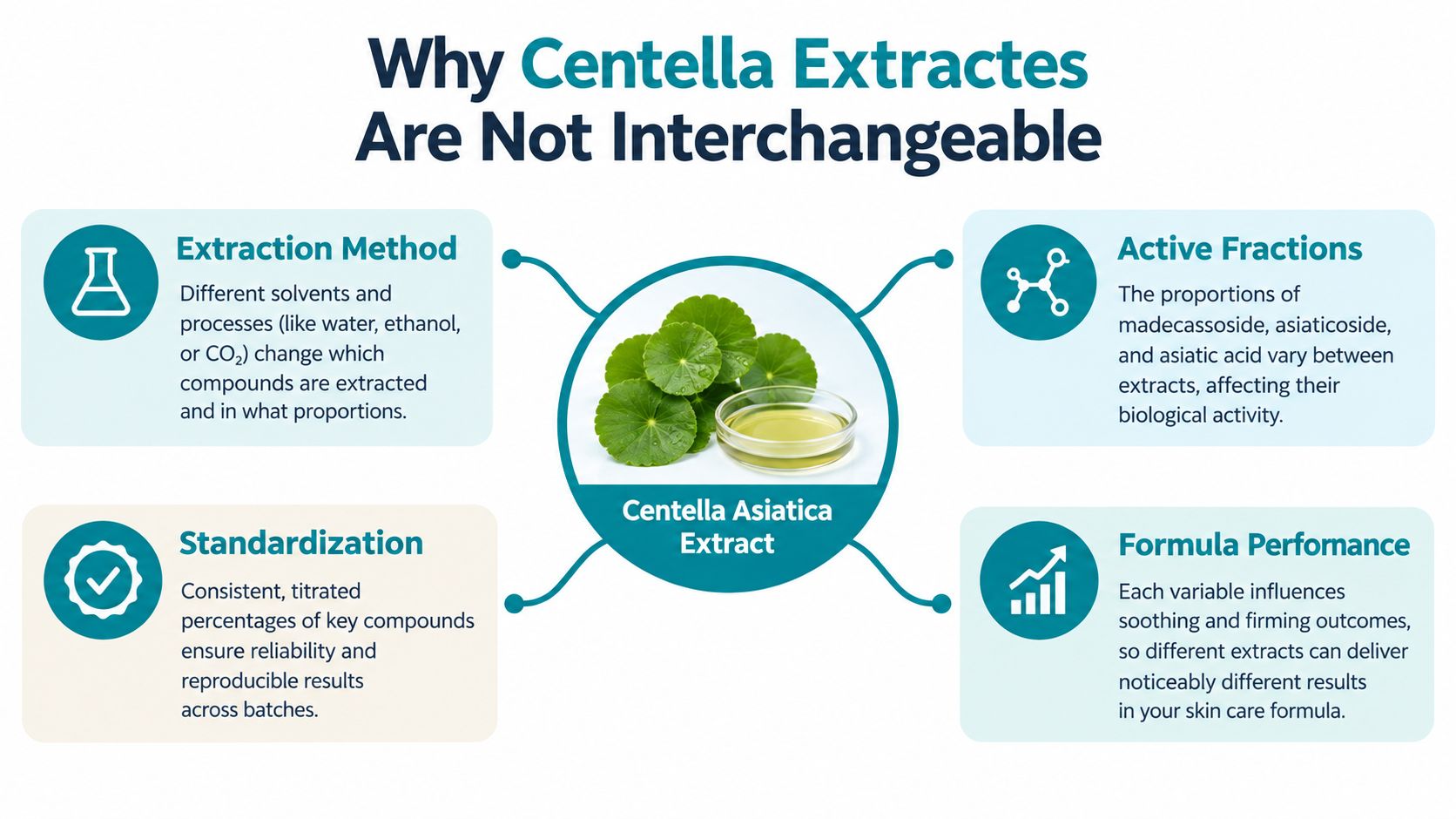
Why standardization matters more than the plant name
The standardized ECa 233 extract is useful because its chemistry is defined, not guessed. That triterpenoid profile gives formulators a real starting point for consistent cosmetic work. The same ingredient name alone can't do that.
Pharmacokinetic research also shows bidirectional conversion between asiaticoside and madecassoside, which means you can't assume biological exposure from the initial ratio printed on a spec sheet PubMed reference. In other words, what goes into the drum doesn't map neatly to what the skin experiences. That's why marker reporting and assay detail matter so much.
For serious makers, the takeaway is simple. Don't buy the word centella, buy the data behind it. That one habit saves time, reduces batch surprises, and makes your finished formula easier to repeat.
Understanding the Active Triterpenoid Profile
The chemistry that gives centella its reputation lives in a small family of triterpenoids, not in the leaf name itself. In formulation terms, that means the active profile matters more than the botanical story. If you're trying to build a dependable cosmetic, you need to know which compounds are doing the heavy lifting.
Madecassoside and asiaticoside are not redundant
The most practical way to think about them is as partners with overlapping but not identical behavior. Asiaticoside is often tied to structural support, while madecassoside is frequently discussed for its calming side of the profile. They don't work in isolation, and the final outcome depends on the whole extract and the rest of the formula.
That's why a number is more useful than a plant nickname. In ECa 233, the madecassoside-to-asiaticoside ratio is approximately 1.5 ± 0.5:1, with triterpenoid glycosides at least 80% of the extract PubMed reference. Those details help you compare one raw material with another before you commit to a run.
Why conversion changes how you interpret a spec sheet
The tricky part is that asiaticoside and madecassoside can convert in both directions. So even a tidy ingredient ratio at the supplier stage doesn't guarantee the same exposure pattern in use. The biological behavior is more dynamic than a simple “more of X equals more effect” model.
That's also why formulation teams should ask for the assay method, not just the declared content. If a supplier can't say how the extract was measured, the number is harder to trust. If they can't say which solvent was used, you still don't know how complete the extraction really was.
A useful mental model is this: the label tells you what's in the jar, but the assay tells you how confident you should be in that label.
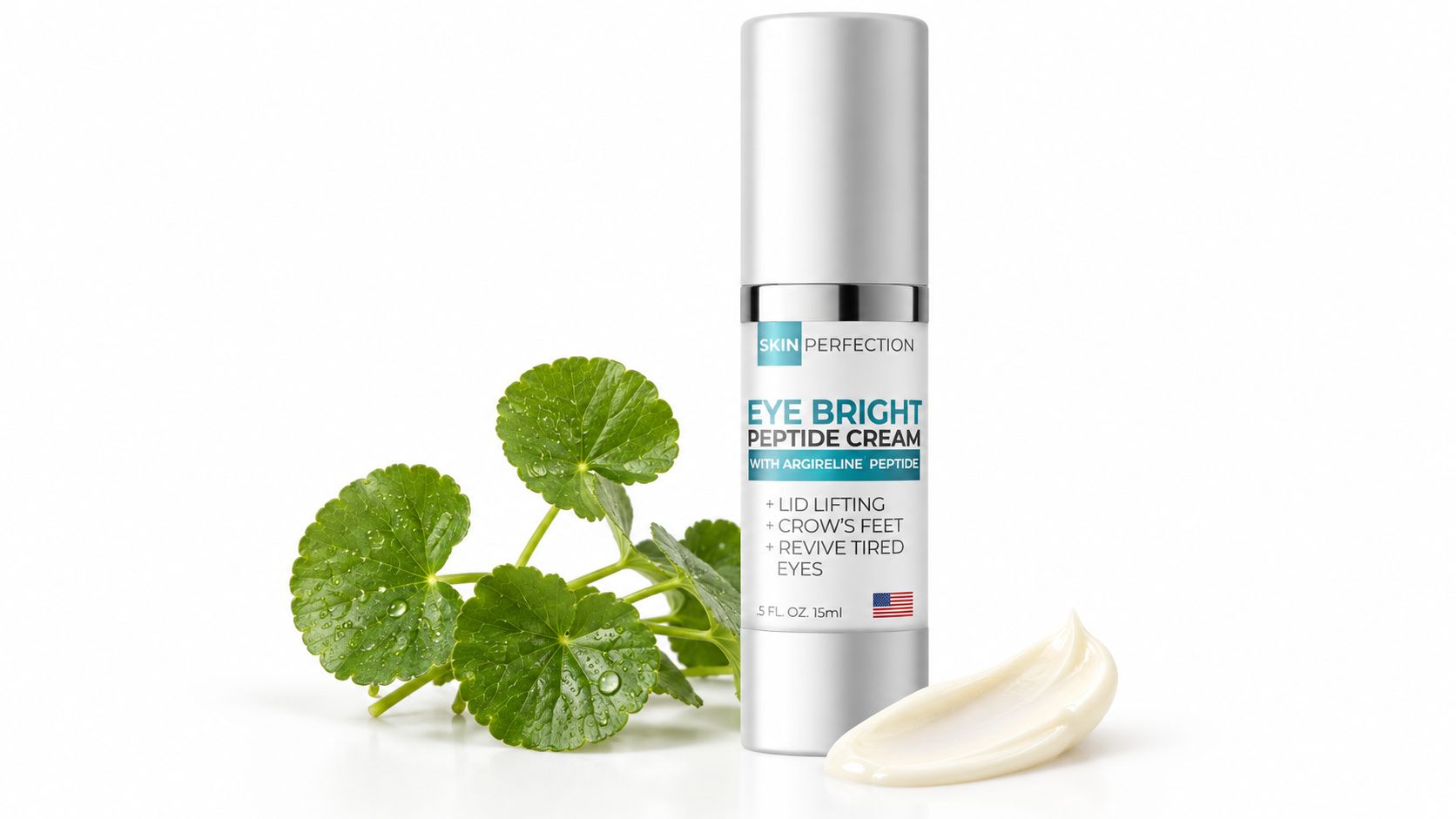
The catalog example below shows why quantified actives are easier to compare than vague claims. Eye Bright Argireline Cream lists peptide percentages clearly, which makes it much easier to judge what the formula is trying to do than a generic eye cream with no numbers.
For a deeper vocabulary check, the ingredient terms guide at natural organic skincare ingredient terminology is a practical reference when you're sorting out what a label really says.
Choosing the Right Centella Form for Your Goals
The right centella form depends on what job you want it to do. A watery botanical, a purified triterpene fraction, and a standardized extract can all sit under the centella umbrella, but they don't belong in the same formulation conversation. The mistake many makers make is choosing by trend instead of by use case.
Match the extract type to the formula job
Use centella water when you want a light botanical story and a very gentle sensory effect, but don't expect it to behave like a concentrated active. Choose whole-plant extracts when you want a broader botanical profile and can accept more variability. Reach for purified triterpene fractions or standardized actives when repeatability matters more than a romantic ingredient list.
The distinction gets even more important for products positioned around sensitivity or barrier support. Cosmetic literature still treats the evidence base as uneven, so the best choice is usually the one that gives you the clearest composition and the fewest unknowns botanical supplier discussion. That's also why a higher percentage isn't automatically better. If the extract isn't standardized, a bigger number can still give you a noisier result.
| Extract Type | Typical Role | Key Consideration |
|---|---|---|
| Centella water | Light botanical support | Often too dilute for a strong active story |
| Whole-plant extract | General soothing and label familiarity | Composition can vary widely |
| Purified triterpene fraction | Targeted active support | Needs tighter sourcing and specification |
| Callus-cell ingredient | Modern cosmetic positioning | Check origin, processing, and documentation |
| High-concentration active | Strongest formula signaling | Stability and sensitization control matter more |
Choose for repeatability, not just headline strength
If you're building a daily moisturizer, a milder extract may be enough when paired with humectants and barrier lipids. If you're formulating a targeted serum, a standardized triterpenoid ingredient gives you a better chance of consistent performance. That's the actual decision tree.
A useful comparison point is botanical boosters like plant based skincare at Supplemynts, where the broader formula still matters more than any single extract name. For formulators who want a broader ingredient strategy, the botanical extract sourcing guide at natural organic skincare supplier resources is worth keeping nearby.
Pick the form that fits the product's purpose, not the one that sounds the most impressive on a label.
Clinical Evidence and Realistic Positioning
A jar of centella can look modest on the shelf, but the research story behind it is more specific than a generic “soothing botanical” label. The strongest positioning is supportive skin-repair signaling and barrier-oriented comfort, which is useful for cosmetics because it stays close to what the ingredient can reasonably do.
What the research points to
Preclinical work has associated centella triterpenoids, especially asiaticoside and madecassoside, with increased fibroblast activity, collagen synthesis, epithelialization, angiogenesis, and lower inflammatory signaling. A systematic review of randomized clinical trials reported favorable wound-healing effects potentially linked to collagen types I, II, and III, fibronectin stimulation, extracellular-matrix remodeling, anti-inflammatory activity, and increased tensile strength. That is promising, but the same review also found only five eligible trials and too few shared outcome measures for meta-analysis.
That limitation matters. It keeps centella in the category of biologically plausible support, not guaranteed cosmetic transformation.
Practical rule: In cosmetic messaging, centella is stronger as a support ingredient than as a promise of transformation.
Why topical use makes more sense than oral positioning
For localized skin appearance goals, topical delivery is the more rational route. A technical review lists 1% w/w madecassoside or asiaticoside creams applied twice daily for localized dermal use, while oral triterpenoids show low bioavailability. That makes the topical route easier to defend for a cosmetic line.
A cosmetic brand or DIY formulator should stay inside appearance language. Say that a product helps skin feel calm, looks supported, or is designed for barrier-friendly care. Do not drift into medical wording just because the ingredient has wound-related literature behind it.
For a head-to-head comparison of soothing actives, see our guide to teprenone versus centella for redness. That kind of comparison helps you choose positioning based on function, not on how impressive the ingredient name sounds on a label.
Formulation Synergies and Concentration Choices
A centella formula works best when it solves one job alongside other ingredients. Centella can support a peptide complex, a humectant system, or a botanical antioxidant, but it does not need to carry the entire formula by itself. That is the practical difference between a thoughtful system and a single-ingredient claim.
Pairing works better than piling on percentage
A centella-based serum often feels more useful when it is paired with a quantified peptide complex or a hydrating botanical booster. When you compare serums, look for labels that disclose peptide percentages and clear active names, because that makes the formula easier to benchmark than a vague soothing blend. Pairing centella with a quantified peptide complex makes the formula easier to benchmark than a vague soothing blend.
The same logic applies if you build around centella and a botanical antioxidant such as Edelweiss extract. The goal is not to force centella into every role. Each ingredient should support a different part of skin feel and visible comfort. Clinical spaces make the same system-over-single-ingredient argument, see Beverly Wilshire Aesthetics for how exosome therapy is positioned.
Why more extract isn't automatically better
A higher concentration can sound stronger, yet it may hide weak standardization, uneven preservation, or botanical noise. A concentrated extract with poor controls can still underperform a lower-dose ingredient that is better characterized. In practice, standardization, contaminant control, preservation, and non-sensitizing formulation matter more than the headline percentage.
Formulation texture matters too. A watery essence, a serum, and a cream place different demands on the same ingredient. A centella fraction that behaves well in a light gel may be a poor fit for a richer emulsion, and the reverse can also be true. For routine-building context, the guide on how to layer skincare serums helps you place centella relative to peptides or antioxidants. The same idea still applies when you are making products rather than layering them.
Safety, Tolerability, and Regulatory Boundaries
Centella is usually treated as a gentle ingredient, but “usually gentle” is not the same as “universally safe.” Human and regulatory evidence points to generally good tolerability, yet rare allergic contact dermatitis has been reported, and one safety assessment classified Centella Asiatica Extract as a weak sensitizer in testing. That is the distinction many consumer guides skip.
Sensitivity depends on composition and context
Risk can rise when the botanical composition is poorly controlled, when the skin barrier is already compromised, or when the formula is highly concentrated. The same assessment flags high-concentration extracts, nanoformulations, and prolonged-use products for sensitive skin as areas needing more evaluation. A calm ingredient can still be the wrong fit for a reactive person in the wrong delivery system.
Patch test before full-face use, especially if the formula is new, heavily botanical, or designed for leave-on use. Stop if you see persistent redness, itching, or a rash that does not settle quickly.
Short-term tolerability is not long-term proof
The available evidence supports ordinary cosmetic use, but it does not prove every serum, DIY blend, nanoemulsion, or oral supplement is safe in every context. Topical comfort and long-term safety are different questions. The first can feel fine while the second is still untested.
For reactive customers, keep the label honest and the formula conservative. A high centella percentage is not a safety guarantee, and higher does not automatically mean better.
Creating Compliant Listings and DIY Guidelines
FDA rules tie a product's category to its intended use, and intended use can show up in the label, ads, website copy, or other promotional material. If a cosmetic says it treats or prevents disease or affects body structure or function, it can become a drug under the rules FDA cosmetics labeling guide. Etsy draws a similar line and prohibits claims that an item is, or is as effective as, an anti-inflammatory, prescription drug, or medical treatment, regardless of disclaimers Etsy medical claims policy.
Use appearance language, not treatment language
For listings, say a centella product is designed to help skin look calm, feel comfortable, or fit into a barrier-supportive routine. Don't say it heals, repairs, treats, or reverses skin conditions. Those verbs change the implied use of the product, and that's where compliance problems start.
A disclaimer won't rescue a prohibited claim. If the headline or image suggests medical action, the disclaimer usually doesn't matter. The safer path is to keep every line of copy focused on cosmetic appearance and sensory benefits.
Keep DIY guidance simple and transparent
For makers, the best discipline is label transparency. Specify the extract type, marker compounds, and intended use level where possible. If your formula is for leave-on cosmetic care, keep the claim set aligned with that use and nothing more.
The DIY formulation guide at make your own skin care products is a practical place to keep your process grounded while you build with centella and other actives. For readers who want a broader perspective on gentle routines, Prime Journal skin care advice is another useful reminder that simple routines and honest positioning usually age better than aggressive claims.
Skin Perfection carries the kinds of raw materials and finished formulas that let you work with centella thoughtfully, whether you're building a new lotion or comparing ready-made options. If you want ingredients and products that support cosmetic formulation without drifting into medical wording, visit Skin Perfection and explore what fits your next batch.