

 Buy with Prime
Copper Peptide
-
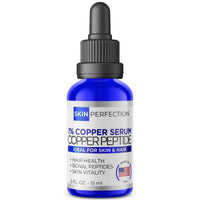
GHK-Cu Copper Peptide Serum | Face, Hair + Scalp | 1% Pure GHK-Cu | 0.5 oz
Regenerating
-
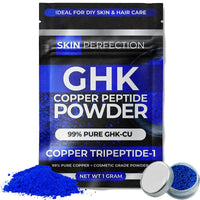
GHK-Cu Copper Peptide Powder, 99% Pure (1 Gram)
Regenerating Renewal
-
Best Seller

Uplift Eye Cream
Anti-Aging Eye Cream

Restore Mature Cells with Copper Peptide

If you have mature skin or are over 50, copper is an essential ingredient to include in your skincare regimen. It rejuvenates mature complexions and helps new, fresh skin cells emerge.
Although discovered thirty years ago, they are not the latest development in anti-aging products; their persistence in the market shows they are effective.
What is Copper Peptide?
It is an essential trace mineral. Copper is one of the elements that our bodies need to be healthy and function correctly. Further, it's found abundantly in our blood, helping oxygen synthesize red blood cells.
Copper peptides are compounds that consist of small protein fragments linked to copper ions. These peptides naturally occur in the body and play essential roles in various physiological processes, including wound regeneration, collagen production, and antioxidant defense.
In skin care, copper peptides are valued for their ability to promote skin regeneration, enhance firmness, and reduce the appearance of fine lines and wrinkles. They work by stimulating collagen synthesis, which helps improve skin elasticity and overall texture, resulting in a more youthful complexion.
What is GHK-Cu Copper Peptide?
GHK-Cu copper peptides, also known as Gly-His-Lys copper peptides, are a specific type of copper peptide that contains the tripeptide GHK (glycyl-l-histidyl-l-lysine) complexed with a copper ion. GHK-Cu is renowned for its remarkable regenerative properties and is widely used in skincare formulations for its anti-aging benefits.
Research suggests that GHK-Cu peptides can promote wound regeneration, reduce inflammation, and enhance collagen and elastin production in the skin. GHK-Cu has antioxidant properties that help protect the skin from oxidative aging and environmental stressors.
Copper vs. GHK Copper Peptide
When comparing copper peptides to GHK-Cu peptides, it's important to note that GHK-Cu is a specific form of copper peptide that has been extensively studied for its biological activities.
While both copper peptides and GHK-Cu peptides offer skin-rejuvenating benefits, GHK-Cu is often regarded as more potent and effective due to its unique structure and mechanism of action.
GHK-Cu peptides have been shown to have superior regenerating properties, support collagen and elastin synthesis more effectively, and exhibit more potent antioxidant activity compared to other copper peptides.
GHK is a tripeptide consisting of glycyl-L-histidyl-L-lysine. GHK works by regenerating the skin. It is also the preferred version for any hair tonic.
What are the Benefits of Copper Peptide?
GHK Copper peptides are combined with several kinds of proteins. The added benefit of GHK is that it:
- improves skin rejuvenation
- reduces the appearance of wrinkles
- promotes collagen and elastin
It makes a fantastic regenerating serum when added to anti-aging products.

Who Discovered Copper for Skincare?
A chemist found that infusing mature, dying cells with blood plasma from young, healthy cells. The result? Your complexion could regenerate mature cells to a healthier state.
Studies have shown that copper peptide in the blood is the reason behind this seemingly miraculous finding. However, unfortunately, this little miracle ingredient was packaged for use in cosmetics.
Just as the copper peptide restored the mature cells in the test, it can restore a youthful appearance. This is because copper has two essential components. Firstly, proteins are the building blocks of almost every structure in our bodies.
Proteins feed our hair, nails, muscles, and skin. After that, it is one of our bodies' essential nutrients for stable structures. In addition, it is necessary to produce collagen in our bodies.
Why Should I Use Copper Peptide?
The two aspects of this substance can fill and improve fine lines, wrinkles, and even the entire complexion. In addition, a copper peptide can help prevent some signs of aging from forming prematurely.
Copper signals the skin to produce more hyaluronic acid. Hyaluronic acid is a gel surrounding joints that supplies collagen with rich vitamins and nutrients. Hyaluronic acid is one of the skin's best natural moisturizers.
Combined with collagen, it increases the elasticity and flexibility of individual cells and trains them to retain their moisture, leading to plump, young-looking faces. Conversely, when not adequately hydrated, cells can look depleted and hollow.
When they have proper hydration, the skin appears fuller and less wrinkled. It's also a carrier peptide. This means that it helps to facilitate the delivery of trace minerals. These elements support collagen synthesis. Magnesium is another commonly used carrier peptide.
As an added benefit, a copper peptide is a natural antioxidant. Additionally, it fights against the effects of free radicals, which are the underlying causes of many of the most troublesome signs of aging. Further, by scavenging for free radicals, peptides neutralize the harmful effects, diminishing the signs of aging.
Skin Regenerating Copper Peptide
In the ever-evolving world of skincare, new ingredients with remarkable benefits continue to emerge. One such ingredient that has gained significant attention is copper peptide. Known for its skin-regenerating properties, the copper peptide has become a popular addition to many skincare products.
-
Enhanced Collagen and Elastin Production: Copper peptide plays a vital role in supporting the production of collagen and elastin in the skin. Collagen and elastin are crucial proteins that maintain the skin's structure, elasticity, and firmness. By boosting their production, copper peptide aids in improving skin texture and reducing the appearance of fine lines and wrinkles. The increased collagen and elastin synthesis contribute to a more youthful and rejuvenated complexion.
- Antioxidant Effects: Copper peptide possesses potent antioxidant properties that help neutralize free radicals, which can cause oxidative damage and accelerate the aging process. By reducing oxidative stress, copper peptide aids in protecting the skin from environmental aggressors and preventing the breakdown of collagen and elastin fibers. Moreover, it exhibits anti-inflammatory effects, soothing irritated skin and calming redness. This makes copper peptide a valuable ingredient for individuals with sensitive or reactive skin.
- Skin Firming and Tightening: Loss of skin firmness and sagging are common concerns associated with the aging process. Copper peptide assists in improving skin firmness and elasticity by promoting the synthesis of glycosaminoglycans (GAGs) and proteoglycans. GAGs help hydrate and plump the skin, while proteoglycans maintain the skin's structural integrity. By supporting these essential components, copper peptide helps restore a more lifted and tightened appearance to the skin.
- Improved Skin Texture and Tone: Copper peptide aids in exfoliation and cell turnover, resulting in smoother and more refined skin texture. It helps to remove dead skin cells, unclogs pores, and promotes a healthier complexion. Furthermore, the copper peptide has been observed to regulate melanin production, assisting in brightening the skin and reducing the appearance of hyperpigmentation and discoloration. This property makes it a valuable ingredient for individuals seeking a more even skin tone.
The 5 Benefits of Using Copper Peptides
-
Collagen Support: Copper peptides support collagen production, promoting skin elasticity and firmness for a more youthful appearance.
-
Antioxidant Defense: Copper peptides act as potent antioxidants, shielding the skin from free radicals and environmental exposure.
-
Skin-Calming: These peptides possess skin-calming properties, helping to calm and soothe irritated skin, making them suitable for sensitive or acne-prone skin.
-
Enhanced Skin Texture: Regular use of a Copper Peptide Serum Booster can lead to smoother, even skin, reducing the appearance of fine lines, wrinkles, and blemishes.
-
Youthful Complexion: Copper peptides contribute to a more youthful complexion by improving skin elasticity and promoting a healthier overall appearance.
Hair and Scalp Treatments with GHK Copper
GHK-Cu copper peptides are not limited to skincare applications but can also benefit hair care formulations. Research suggests that GHK-Cu peptides can promote hair growth, improve hair thickness and density, and enhance the overall health of the scalp and hair follicles.
By stimulating hair follicle stem cells and increasing blood flow to the scalp, GHK-Cu peptides may help address common hair concerns such as hair loss, thinning, and dullness, leading to healthier, more vibrant-looking hair.
The copper peptide has emerged as a powerful ingredient in the realm of skincare, with its ability to promote skin regeneration, enhance collagen and elastin production, accelerate wound regeneration, and provide antioxidant and anti-inflammatory effects. Incorporating copper peptide-containing skincare products into your routine can unlock the potential for a more youthful, rejuvenated, and radiant complexion.
Embrace the regenerative power of copper peptide and embark on a journey towards healthier, more vibrant skin.
Copper Peptide in Liquid vs. Powder Form for Skincare Products
Incorporating copper peptides into skincare formulations has gained popularity due to its potential benefits in promoting collagen production, improving skin elasticity, and reducing the appearance of fine lines and wrinkles. However, choosing between liquid and powder can influence the product's stability, efficacy, and overall formulation process.
Let's delve into the pros and cons of each.
The Pros of Copper Peptide in Liquid Form
- Ease of Incorporation: Liquid copper peptides can be easily mixed into skincare formulations without the need for additional solvents or dispersing agents.
- Immediate Availability: Being in liquid form, the copper peptide might be more immediately available for skin absorption once applied.
- Consistent Distribution: Ensures an even distribution of copper peptide throughout the product, minimizing any potential for uneven application on the skin.
Cons:
- Potential for Degradation: Liquids can be more susceptible to oxidation, which may degrade the copper peptide over time.
- Storage & Shelf-life: Liquid forms might require refrigeration or special storage conditions, which can be cumbersome for manufacturers and end-users.
- Preservation Challenges: It might necessitate the use of preservatives to maintain its stability and prolong its shelf life.
The Pros of Copper Peptide in Powder Form
- Long Shelf-life: Powders typically have a longer shelf life than liquids and are less prone to degradation.
- Versatility: The powder can be incorporated into both water-based and oil-based skincare formulations by reconstituting it in the desired solvent.
- Stability: Less susceptible to oxidation and might require fewer preservatives.
Cons:
- Dissolution Issues: These may only dissolve partially or unevenly, potentially leading to inconsistencies in the final product.
- Additional Steps in Formulation: Requires an extra step of dissolution, potentially complicating the manufacturing process.
- Potency Concerns: If not stored or handled correctly, the powder might lose its potency over time.
The choice between liquid and powder form of copper peptide largely depends on the specific requirements of the skincare formulation, the desired shelf life, and the manufacturer's capability to ensure product consistency. While liquid forms offer ease of incorporation, the powder form provides longevity and stability.
Manufacturers should weigh the pros and cons of each form, considering the target audience, product positioning, and their own production capabilities.
Sources:
https://www.ncbi.nlm.nih.gov/pmc/articles/PMC6073405/
https://www.webmd.com/beauty/qa/how-does-copper-peptide-affect-the-skin
https://www.mdedge.com/dermatology/article/80383/aesthetic-dermatology/peptides/page/0/1