

 Buy with Prime

Essential Oils
-

Anti-Age Essential Oil Blend
Anti-Aging Essential Oil Blend
-
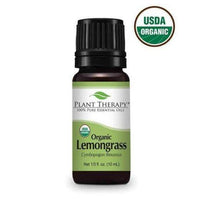
Organic Lemongrass Essential Oil
Energizing Essential Oil
-
Sold out

Plant Therapy Hair Therapy Essential Oil Blend


Essential Oils for Skincare, Scalp Care and Aromatherapy
Essential oils are concentrated aromatic extracts of plants. In skincare they add natural scent and an aromatherapy moment to your routine, and they are always diluted before they touch the skin. This collection has three pure essential oil products from Plant Therapy: an anti-age facial blend, organic lemongrass, and a hair and scalp blend. Each one has a different job and a different usage rate, so the guide below helps you pick the right one and use it safely.
Which Essential Oil Is Right for You
Anti-Age Essential Oil Blend: for mature skin and DIY face oils
Choose the Anti-Age Essential Oil Blend if you want a ready-made scent blend for a face oil, serum or cream. Its ingredient list is palmarosa, rosalina, copaiba oleoresin, frankincense serrata, frankincense carteri, sandalwood, neroli and rose absolute. The product page rate is 2% in an oil base or other fragrance-free base, which is 18 drops per fluid ounce at the house rate of 9 drops = 1% per fl oz.
Organic Lemongrass Essential Oil: a fresh scent for oily-feeling skin
Choose Organic Lemongrass Essential Oil if you like a bright, lemony scent in cleansers, toners and light lotions for skin that feels oily. Lemongrass is rich in citral, a known skin sensitizer, so keep it low. IFRA (International Fragrance Association) limits depend on the product type. One supplier's IFRA certificate for East Indian lemongrass oil (51st Amendment) allows 0.20% in leave-on face, body and hand products (about 2 drops per fluid ounce at the house rate of 9 drops = 1% per fl oz), 0.26% in leave-on hair products, 1.6% in rinse-off and bath products (about 14 drops per fluid ounce), and only 0.04% in deodorants, which is less than 1 drop per ounce, so skip it there. The reference Essential Oil Safety (Tisserand and Young) gives 0.7% as a general dermal maximum, but the IFRA limits are lower, so follow the IFRA certificate for the specific oil you buy.
Hair Therapy Essential Oil Blend: for scalp massage and your shampoo
Choose the Hair Therapy Essential Oil Blend if you want a fresh, herbal scent for scalp massage oils, shampoo and conditioner. It includes rosemary, clary sage, bergamot, atlas cedarwood, lavandin and copaiba. For shampoo and conditioner, the product page directions say 1 to 2%: 9 to 18 drops per ounce. For a scalp massage oil, the product description gives 2 to 5% in a carrier oil (18 to 45 drops per ounce), while the directions say to dilute to 1 to 2%, so start at 1 to 2%. For leave-on use, follow the IFRA certificate for the blend.
Compare Skin Perfection Essential Oils
| Product | Key essential oils (from the ingredient list) | Best for | Usage rate | Price |
|---|---|---|---|---|
| Anti-Age Essential Oil Blend | Frankincense (2 types), sandalwood, neroli, rose absolute, palmarosa, rosalina, copaiba | Face oils, serums and creams for mature skin | 2% (18 drops/oz) | $26.95 |
| Organic Lemongrass Essential Oil | Lemongrass | Rinse-off cleansers and body washes; oily-feeling skin | IFRA limits for East Indian lemongrass: rinse-off 1.6% (about 14 drops/oz); leave-on face and body 0.20% (about 2 drops/oz); leave-on hair 0.26%; deodorant 0.04% (skip). Follow your oil's IFRA certificate. | $11.95 |
| Hair Therapy Essential Oil Blend | Rosemary, clary sage, bergamot, atlas cedarwood, lavandin, copaiba | Scalp massage, shampoo and conditioner | Shampoo and conditioner: 1 to 2% (9 to 18 drops/oz). Scalp oil: 1 to 2% per directions (description says 2 to 5%). Leave-on: follow the blend's IFRA certificate. | $19.95 |
How to Use Essential Oils Safely
- Always dilute. Never apply these oils straight to the skin. Mix into a carrier oil such as jojoba oil, or into an unscented lotion, serum or shampoo.
- Mind the sun. Regular bergamot contains bergapten, which is phototoxic. Tisserand recommends no more than 0.4% in leave-on products. The Hair Therapy Blend is best used in rinse-off shampoo and conditioner, or rinsed out after a scalp oil massage.
- Patch test. Apply your diluted blend to the inner arm and wait 24 hours. Sensitive skin: start at the lowest rate of the range and work up only if your skin stays comfortable.
- Keep the eyes clear. Keep essential oils away from the eye area.
Using Them Together
Use one scent per product so rates stay accurate. A simple routine: a lemongrass gel cleanser in the morning, a face oil with the Anti-Age Blend at night, and the Hair Therapy Blend in your shampoo. For single-ingredient guides, see our lavender and rose entries.
Frequently Asked Questions
Which essential oils are good for wrinkles?
Frankincense, rose, sandalwood and neroli are the classic choices for mature skin, and all four are in the Anti-Age Essential Oil Blend. Essential oils mainly bring scent and a pleasant ritual. For a measurable change in the look of lines, pair them with a peptide serum or moisturizer.
Can you put essential oils directly on your face?
No. Undiluted essential oils can irritate or sensitize skin. Always dilute them into a carrier oil or unscented base at the rate on the product page, such as 2% for the Anti-Age Blend.
How do you dilute essential oils for skin?
Use the usage rate for that oil and count drops: at the house rate, 9 drops in 1 fluid ounce of base is 1%. That makes 18 drops per ounce for a 2% blend. For lemongrass, follow the IFRA limit for your product type: about 2 drops per ounce in a leave-on face product (0.20%) and about 14 drops per ounce in a rinse-off cleanser (1.6%).
Is lemongrass oil good for skin?
Lemongrass gives a fresh, clean scent that many people with oily-feeling skin enjoy in cleansers and toners. Its citral content can sensitize skin, so follow the IFRA limit on your oil's certificate: for East Indian lemongrass that is 0.20% in leave-on face products and 1.6% in rinse-off products. Patch test first.
Are essential oils safe for sensitive skin?
Many people with sensitive skin use them at low rates, but they are a common source of reactions. Patch test on the inner arm for 24 hours, start at the lowest rate of the range, and skip any oil that causes stinging or redness.
Do essential oils expire?
Yes. The Hair Therapy Blend product page gives a shelf life of about 1 to 2 years. Keep bottles tightly capped, away from heat and light, and replace any oil whose scent has changed.
Sources
- AromaWeb. Lemongrass essential oil, citing Tisserand R, Young R. Essential Oil Safety, 2nd ed. Churchill Livingstone Elsevier; 2014:334-335 (general dermal maximum 0.7%).
- AromaWeb. Bergamot vs. FCF Bergamot Essential Oil (bergapten, 0.4% leave-on maximum per Tisserand).
- Equinox Aromas. IFRA Conformity Certificate, Lemongrass Oil East Indian (EQA57218), IFRA 51st Amendment (supplier document): category limits 2, 5A-5C, 7B and 9.
- Ingredient lists, usage rates and prices: Skin Perfection product pages.
These statements have not been evaluated by the Food and Drug Administration. These products are not intended to diagnose, treat, cure, or prevent any disease.
About the Author
Written by Kari Thomas, cosmetic formulator and founder of Skin Perfection.