

 Buy with Prime
Honey and Milk Oatmeal Recipe
Honey, Milk, and Oatmeal Face Mask: Fresh and Shelf-Stable Versions
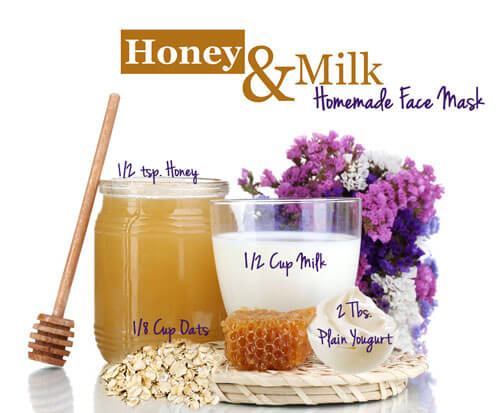
A honey, milk, and oatmeal mask is a soft paste of finely ground oats, plain yogurt, honey, and a splash of milk. You smooth it over clean skin for 10 to 15 minutes, then rinse with lukewarm water. The oats turn creamy and leave skin feeling calm and soft, honey draws in moisture, and yogurt adds a mild touch of lactic acid for a smoother, brighter look.
Because it is made from fresh food, this mask must be mixed and used the same day. Below you will find the fresh single-use recipe in grams, plus a formulator's shelf-stable gel version with a preservative, so you can keep a jar in the bathroom.
Why These Ingredients Work Together
- Oats: a 2007 review by Kurtz and Wallo in the Journal of Drugs in Dermatology describes colloidal oatmeal as a cleanser, moisturizer, and buffer. Its starches and beta-glucan hold water on the skin, and its saponins give a gentle cleansing action. Learn more in our oatmeal glossary entry and beta-glucan entry.
- Honey: a 2013 review by Burlando and Cornara in the Journal of Cosmetic Dermatology notes that in cosmetics honey softens and moisturizes skin and helps regulate pH, and that formulas typically use 1 to 10% honey. See our honey glossary entry.
- Yogurt and milk: both contain lactic acid, an alpha hydroxy acid (AHA). The amount in yogurt is small compared with a lactic acid product, so think of it as a gentle smoothing touch, not a peel.
Equipment and Sanitation
- Digital scale reading to 0.1 g
- Small glass bowl, spoon or mini whisk, and a clean fan brush (optional)
- For the shelf-stable gel: glass beaker, pH strips, and an airless pump or clean jar
Wash tools in hot soapy water, dry them, and wipe with 70% isopropyl alcohol. Start with clean hands and a freshly cleansed face.
Recipe 1: Fresh Honey, Milk, and Oatmeal Mask (one use, about 37 g)
| Ingredient | Grams | % |
|---|---|---|
| Rolled oats, ground to a fine flour | 10.0 | 27% |
| Plain unsweetened yogurt | 15.0 | 40.5% |
| Raw honey | 7.0 | 19% |
| Whole milk | 5.0 | 13.5% |
- Grind the oats in a clean coffee grinder or blender until powdery. Fine oats spread smoothly and do not scratch.
- Stir the yogurt, honey, and milk together, then fold in the oat flour. Let it sit for 2 minutes so the oats soften into a thick paste. Add milk 1 g at a time if it is too stiff.
- Apply an even layer to clean, dry skin, avoiding the eyes.
- Leave on for 10 to 15 minutes, then rinse with lukewarm water using gentle circles.
- Pat dry and follow with your moisturizer.
Fresh food rule: this mask contains milk, yogurt, and honey with no preservative. Mix it right before use, keep the ingredients refrigerated, and throw away anything left over the same day.
Recipe 2: Shelf-Stable Honey Oat Gel Mask (100 g)
For a mask you can keep, leave out the dairy and build the formula on a water-based gel with a broad-spectrum preservative.
| Ingredient | Grams | % | Phase |
|---|---|---|---|
| Aloe Vera Gel Serum Base | 81.0 | 81% | A |
| Honey | 10.0 | 10% | A |
| Colloidal oatmeal (very finely milled oats) | 5.0 | 5% | B |
| Leucidal SF Complete (preservative) | 4.0 | 4% | C |
- Phase A: stir the honey into the aloe gel at room temperature until clear. Honey is used at 10%, the top of the 1 to 10% range reported for cosmetics.
- Phase B: sprinkle in the colloidal oatmeal while stirring, and stir for 2 minutes until evenly dispersed.
- Phase C: add Leucidal SF Complete at 4%, the top of its 2 to 4% recommended range, and stir well.
- Check the pH with a strip. Aim for about 4.5 to 5.5, which suits skin.
- Pack into an airless pump or a clean jar and label with the date.
Apply a thick layer for 15 minutes and rinse. Store in a cool place, use a clean spatula, and plan to finish the jar within about three months. Natural preservatives like Leucidal are milder than conventional ones, so throw out the gel if it changes color, smell, or texture. Formulas you plan to sell should be challenge tested by a lab.
How Often to Use It
Once or twice a week is enough for most skin. On your mask night, skip other exfoliating steps. For more on fitting masks into a routine, see our guide to how often to use facial masks.
Variations
- Banana: mash 10 g of ripe banana into the fresh mask for a creamier, more cushiony feel. Same-day use only.
- Extra softening: add 2 g of melted coconut or jojoba oil to the fresh mask for dry skin.
- Dairy-free: replace the yogurt and milk with an equal weight of aloe vera gel.
- Brighter look: for a stronger, measured lactic acid exfoliation, use a finished product such as our Alpha Hydroxy Probiotic Cleanser on a separate day instead of adding acids to the mask.
We leave out raw egg and lemon juice. Raw egg carries a food-safety risk on the face, and citrus juice can sting and make skin more reactive to sun.
Sensitive Skin and Safety
- Patch test on your inner arm for 24 hours, especially if you react to oats, honey, pollen, or dairy.
- Avoid broken or sunburned skin and the eye area.
- Lactic acid is an AHA. The FDA advises that AHA products can increase sensitivity to the sun, so use sunscreen the next morning.
Troubleshooting
- Too runny: add 1 to 2 g more oat flour and wait 2 minutes.
- Too sticky to rinse: splash with lukewarm water and wait 30 seconds; honey dissolves in water.
- Gritty feel: grind the oats finer, or sift them.
- Gel separates: stir before each use; oatmeal settles in thin gels.
Frequently Asked Questions
Is a honey and oatmeal mask good for your face?
For most people, yes. Oats help skin feel calm, soft, and moisturized, and honey is a humectant that draws water to the skin. Patch test first if you react to oats, honey, or dairy.
How long should I leave a honey oatmeal mask on?
Leave it on for 10 to 15 minutes. Rinse with lukewarm water before it dries completely, then moisturize.
How often can I use a honey and oatmeal mask?
Once or twice a week suits most skin types. It is gentle, but skip other exfoliants on the same day.
Can I store a homemade honey milk mask?
Not the fresh version. Milk and yogurt spoil, so mix it right before use, keep the ingredients refrigerated, and discard leftovers the same day. For a mask you can keep, make the shelf-stable gel with a preservative.
Can I use manuka or regular honey?
Either works in a face mask. Raw honey is thicker and spreads well. Choose plain honey with no added flavors or syrups.
Does yogurt exfoliate your skin?
Yogurt contains a small amount of lactic acid, an AHA, so it can leave skin feeling a little smoother. It is much milder than a measured lactic acid product.
Is this mask safe for sensitive skin?
Oats and honey are among the gentlest mask ingredients. Patch test on your inner arm for 24 hours, keep it away from the eyes, and rinse if you feel stinging.
Shop and Learn More
Build the shelf-stable version with Aloe Vera Gel Serum Base and Leucidal SF Complete. For more mask ideas, read Natural Anti-Aging Face Masks for Mature Skin.
Sources
- Kurtz ES, Wallo W. Colloidal oatmeal: history, chemistry and clinical properties. J Drugs Dermatol. 2007;6(2). JDD
- Burlando B, Cornara L. Honey in dermatology and skin care: a review. J Cosmet Dermatol. 2013;12(4):306-313. doi:10.1111/jocd.12058. PubMed
- U.S. Food and Drug Administration. Alpha Hydroxy Acids. fda.gov
- Active Micro Technologies, Leucidal SF Complete (supplier data: Lactobacillus Ferment, Lactobacillus, Cocos Nucifera Fruit Extract; 2 to 4% use level as listed on the Skin Perfection product page).
These statements have not been evaluated by the Food and Drug Administration. These products are not intended to diagnose, treat, cure, or prevent any disease.
About the Author
Written by Kari Thomas, cosmetic formulator and founder of Skin Perfection.