

 Buy with Prime


Think of an anti-aging serum as a highly concentrated, nutrient-dense shot for your skin. If a moisturizer is like a protective coat, a serum is the powerful, lightweight base layer designed to sink in deep and deliver potent ingredients where they matter most.
What Is An Anti-Aging Serum And Why It Matters
At its core, an anti-aging serum is a fast-absorbing liquid packed with a high concentration of active ingredients. Its magic lies in its molecular structure. Unlike heavier creams and lotions that mainly work on the skin's surface to form a protective barrier, a serum's smaller molecules allow it to penetrate more deeply and efficiently.
This targeted delivery system makes serums a non-negotiable, proactive step in any skincare routine focused on maintaining your skin's youthful vitality.
It's important to remember that serums don't replace your moisturizer; they work together. The serum delivers the potent actives, and the moisturizer then seals it all in while providing that crucial surface hydration. Getting clear on the differences between hydrators and serums can really help you build a smarter, more effective routine.
The Power of Potency
The real advantage of an anti-aging serum is its sheer potency. These formulas are specifically built to address the most common signs of aging and give your skin the support it needs.
- Texture: Serums help visibly smooth the skin’s surface, leaving it feeling softer and more refined.
- Tone: Potent brightening ingredients can promote a more even, radiant-looking complexion.
- Hydration: Many serums are loaded with humectants that pull moisture into the skin, giving it that plump, dewy look.
- Firmness: Key actives can help improve the appearance of skin elasticity, making it look and feel firmer.
This concentrated, targeted approach is what makes serums an indispensable tool for anyone wanting to truly enhance their skin’s natural beauty.
A well-formulated anti-aging serum is the cornerstone of a proactive skincare philosophy. It’s less about turning back the clock and more about giving your skin exactly what it needs to look its absolute best at every stage of life.
A Growing Staple in Modern Skincare
The explosion in popularity of these products really shows a shift in how we think about skincare—it’s all about proactive maintenance now. This isn't just a trend; the numbers back it up. The global market for anti-aging serums is expected to jump from USD 55.7 billion in 2025 to a staggering USD 159.6 billion by 2035.
This massive growth highlights just how many people are making serums a permanent fixture in their daily regimen.
To really appreciate why these formulas are so foundational, it helps to look at ingredients that have stood the test of time. Exploring the anti-aging power of aloe vera, for instance, gives you great context for understanding how the advanced actives in today's serums build upon these timeless natural principles.
Decoding The Most Effective Serum Ingredients
Stepping into the world of skincare can feel a bit like learning a new language, especially when you're trying to figure out the ingredient list on an anti-aging serum. But here's a secret: understanding the key players in these potent formulas is the single most important step toward finding a product that truly makes your skin happy.
Think of these ingredients as a team of specialists, each with a unique job to do in promoting a vibrant, youthful appearance. Instead of getting bogged down in complex chemical names, let's break it down. A select group of powerhouse ingredients shows up again and again in the best serums, simply because they deliver remarkable cosmetic benefits. When you know what to look for, you can choose your next serum with total confidence.
The A-List Actives For Youthful-Looking Skin
At the heart of any great anti-aging serum are its active ingredients. These are the components doing the heavy lifting—the ones responsible for the visible improvements you see in your skin's texture, tone, and overall glow. While the list can seem endless, a few standouts are celebrated for their ability to support beautiful skin.
Let's meet the most popular and effective ingredients that form the foundation of a high-performance formula.
-
Peptides: Think of peptides as tiny messengers. These small protein fragments encourage the skin to look and feel firmer and more supple. They're fundamental in formulas designed to improve the appearance of fine lines and elasticity. To really dive deep, you can explore the cosmetic synergy between Matrixyl 3000 and Argireline in our detailed guide.
-
Hyaluronic Acid: This stuff is a true moisture magnet. As a humectant, Hyaluronic Acid pulls water from the air right into your skin. This delivers an intense surge of hydration that helps plump its appearance and soften the look of fine lines almost instantly.
-
Vitamin C: A brilliant antioxidant, Vitamin C is your go-to for promoting a brighter, more even-looking complexion. It helps defend the skin against daily environmental stressors while visibly reducing the appearance of dark spots for a radiant glow.
The image below gives a great visual of how a serum's function, benefits, and proper layering all work together.
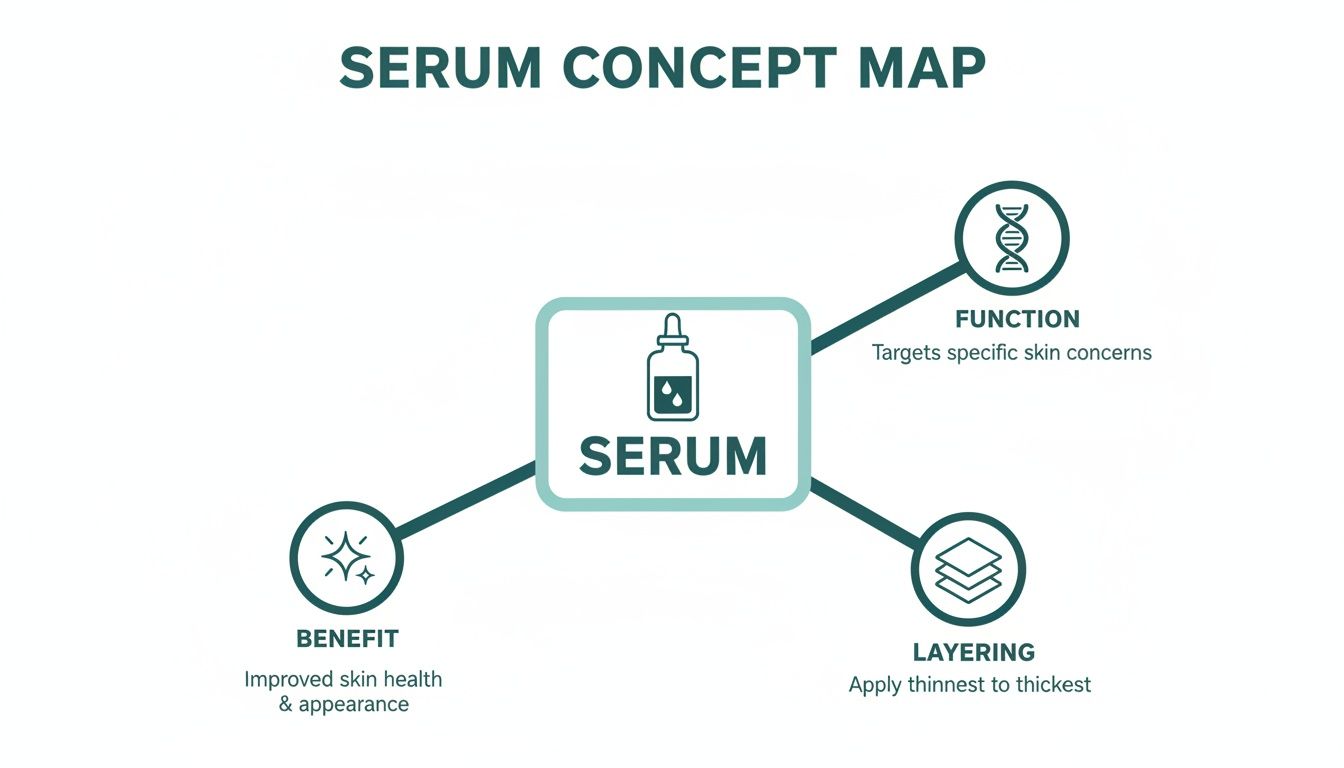
This map really shows that the magic of a serum comes from combining powerful ingredients with the right application to get those visible, beautiful results.
Plant-Derived Extracts And Modern Innovations
Beyond the classics, the skincare world is buzzing with exciting ingredients sourced from nature and perfected by science. These components offer specialized support, from soothing botanicals to advanced ingredients that benefit your skin.
To give you a quick reference, here’s a breakdown of some of the most popular and effective ingredients you'll find in today's top anti-aging serums.
| Key Anti-Aging Serum Ingredients And Their Cosmetic Benefits | ||
|---|---|---|
| Ingredient | Primary Cosmetic Function | Best For Improving The Appearance Of |
| Peptides (e.g., Matrixyl 3000, Argireline) | Supports Firm Appearance | Fine lines, wrinkles, loss of firmness |
| Hyaluronic Acid | Hydration & Plumping | Dehydration, fine lines, dullness |
| Vitamin C (L-Ascorbic Acid & derivatives) | Antioxidant & Brightening | Dark spots, uneven skin tone, dullness |
| Epidermal Growth Factors (EGF) | Skin Revitalization | Uneven texture, tired-looking skin |
| Plant Stem Cells | Antioxidant Properties | Environmental damage, signs of aging |
| Retinoids (Retinol, Retinal) | Skin Exfoliation | Wrinkles, texture |
| Niacinamide (Vitamin B3) | Supports Skin Barrier & Brightens | Redness, enlarged pores, uneven tone |
This table helps you quickly match your skin's needs with the ingredients best suited to help. It's all about finding the right tools for the job!
One of the most noteworthy advancements is the use of Epidermal Growth Factors (EGF). These proteins are fantastic at supporting the skin’s own natural processes, resulting in a complexion that appears renewed and refreshed. They are often included in sophisticated formulas to promote a smoother, more vibrant look.
Plant stem cells are another key innovation. Harvested from resilient botanicals like apples or grapes, these ingredients offer exceptional antioxidant properties. They help protect the skin from daily environmental aggressors, preserving its youthful appearance.
The most effective anti-aging serum formulas often combine tried-and-true ingredients like Vitamin C with modern advancements like peptides and plant stem cells. This multi-faceted approach ensures your skin receives comprehensive support for a beautifully radiant look.
This strategic blending isn't just a trend; it's a direct response to what savvy skincare users want: products that deliver real, visible results. Market reports consistently show that a small set of key active ingredients—including peptides, hyaluronic acid, and vitamin C—dominate both professional recommendations and consumer purchases. By understanding these powerhouse ingredients, you can make informed choices that align perfectly with your skincare goals.
How To Choose The Right Serum For Your Skin Type
Finding the perfect anti-aging serum isn’t about chasing a single "best" product everyone is talking about. It’s about finding the best formula for your unique skin. A serum that gives your best friend a gorgeous glow might feel too heavy or simply not do enough for you.
The real secret is matching the serum's ingredients and feel to what your skin is telling you it needs. When you get this right, the active ingredients can work their magic without throwing your skin off balance. Think of it like this: you wouldn't use a sledgehammer for a small picture nail. By really getting to know your skin's personality, you can see past the marketing hype and choose a serum that gives it the exact support it needs to thrive.
If you need a little help figuring out your skin's unique traits, our guide on what are the 5 skin types is a fantastic place to start this journey.
Serums For Oily Or Combination Skin
If your skin has a natural shine or gets oily in the T-zone while staying normal elsewhere, your main goal is balance. The right anti-aging serum for you will be packed with potent goodies but won't add any extra weight or grease.
Keep an eye out for formulas described as lightweight, water-based, or non-comedogenic—that last one is key because it means the product is formulated to be less likely to clog your pores. These types of serums sink in quickly, leaving your skin feeling clean and refreshed, not slick.
- Key Ingredients to Seek: Niacinamide is a true superstar for oily skin because it helps minimize the appearance of pores and promotes a more even, balanced complexion. Lightweight hydrators like glycerin are also fantastic for delivering moisture without any greasy after-feel.
Serums For Dry Or Dehydrated Skin
Dry skin naturally produces fewer oils (lipids) and often feels tight and flaky, while dehydrated skin is just thirsty for water. Both situations call for serums that are masters at delivering and locking in moisture, which is a huge help in softening the look of fine lines.
Your ideal serum will probably have a richer, more comforting texture that feels amazing when you apply it. The aim is to completely drench your skin in hydration and support its natural moisture barrier.
For anyone with dry skin, an anti-aging serum loaded with humectants is a total game-changer. It’s like giving your skin a huge drink of water, which visibly plumps everything up and brings back that dewy, supple look.
Look for these hydration powerhouses on the ingredient list:
- Hyaluronic Acid: This is a famous moisture magnet for a reason. It can hold many times its weight in water, delivering an intense surge of hydration.
- Glycerin: A classic, reliable humectant that pulls moisture into the top layers of your skin.
- Peptides: On top of their firming appearance benefits, many peptides are great at supporting the skin's own hydration levels.
Serums For Sensitive Skin
When you have sensitive skin, it can react to just about anything, showing up as redness or discomfort. For you, the motto is "less is more." You need a gentle but effective anti-aging serum that calms, soothes, and helps beautify your skin's appearance.
Always put formulas that are free of common triggers like synthetic fragrances, alcohol, and harsh dyes at the top of your list. A shorter, more focused ingredient list is often a very good sign.
But the most critical step for sensitive skin is the patch test. Before you even think about putting a new serum on your face, test a tiny amount on a hidden spot, like behind your ear or on your inner wrist. Wait a full 24-48 hours to make sure your skin is happy with the formula. This simple step is non-negotiable and can save you from a world of irritation.
Mastering Serum Application For The Best Results
So, you’ve found the perfect anti-aging serum—that’s a huge win! But the journey to incredible skin doesn’t stop there. How you apply that gorgeous formula is just as critical as what’s inside the bottle. Getting it right ensures every potent drop soaks in and gets to work, letting those powerful active ingredients do their thing.
Think of it like cooking a gourmet meal. You can have the finest ingredients, but your technique is what truly brings out the flavor. It’s the same with skincare. Mastering a few simple application steps can make all the difference in how your skin looks and feels, turning a daily chore into a rewarding ritual.
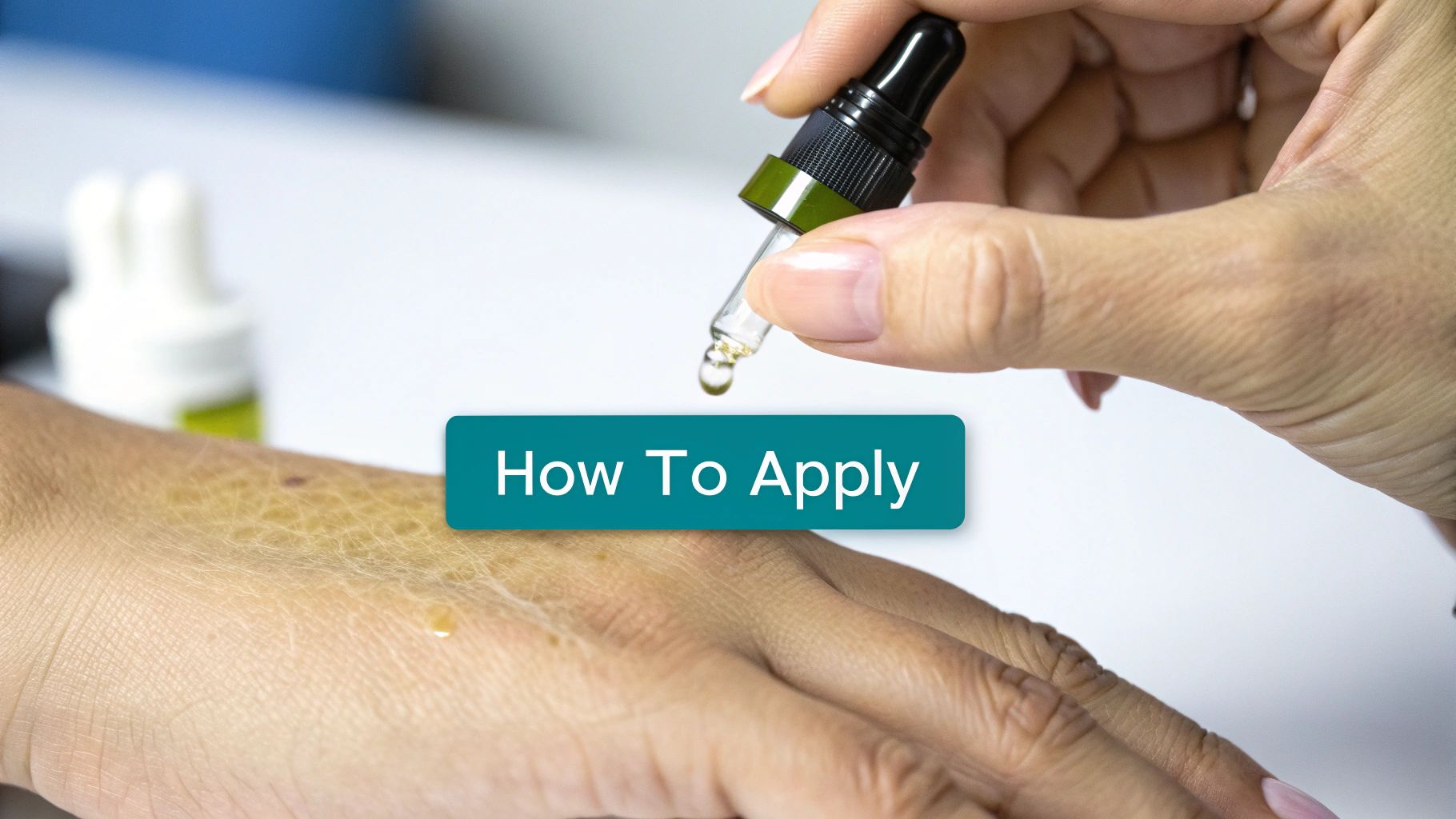
A Step-By-Step Guide To Flawless Application
To really get the most from your serum, you need a consistent process that preps your skin and helps the product absorb completely. A little bit of technique goes a long, long way.
Here’s a simple, effective four-step routine to follow:
-
Start with a Clean Canvas: Always, always apply serum to freshly cleansed and toned skin. When you wash away dirt, oil, and grime, you remove any barriers that could stop the serum from penetrating deeply. Pro tip: apply the serum while your skin is still a little damp to help lock in extra moisture.
-
Use the Right Amount: With a concentrated anti-aging serum, less is definitely more. Just a pea-sized amount on your fingertips is all you need for your entire face and neck. Using too much is just wasteful and can leave your skin feeling sticky.
-
Apply with a Gentle Touch: Resist the urge to rub the serum in aggressively—that can pull and stretch your delicate skin. Instead, use a gentle patting and pressing motion. Lightly tap the product onto your face and neck with your fingertips until it’s evenly distributed. This technique is much gentler and actually boosts absorption.
-
Allow Time to Absorb: Patience is a virtue! Give the serum a minute or two to fully sink in before you move on to your moisturizer or sunscreen. This ensures the active ingredients have time to get to work without being diluted by the next product you layer on top.
Where Serum Fits In Your Daily Routine
One of the questions we get asked most is about the right order to apply skincare. Nailing the sequence is crucial for letting each product do its job properly. Because serums have such a thin consistency, they should always go on before any heavier creams or oils.
If you’re ever feeling lost, our complete guide on the correct order to apply skin care products breaks it all down beautifully.
Key Takeaway: The golden rule is simple: apply your skincare products from the thinnest to the thickest consistency. This ensures lighter, water-based products like serums can penetrate the skin before thicker, oil-based products create a protective seal on top.
Here’s what that looks like in a typical morning and evening routine:
Sample Morning Routine
- Step 1: Cleanser
- Step 2: Toner or Essence
- Step 3: Anti-Aging Serum (e.g., a Vitamin C serum for antioxidant support)
- Step 4: Eye Cream
- Step 5: Moisturizer
- Step 6: Sunscreen (SPF 30 or higher)
Sample Evening Routine
- Step 1: Cleanser (consider a double cleanse if you're wearing makeup)
- Step 2: Exfoliant or Toner
- Step 3: Anti-Aging Serum (e.g., a peptide or EGF serum to support overnight rejuvenation)
- Step 4: Eye Cream
- Step 5: Moisturizer or Night Cream
By following these simple steps and slotting your serum into the right place, you create the perfect environment for your skin to soak up all the cosmetic benefits of the powerful ingredients you’ve so carefully chosen.
Exploring Natural Ingredients And DIY Skincare
For the hands-on beauty lover, diving into the world of natural ingredients and DIY skincare is a total playground. It’s all about creativity and making something just for you. This approach is the heart of clean beauty—it puts you in the driver’s seat, connecting you directly with the beautiful, plant-derived extracts that make your skin sing. Making your own products isn't just about the finished serum; it's about the process and knowing every single thing you're smoothing onto your skin.
The appeal is pretty obvious. You get complete control over what goes into your formulas, picking ingredients that feel right for your personal skincare philosophy. Whether you're drawn to the intense hydration of aloe vera or the silky feel of botanical oils, DIY lets you craft a product that is uniquely yours.
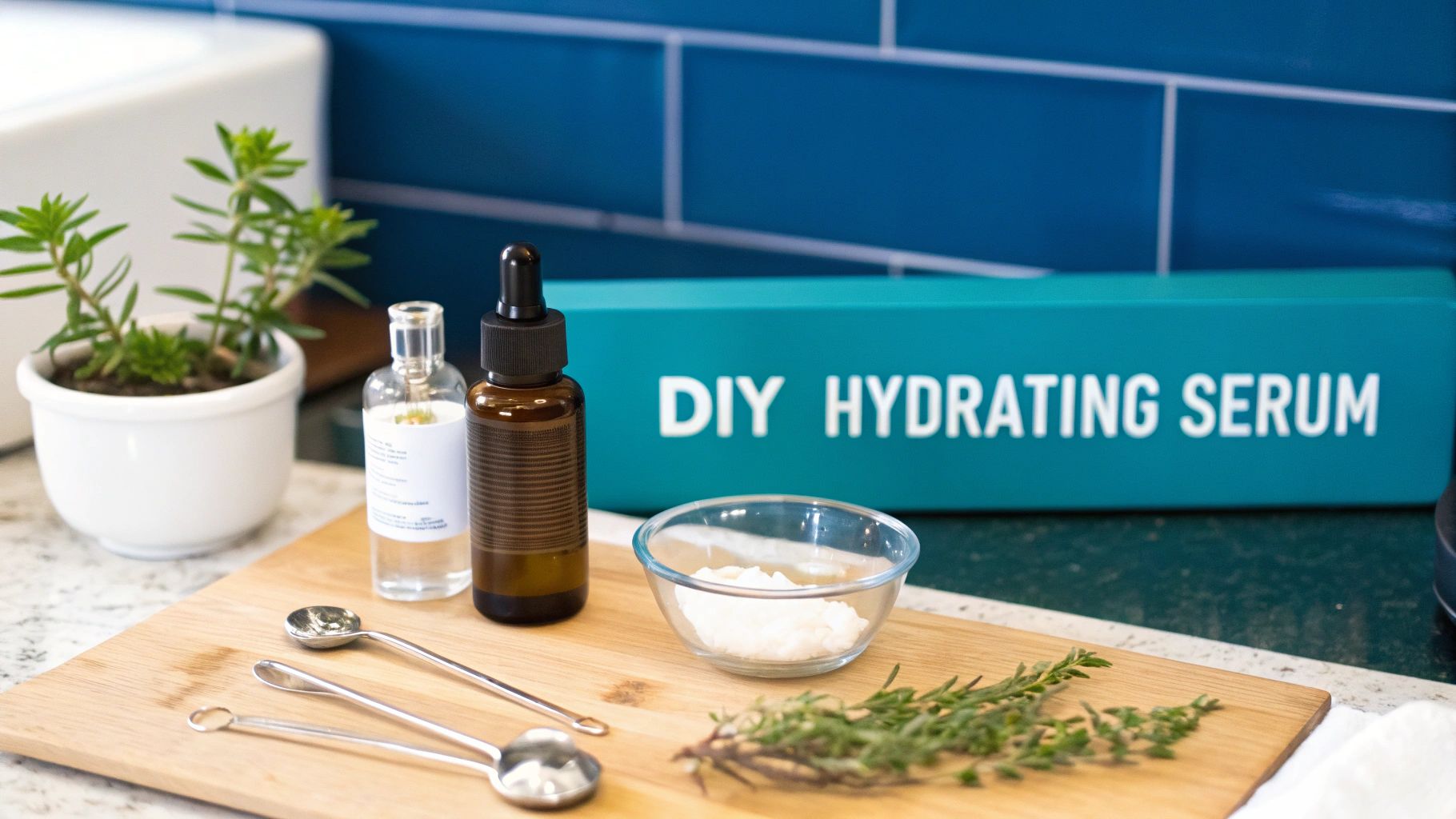
The Foundations Of A Simple DIY Hydrating Serum
Whipping up a basic hydrating serum at home is way simpler than you might think. This beginner-friendly recipe is all about creating a water-based gel that has a lovely slip and gives your skin a boost of moisture. It's perfect for layering into any routine and serves as a fantastic starting point for your creative journey.
Think of this as your base camp. Once you get comfortable with the process, you can start adding other water-soluble goodies. For those who really want to get into the art of making cosmetics, exploring professional resources on cosmetic formulation can open up a whole new world of knowledge and inspiration.
Here’s an easy recipe to get you started:
- Distilled Water: This is the foundation of your serum. Using distilled water ensures it’s free from any minerals or contaminants you'd find in tap water.
- Vegetable Glycerin: A classic humectant that acts like a magnet for moisture, drawing it into the skin to give it that plump, hydrated look.
- A Natural Gelling Agent (like Xanthan Gum): This is what gives your serum its signature texture, turning a watery solution into a more substantial gel that’s a breeze to apply.
The real fun is in the process itself—measuring, mixing, and watching your creation come to life. It gives you a real appreciation for what each ingredient brings to the table.
Critical Safety Rules For DIY Skincare
While making your own skincare is incredibly rewarding, safety has to be your number one priority. Creating products that are both effective and safe takes more than just mixing pretty ingredients together. It requires a serious commitment to cleanliness and proper formulation to prevent nasty microbial growth and ensure your creations are gentle on your skin.
Creating your own skincare is a beautiful blend of art and science. The art is in your ingredient selection and creativity; the science is in the sanitation and preservation that keep your products safe and stable.
Before you even think about starting, make these safety practices non-negotiable:
- Impeccable Sanitation: Your workspace, containers, and tools have to be spotless. We’re talking thoroughly sanitized. Use 70% isopropyl alcohol to wipe down every single surface and piece of equipment to minimize the risk of introducing bacteria into your formula.
- Using Distilled Water: Never, ever use tap water. It contains minerals and microorganisms that can contaminate your product and drastically shorten its shelf life.
- Proper Preservation: This is not an optional step. Any product that contains water must have a broad-spectrum preservative. Preservatives are what stop harmful bacteria, yeast, and mold from setting up camp in your beautiful water-based creations.
- Sourcing Quality Ingredients: Your final product is only as good as its parts. Always buy your supplies—from active ingredients to preservatives—from reputable suppliers who sell high-quality, cosmetic-grade materials. If you're growing botanicals like aloe yourself, knowing how to care for them is key. A helpful resource like A Guide to Aloe Vera Plants Care can make sure you’re sourcing fresh, healthy ingredients for your projects.
By sticking to these fundamental rules, you can enjoy the creative rush of DIY skincare with total confidence, knowing your homemade anti-aging serum is crafted with both love and safety in mind.
What's Driving the Anti-Aging Skincare Craze?
Have you ever noticed how certain skincare ingredients seem to be everywhere all at once? The journey an anti-aging serum takes from a lab to your bathroom shelf isn't random; it's shaped by some pretty powerful global trends. Knowing what’s happening in the bigger picture gives you context for your own skincare choices, helping you see beyond the marketing buzz.
These shifts aren't just fads. They're driven by real changes in consumer values, breakthroughs in science, and just plain demographics. When you get a handle on these patterns, you become a much smarter shopper, ready to find products that actually line up with what you want for your skin.
The Influence Of Global Demographics
One of the biggest forces pushing the anti-aging market forward is simple: people are getting older. As populations in major parts of the world age, the desire for effective skincare that helps them look and feel their best grows right along with it. This has created some clear patterns in where the money is being spent.
For example, there’s a heavy concentration of spending in a few key regions. Right now, North America is the single largest player, making up an estimated 40% of the entire global market. That points to a strong, well-established customer base that is actively on the hunt for high-performance products. If you're curious about the numbers, this comprehensive anti-aging market analysis breaks it all down.
This focus on certain geographic areas affects everything from the ingredients chosen for a serum to the way it's advertised, ensuring that the products hitting the shelves meet the specific demands of these core consumers.
How E-Commerce Changed Everything
The way we shop for skincare has completely shaken up the industry. The explosion of e-commerce blew the doors off the old way of doing things, making specialized and niche skincare more accessible than ever before. You’re no longer limited to whatever your local department store decides to stock.
This move to online shopping has put the power back in your hands, allowing you to:
- Deep-dive into ingredients: You can easily look up exactly what peptides, growth factors, or plant stem cells do before you even think about buying.
- Read real-world reviews: With access to thousands of reviews from people just like you, you can see what’s working and what’s not.
- Buy straight from the brands: This direct-to-consumer approach often means you get access to more unique formulas and a real connection to the brand's philosophy.
E-commerce has basically turned skincare into a worldwide conversation. It allows savvy shoppers to discover and get their hands on incredibly effective formulas no matter where they live, creating a more educated and empowered community.
When you boil it down, knowing these trends shows that your interest in a top-notch anti-aging serum isn't just a personal whim. It’s part of a much larger, well-informed movement toward valuing smart, science-backed skincare that helps you celebrate your skin at every age.
Your Anti-Aging Serum Questions, Answered
Stepping into the world of serums can feel a little overwhelming, and it's natural to have questions. We get it. To make things easier, we’ve put together answers to some of the most common things people wonder about when adding an anti-aging serum to their routine.
Think of this as your friendly guide to clearing up confusion and busting a few myths. Our goal is to give you straightforward, real-world advice so you can feel completely confident about the choices you make for your skin.
When Is The Best Time To Start Using An Anti-Aging Serum?
Honestly, there’s no magic age to start. Many people begin exploring anti-aging serums in their late 20s or early 30s. Think of it as a proactive step—giving your skin the support it needs before significant changes appear.
But here’s the thing: it’s never, ever too late to start. Whether you're looking to soften the look of fine lines that are already there, brighten your complexion, or just give your skin a major hydration boost, the right serum can make a world of difference. The real goal is to have beautiful, healthy-looking skin at every stage of life.
Can I Use More Than One Serum At A Time?
Absolutely! Layering serums is a fantastic strategy for tackling multiple skin goals at once. You just need to know the right way to do it so your skin can soak up all the goodness from each one.
The golden rule is to apply them from the thinnest texture to the thickest. For instance, you’d start with a light, watery serum (like one with hyaluronic acid) and follow it up with a slightly creamier peptide formula. Just give each layer about a minute to absorb before moving on to the next product.
Expert Tip: Be mindful of layering too many powerful active ingredients at once, especially if your skin is on the sensitive side. It's always a good idea to introduce new products one by one to see how your skin reacts.
Will A Serum Make My Oily Skin Greasier?
This is a huge concern for anyone with oily skin, but rest assured, the right anti-aging serum can actually help bring things into balance. Long gone are the days of heavy, greasy formulas. Today’s best serums are incredibly lightweight and water-based.
Many are specifically formulated to be non-comedogenic, which is just a fancy way of saying they won’t clog your pores. Look for powerhouse ingredients like Niacinamide, which is brilliant for minimizing the appearance of pores and promoting a more even-toned complexion. Sometimes, oily skin is just dehydrated skin crying out for moisture, and a good hydrating serum can help it feel balanced, reducing the look of that afternoon shine.
At Skin Perfection, our passion is empowering you with the knowledge and ingredients to achieve your best skin ever. Whether you fall in love with one of our expertly crafted formulas or decide to create your own, we’re here to support you. Discover our collection of advanced serums and high-quality DIY supplies at https://www.naturalorganicskincare.com.