

 Buy with Prime
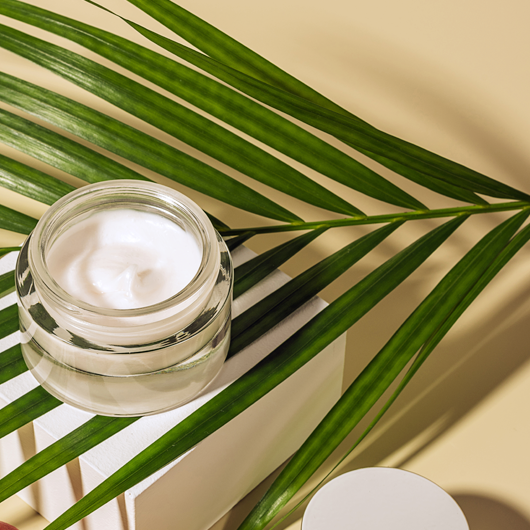


If you've ever used pure castor oil, you know it's incredibly rich and nourishing. But let's be honest—it's also thick, sticky, and can feel pretty heavy on the skin. So, what if you could get all those amazing properties in a light, silky format that your skin just drinks up?
That’s exactly what castor oil lotion is. It’s a clever emulsion that combines the qualities of castor oil with the lightness of a water-based lotion. This simple tweak makes it a joy to apply, delivering all the goodness without that heavy, greasy feeling.
Why a Lotion is a Game-Changer

While we love pure castor oil, that dense texture makes it impractical for everyday, all-over use. This is where creating a lotion completely changes the game. It takes a powerful, single ingredient and turns it into an elegant daily moisturizer that just glides onto your skin.
The secret is emulsification. By whipping the oil into a water base, the formula becomes incredibly spreadable and absorbs in a flash. This allows the key component of castor oil—its high concentration of ricinoleic acid—to get to work more effectively.
The result is a product that delivers amazing surface hydration, smoothing out your skin’s texture and leaving it feeling plump and deeply moisturized.
Its Growing Popularity
It's no secret that castor oil has been a beauty staple for centuries, but seeing it pop up in modern lotion formulas is a trend that's really taking off. From DIY skincare lovers to major beauty brands, everyone is catching on.
This boom is part of a bigger picture. The castor oil market hit an impressive USD 1.385 billion in 2022 and is expected to soar to USD 2.333 billion by 2036. A huge driver of this growth is its use in personal care products, where its ability to create smooth, effective emulsions is a massive plus.
For skincare crafters like many of the enthusiasts and estheticians we work with, castor oil is an ideal base. It mixes beautifully with other ingredients, letting you create custom formulas that feel truly luxurious while giving you that radiant glow. It’s become a go-to for creating lotions that beautify the skin, hair, and even eyelashes.
Castor Oil vs Castor Oil Lotion At A Glance
So, when should you reach for the pure oil versus the lotion? It really comes down to what you’re trying to achieve. One is a targeted application, while the other is an everyday hydrator. Seeing them side-by-side makes the difference clear.
This is just one of many fascinating topics to explore as you discover the benefits of beauty oils and learn how they fit into a well-rounded skincare routine.
| Characteristic | Pure Castor Oil | Castor Oil Lotion |
|---|---|---|
| Texture | Very thick, viscous, and sticky | Lightweight, creamy, and smooth |
| Absorption | Slow to absorb, can feel heavy | Absorbs quickly with no greasy feel |
| Application | Best for targeted spot application | Ideal for all-over body and face application |
| Formulation | 100% pure, single ingredient | An emulsion of oil, water, and other ingredients |
Ultimately, having both options in your toolkit gives you the flexibility to address different needs. The lotion makes daily hydration effortless, while the pure oil remains a powerful ally for more intensive, focused applications.
The Science Behind Castor Oil's Skin Enhancing Properties

To really get why castor oil lotion works so well, we have to look under the hood at its unique chemical makeup. The secret ingredient here is ricinoleic acid, a rare fatty acid that makes up a whopping 90% of castor oil. This one compound is a skincare multi-tasker, giving the oil a one-two punch that few other ingredients can match.
Think of ricinoleic acid as having two superpowers. First, it’s a humectant. Humectants are like moisture magnets, pulling water from the air right into your skin. This drenches your skin cells with hydration, which is what gives you that plump, dewy look.
But it doesn't stop there. Ricinoleic acid is also a fantastic emollient. While humectants pull water in, emollients work on the surface, smoothing and softening everything. They fill in the tiny, invisible gaps between skin cells, creating a silky-smooth canvas. It's this beautiful partnership that makes castor oil so good at transforming your skin's texture and feel.
The Humectant and Emollient Advantage
When you get a humectant and an emollient working together, something special happens. The humectant grabs onto moisture, and the emollient swoops in to lock it all down, all while making the skin’s surface feel like polished glass. This team effort is what helps diminish the look of fine lines and gives your skin a radiant, youthful glow.
This is precisely where a well-made castor oil lotion stands out. A lotion delivers these benefits in a way that slathering on pure, thick oil just can't.
In a lotion, the castor oil is emulsified into a water base. This completely transforms the experience, making the product feel elegant and light. It sinks in fast, delivering all that moisturizing goodness without the heavy, sticky feeling of raw oil.
By suspending the oil in a lighter formula, your skin can drink up the nourishing compounds almost instantly. This means you can get the hydrating and smoothing perks every single day, making it a practical and even luxurious part of your routine. And if you're curious about how different moisture-magnets work, you can explore our full guide on natural humectants for skin.
Why Formulation Matters
Turning thick, syrupy castor oil into a silky lotion isn't just about making it feel nice; it's about making it work better. The emulsification process breaks the oil down into microscopic droplets that can be spread evenly and absorbed efficiently.
Here’s why that matters:
- Improved Spreadability: The lotion glides across the skin like a dream. A little goes a long way, covering large areas effortlessly.
- Enhanced Absorption: A lighter texture means the good stuff gets to work faster instead of just sitting on top of your skin.
- Non-Greasy Finish: You get all the deep moisturizing properties of the oil, but without any greasy residue. This makes it perfect for both morning and night.
At the end of the day, the lotion format takes a potent, almost rustic ingredient and refines it into a sophisticated cosmetic. It makes the power of castor oil accessible, pleasant, and incredibly effective for achieving beautiful-looking skin. This is why it’s a favorite for at-home skincare creators and professional formulators alike.
Formulating Your High-Performance Castor Oil Lotion
Alright, let's get our hands dirty and move from theory to creation. This is where the real magic happens. Making your own stable, effective castor oil lotion is one of the most rewarding DIY projects, and this is your guide to turning a few simple ingredients into a luxurious, high-performance product.
At its heart, a lotion is just a blend of oil and water, held together by a special ingredient that convinces them to play nice. The first step to making a lotion that feels incredible is understanding where castor oil fits into this picture.
The Building Blocks of a Great Lotion
Think of making lotion like baking a cake. You have your fats (the oil phase), your liquids (the water phase), and the eggs that bind it all together (the emulsifier). Each part is non-negotiable for getting that perfect final texture and ensuring your lotion doesn't separate.
- The Oil Phase: This is where castor oil lives. It includes all of your oil-soluble ingredients, like carrier oils, rich butters, and certain active compounds.
- The Water Phase: This part is made up of all things water-soluble. Think distilled water, floral hydrosols, and humectants like glycerin that draw moisture into the skin.
- The Emulsifier: This is the key that unlocks a creamy, uniform lotion. It forces the oil and water to mix and stay mixed. Without it, you'd just have a greasy, separated mess. You can dive deeper into how these work in our guide on emulsifiers for lotion.
How much castor oil you use in your oil phase will completely change the end result. A higher percentage gives you a richer, more intensely conditioning lotion that’s perfect for very dry skin. A lower amount will create a lighter formula that’s better for daily use or for your face.
Choosing Your Castor Oil
Not all castor oil is the same, and the type you pick will influence your lotion’s personality. The two most common choices are cold-pressed and Jamaican black castor oil (JBCO). Cold-pressed is lighter in both color and feel, making it a fantastic, all-purpose option for facial lotions.
JBCO, on the other hand, is made from roasted castor seeds. This gives it a darker color and a reputation for being exceptionally nourishing, especially for the scalp. It's the go-to choice if you're formulating a lotion to promote the appearance of thicker, fuller-looking hair.
No matter which one you choose, castor oil's main job is to bring its unique moisturizing and conditioning power to the party, giving your lotion that signature rich, nourishing feel.
The demand for specialized ingredients like these is surging. The cosmeceutical world has fallen in love with castor oil, with its market projected to jump from USD 1.45 billion in 2026 to USD 1.92 billion by 2030. For us DIY formulators, this is fantastic news. It means we're seeing more innovative castor oil derivatives, like hydrogenated versions, which are excellent for delivering other high-performance ingredients more effectively. You can learn more about this growing market on The Business Research Company.
Pairing with High-Performance Ingredients
Now for the fun part—customization! By adding other potent ingredients, you can create targeted formulas that go way beyond simple moisturizing. Think of your castor oil lotion as the perfect delivery vehicle for powerful actives.
For a lotion designed to beautify mature skin, try adding:
- Peptides: These tiny but powerful ingredients help improve the skin's appearance, encouraging a firmer, more youthful look.
- Antioxidants: Ingredients like Vitamin E or Green Tea Extract are fantastic for helping the skin defend against daily environmental stressors.
If you’re making a hair lotion to nourish the scalp, you might include:
- Botanical Extracts: Ingredients like Saw Palmetto or Rosemary extract are popular, trusted choices in hair-focused formulas.
- Biotin: Famous for its role in supporting the appearance of healthy hair and skin.
By thoughtfully combining these ingredients, you can elevate a simple moisturizer into something truly special and professional-grade. If you're looking to explore more in the world of DIY skincare, this guide to recipes for homemade face creams is packed with great inspiration. When you start with high-quality ingredients, you have the power to create something amazing.
Alright, let's roll up our sleeves and get to the fun part—making your very own professional-grade castor oil lotion. This isn't just a kitchen-counter experiment; this is a blueprint for a truly beautiful lotion that feels incredible, sinks in without a trace of grease, and leaves your skin looking plump and hydrated.
We're going to walk through this together, phase by phase. It might seem like a science project at first, but you'll see how simple it is once you understand the basic steps. My goal is to give you the confidence to create a stable, gorgeous, and effective lotion using top-notch supplies, like the ones from Skin Perfection.
Your Formulation Blueprint
Making a great lotion is all about combining oil and water—two things that famously don't mix. The secret? An emulsifier. Think of it like a three-act play: the water phase, the oil phase, and the grand finale where they come together.
This little chart breaks down the fundamental process.

As you can see, you prepare your water-based ingredients and your oil-based ingredients separately. Then, with the help of an emulsifier, you blend them into the creamy, dreamy lotion you're after.
Equipment and Ingredients
First things first, let's get your kitchen lab set up. When you're making skincare, cleanliness is non-negotiable. Precision is a close second.
Equipment:
- Two heat-safe beakers or glass measuring cups (at least 250ml)
- A small pot to create a water bath (or a double boiler)
- A digital scale that measures to 0.01g
- A mini-mixer or immersion blender (a milk frother works wonders!)
- pH testing strips or a pH meter
- Sanitized lotion bottles or jars for your finished product
Ingredients: This recipe creates about 100g (roughly 3.5 oz) of lotion. For accuracy, we're measuring everything by weight, not volume.
Phase A - Water Phase:
- 66g Distilled Water: This is the hydrating foundation of your lotion.
- 3g Vegetable Glycerin: A fantastic humectant that pulls moisture into the skin.
Phase B - Oil Phase:
- 10g Cold-Pressed Castor Oil: Our star player, bringing its rich, conditioning magic.
- 10g Fractionated Coconut Oil: This lightens the feel, helping the lotion absorb beautifully.
- 5g Emulsifying Wax NF: The matchmaker that holds our oil and water phases together.
Phase C - Cool-Down Phase (add below 113°F / 45°C):
- 5g Syn-Coll (Palmitoyl Tripeptide-5): A powerhouse peptide to boost the appearance of skin texture and firmness.
- 1g Leucidal SF Complete: A broad-spectrum preservative to keep your creation safe and fresh.
Pro Tip: Before you measure a single ingredient, sanitize your entire workspace and all your equipment with 70% isopropyl alcohol. This is the single most important step to prevent bacteria from spoiling your beautiful lotion. Don't skip it!
Step-by-Step Instructions
Ready? Follow these phases carefully, and you'll have a perfect emulsion in no time.
Step 1: Prepare Your Phases Get your two beakers ready. In the first beaker, measure out your water phase ingredients: the distilled water and vegetable glycerin. In the second beaker, measure out all your oil phase ingredients: the castor oil, fractionated coconut oil, and emulsifying wax NF.
Step 2: Heat Both Phases Create a gentle water bath by placing both beakers in a pot with a few inches of simmering water. Gently heat them until both phases reach about 160°F (71°C). Having both at a similar temperature is crucial for creating a stable, lasting bond.
Step 3: Combine and Emulsify This is the moment of magic. Carefully pour your oil phase into your water phase. Grab your mini-mixer and immediately start blending in short bursts. For the next 2-3 minutes, you'll see the mixture transform from two clear liquids into a milky white, creamy lotion right before your eyes.
Step 4: Cool and Add Actives Now, patience is key. Let the lotion cool, giving it a gentle stir every so often. Once the temperature has dropped below 113°F (45°C), it's safe to add your cool-down ingredients. Add the Syn-Coll peptide and the Leucidal SF Complete preservative, then stir gently until they are fully mixed in.
Step 5: Check pH and Bottle We're almost there! The ideal pH for a skin-friendly lotion is between 4.5 and 5.5. This range is not only best for your skin barrier but also ensures your preservative works effectively. Dip a pH strip into your lotion and check the color. If it needs adjusting, a tiny drop of citric acid solution will lower it. Once the pH is perfect, pour your gorgeous castor oil lotion into your sanitized bottles.
Feeling inspired? This recipe is a fantastic starting point. For more ideas and variations, check out our other guides on making your own homemade body lotion. You've just created a high-performance product that perfectly showcases the incredible benefits of castor oil in a truly elegant formula.
One of the best things about making your own castor oil lotion is just how versatile it can be. While it's an incredible ally for your face and body, you can also direct its nourishing power to boost the appearance of lush hair and defined lashes.
With just a few smart tweaks to your base recipe, you can create targeted formulas for your scalp, eyebrows, and eyelashes. The secret lies in adjusting the texture and adding a few complementary ingredients. For your hair, you’ll want a lighter fluid that nourishes the scalp without leaving your strands greasy. For lashes, a delicate, serum-like feel is perfect for precise, safe application.
Creating a Scalp-Nourishing Lotion for Hair
A healthy-looking head of hair really does start with a happy scalp. By whipping up a lightweight castor oil lotion, you can deliver hydration and key nutrients right to the skin on your head. This helps support the hair follicles and creates the perfect environment for your hair to look its absolute best.
To adapt your base lotion recipe for your scalp, think about these changes:
- Go Lighter on the Oil Phase: Simply reduce the total percentage of oils in your formula. This creates a much lighter, almost serum-like lotion that won't make your roots look weighed down or oily.
- Pick the Right Castor Oil: While cold-pressed is always a great choice, many formulators swear by Jamaican Black Castor Oil (JBCO) for hair formulas. It has a stellar reputation for deeply nourishing the scalp.
- Add Hair-Focused Goodies: During your cool-down phase, this is where the magic happens. Mix in actives known for their role in hair care. Biotin (Vitamin B7) and Hydrolyzed Keratin Protein are fantastic additions for improving the appearance of your hair's strength and fullness.
When it's time to apply your custom scalp lotion, a bottle with a nozzle applicator is your best friend. Just part your hair into sections, apply a small amount directly to the scalp, and gently massage it in. This targeted approach makes sure the product gets exactly where it needs to be.
Formulating a Gentle Lotion for Lashes and Brows
Full, defined eyebrows and long, fluttery eyelashes frame the face beautifully. You can create your own gentle, serum-like castor oil lotion to enhance their appearance, helping them look denser and more conditioned over time. But safety is everything here—the eye area is incredibly delicate.
The main goal is to create a very thin formula that doesn't migrate. You need it to stay precisely where you put it—right on the lash line and brows—without any risk of it running into your eyes.
When you're formulating for the eye area, every single ingredient choice matters. Always, always opt for the gentlest, highest-purity ingredients you can find, and make sure your formula is perfectly preserved to eliminate any risk of contamination.
This is a market with massive interest. Globally, cosmetics snap up 35-40% of the castor oil market share, and a huge chunk of that is driven by products designed to enhance hair and lashes. Enthusiasts and professionals are all creating custom blends to meet this demand. For instance, you'll find DIY pros using it in scalp lotions, while estheticians often mix it into professional serums to boost the appearance of lash fullness. You can learn more about the castor oil market dynamics by exploring the comprehensive report on The Business Research Company.
Critical Safety for Eye-Area Formulations
Let's be crystal clear: creating products for use near the eyes demands the absolute highest level of care. This is not the place to take shortcuts. Ever.
Key Precautions:
- Always Patch Test: Before you even think about putting your new lotion on your lash line, test it on a small, out-of-the-way spot (like behind your ear) for at least 24 hours to check for any sensitivity.
- Use a Sterile Applicator: Never, ever apply the product with your fingers. Use a clean, single-use micro-swab or a dedicated, sanitized fine-tip eyeliner brush for each application.
- Apply Sparingly: A tiny amount is all you need. Seriously. Apply a very thin line just to the base of your upper lashes and along your brows. Your goal is to avoid getting the product directly in your eyes.
- Perfect Your Preservative: Because this product is used so close to the eyes, a reliable, broad-spectrum preservative isn't just a suggestion—it's completely non-negotiable.
By sticking to these guidelines, you can safely customize your castor oil lotion to create effective, professional-quality treatments for both your hair and lashes, truly showing off the amazing versatility of this natural ingredient.
Diving into the world of DIY skincare is incredibly rewarding, but let's be clear: safety is everything. When you're crafting your own products, you're the formulator, the quality control, and the end-user all in one. Following a few key practices ensures every jar of castor oil lotion you whip up is not just effective, but completely safe for your skin.
The absolute number one rule before slathering on any new product—whether you made it or bought it—is the patch test. It’s your first line of defense against an unexpected reaction. Just apply a tiny bit of lotion to a discreet spot, like your inner wrist or behind your ear. Then, you wait. Give it at least 24 hours to see if your skin has anything to say about it. This simple step can save you a world of trouble.
Best Practices for Your Lotion
Even though castor oil lotion is a wonder for many, it's always smart to listen to what your own skin is telling you. If you have very oily skin, for example, you might find that using it twice a day is a bit much. Try it as a rich evening treatment instead and see how your skin responds.
Proper storage is another biggie. Think of your homemade lotion like fresh food; it needs to be protected to stay good.
- Keep it Cool: Heat is the enemy of a good emulsion. It can cause your lotion to separate and can degrade all those lovely active ingredients you added. A cool spot, far from a sunny window, is perfect.
- Keep it Dark: Light is another culprit that can break down sensitive compounds. This is why you often see high-end serums in opaque or dark glass bottles—they're not just for looks!
The Unskippable Role of Preservatives
Here's some straight talk: any product that contains water (and yes, that includes your beautiful DIY lotion) is a five-star resort for mold and bacteria. It's just science. This is exactly why adding a broad-spectrum preservative isn't just a suggestion—it's non-negotiable.
Without one, your lotion is only safe to use for a few days, and even then, it must be refrigerated. A good preservative is the only thing that stands between a beautiful, skin-loving product and a science experiment gone wrong. If you want to dive deeper, we've got a whole guide on choosing the right natural skin care preservative.
The global fascination with castor oil isn't just a niche trend; the market is valued at an estimated USD 2.21 billion in 2024, with its role in sustainable skincare being a huge part of that growth. As more people bring this amazing oil into their routines, sticking to these safety standards becomes more important than ever. You can learn more about what's driving the castor oil market by checking out the latest research from Straits Research.
Frequently Asked Questions About Castor Oil Lotion
Whenever you're trying something new with your skincare, a few questions are bound to come up. Let's tackle some of the most common ones about castor oil lotion so you can feel confident and get the best results, whether you're buying it or making your own.
Can I Use Castor Oil Lotion On My Face Every Day?
Absolutely. For many people, especially those with dry or mature skin, a well-made castor oil lotion can be a daily go-to. It's fantastic for boosting hydration and giving your skin a plumper, smoother look and feel.
However, if your skin is on the oily or combination side, you might find it works better as an evening treatment or just a few times a week. The real secret is to listen to your skin. Always do a quick patch test before making it a regular part of your routine.
Will Castor Oil Lotion Make My Skin Or Hair Greasy?
This is a totally valid concern, especially if you've ever felt how thick and heavy pure castor oil is. The great news is that a properly formulated castor oil lotion is specifically designed to avoid that greasy feeling. It's an emulsion, meaning the oil is blended with water-based ingredients to create something lightweight that absorbs quickly.
The whole point is to get all the nourishing benefits of the oil without leaving a slick, heavy film on your skin or hair. When you're using it on your hair, just a tiny amount focused on the scalp and ends is all you need to nourish without weighing things down.
The magic of a good lotion is its absorption. It should leave your skin feeling soft and moisturized—never slick or heavy. That's what makes it so pleasant for daily use.
How Long Until I See A Difference From Castor Oil Lotion?
Patience is key here, but some benefits are immediate. You’ll likely feel a difference in skin hydration right after the first use; your skin should feel softer and more supple straight away.
For more significant changes, like improvements in skin texture, the appearance of fine lines, or the look of fuller hair, you'll need to be consistent. Stick with it for several weeks, or even a couple of months, to give the ingredients time to really work their magic.
At Skin Perfection, we believe in empowering you with the best ingredients for your skincare journey. Whether you're crafting your own custom castor oil lotion or seeking professional-grade products, we have everything you need to achieve beautifully radiant skin. Explore our lotion-making supplies and skincare solutions today.