

 Buy with Prime
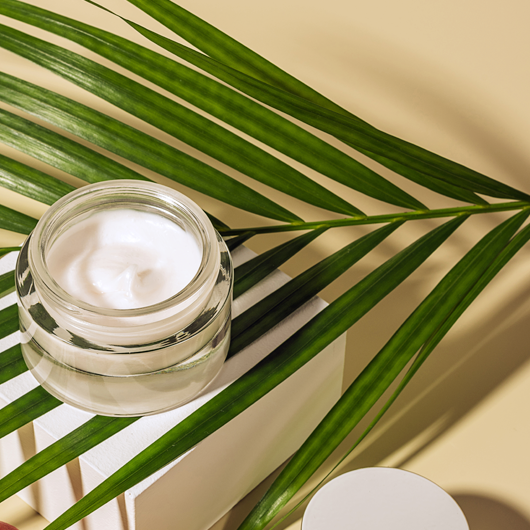


If your skin suddenly feels tight after cleansing, stings when you apply products you used to tolerate, or looks dull no matter how much moisturizer you layer on, you're probably not dealing with “just dryness.” In practice, this pattern usually points to a barrier that's been pushed past what it can comfortably handle.
That often happens after too many exfoliating acids, frequent retinoid use, harsh cleansers, over-washing, or too much experimentation at once. The good news is that a calmer, stronger-looking complexion usually starts with subtraction, not addition. You don't need a crowded shelf. You need a method.
Table of Contents
- Is Your Skin Barrier Compromised
- Your Immediate Action Plan
- Long-Term Barrier Fortification
- Key Ingredients for Barrier Support
- DIY Formulations for a Healthy Look
- Troubleshooting and When to See a Pro
Is Your Skin Barrier Compromised
Your skin barrier is the outer defense layer of the stratum corneum. I usually describe it to clients as a smart gatekeeper. It helps keep water in, and it limits how easily irritants get in. When that system is under stress, transepidermal water loss, or TEWL, rises, and skin starts acting unreliable.
That's why barrier trouble doesn't show up as one symptom. It usually shows up as a cluster. Skin can feel dry and oily at the same time. It can sting from a “gentle” serum. It can look rough, flushed, or oddly shiny without feeling healthy.

What the barrier actually does
The barrier isn't just about dryness. It's part water management, part surface protection. When it's functioning well, skin feels more comfortable, looks smoother, and handles a normal routine without protest.
When it's compromised, even useful ingredients can start feeling harsh. That's why knowing how to repair skin barrier issues starts with recognizing that the problem may be the skin's tolerance level, not a lack of actives.
Practical rule: If your skin burns from products that never used to bother you, stop assuming you need a stronger treatment. You may need less stimulation and more support.
Signs you can check today
Look for patterns, not isolated moments.
- Persistent redness: Skin stays flushed or irritated even when you're not actively using an exfoliant.
- Post-cleanse tightness: Your face feels stretched after washing instead of comfortable.
- Dry patches or flaking: Moisture doesn't seem to “stick,” especially around the cheeks, mouth, or nose.
- New sensitivity: Products tingle, sting, or feel hot on contact.
- Dull appearance: Skin loses bounce and light reflection.
- Frequent breakouts: A stressed barrier can make acne-prone skin look more chaotic.
If your main issue feels like dehydration, a simple read on aloe vera for dry skin can help you think through soothing options without jumping back into heavy treatment products too fast.
One overlooked trigger
A lot of people focus on acids and retinoids, but I often start by asking about cleanser pH. Skin's natural acidic range is 4.5 to 5.5. A meta-analysis reviewing over 50 clinical trials found that cleansers with a pH between 4.0 and 5.0 led to 40% faster recovery of TEWL than alkaline cleansers above pH 7.0, and when skin surface pH rises above 6.0, enzymatic activity tied to lipid synthesis is inhibited, leading to a 50% reduction in ceramides and cholesterol production (clinical summary).
That matters because you can sabotage your routine before your serum even touches your face. If your cleanser leaves you squeaky, stripped, or hot-faced, I'd investigate that first.
Your Immediate Action Plan
When skin is reactive, the first phase isn't about optimization. It's about removing friction. The people who recover fastest usually stop trying to “fix” their skin with six new products at once.
What to stop first
Pause the ingredients and habits most likely to keep irritation going.
- Retinoids: Set aside retinol, retinal, and stronger vitamin A products for now.
- Exfoliating acids: Skip AHA and BHA products, peels, and exfoliating pads.
- Strong vitamin C formulas: These can feel sharp on already stressed skin.
- Scrubs and cleansing tools: Brushes, gritty exfoliants, and rough washcloths add more friction than you think.
- Frequent routine changes: Switching products every few days makes it hard to calm skin or identify the trigger.
If you want another practical comparison of this calm-down approach, this guide on how to fix a damaged skin barrier is useful because it reinforces the same minimalist logic.

The calm-down routine
A clinically grounded barrier-support routine is a 3-step sequence: cleanse gently, treat with barrier-supportive actives, then seal with a moisturizer or occlusive. Guidance also recommends a mild cleanser in the 4.0 to 5.0 range, followed by ingredients such as ceramides or hyaluronic acid to reduce TEWL and support function (The Ordinary barrier guide).
In real life, that looks like this:
-
Cleanse once, gently
Use a mild cleanser at night to remove sunscreen, makeup, and debris. In the morning, many people do better with just lukewarm water or a very light cleanse. -
Apply a simple hydrating layer
Humectants help attract water to the skin surface. If you formulate at home, Sodium Hyaluronate Powder Pure Hyaluronic Acid is a cosmetic-grade powder used to make water-based serums and creams, with typical DIY use levels of 0.1–2% and a stated molecular weight of 800-1500 Daltons for surface-focused hydration. -
Seal it in
Follow with a plain moisturizer, cream, or ointment texture that helps reduce water loss and keeps the skin from feeling exposed.
When skin is inflamed, simplicity is a treatment strategy in itself.
For nighttime comfort, it also helps to think about moisture retention, not just moisture application. A short guide on how to hydrate skin overnight can help you fine-tune that step.
If you make your own products
DIY is useful here, but only if you stay disciplined. This isn't the moment for fragrance, essential oils, aggressive acid blends, or stacking a dozen botanicals because they sound soothing on paper.
Choose a small number of compatible ingredients. Keep water-based formulas clean and properly preserved. Label the batch and resist the urge to keep tweaking it every other night.
Long-Term Barrier Fortification
Calming skin is one job. Keeping it from sliding back into the same cycle is another. Routine design, then, matters more than trend chasing.
Consistency matters more than novelty
A key study found that participants using a ceramide-containing emollient for 2 weeks had a 25% reduction in TEWL and a 30% increase in skin hydration, with the most noticeable gains showing up between days 10 and 14 of daily use. That tells you something important. Barrier improvement usually isn't instant, and random product hopping works against the process.
Ceramides matter because they're part of the lipid structure that helps skin stay comfortable and less porous to everyday irritation. In practical terms, a routine with physiologic lipids tends to outperform a routine that relies only on surface slip or temporary occlusion.
What a maintenance routine should feel like
Long-term support should feel boring in the best way. Your cleanser shouldn't leave your face squeaking. Your moisturizer shouldn't sting. Your skin shouldn't look calm for two days and then crash because you layered too many “results” products on top of each other.
I look for three signs that a maintenance routine is working:
- Comfort after cleansing
- Less day-to-day reactivity
- A steadier texture and more hydrated appearance
That doesn't mean your routine has to be bare bones forever. It means your baseline products need to be dependable enough that your skin stays stable when life gets messy, weather changes, or you decide to use an active again.
Stable skin usually comes from repeatable habits, not from a dramatic routine.
For overnight moisture support, one option is HydroGlow Anti-Aging Night Mask. Based on the catalog snapshot, it contains three forms of hyaluronic acid, polyglutamic acid, jojoba, squalane, glycerin, and triglycerides, and it's designed to absorb like a moisturizer rather than function as a rinse-off mask. That kind of formula can fit the maintenance phase when your skin wants hydration and a more cushioned feel overnight.
A resilient barrier also benefits from restraint. If your skin is doing well, don't reward it by over-exfoliating. Keep the basics stable, and let the stronger products stay in a supporting role instead of becoming the entire routine.
Key Ingredients for Barrier Support
Once skin settles down, ingredient selection gets easier. I don't sort formulas by marketing language. I sort them by function. For barrier support, most useful ingredients fall into three groups: humectants, emollients, and occlusives.
How to read a formula
Humectants attract water. Emollients soften and smooth the skin surface. Occlusives help slow water loss. Good formulas often combine all three, because hydration without a seal can disappear quickly, and a heavy seal without enough water underneath can leave skin feeling coated but still tight.
If you formulate or shop by ingredient list, this is also where a grounding knowledge of natural humectants for skin becomes useful. It helps you separate ingredients that merely sound hydrating from those that serve a clear role in the formula.
Barrier Support Ingredient Cheat Sheet
| Ingredient Category | Primary Function | Examples |
|---|---|---|
| Humectants | Attract and hold water at the skin surface | Hyaluronic acid, sodium hyaluronate, glycerin |
| Emollients | Smooth roughness and improve skin feel | Squalane, jojoba oil, triglycerides |
| Occlusives | Help reduce water evaporation from the skin | Petrolatum, shea butter, richer balm textures |
A few practical notes matter here.
- Humectants work best on damp skin: Apply them when the face is still slightly moist, then follow with a cream.
- Emollients improve feel and flexibility: They're often the reason skin stops feeling papery or rough.
- Occlusives are useful when skin feels exposed: They're especially helpful at night or in dry weather.
Supportive extras that can earn a place
Some ingredients don't fit neatly into one category but can still support a calmer routine.
- Niacinamide: Often used in supportive formulas, but if your skin is freshly irritated, simpler may be better at first.
- Panthenol: Common in comfort-focused products because it pairs well with hydrating systems.
- Centella asiatica: Frequently chosen when skin looks stressed or flushed.
- Aloe: Useful when you want a lighter, soothing profile in gels or emulsions.
A formula doesn't need every trendy ingredient to be effective. In many cases, the better product is the one with fewer chances to irritate you.
DIY Formulations for a Healthy Look
DIY can be an excellent way to support skin at home because you control the ingredient list, the concentration, and the batch size. It can also go wrong fast if you improvise too much. Keep these formulas simple, fragrance-free, and focused on hydration and comfort.

Hydration support serum
This is the kind of formula I'd choose when skin feels dehydrated, tight, and easily irritated by complex actives.
Formula concept
- Distilled water: Main solvent
- Sodium hyaluronate: Humectant support
- Glycerin: Extra water-binding slip
- Preservative: Required for a water-based product
How to make it
- Sanitize your tools, beaker, mixing utensil, and bottle.
- Add distilled water to the beaker.
- Sprinkle sodium hyaluronate slowly so it hydrates evenly instead of clumping.
- Add glycerin and mix until uniform.
- Add your preservative according to its usage guidelines.
- Bottle the serum and label the batch date.
Why it works Sodium hyaluronate and glycerin are both there to support hydration. This type of serum isn't meant to replace a cream. It's the water layer that should sit under one.
Calming cream base
A basic cream or lotion base gives you the “seal” step many stressed skin routines are missing.
Formula concept
- Water phase: Distilled water
- Humectant: Glycerin
- Oil phase: Jojoba or squalane
- Bodying support: A butter or fatty thickener if desired
- Emulsifier and preservative: Needed for a stable water-and-oil product
- Optional soothing addition: Aloe or panthenol if compatible with your system
Method Warm the water phase and oil phase separately, combine according to your emulsifier's instructions, then mix until the emulsion forms and cools. Add heat-sensitive ingredients during cooldown. Package in a clean container.
If you're building from beginner-friendly techniques, a guide to DIY natural facial moisturizer can help you stay within a safer, simpler framework.
Safety rules that matter
Homemade skincare can be elegant, but it still needs discipline.
Patch test every new formula, even if every ingredient sounds gentle.
- Use a preservative in water-based products: Water plus botanicals without preservation is not a casual shortcut.
- Make small batches: Smaller volumes help you monitor freshness and performance.
- Label everything: Date, formula, and any active percentage.
- Don't keep adjusting the recipe while your skin is reactive: Test one stable version first.
Good DIY skincare is controlled skincare. That's the difference between crafting a useful support product and creating a source of fresh irritation.
Troubleshooting and When to See a Pro
The hardest part for many people isn't starting a barrier-support routine. It's staying with it long enough to judge it fairly. Professional guidance notes that improvement is typically visible in 2–4 weeks, and potentially irritating ingredients are often reintroduced slowly, commonly starting at one night per week, with sunscreen kept in place because UV exposure can prolong inflammation (professional barrier support guidance).
What progress usually looks like
Early progress is often subtle. Skin may sting less before it looks dramatically different. Tightness usually eases before texture fully smooths out.
Watch for these signs:
- Less burning on application
- Reduced roughness
- More comfort through the day
- Fewer sudden flare-ups from basic products
If your skin still feels inflamed, it can help to review common triggers through a lens of what causes skin inflammation. Sometimes the issue isn't the moisturizer. It's the hot water, the shaving routine, the fragranced hair products, or the active you “only use occasionally.”
How to restart actives without repeating the damage
Many people undo their own progress when they feel better, then return to their old routine all at once.
A safer restart looks like this:
-
Wait for calm skin
No regular burning, less visible irritation, and a routine that feels predictable. -
Choose one active only
Don't restart retinoids, acids, and vitamin C in the same week. -
Begin at one night per week
Keep the rest of the routine bland and supportive. -
Watch the skin, not the calendar
If your skin stays calm, you can increase slowly. If it gets hot, flaky, or extra reactive, back off.
Reintroduction should feel cautious, not ambitious.
When home care isn't enough
Some situations need a professional eye. If you have persistent acne, recurring eczema-like flares, psoriasis, or irritation that keeps cycling back, home care may not be enough to sort out what's really happening. In that case, in-office support or corrective facial programs can be helpful as part of a broader plan, especially when the issue is chronic rather than occasional.
You should also consider professional guidance if your skin isn't improving after a reasonable consistent trial, if products burn no matter how simple they are, or if the pattern looks more like an ongoing condition than a temporary setback.
If you want skincare that supports a healthy-looking barrier, or you'd rather build your own simple formulas with transparent ingredients, explore Skin Perfection for ready-made products and DIY lotion-making supplies designed for informed skincare enthusiasts and formulators.