

 Buy with Prime
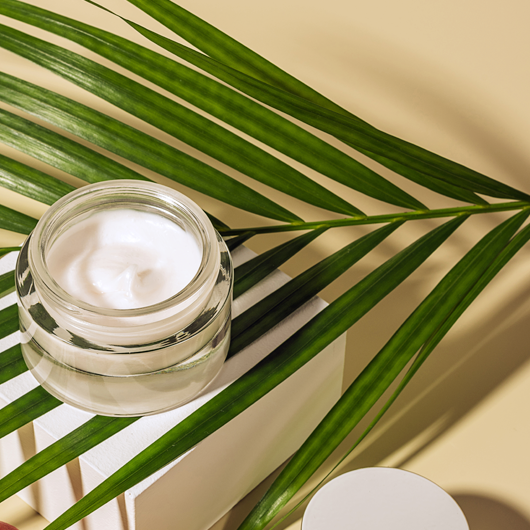


You mixed a serum, stirred carefully, and still ended up with tiny fish-eye lumps floating through it. The liquid looked smooth for a minute, then turned stringy, watery, or oddly slippery. Most DIY makers hit that moment early. It doesn’t mean you’re bad at formulating. It usually means the natural gelling agent wasn’t dispersed or hydrated the way that ingredient needs.
A gelling agent is the quiet architect of texture. It helps turn a thin water phase into something that feels elegant in the hand, glides across the skin, and holds a formula together long enough to be useful. In skincare, that matters. Texture shapes how a serum pours, how a mask sits on the face, and how a lotion feels during rub-in.
Interest in these materials keeps growing because formulators and shoppers both want simpler ingredient stories. The market reflects that shift. The global natural gelling agents market was valued at approximately $3.74 billion in 2024 and is projected to reach $7.724 billion by 2035, expanding at a CAGR of 6.8% according to Fact.MR’s natural gelling agents market report.
That broad growth shows up at the mixing bowl level too. People want plant-derived, marine-sourced, and fermentation-based options that create polished textures without relying only on synthetic thickeners.
For skincare makers, the challenge isn’t finding a gum or gel former. It’s choosing the right one, then handling it properly. A lightweight serum needs a very different structure from a scoopable mask. A lotion with oils and humectants behaves differently from a clear water gel. Small process mistakes can change everything.
Natural gelling agents behave less like flour and more like tiny framework builders. If you dump them in carelessly, they clump. If you guide them, they build texture.
Introduction to Natural Gelling Agents
A natural gelling agent is a substance, usually derived from plants, seaweed, or natural biopolymers, that thickens water and can create anything from a soft fluid gel to a firmer jelly-like structure. In skincare, these ingredients help control flow, suspension, spreadability, and the final sensory feel.
Why texture matters in skincare
Texture isn’t decoration. It affects how a formula behaves from the first pour to the last swipe.
A watery facial serum may feel refreshing, but if it’s too thin, it can run through your fingers before you apply it. A cream may contain beautiful oils and humectants, but if it lacks structure, it can separate or feel messy. The gelling system helps organize that formula.
It functions like furniture in a room. Without it, everything drifts. With the right arrangement, each piece has a place and the room works.
Where natural gels come from
Many common gelling agents come from:
- Plants, such as pectin and guar-derived materials
- Seaweed, such as agar and carrageenan
- Fermentation, such as xanthan and gellan
- Animal-derived sources, such as gelatin
Each source brings a different feel. Some make glossy gels. Some create cushion. Some produce a soft slip. Others make a firmer, more brittle set.
That’s why two products can both be called “gel” and feel completely different.
Where beginners get stuck
Most confusion starts with one of these mistakes:
- Dumping powder straight into water: The outer layer hydrates instantly and traps dry powder inside.
- Using the wrong temperature: Some gelling agents need heat. Others disperse better cold, then hydrate over time.
- Ignoring ions or pH: Salts, acids, and other ingredients can change how the network forms.
- Expecting every gum to act the same: They don’t. One may make a silky serum. Another may make a bouncy mask.
If you understand those basics, your formulation work gets much easier. You stop chasing “magic ingredients” and start controlling structure on purpose.
Core Principles and Mechanisms of Natural Gelling Agents
A gel forms when long molecules link together and trap water inside a loose three-dimensional network. A thick liquid and a true gel can feel similar at first, but they aren’t built the same way.

Thickening versus true gel formation
A thickener mainly slows movement. It makes water feel heavier and more viscous.
A gel former goes further. Its polymer chains connect enough to create a scaffold that holds water in place. That scaffold gives the formula body, structure, and often better stability.
Think of the difference this way:
- Thickening is like adding more people to a crowded room. Movement slows.
- Gel formation is like building shelves in that room. Space becomes organized and supported.
Many skincare formulas use both ideas at once. A formulator may want a serum that still pours but has enough internal structure to suspend extracts or give a smoother glide.
How polymer chains build a network
Natural gelling agents are made of long chains. When conditions are right, those chains hydrate, unfold, and begin interacting with one another.
Several things can drive that process:
-
Water absorption
The powder pulls in water and swells. -
Chain expansion
The molecules open up and occupy more space. -
Cross-linking or association
The chains hook, align, or cluster. -
Water trapping
The network holds water in the spaces between chains.
The result is a semi-solid texture, even though most of the formula is still water.
If you’re also building lotions and cream-gels, understanding the difference between a gelling system and a wax-based structure helps. This overview of what is emulsifying wax is useful because waxes stabilize oil and water mixtures in a different way from gums.
Why ions and heat can change everything
Some natural gelling systems are sensitive to minerals and salts. Gellan gum is a good example. Gellan gum gels prepared with calcium ions (Ca²⁺) set between 25–40°C, while sodium ion (Na⁺) formulations set in the 40–50°C range, which gives formulators a way to tune texture without changing concentration, according to Gellan Solutions technical guidance.
That matters in practice. If your water phase contains electrolytes, botanical minerals, or certain actives, the gel may set faster, firmer, or differently than you expected.
Practical rule: A gum doesn’t only respond to how much you use. It also responds to what else is in the beaker.
Common points of confusion
New formulators often assume a failed gel means they chose the wrong ingredient. Often, the ingredient is fine. The process was off.
Watch for these clues:
- Clumps right away: poor dispersion
- Thin gel after full mixing: incomplete hydration or incompatible conditions
- Rubbery set: too much ionic interaction or the wrong gelling system for the texture goal
- Stringy slip: common with some gums when overused
When you understand the mechanism, troubleshooting stops feeling mysterious. You can read the texture and trace it back to the structure.
Common Types of Natural Gelling Agents
Choosing a natural gelling agent is a lot like choosing fabric. Linen, silk, and wool all cover the body, but they drape differently. Gelling agents all build texture, but they don’t build the same texture.

Xanthan gum
Xanthan gum is one of the most forgiving options for beginners. It’s fermentation-derived and widely used to create fluid gels, serum textures, and mild thickening in emulsions.
It tends to give a soft, slightly elastic slip. In some formulas, that can feel pleasantly cushioned. In others, especially at higher use levels, it can feel stringy.
Xanthan is popular because it:
- Disperses well with the right slurry method
- Works in many water-based systems
- Helps suspend particles and extracts
The tradeoff is aesthetics. If you want a crystal-clear, glassy gel, xanthan often isn’t the first choice.
Gellan gum
Gellan gum is useful when you want more control over set and texture. It can create elegant gels that feel cleaner and less draggy than some heavier gums.
Because it responds strongly to ions, formulators use it when they want precision. It can be tuned toward softer or firmer structures depending on the surrounding formula conditions.
This makes gellan especially interesting for masks, gel serums, and products where clean break and stable structure matter.
Agar
Agar comes from seaweed and is famous in food, but it can also be useful in cosmetic-style gel systems. It tends to form firmer, more brittle gels than soft-flowing serum textures.
That’s why agar is often better for a rinse-off mask or a structured gel piece than for a silky daily serum. If you force agar into the wrong role, the texture can feel too rigid.
Pectin
Pectin is plant-derived and often associated with fruit-based gel systems. In skincare-style experimentation, it can contribute body and a smoother gel-cream feel when paired with the right supporting ingredients.
It’s often worth exploring if you want a softer, more natural-feeling texture rather than a springy or highly elastic gel.
Carrageenan
Carrageenan also comes from seaweed. Different forms create different textures, from fluid thickening to more structured gels.
Its behavior depends heavily on the exact type and what else is in the formula. That means it can be versatile, but it also demands attention to system design.
Guar gum
Guar gum deserves special mention for topical work. It can create substantial viscosity and strong film-like structure. Guar gum-based gels showed tensile strength approximately 2-fold higher than commercially available sodium-alginate formulations, according to Pharma Excipients’ discussion of natural gum gelation.
That stronger structure can be useful in products where you want the gel to hold together well during use. Guar can also affect spreadability in a way many formulators find helpful for skin application.
Cellulose-derived options
Some formulators also work with cellulose-based materials that come from plant fiber processing. These can help create refined textures and can be very useful in hybrid systems.
They’re often chosen when the goal is a smoother, less “gummy” feel.
A quick practical comparison
| Agent | Source | Typical feel | Best fit |
|---|---|---|---|
| Xanthan gum | Fermentation | Soft, slightly elastic | Serums, fluid gels, light emulsions |
| Gellan gum | Fermentation | Clean, controlled, structured | Gel serums, masks, precision textures |
| Agar | Seaweed | Firm, brittle set | Firm masks, structured gels |
| Pectin | Plant | Soft, body-building | Gel-creams, gentle lotion textures |
| Carrageenan | Seaweed | Variable, depends on type | Specialty gel systems |
| Guar gum | Plant | Thick, substantial, stable | Topical gels, richer textures |
If you like working with botanical bases, pairing gels with soothing plant materials can open up useful design options. This guide to Aloe Vera gives a good practical look at one ingredient many makers combine with gentle gelling systems. For a hands-on base idea, this homemade organic aloe vera gel recipe can help you think through how hydration and texture come together.
Some gels bounce. Some pour. Some hold peaks. Pick the texture first, then choose the gum.
Formulating Skincare with Natural Gelling Agents
Good gel formulation starts before you add the powder. Most failures happen in the first minute, not the last. If the powder hydrates unevenly, you spend the rest of the batch chasing lumps.
The dispersion method that prevents clumping
For many gums, the cleanest approach is to premix the powder into glycerin or propanediol before adding it to water. This creates a slurry that separates the particles so they can hydrate more evenly.
Use this order:
- Measure your gum.
- Place glycerin or propanediol in a small beaker.
- Sprinkle the gum into that liquid while stirring.
- Mix until you have a smooth, lump-free slurry.
- Add the slurry slowly to the water phase under stirring.
- Allow full hydration before judging final thickness.
That pause matters. A freshly mixed gel often looks thinner or rougher than it will after complete hydration.
Why pH and electrolytes matter
A natural gelling agent doesn’t sit alone in a formula. It shares space with hydrosols, humectants, botanical extracts, salts, proteins, and sometimes acids.
Those additions can change:
- Hydration speed
- Final viscosity
- Clarity
- Set strength
- Spreadability
Humectants are especially important because they change both skin feel and water activity in the formula. If you’re pairing a gel network with moisture-binding ingredients, this guide to natural humectants for skin is a useful companion.
Usage rates and pH compatibility
The exact amount depends on grade, supplier guidance, and the rest of the formula. Start with supplier directions when you have them, then adjust in small increments.
| Agent | Usage Rate (%) | pH Range | Electrolyte Sensitivity |
|---|---|---|---|
| Xanthan gum | Often used at low levels for fluid to medium gels | Broad working range in many skincare formulas | Moderate. Performance can shift with salts and actives |
| Gellan gum | Often used at low levels because structure builds quickly | Formula-dependent | High. Ions strongly affect setting behavior |
| Agar | Often used when a firmer set is wanted | Formula-dependent | Moderate |
| Pectin | Depends heavily on the system and support ingredients | Formula-dependent | Sensitive to formula design |
| Guar gum | Usually used for viscosity and body rather than crystal-clear gels | Broad in many systems | Moderate |
Because this table is qualitative, it’s a starting map, not a final formula sheet.
Troubleshooting common texture problems
A rough or unstable batch usually leaves clues.
Grainy or speckled gel
This often means poor initial dispersion. Dry pockets stayed trapped inside partially hydrated clumps.
Fix it by improving the slurry step and adding powder more slowly.
Gel is thinner than expected
Hydration may be incomplete, or another ingredient may be interfering with network formation.
Let the batch rest, then reassess. If it’s still too thin, review salts, acids, extracts, and mixing order before adding more gum.
Phase separation in a lotion-gel
The issue may not be the gum alone. It may be the emulsion structure, oil load, or emulsifier choice.
Check whether your system needs a stronger emulsifier support, a different oil phase balance, or a secondary thickener.
Too much drag on application
That usually means the gel network is too dense or the gum choice doesn’t match the desired after-feel.
Try lowering the gum slightly or blending with a second texturizer for a softer finish.
DIY Lotion and Serum Formulations with Natural Gelling Agents
Most tutorials stop at “add gum to water and stir.” That’s where many homemade skincare batches go wrong. Practical cosmetic-style guidance is still surprisingly thin, especially around lump prevention, texture control, and adapting food-famous gel agents for skin use. That gap is one reason detailed DIY protocols for xanthan gum, agar-agar, and pectin are such an underserved topic, as discussed in Cape Crystal Brands’ guide to natural gelling agents and dispersion techniques.

Formula one lightweight hydrating serum
This type of serum should glide easily, spread fast, and leave a light hydrated finish.
Suggested structure
- Distilled water or hydrosol
- Glycerin or propanediol
- Xanthan gum at 0.2%
- Optional humectants
- Preservative according to supplier guidance
Method
- Add glycerin or propanediol to a small beaker.
- Sprinkle the xanthan into that liquid and stir until smooth.
- Place your water phase in a second beaker.
- Add the slurry slowly while stirring the water phase.
- Continue mixing until uniform.
- Let the serum rest to complete hydration.
- Add heat-sensitive ingredients only after the base is fully formed and cooled as needed.
This produces a light gel texture rather than a thick jelly. If the serum feels too stringy, reduce gum slightly next time or pair it with a second texturizer.
Formula two firm facial mask
A mask can hold more structure than a daily serum. For such applications, agar and gellan can work nicely together when handled carefully.
Suggested structure
- Water phase
- Humectant
- Agar
- Gellan gum
- Optional clay or botanical additions
- Preservative according to supplier guidance
Method
- Heat the water phase if your agar grade requires it for full dissolution.
- In a separate cup, disperse gellan as directed by your chosen process.
- Combine with steady stirring.
- Pour while still fluid, because this kind of system can set quickly.
- Let it cool undisturbed.
If the mask turns rubbery, the structure is too strong for your preference. Lower one gelling agent or reduce ionic ingredients in the surrounding formula.
Keep notes on temperature, order of addition, and stirring speed. With gels, process is part of the formula.
Formula three silky lotion with pectin support
Pectin can be useful in lotion-style systems when the goal is a soft, cushioned body instead of a high-bounce gel.
Suggested structure
- Water phase
- Humectant
- Pectin
- Oil phase
- Emulsifier
- Preservative according to supplier guidance
Method
- Prepare a pectin slurry in glycerin if your material benefits from that approach.
- Build the water phase and hydrate the pectin thoroughly.
- Prepare your oil phase separately.
- Emulsify according to your emulsifier’s instructions.
- Cool with continued gentle mixing.
- Add delicate ingredients during the cool-down stage.
If you make lotion regularly, this guide to emulsifiers for lotion helps connect the gel structure to the emulsion structure.
One useful base option
Some makers prefer starting from an existing base rather than building every batch from scratch. Skin Perfection offers an Aloe Vera Gel Serum Base that can function as a starting foundation for customized serum work, which can be useful when you want to test add-ins without designing the entire base system yourself.
Apprentice mistakes to avoid
- Adding actives too early: Some ingredients are better added after the gel has formed.
- Judging thickness instantly: Many systems need time.
- Overmixing after set begins: This can break texture.
- Changing three things at once: If a batch fails, you won’t know why.
The fastest way to improve is to run small test batches and change only one variable each time.
Safety and Regulatory Guidelines for Natural Gelling Agents
Natural doesn’t mean automatic. A natural gelling agent still needs safe handling, accurate labeling, and a preservation plan that matches the formula.
The personal care industry has moved strongly toward these ingredients. Natural gelling agents account for 55.5% market share in the personal care industry in 2026, according to Future Market Insights’ gelling agent market report. That shift reflects preference for cleaner ingredient stories, but it also raises the bar for formulation discipline.
Preservation comes first in water-based products
Any gel, serum, or lotion that contains water needs preservation and good manufacturing habits. A beautiful gel texture won’t matter if the formula isn’t microbiologically stable.
Preservatives should be selected based on the full formula, not the gum alone. pH, water content, botanical load, and packaging all matter. If you’re building water-based products, this guide to natural skin care preservative is a practical next read.
Keep claims cosmetic, not medical
For handmade skincare, especially on marketplaces and product listings, wording matters as much as ingredients.
Stay with cosmetic language such as:
- Texture-focused descriptions: silky, smooth, gel-cream, lightweight, cushiony
- Appearance language: supports softer-looking skin, helps skin feel hydrated, improves slip
- Use-case language: suitable for facial serums, lotions, masks, and scalp-focused cosmetic products
Avoid language that suggests treatment, cure, diagnosis, or drug-like action.
Ingredient review and common-sense handling
A safe workflow includes:
- Patch testing finished formulas: especially when multiple botanicals are involved
- Reviewing supplier documents: check recommended use, storage, and handling
- Watching allergen context: “natural” ingredients can still bother some users
- Using clean equipment: contamination often starts at the bench
A stable texture is not the same as a safe product. You need both.
Labeling and batch discipline
Even for hobby batches, write down:
| Record item | Why it matters |
|---|---|
| Ingredient lot or source | Helps track consistency |
| Mixing order | Makes troubleshooting possible |
| Date made | Supports shelf-life observation |
| Texture notes | Helps compare revisions |
That kind of recordkeeping feels simple, but it separates random crafting from controlled formulation.
Choosing the Right Natural Gelling Agent for Your Skincare Goals
The right choice depends less on trend and more on the texture you want to build. Start with the finished experience on skin, then work backward.
If you want a pourable serum
Choose a gelling system that creates light body without turning the formula into jelly. Xanthan often works well for this when used carefully and kept modest.
This route suits hydrating serums, essence-style products, and simple botanical gels.
If you want a firmer mask
Look toward a stronger gel former, or a blend, especially if the mask needs to sit in place instead of running. Agar and gellan are worth considering when you want more structure and a cleaner set.
This is useful for wash-off masks and specialty gel textures.
If you want a cushioned lotion-gel
Pick a material that contributes body but doesn’t dominate the feel. Pectin or a gentle hybrid approach can help create a softer, more cosmetic finish in lotion-style systems.
That works well when you want a cream that feels less waxy and more fluid.
If your formula contains lots of salts or tricky actives
Be cautious with highly ion-responsive systems. A beautiful gel on paper can behave very differently once minerals, extracts, or electrolyte-rich ingredients enter the formula.
In those cases, small pilot batches save time and ingredients.
A simple decision path
Ask these questions in order:
- Do I want a flowing texture or a set texture?
- Does the formula need to be clear, cloudy, silky, or rich?
- Am I working with a water-only gel or a true emulsion?
- Will my actives, extracts, or salts interfere with the network?
- Do I want beginner-friendly handling or more precise technical control?
If you’re still unsure, start with the easiest acceptable option, not the fanciest one. A simple, repeatable gel beats an ambitious formula that fails every other batch.
Conclusion and Next Steps
A natural gelling agent does more than thicken. It shapes how a product pours, spreads, rests on the skin, and stays consistent over time. Once you understand dispersion, hydration, and network formation, formulas become much easier to predict.
The biggest improvement usually comes from process, not from buying more ingredients. Slurry the powder first. Respect temperature. Keep salts and pH in mind. Change one variable at a time.
If you want to keep learning, try three small experiments:
- Blend two texturizers for a hybrid feel
- Make the same serum at two gum levels and compare slip
- Test one formula with and without electrolytes to see how structure changes
That kind of side-by-side work trains your hands as much as your notes. Over time, you’ll start recognizing a good gel before the batch is even finished.
If you're ready to build your own gel serums, lotion-gels, or custom skincare textures, Skin Perfection offers skincare products and lotion-making supplies for DIY makers and professionals who want plant-forward, clean-label formulation options.