

 Buy with Prime


When your skin is both sensitive and starting to show the signs of aging, finding the right care can feel like a real challenge. That's where plant-based skincare comes in. It's a gentle, yet incredibly effective, way to nurture your skin, helping it look calm, hydrated, and smooth without turning to harsh synthetic ingredients.
Why Plant-Based Care Is Ideal for Evolving Skin
Welcome to the world of plant-powered skincare! It's the perfect sweet spot for skin that's both sensitive and maturing. There’s a powerful synergy when you combine ‘plant-based,’ ‘sensitive,’ and ‘aging’—it’s all about nurturing your complexion in the kindest way possible.
There’s a good reason so many of us are turning to natural formulations. We want visible results without the appearance of irritation or redness that can come from more aggressive products. This is especially true as our skin evolves, becoming more reactive over time.
Think of your skin like a delicate garden. You wouldn't pour harsh chemicals all over it; that would just disrupt its natural balance. Instead, plant-based nutrients act like rich soil and gentle nourishment, helping your garden truly flourish.
The Growing Demand for Natural Solutions
This shift toward gentle, effective skincare isn't just a trend; it's a movement. The numbers speak for themselves. The global market for plant-based skincare was valued at around USD 1,109.7 million, and it's projected to more than double to roughly USD 2,394.1 million by 2034. It’s clear that people are choosing formulas that feel cleaner and kinder to their skin.
This guide is all about helping your skin look and feel its best. We'll dig into how nature-derived actives can give you a complexion that looks calm, hydrated, and smooth. Plant-based care is a fantastic match for evolving skin, and understanding broader natural strategies for reducing inflammation can be a great complement to your routine.
This approach isn’t about trying to turn back the clock. It’s about embracing your skin at every stage and giving it the botanical support it needs to look its absolute best—radiant, comfortable, and beautifully healthy.
We'll cover everything from the best ingredients to look for to building your perfect daily ritual. Our goal is to give you the knowledge to care for your skin confidently using the power of botanicals. To learn more about why so many are making the switch, check out our guide on the benefits of using natural and organic products at https://www.naturalorganicskincare.com/blogs/category/the-benefits-of-using-natural-and-organic-products. By the end, you'll feel empowered to choose and even create products that are perfectly in tune with your skin's unique needs.
Understanding How Sensitive Aging Skin Behaves
As we get older, our skin's entire structure and the way it acts begins to change. Picture youthful skin like a brand-new, tightly woven piece of fabric—it's strong, bouncy, and resilient. Over time, that same fabric naturally becomes more like fine silk: beautiful, but much more delicate.
This is a totally normal part of life. The skin's supportive network, built from things like collagen and elastin, starts to diminish. This is what can lead to fine lines and a feeling of lost firmness. At the same time, our skin often starts producing less of its natural oils, which can leave it feeling drier and less plump than it used to be.
The Double Challenge of Sensitivity
Now, when you add sensitivity into the equation, skin care becomes a whole new ballgame that requires a much more thoughtful touch. Sensitive skin is really defined by its tendency to overreact to different triggers. It's not a specific condition, but more of a predisposition to feel uncomfortable or show visible signs of temporary redness when encountering certain things.
Common triggers that can set off sensitive skin include:
- Harsh Ingredients: Things like sulfates or high-test acids can really disrupt the skin's surface.
- Synthetic Fragrances: Many artificial scents are packed with compounds that can provoke a reaction in skin that's already on edge.
- Environmental Stressors: Daily factors like pollution, wind, and abrupt temperature shifts can throw the skin’s balance out of whack.
For aging skin that's also sensitive, these reactions can feel much more dramatic. The skin's natural defense system just isn't as robust as it once was, making it an easier target for outside irritants. This is exactly why a gentle but effective approach, like plant-based skin care for sensitive aging skin, is often such a game-changer.
Protecting Your Skin Barrier
Let's think of your skin’s outermost layer—the skin barrier—as a sturdy brick wall. The skin cells are the bricks, and the natural lipids (or fats) are the mortar holding it all together. When this barrier is healthy, it's fantastic at keeping moisture locked in and irritants locked out.
As we age, the “mortar” in this wall can start to diminish, leaving tiny gaps. This weakened state makes it easier for moisture to escape (hello, dryness!) and for irritants to sneak in, which can crank up sensitivity.
A great skincare routine is all about gently cleansing and moisturizing this wall without causing any more damage. The goal is simply to support and respect this delicate structure. To really get into the weeds on this crucial topic, you can explore our guide on how to strengthen your skin's natural barrier.
Once you get a handle on these interconnected characteristics, you can start making much smarter choices for your skin. It all comes down to picking products that soothe, hydrate, and beautify without sending your complexion into a panic. That's the real key to keeping your skin calm, comfortable, and radiant through every stage of life.
Powerful Plant Ingredients Your Skin Will Love
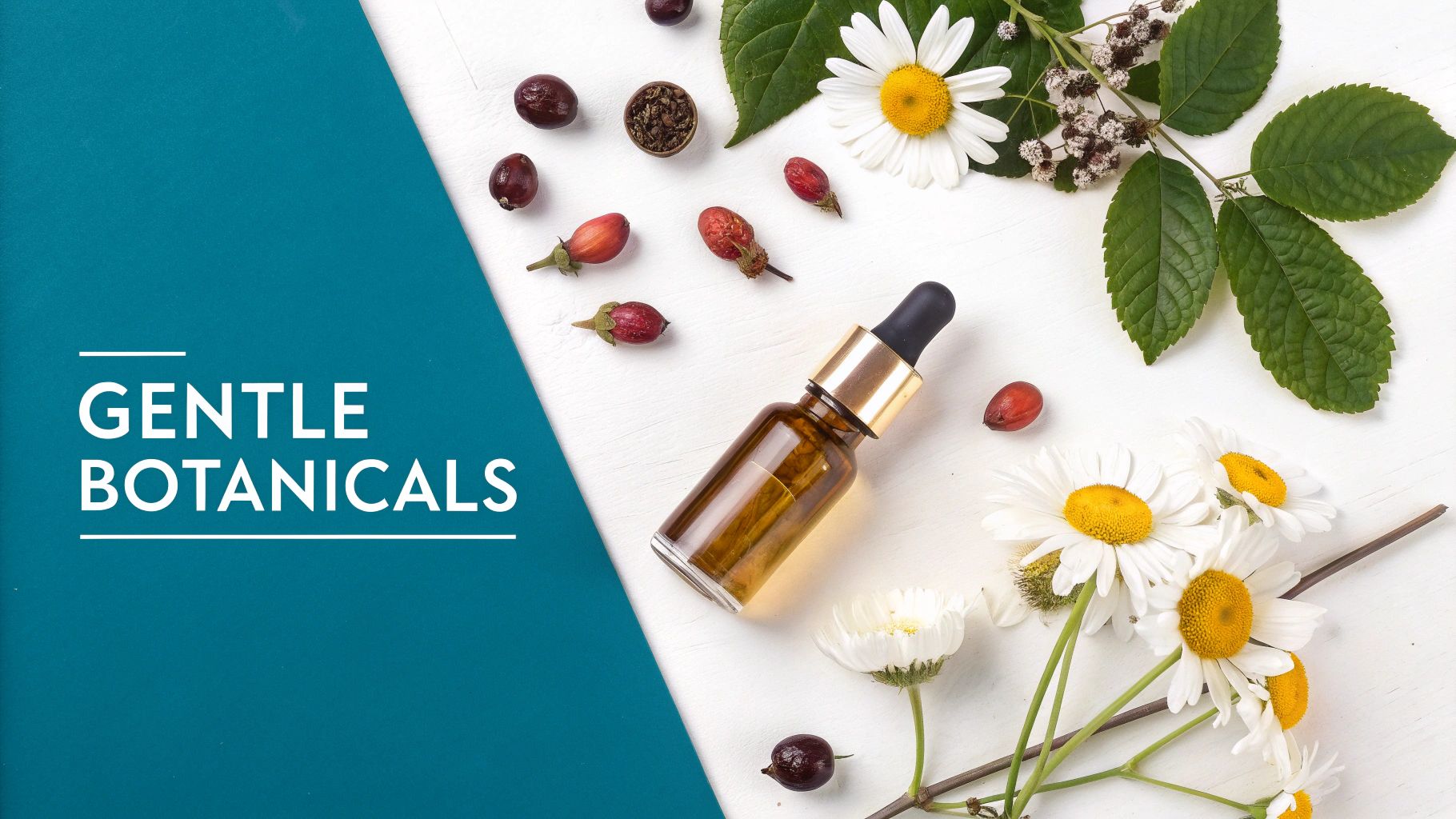
Diving into skincare labels can feel like you need a chemistry degree, but don't worry. Nature has already provided a beautiful and surprisingly potent toolkit for sensitive, maturing skin. Certain botanicals are absolute rockstars when it comes to beautifying and comforting the skin, working with it, not against it. Getting to know these powerhouse plants will help you read any ingredient list with total confidence.
Think of these ingredients less like harsh chemicals that force a change and more like specialized support systems. They give your skin the resources it needs to look its best—more hydrated, calm, and radiant. Let's get into some of the most trusted plant-derived actives in plant-based skin care for sensitive aging skin.
Here’s a quick-reference table to some of our favorites.
Gentle Plant-Based Actives for Sensitive Aging Skin
| Ingredient | Primary Cosmetic Benefit | Best For |
|---|---|---|
| Plant-Derived Hyaluronic Acid | Deep hydration, plumping effect | Dehydrated skin, minimizing the look of fine lines |
| Jojoba Oil | Moisturizing and balancing | All skin types, maintaining softness and suppleness |
| Bakuchiol | Reducing appearance of lines and wrinkles | A gentle approach to visible signs of aging |
| Rosehip Seed Oil | Improving skin texture and tone | Promoting an even, luminous complexion |
| Calendula | Soothing and calming | Easily irritated or reactive skin |
| Chamomile | Comforting and balancing | Maintaining a peaceful, serene complexion |
| Green Tea Extract | Antioxidant properties | Protecting skin from environmental stressors |
As you can see, nature offers a solution for nearly every concern, from hydration to soothing sensitivity. Now, let’s explore why these ingredients are so effective.
The Hydration Heroes
Hydration is everything for skin that looks plump and youthful. When skin is dehydrated, fine lines instantly look more prominent, so keeping moisture levels topped up is priority number one.
-
Plant-Derived Hyaluronic Acid: This stuff is a true moisture magnet. It can hold a massive amount of water, pulling it into the skin's surface for an immediate plumping effect that helps soften the appearance of those pesky fine lines.
-
Jojoba Oil: Because its structure is so similar to our skin's natural oils (sebum), jojoba is a brilliant moisturizer. It helps balance the skin without ever feeling heavy or greasy, making it a fantastic choice for keeping skin soft and supple.
The Gentle Refiners
We all want that smooth, glowing complexion, right? Thankfully, you don't need harsh ingredients to get there. Gentle botanicals can help you achieve a smoother-looking finish without the drama of irritation.
Bakuchiol: Often hailed as a gentle, plant-based option, Bakuchiol comes from the babchi plant. It’s famous for its ability to lessen the look of fine lines and wrinkles while improving skin tone—all with a much gentler touch that’s perfect for sensitive types.
- Rosehip Seed Oil: This gorgeous, luxurious oil is packed with fatty acids and vitamins. It’s loved for its deeply nourishing properties and its knack for improving the appearance of skin texture, promoting a bright, even-toned glow.
The Soothing Champions
For skin that's prone to redness or reactivity, calming ingredients are non-negotiable. They are the foundation for healthy-looking skin, helping to keep your complexion comfortable and looking serene.
-
Calendula: This beautiful marigold flower has been a go-to for soothing skin for centuries. Its extracts are wonderful for helping to calm things down and keep skin in its happy place.
-
Chamomile: Just like a warm cup of chamomile tea calms the nerves, this flower offers comforting properties for the skin. It's an ideal ingredient for helping maintain a peaceful complexion, especially when your skin is feeling a bit stressed out.
-
Green Tea Extract: Loaded with powerful compounds called polyphenols, green tea has celebrated antioxidant properties. These properties help defend it against environmental stressors that can accelerate the signs of aging. You can explore the amazing properties of green tea for skin in our detailed article at https://www.naturalorganicskincare.com/blogs/category/green-tea-extract-for-skin.
It's no surprise that the demand for these kinds of ingredients is skyrocketing. The global market for skincare ingredients was valued at USD 13.4 billion and is expected to hit USD 21.5 billion by 2034. This boom is fueled by a massive consumer shift toward multifunctional plant actives like aloe vera, green tea, jojoba, and calendula—ingredients that deliver real cosmetic benefits with a much lower risk of irritation.
Common Ingredients to Approach with Caution
When you have sensitive, aging skin, figuring out what not to use is just as important as finding what works. Some ingredients, even popular ones, can be a little too much for a delicate complexion. The goal here isn't to create a scary "bad list," but to empower you with the knowledge to make calm, comfortable choices for your skin.
Think of it like this: if you have a sensitive stomach, you probably wouldn't order the spiciest dish on the menu. You'd opt for something you know you'll enjoy without any regrets later. Your skin is no different. It often prefers a gentler approach, especially when it comes to certain powerful actives and fragrances.
Understanding Potential Triggers
Some common ingredients, while fantastic for other skin types, can be a real challenge for skin that's both sensitive and mature. High concentrations of certain exfoliating acids, for example, might be too stimulating. And we all know that some synthetic fragrances are notorious culprits behind the appearance of redness and irritation.
Here are a few categories to keep an eye on:
- Harsh Sulfates: Ingredients like Sodium Lauryl Sulfate (SLS) are incredibly effective cleansers—maybe a little too effective. They can strip away your skin's natural protective oils, leaving it feeling tight, dry, and vulnerable.
- Synthetic Fragrances: That one little word, "fragrance" or "parfum," on an ingredient list can hide dozens of undisclosed chemicals. For sensitive skin, it's often a recipe for irritation.
- Certain Essential Oils: While many botanicals are skin saviors, some essential oils can be too potent for reactive skin, especially in high concentrations. Oils like peppermint, citrus, and tea tree are best used with caution.
Formulation Is Everything
It’s also crucial to remember that "plant-based" doesn't automatically mean "irritation-free." As analysts at the IMARC Group's market analysis have noted, even botanical extracts can be sensitizers if not used correctly. Proper formulation and safety testing are everything.
The way ingredients are combined in a formula makes all the difference. A well-formulated product can include a potentially stimulating ingredient at a low, effective concentration buffered by soothing botanicals, making it perfectly suitable for sensitive skin.
On the flip side, even a typically gentle ingredient can cause a reaction if the formula is off or if you have a specific allergy. This is exactly why patch testing any new product is a non-negotiable step in a smart skincare routine.
Knowing these nuances helps you sidestep the common pitfalls and build a routine that truly supports your skin. For a deeper dive into ingredients to watch out for, check out our guide on the top 10 toxins to avoid in skincare. This knowledge is your best tool for choosing products with total confidence.
Building Your Gentle AM and PM Skincare Routine
A gorgeous, healthy complexion really comes down to one thing: a consistent daily routine. When you're dealing with sensitive, aging skin, this ritual isn't about piling on a dozen products. It's about taking gentle, purposeful steps that calm and support your skin.
By creating separate morning (AM) and evening (PM) routines, you can give your skin exactly what it needs throughout the day and night. Think of it as a beautiful act of self-care.
The philosophy is simple: mornings are for protection, and evenings are for renewal. This straightforward approach makes sure your plant-based skin care for sensitive aging skin is working smarter, not harder, providing support right when and where it's needed most.
Your Essential Morning Routine
The whole point of your AM routine is to get your skin ready for the day. This means gently cleansing away anything from the night, loading up on antioxidants to defend against environmental stressors, and locking in moisture for a hydrated, comfortable feel that lasts all day. It’s like putting on your skin's armor before you head out the door.
A simple but incredibly effective morning ritual boils down to just three core steps:
-
Gentle Cleanse: Start your day with a mild, hydrating cleanser. Cream or milk cleansers are fantastic choices for sensitive, mature skin because they clean without stripping away your skin's natural oils. The goal is to feel soft and supple, never tight.
-
Apply a Serum: This is your power step—where you deliver a concentrated dose of beautifying ingredients. A serum with plant-derived antioxidants or a hydrating hero like Hyaluronic Acid is perfect for morning use to support a radiant, healthy look.
-
Moisturize & Protect: Always finish with a moisturizer that suits your skin's needs, immediately followed by a broad-spectrum sunscreen with an SPF of 30 or higher. Sun protection is completely non-negotiable. It's the single best thing you can do to protect your skin's appearance over time.
This visual guide breaks down the essential steps for both your morning and evening care.
As you can see, it clearly separates the AM focus on protection from the PM focus on renewal and moisturization, highlighting the main goal of each routine.
Your Restorative Evening Routine
When the day is done, your skincare focus should shift to supporting your skin’s natural overnight cycle. The PM routine is all about a thorough cleanse to remove makeup, sunscreen, and daily grime, followed by targeted serums and a rich moisturizer to deeply nourish your skin while you get your beauty sleep.
Here’s what a great restorative PM routine looks like:
- Thorough Cleanse: If you wear makeup or sunscreen, a double cleanse is the way to go. Start with an oil-based cleanser to melt everything away, then follow up with your gentle cream or milk cleanser to wash the day off completely.
- Apply a Targeted Serum: Nighttime is the perfect opportunity to use serums with actives that support skin texture and tone, like those featuring Bakuchiol. These ingredients get to work their magic without interruption while you sleep.
- Deeply Moisturize: End your day by applying a richer, more nourishing moisturizer or a few drops of facial oil. This final step seals in your serum and provides lasting hydration, helping you wake up to a complexion that looks refreshed, smooth, and revitalized.
Your most powerful tool is a consistent, gentle routine. It’s not about using a million products, but about using the right products correctly, day in and day out. This consistency is what allows those gentle botanicals to truly work their magic over time.
By splitting your care into these two distinct routines, you’re giving your skin precisely what it needs to look its best—protection from daily challenges in the morning and the perfect environment to renew itself by night.
How To Create A Gentle Botanical Serum At Home
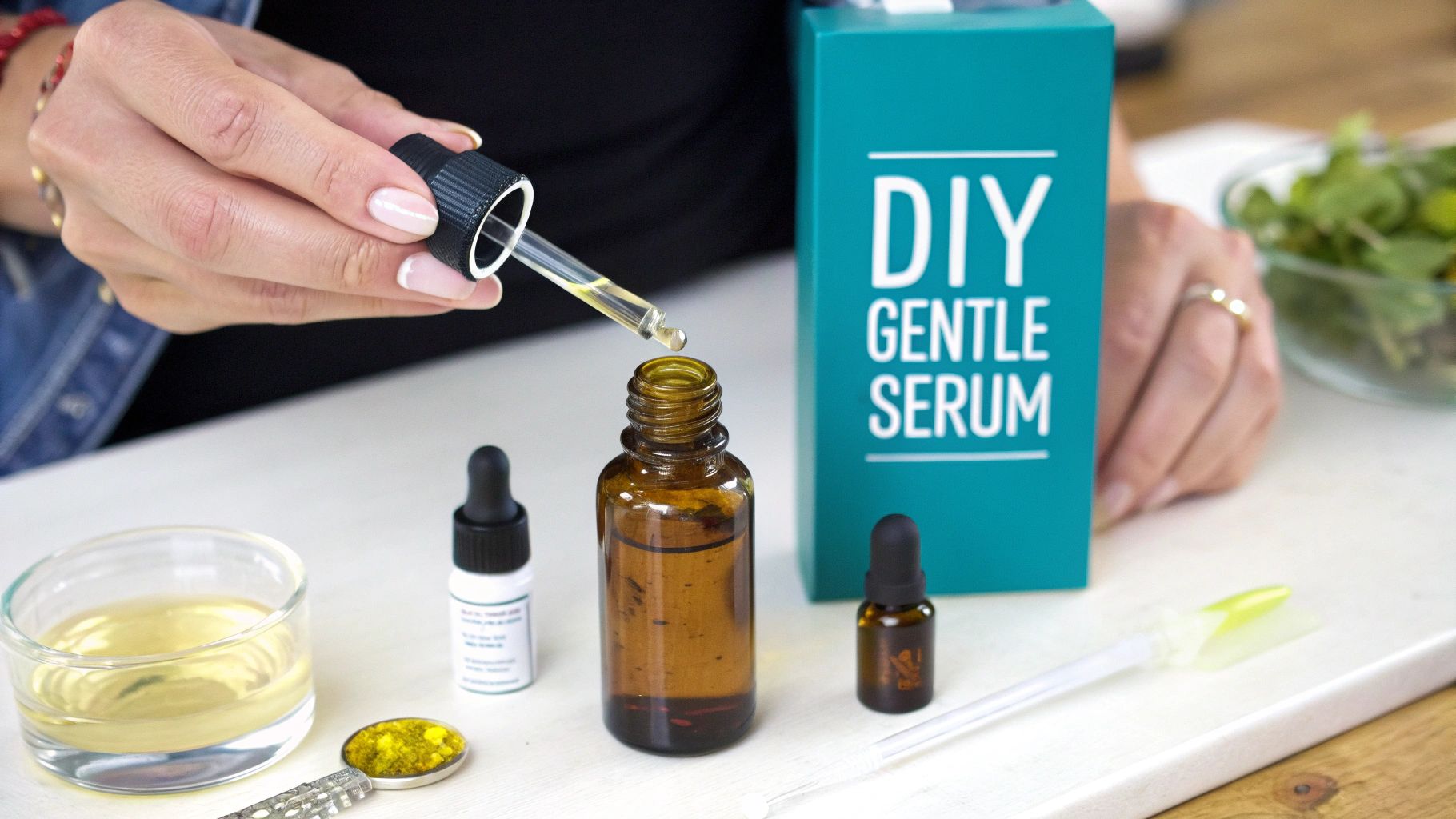
There’s something incredibly rewarding about being hands-on with your skincare. When you create your own products, you get to call all the shots, crafting a formula that’s perfectly tuned to what your skin loves and needs.
Think of yourself as your very own skincare chef! With just a few high-quality ingredients from Skin Perfection, you can whip up a luxurious, personalized serum that feels incredible. This simple recipe will show you how to make a gentle botanical blend designed to nourish and beautify sensitive, maturing skin.
Our formula is built around a base of nourishing carrier oils and gentle, effective actives. We’ve chosen ingredients known for being friends to sensitive complexions to help you achieve a healthy, radiant glow. For those who really love the botanical aspect, you can even cultivate your own lavender for its beautiful properties.
DIY Gentle Radiance Serum Recipe
Ready to get started? This recipe makes a 30g batch (that’s about 1 oz), which is the perfect size for a standard dropper bottle. You’ll just need a small digital scale for accuracy, a sanitized glass beaker for mixing, and a clean bottle to store your creation.
Here’s what you’ll need to make a simple, nourishing facial serum for your sensitive, mature skin.
| Ingredient | Percentage (%) | Grams (for a 30g batch) | Purpose |
|---|---|---|---|
| Jojoba Oil or Squalane | 87% | 26.1g | A lightweight, nourishing base that mimics skin's natural oils. |
| Vitamin E Oil | 5% | 1.5g | An antioxidant that helps keep the oils fresh. |
| Bisabolol | 3% | 0.9g | A soothing botanical extract derived from chamomile. |
| Tetrahexyldecyl Ascorbate | 5% | 1.5g | A gentle, oil-soluble form of Vitamin C for a brighter look. |
This blend comes together to create a beautiful, non-greasy serum that leaves skin feeling moisturized and looking luminous.
If you’re new to making your own products and want to dive deeper, our guides on cosmetic formulation are a fantastic place to start learning the fundamentals.
Step-by-Step Instructions
Making your serum is really just a matter of careful measuring and gentle mixing. Follow these steps, and you’ll have a gorgeous final product in no time.
- Prep Your Workspace: This is a crucial first step! Make sure your hands, surfaces, beaker, and bottle are all thoroughly cleaned and sanitized. This keeps your serum fresh and free from unwanted bacteria.
- Measure Your Ingredients: Using your digital scale, carefully weigh each ingredient into your sanitized glass beaker. It’s easiest to measure the carrier oil first, then add the smaller amounts of the actives on top.
- Mix Gently: Once everything is in the beaker, stir gently with a clean glass rod or mini-whisk. Keep stirring until the mixture is completely uniform and clear.
- Bottle and Store: Carefully pour your finished serum into a dark glass dropper bottle. The dark glass is important—it protects the delicate oils and actives from light, which can cause them to break down over time. Store it in a cool, dark spot.
Safety First—Always Patch Test: This is the most important step of all. Before you put the serum all over your face, apply a small amount to a hidden area, like your inner wrist or behind your ear. Wait a full 24-48 hours to make sure your skin is happy with the new formula.
Creating your own plant-based skin care for sensitive aging skin is such an empowering way to get that radiant complexion you’re looking for. Enjoy the process and the beautiful, personalized product you’ve just made.
Your Top Plant-Based Skincare Questions, Answered
Diving into the world of plant-based skin care for sensitive aging skin can definitely spark a few questions. It’s smart to be curious—after all, you're looking for the perfect routine to help your skin look and feel its absolute best. Let's clear up some of the most common questions so you can move forward with total confidence.
Think of this as a quick chat with a skincare-savvy friend, here to clear up any doubts you might have. Getting these answers can make all the difference in building a routine that truly works for you.
Can I Be Allergic to Natural Ingredients?
Yes, absolutely. The word "natural" doesn't automatically mean "hypoallergenic." Just like some people are allergic to pollen or certain foods, your skin can have a unique reaction to a botanical extract. Your body can react to anything, whether it comes from a lab or a plant.
This is exactly why patch testing is a non-negotiable first step. Before you slather a new product all over your face, test a small amount on a hidden spot, like your inner arm or just behind your ear. Give it 24-48 hours and keep an eye out for any signs of irritation. This simple habit is the safest way to introduce new formulas to your skin.
How Long Until I See Results?
When it comes to skincare, patience and consistency are your two best friends. You might notice some immediate benefits, like better hydration or a calmer feel to your skin, but the more significant changes to texture and radiance take time.
A good rule of thumb is to give a new product at least 8-12 weeks of consistent use before you make a final call. Your skin's natural turnover cycle is about 28 days—and that process slows down as we age—so it needs several cycles to show the full cosmetic benefits of a new routine.
What Is the Difference Between Vegan and Plant-Based?
These terms get tossed around a lot, often interchangeably, but there's a key distinction. Knowing the difference helps you make choices that align with your personal values.
- Plant-Based Skincare: This simply means the product's main active ingredients come from plants. However, it might still include animal byproducts like beeswax, honey, or lanolin.
- Vegan Skincare: This is the stricter of the two. Vegan products contain zero ingredients derived from animals or their byproducts. Period. If avoiding all animal-related ingredients is your priority, always look for a certified vegan label.
Both approaches celebrate the power of botanicals, but the vegan standard is much more stringent when it comes to animal welfare.
Should I Start Multiple New Products at Once?
It’s so tempting to do a complete routine overhaul, but we strongly advise against it—especially if you have sensitive skin. If you introduce several new products at the same time and have a reaction, you’ll be left playing a frustrating guessing game about which one caused the problem.
The smartest approach is to introduce only one new product at a time. Give it a solid one to two weeks to see how your skin responds before you even think about adding something else. This methodical process lets you build a personalized routine that you know is both gentle and effective for your unique complexion.
At Skin Perfection, we're passionate about providing high-quality ingredients and expertly formulated products to help you reach your skincare goals. Whether you're a DIY pro creating a custom serum or you're looking for a ready-to-go solution, you can find everything you need to support your skin's beauty at https://www.naturalorganicskincare.com.