

 Buy with Prime

DIY Antioxidant Serum
-
Sale

Leucidal SF Max
Lactobacillus Antimicrobial
-
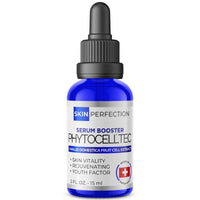
PhytoCellTec Malus Domestica - Apple Stem Cells
Antioxidant & Apple Stem Cells
-

Regenerating Facial Cream Lotion Bulk Base
Lotion Making Base
-
Sold out
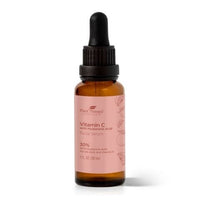
Vitamin C Serum with Hyaluronic Acid
Brightening antioxidant serum


How to Make a DIY Antioxidant Serum
A DIY antioxidant serum is a preserved, water-based serum with one or more antioxidants stirred in at full strength, used in the morning under sunscreen. The simplest version takes five minutes: start with a vitamin C serum or a hyaluronic acid gel as the base, add Edelweiss and apple stem cell boosters at 5% each, add a preservative, check the pH, and store it in an airless bottle in the refrigerator. The result is a serum for a brighter, more even-looking complexion that you can customize.
Below are three updated recipes in drops, grams, and percentages, why antioxidants work best in combination, and the storage rules that keep them from going brown. For the bigger picture, see our explainer on what free radicals are.

Why Antioxidants Work Better Together
UV light and pollution generate free radicals on the skin's surface, and antioxidants neutralize them before they can contribute to a dull, uneven, older-looking complexion. Antioxidants also protect each other. The best-known evidence is a 2005 lab study by Lin and colleagues in the Journal of Investigative Dermatology: adding ferulic acid to a solution of 15% vitamin C (L-ascorbic acid) and 1% vitamin E made the vitamins more stable and roughly doubled the solution's protection of pig skin against simulated sunlight, from about 4-fold to about 8-fold. That is a lab result, not a sunscreen claim: an antioxidant serum goes under your sunscreen, never instead of it.
Our Vitamin C Serum with Hyaluronic Acid already pairs vitamin C (as 3-glyceryl ascorbate) with ferulic acid and vitamin E (tocopheryl acetate), which makes it a ready-made base for Recipe 2.
The Antioxidant Boosters Used Here
| Booster | What it is | Rate used | Drops per 1 oz |
|---|---|---|---|
| Edelweiss Serum Booster | Leontopodium alpinum extract, a botanical antioxidant | 5% (range 3 to 5%) | 45 |
| PhytoCellTec Malus Domestica | Swiss apple fruit cell culture extract in a lecithin base | 5% (range 2 to 5%) | 45 |
Edelweiss's supplier, dsm-firmenich, reports in-vivo testing in which signs of skin aging such as fine lines looked reduced after four weeks compared with a placebo (supplier data). Drop counts use the house rate of 9 drops = 1% per fluid ounce, and 1 fl oz of serum weighs about 30 g.
Equipment and Sanitation
- Digital scale reading to 0.01 g
- Sanitized glass beaker, mini whisk or hand blender, and a small funnel
- 1 oz airless pump bottle (airless pumps keep out the air and fingers that make antioxidants spoil faster)
- pH strips, gloves, and 70% isopropyl alcohol
Wash tools in hot soapy water, rinse, spray with 70% isopropyl alcohol, and let them air dry. Work out of direct sunlight.
Recipe 1: Apple Stem Cell Daytime Serum (1 oz, 30 g)
| Ingredient | Grams | % | Drops |
|---|---|---|---|
| Ultra Hyaluronic Plumping Gel (base) | 28.2 | 94% | |
| PhytoCellTec Malus Domestica | 1.5 | 5% | 45 |
| GSB Natural Preservative Powder | 0.3 | 1% |
This is the original two-ingredient recipe from this page, now with the apple stem cells at the top of their range and a preservative added.
Recipe 2: Boosted Vitamin C Antioxidant Serum (1 oz, 30 g)
| Ingredient | Grams | % | Drops |
|---|---|---|---|
| Vitamin C Serum with Hyaluronic Acid (base) | 26.7 | 89% | |
| Edelweiss Serum Booster | 1.5 | 5% | 45 |
| PhytoCellTec Malus Domestica | 1.5 | 5% | 45 |
| GSB Natural Preservative Powder | 0.3 | 1% |
Recipe 3: Antioxidant Day Cream (2 oz, 60 g)
| Ingredient | Grams | % | Drops |
|---|---|---|---|
| Regenerating Facial Cream Lotion Base | 51.0 | 85% | |
| Edelweiss Serum Booster | 3.0 | 5% | 90 |
| PhytoCellTec Malus Domestica | 3.0 | 5% | 90 |
| Leucidal SF Max | 2.4 | 4% | |
| GSB Natural Preservative Powder | 0.6 | 1% |
Leucidal SF Max is used at 4%, the top of its 2 to 4% range, and its product page recommends pairing it with a gluconolactone and sodium benzoate preservative (GSB) for protection against yeast and mold, so GSB is added at 1%.
Method (all three recipes)
- Weigh the base into the sanitized beaker at room temperature. No heat is needed.
- Sprinkle in the GSB and stir for 2 to 3 minutes until dissolved.
- Add the boosters by drop count or weight (and the Leucidal SF Max for Recipe 3, brought to room temperature first to reduce haze).
- Blend 1 to 2 minutes with a mini whisk or a hand blender on low.
- Check the pH and aim for 4.5 to 5.5, inside GSB's working range of pH 3 to 6.
- Funnel into an airless bottle, label with the date, and refrigerate.
About the preservative: each base is already preserved, but the boosters dilute it, and some boosters contain none of their own. GSB is used at 1% because it is combined with the base's preservative. If you ever build a serum from unpreserved ingredients only, use GSB at 2% as the sole preservative.
How to Use
Apply 3 to 4 pumps to clean, dry skin every morning, then moisturizer, then a broad-spectrum sunscreen. Recipe 3 can replace the moisturizer step. Apply before or after your other serums, but keep the routine simple: one antioxidant step is enough.
What to Expect and When
- Right away: the hyaluronic acid bases leave skin looking smoother and more hydrated.
- 4 weeks: the time frame of the Edelweiss supplier testing; most people notice a brighter-looking complexion.
- 8 to 12 weeks of daily use with sunscreen: a more even-looking tone.
Shelf Life and Storage
Refrigerate and use within 2 to 3 months, since antioxidants are themselves used up as they protect the formula. A homemade formula has not been challenge tested, so that is a cautious guideline. Throw it out if it turns dark yellow or brown, separates, or smells off.
Patch Test and Sensitive Skin
Patch test on your inner arm for 24 hours. If your skin is sensitive, start with Recipe 1, use the boosters at their lowest rates (Edelweiss 3%, 27 drops per ounce; PhytoCellTec 2%, 18 drops per ounce), and use it every other morning before working up. Stop if you notice stinging or redness.
Troubleshooting
- Serum turned yellow or brown: it oxidized from heat, light, or air. Remake a smaller batch and store it in the refrigerator in an airless bottle.
- Cream looks hazy or thinner: normal with Leucidal SF Max and liquid boosters. Add 2 to 3 g more base if you want it thicker.
- Pills under makeup: use less and wait 2 minutes before sunscreen.
Frequently Asked Questions
How do you make an antioxidant serum at home?
Start with a preserved base such as a hyaluronic acid gel or vitamin C serum, add antioxidant boosters like Edelweiss and apple stem cells at their recommended rates, and add GSB at 1% when the base already has a preservative. Check the pH and store the serum in an airless bottle in the refrigerator.
Should I use an antioxidant serum in the morning or at night?
Morning is best, under sunscreen, because that is when skin meets UV light and pollution. You can use it at night too, but do not skip the morning application.
Does homemade vitamin C serum work?
It can, if the form of vitamin C is stable and the serum is stored well. Pure ascorbic acid mixed with water oxidizes quickly at home, which is why a pre-stabilized vitamin C serum makes a more reliable base.
How long does a DIY antioxidant serum last?
About 2 to 3 months in the refrigerator when it is preserved and kept in an airless bottle. Discard it sooner if it darkens or smells different.
Why did my vitamin C serum turn brown?
Browning means the vitamin C has oxidized from air, light, or heat. An oxidized serum has lost much of its antioxidant value, so replace it and store the next batch cold and dark.
Which antioxidants can be combined?
Vitamin C, vitamin E, and ferulic acid are the classic trio, because in a 2005 lab study ferulic acid made vitamins C and E more stable. Botanical antioxidants like Edelweiss and apple stem cells layer well on top of that base.
Shop and Learn More
Shop the Vitamin C Serum with Hyaluronic Acid, Edelweiss, PhytoCellTec apple stem cells, and Leucidal SF Max. Learn more about antioxidants in skincare and how to add a serum booster to any base.
Sources
- Lin F-H, Lin J-Y, Gupta RD, et al. Ferulic acid stabilizes a solution of vitamins C and E and doubles its photoprotection of skin. Journal of Investigative Dermatology. 2005;125(4):826-832. doi:10.1111/j.0022-202X.2005.23768.x (lab study)
- dsm-firmenich, Alpaflor Edelweiss CB product page (supplier data: in-vivo testing over 4 weeks versus placebo).
- Skin Perfection product pages: Edelweiss 3 to 5%, PhytoCellTec Malus Domestica 2 to 5%, Leucidal SF Max 2 to 4% (pair with GSB), GSB Natural Preservative Powder (pH 3 to 6), Vitamin C Serum with Hyaluronic Acid ingredient list.
These statements have not been evaluated by the Food and Drug Administration. These products are not intended to diagnose, treat, cure, or prevent any disease.
About the Author
Written by Kari Thomas, cosmetic formulator and founder of Skin Perfection.