

 Buy with Prime



Finding the best anti-aging serums isn't about chasing a miracle in a bottle. It really comes down to understanding your own unique skin and knowing which powerful ingredients can actually make a difference. The most effective formulas are usually packed with peptides, antioxidants, and hydrating agents that work together to improve skin texture and firmness and promote the healthy glow we’re all after.
Your Guide to Choosing the Best Anti-Aging Serums
Stepping into the world of serums designed for mature skin can feel a bit overwhelming, right? With all the complex ingredients and big promises, it's easy to get lost. The goal here is simple: to give you a clear, straightforward roadmap. We're going to demystify these potent formulas and help you understand how they can beautifully support your skin.
Think of a serum as a concentrated booster for your skin. Its lightweight, liquidy texture is designed to sink in quickly, delivering beneficial ingredients like peptides and plant actives right where they're needed. Unlike thicker creams that sit more on the surface, serums are all about targeted delivery, making them a cornerstone of any routine focused on maintaining a youthful look.
What to Expect From This Guide
This article will break down everything you need to know, without the confusing jargon. We’ll explore the science behind the key ingredients that beautify the skin, help you figure out which serum is right for your specific skin type, and show you exactly how to work it into your daily ritual. Our focus is on empowering you with real knowledge, not just listing a bunch of products.
Here’s a quick peek at what we’ll cover:
- Decoding Key Ingredients: We'll get into the nitty-gritty of powerhouse components like peptides and antioxidants, and explain what they actually do for your skin's appearance.
- Matching Serums to Skin Types: Find personalized recommendations, whether your skin is oily, dry, sensitive, or a little bit of everything.
- Mastering Application: Learn the right way to apply your serum to get the most out of every single drop.
- DIY Serum Crafting: For anyone who loves a hands-on approach, we’ll even touch on how you can create your own simple formulas at home.
The buzz around these products is huge, reflecting a major shift in how we think about skincare. The global anti-aging market was recently valued at a whopping USD 52.44 billion and is expected to climb to USD 80.61 billion by 2030. That incredible growth, highlighted in this market analysis about anti-aging products from Grand View Research, shows that people everywhere are looking for high-quality skincare that delivers visible results.
The ultimate goal isn't to chase some unrealistic ideal of youth. It's about supporting your skin so it looks healthy, radiant, and vibrant at every stage of life. Choosing the right serum is a huge step on that journey.
By the time you finish this guide, you’ll feel confident enough to look past the marketing hype. You'll be able to pick a serum based on what truly matters: proven ingredients, your skin's unique needs, and a formula that helps you reach your personal skincare goals.
Decoding the Powerhouse Ingredients in Serums

Ever flip over a serum bottle and feel like the ingredient list is written in another language? You're not alone. Figuring out what’s actually inside your skincare is the first real step toward finding a formula that helps your skin look its best. Let's break down the star players you'll find in the best anti-aging serums, without the confusing science jargon.
Think of an effective serum as a team of specialists, each with a unique job. Some ingredients are amazing communicators, others are fantastic defenders, and some are master hydrators. When they work together, they create a powerhouse formula that supports a smooth, firm, and radiant complexion.
Let’s meet some of the most important members of this team.
Peptides: The Master Communicators
Imagine peptides as tiny messengers for your skin. These short chains of amino acids are basically little signals that encourage your skin to maintain its youthful look. When applied in a serum, they support the skin’s natural processes, which can help improve the appearance of firmness and elasticity.
Different peptides carry different "messages." Some, for instance, are known for their ability to soften the look of fine lines and wrinkles, while others help promote a smoother-looking skin texture. Because they’re so specific, they've become a cornerstone ingredient in many of the best serums for mature skin.
Peptides are a long-term ally. Consistent use helps support the skin’s structure, leading to a visibly firmer and more supple appearance over time. They are foundational to any routine focused on graceful aging.
This ingredient-first approach is getting more popular as people hunt for real solutions. It’s no surprise that the anti-aging ingredients market is projected to grow from USD 11.24 billion to USD 19.2 billion over the next decade. This boom shows just how much we're starting to appreciate the power of well-chosen ingredients. You can read more about this market expansion on Precedence Research.
Plant-Derived Actives: Nature’s Defenders
Nature provides us with a whole arsenal of ingredients that can help beautify the skin's surface against the daily environmental stressors. These plant-derived actives are often packed with antioxidants, which are crucial for keeping your complexion looking healthy and vibrant.
Think of antioxidants as your skin's personal bodyguards. They help neutralize free radicals from things like pollution and UV exposure before they can visibly impact your skin.
Two standouts you'll see in modern skincare are Bakuchiol and Green Tea Extract.
- Bakuchiol: Often called a gentle, plant-based alternative to retinol, Bakuchiol helps visibly refine skin texture and lessen the look of fine lines. The big win? It does this without the potential for irritation that some people experience from retinoids.
- Green Tea Extract: This classic botanical is loaded with polyphenols—a type of antioxidant that’s fantastic for soothing the skin's appearance and helping it look its best against environmental aggressors. It’s a great helper for maintaining a calm, even-toned complexion.
Including botanicals like these is a key reason why many of the best serums can offer visible results while still being gentle on the skin. You can dive deeper into top-tier ingredients by checking out our guide on the 5 best anti-aging ingredients for great skin care products.
Understanding the Ingredient List
When you’re picking out a serum, don't just fall for the buzzwords on the front of the bottle. Flip it over and give that ingredient list a quick scan. Ingredients are always listed in order of concentration, so the stuff at the top is what you’re getting the most of.
Look for key actives like peptides (often listed with trade names like Matrixyl or Argireline) and powerful plant extracts to be high up on that list.
By getting familiar with these powerhouse ingredients, you can see past the marketing hype and make a truly informed choice. You’ll be able to pick a serum based on what it can actually do for your skin, giving you the confidence that you’re investing in a product that truly aligns with your goals.
Matching a Serum to Your Unique Skin Type
Finding the best serum has nothing to do with finding one magical, universal formula. The most effective product is the one that gets along with your skin, addressing its specific quirks and needs. Think of it like this: you wouldn't use the same fertilizer for a cactus as you would for a rose. Your skin deserves that same personalized approach.
Choosing a serum based on your skin type—whether it's oily, dry, combination, or sensitive—is the secret to seeing visible improvement. A formula that makes dry skin feel plump and happy might feel like a greasy mess on oily skin. This guide will help you find your perfect match, ensuring your serum helps your skin look and feel its absolute best.
Serums for Oily and Combination Skin
If your skin produces excess oil, especially in the T-zone, adding another product might sound crazy. But hear me out: the right serum can actually help bring your skin into a more balanced appearance. The goal is to deliver hydration and active ingredients without adding extra weight or clogging your pores.
Look for formulas described as lightweight, water-based, or non-comedogenic. These serums sink in quickly and leave a clean, fresh finish. An ingredient like Niacinamide is a fantastic choice here, as it's known for refining the appearance of pores and improving skin texture—a total win for oily or combination complexions.
Formulations for Dry Skin
Dry skin is thirsty skin, and the right serum is like a tall drink of water for a parched complexion. This skin type benefits most from ingredients that pull moisture in and lock it in, creating a plump, dewy, and smooth appearance. It’s all about layering that hydration effectively.
Your go-to ingredient should be Hyaluronic Acid, a true hydration hero known for holding many times its weight in water. Serums packed with hyaluronic acid give you an immediate feeling of relief and help soften the look of fine lines that always seem more obvious on dry skin. Peptides also play beautifully with dry skin, supporting the appearance of firmness and elasticity for a more supple feel.
When you have dry skin, a serum is your foundational hydration step. Following it up with a good moisturizer is crucial to seal in all those beneficial ingredients and prevent moisture from evaporating from the skin's surface.
This chart breaks down the main jobs of three powerhouse ingredients you’ll often find in the best serums, helping you see which one fits your goals.
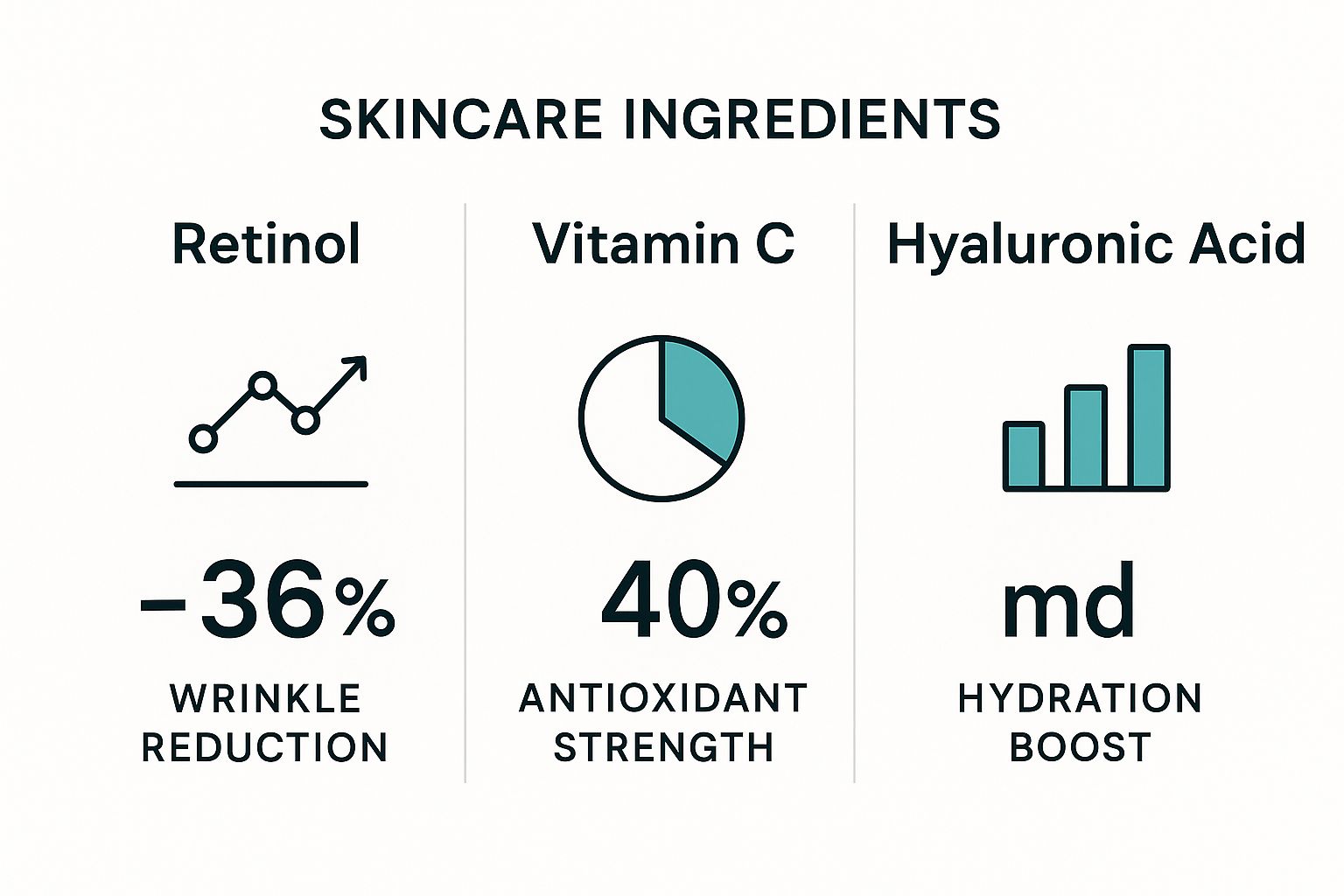
As you can see, each ingredient brings something different to the table, from antioxidant protection to a major moisture boost, making it easier to pick what your skin type is crying out for.
Navigating Sensitive Skin
Sensitive skin needs a gentle touch and an ingredient list that’s short and sweet. The mission is to find a serum that delivers amazing benefits without triggering redness, itchiness, or discomfort. When in doubt, keep it simple.
Always reach for serums that are fragrance-free and alcohol-free, as these are the usual suspects when it comes to irritation. Look for calming ingredients like Green Tea Extract or Allantoin, which help soothe the skin's appearance. And before you even think about putting a new serum on your face, you absolutely must do a patch test.
Here's how to do it right:
- Apply a small dab of the serum to a discreet spot, like your inner wrist or just behind your ear.
- Wait 24-48 hours and see how your skin reacts.
- If you see no redness or irritation, you’re good to go!
This simple step is the safest way to introduce new products, ensuring they’re a good fit for your sensitive complexion. By listening to your skin and carefully choosing ingredients, you can find a powerful serum that makes your skin happy—no compromises needed.
We've covered the basics, but here’s a quick-reference table to make your next shopping trip even easier.
Serum Ingredient Recommendations by Skin Type
| Skin Type | Ideal Serum Texture | Key Ingredients to Look For | Ingredients to Approach with Caution |
|---|---|---|---|
| Oily | Lightweight, water-based, gel-like | Niacinamide, Salicylic Acid, Zinc | Heavy oils (like coconut oil), overly rich creams |
| Dry | Creamy, lotion-like, oil-based | Hyaluronic Acid, Glycerin, Peptides, Ceramides | High concentrations of alcohol, strong exfoliants |
| Combination | Lightweight lotion or gel | Hyaluronic Acid, Niacinamide, Antioxidants | Ingredients that are too drying or too heavy |
| Sensitive | Minimalist, milky, soothing | Green Tea Extract, Allantoin, Centella Asiatica | Fragrance, alcohol, essential oils, potent acids |
This table should help you zero in on the types of formulas and ingredients that will work with your skin, not against it, taking the guesswork out of finding your holy-grail serum.
Mastering Your Serum Application Technique
Picking out a fantastic serum is a great first step, but how you put it on is what really counts. Think of it this way: you wouldn't just slap paint on a canvas without prepping it first, right? The right technique ensures every potent drop is properly absorbed, so it can actually get to work.
This simple guide will walk you through the best way to apply your serum, turning a daily chore into a powerful ritual for radiant skin. Each step builds on the last, making sure you get the absolute most out of that little bottle.

The Step-by-Step Application Process
Getting your serum application right doesn't have to be complicated. Following a consistent order is the key to letting each product do its job without getting in the way of the others. A solid routine is the foundation for seeing visible improvements.
Here’s a simple, effective order to follow:
- Start with a Clean Face: Always, always begin by cleansing your skin to get rid of makeup, dirt, and oil. A clean slate is non-negotiable for good serum absorption.
- Apply Your Toner: If toner is part of your routine, now's the time. Toning helps balance your skin's pH and gets it ready for what's next.
- Dispense the Right Amount: You really don't need to drench your skin. A pea-sized amount of serum is usually more than enough for your entire face and neck.
- Apply to Damp Skin: Here’s a pro tip: for the best absorption, apply your serum to skin that's still slightly damp. This helps the formula spread like a dream and lets hydrating ingredients pull that moisture into your skin.
- Use a Gentle Touch: Drip the serum into your palms and gently press or pat it onto your skin. Avoid aggressive rubbing, which just creates friction. Use gentle, upward strokes on your face and neck.
- Allow a Moment to Absorb: Give your serum about 60-90 seconds to really sink in before you move on. This little pause prevents that annoying pilling and makes sure it isn't just mixing with your moisturizer on the surface.
- Lock It In with Moisturizer: Finish up by applying your favorite moisturizer. This final layer is crucial—it seals in all those powerful serum ingredients and adds an extra layer of hydration.
The most crucial element of any skincare routine is not how many steps you have, but how consistent you are. Daily application is what allows the ingredients in your serum to support your skin's appearance over the long term.
Answering Common Application Questions
Even with a clear process, a few questions always seem to pop up. For instance, figuring out the right sequence for all your products can feel like a puzzle. If you need a more detailed breakdown, you can explore our guide on the correct order to apply skin care products.
Another common question is why damp skin is so highly recommended. Just think of your skin like a sponge—a slightly damp sponge soaks up liquid way more easily than a bone-dry one. The exact same idea applies here. It’s a simple trick to help your skin drink up all the goodness from the serum.
By mastering this simple but effective technique, you're ensuring your investment in a quality serum truly pays off. A mindful application process turns your routine from a task into a moment of self-care that nurtures your skin, helping it look beautifully smooth and vibrant.
Creating Your Own DIY Serums at Home
For anyone who loves having total control over what goes on their skin, whipping up a DIY serum can be a seriously fun and rewarding project. When you make your own, you get to pick every single ingredient, creating a custom blend that’s perfectly suited to your skin's needs and your personal beauty philosophy. It's an exciting journey, but it’s one that needs to start with a good foundation of safety and know-how.
Think of it like baking a cake from scratch. You’ve got your base (the flour and liquid), your key flavors (like vanilla or cocoa), and something to keep it from going bad (preservatives). It’s the same idea in skincare—these components make sure your creation is effective, stable, and a pleasure to use.

The Fundamental Building Blocks of a Serum
Every good DIY serum is built on three core parts. Getting to know what each one does is the first step to making something you’ll actually love using. Don't worry, this is less about complicated chemistry and more about following a simple, balanced recipe.
Here are the three essentials:
- The Base: This is the foundation of your serum and what makes up most of the formula. A simple base like distilled water or a floral hydrosol (think rosewater) creates a lightweight, hydrating delivery system for all your other goodies.
- The Actives: These are your "powerhouse" ingredients, the real stars of the show that you choose to target specific skin goals. This could be something hydrating like vegetable glycerin, a calming botanical extract, or even a fancy peptide you’ve bought from a reputable supplier.
- The Preservative System: This might be the single most important part for safety. Any product made with water is a perfect playground for bacteria, mold, and yeast. A broad-spectrum preservative is completely non-negotiable if you want your serum to be safe for more than a couple of days.
Creating your own skincare is an empowering act of self-care, but safety must always come first. Never skip the preservative step in any water-based formula. This ensures your beautiful creation remains pure and safe for your skin from the first drop to the last.
A Simple Foundational Recipe to Start
Ready to give it a try? A basic hydrating serum is the perfect place to begin. This recipe is all about delivering moisture and helping you get comfortable with the process of measuring, mixing, and preserving your own product. It’s a fantastic way to build confidence before you start experimenting with more advanced actives.
Here is a foundational recipe to guide your first go:
- Hydrating Base (Approx. 90%): Start with high-quality distilled water or a soothing hydrosol. This is the main liquid carrier for your active ingredients.
- Humectant (Approx. 5%): Add in a humectant like vegetable glycerin. This ingredient is a total moisture magnet, pulling water into the skin for a plump, hydrated look.
- Soothing Additive (Approx. 3%): Mix in a skin-loving botanical, like a green tea extract. This adds antioxidant properties that help beautify the skin’s surface from everyday environmental stressors.
- Preservative (Approx. 1-2%): Follow the supplier's instructions carefully and add a broad-spectrum preservative like Leucidal Liquid SF or Optiphen Plus. The exact percentage will depend on the specific one you choose.
This simple formula introduces the basic principles behind making a beautifying product at home. As you get more familiar with the process, you can start exploring other actives to customize your serums even further. For more ideas and detailed guides, you'll find a ton of info in our resources on how to make your own skin care products. The journey is about encouraging creativity while always adhering to responsible, safe formulation practices.
How Skincare Trends Shape Your Choices
Let's be honest, the skincare world is always buzzing with the "next big thing." One minute, it's a new ingredient everyone's talking about on social media; the next, it's a celebrity launching a must-have product line. This constant churn has a real impact on what we see on store shelves and, more importantly, how we think about aging.
The conversation has thankfully shifted from just erasing wrinkles to focusing on long-term skin health and looking fantastic at any age. When you understand what’s driving these trends, you can see past the hype. It empowers you to pick the best anti-aging serums based on solid ingredients that actually fit your skin's needs, not just what's popular this week.
From a Quick Fix to Long-Term Glow
The dialogue around "anti-aging" has really matured, and it’s a welcome change. Instead of a desperate search for a fountain of youth, the focus is now on nurturing your skin for the long haul. This has pushed brands to develop products with supportive, beautifying ingredients—a huge win for anyone trying to build a routine that actually works.
Celebrity-backed brands have played a massive part in this. They've brought conversations about graceful aging and proactive skincare into the mainstream. This visibility has helped fuel significant market growth, with the global anti-aging industry projected to jump from USD 53.7 billion to a whopping USD 90.8 billion over the next few years. You can read more about this growth trend from Persistence Market Research.
Think of trends as a starting point for your research, not a rulebook. Just because an ingredient is trending doesn't mean it's right for you. It's only a good choice if it lines up with your specific skin concerns and goals.
When you learn to look past the buzzwords, you can build a skincare routine that’s not only effective but sustainable. It puts you in the driver’s seat, helping you choose products that genuinely contribute to your skin’s health and radiance.
Your Top Questions About Anti-Aging Serums, Answered
Jumping into the world of serums can bring up a few questions. Even after you get the hang of ingredients and how to apply them, some of the finer points can feel a little fuzzy. Let's clear things up by tackling the most common questions we hear about the best anti-aging serums.
Think of this as your go-to cheat sheet. It’ll reinforce the key ideas we've covered and help you fine-tune your routine for gorgeous, healthy-looking skin.
When Should I Start Using an Anti-Aging Serum?
Honestly, there's no magic number. Skincare is a personal journey, and the right time to start is whenever your skin starts telling you it's ready. Many people begin introducing serums focused on hydration and antioxidants in their mid-to-late 20s, which is a great way to support the skin's appearance early on.
The best way to go about it is to choose a product based on your skin's current needs, not your age. For example, a simple hyaluronic acid serum is fantastic for hydration at any age. If you're noticing changes in your skin's texture, you might want to explore a peptide-based formula to help achieve a firmer look.
Your skincare routine should evolve right along with you. The perfect serum for you today might not be the one you need five years from now. Learning to listen to your skin is the most important skill you can develop.
Can I Use More Than One Serum at a Time?
Absolutely! Layering serums can be incredibly effective, but you need to be strategic about it. A good rule of thumb is to apply them in order of thinnest to thickest consistency. Give each one a moment to sink in before moving on to the next.
For instance, a watery, lightweight hyaluronic acid serum should always go on before a richer, slightly thicker peptide serum. It's also a smart move to introduce new products one at a time. This way, you can see how your skin reacts and easily pinpoint anything that might be causing sensitivity.
How Long Until I See a Difference in My Skin?
Patience and consistency are your two best friends in skincare. While you might feel some immediate benefits, like better hydration, within a few weeks, the more visible changes to your skin's tone and firmness take a bit longer.
For most people, it takes about 8 to 12 weeks of consistent, daily use to see noticeable improvements from a new serum. Just remember, skincare isn't about an overnight miracle; it's about giving your skin long-term support. The best results come from making it a daily habit.
What Is the Difference Between a Serum and a Moisturizer?
The biggest differences come down to their jobs and textures. Serums are lightweight, potent formulas packed with active ingredients designed to target specific concerns, like the appearance of skin texture or an uneven tone.
Moisturizers, on the other hand, are usually thicker. Their main job is to hydrate the skin and support its natural moisture barrier. They work beautifully as a team: apply your serum first to deliver those concentrated actives, then lock it all in with a moisturizer to seal the deal and provide lasting hydration.
At Skin Perfection, we believe in giving you the knowledge and high-quality ingredients you need to crush your skincare goals. Whether you’re after a ready-made serum or the supplies to whip up your own, explore our collection to support your skin's journey to radiance. Discover our products today.