

 Buy with Prime
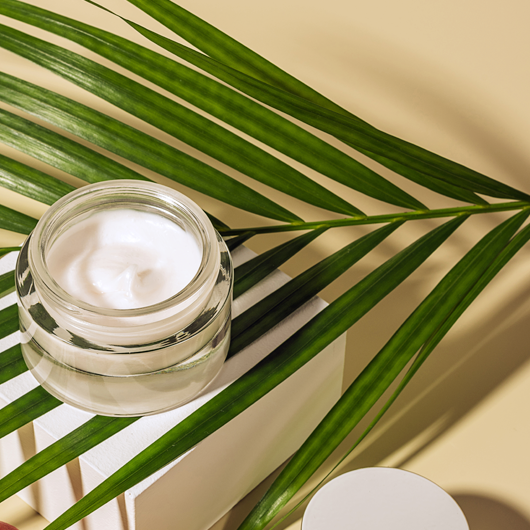


The most popular advice about sensitive skin is often the least useful: “Never exfoliate.” That blanket rule ignores the core issue. Sensitive skin usually needs less friction, fewer strong products, and more recovery time, but that doesn't automatically make every mild exfoliant unsuitable. The safer question is not whether exfoliation is allowed. It's whether your skin can tolerate the total irritation load created by exfoliants, retinoids, acne treatments, fragrance, cleansing, heat, and environmental stress.
Self-declared sensitive skin is widespread. A 2020 systematic review and meta-analysis found a global prevalence of 71% in adults, with 40% reporting very or moderately sensitive skin (GoodRx's dermatology guidance). That scale helps explain why professional advice has moved away from aggressive scrubbing and toward conservative, barrier-conscious routines.
Table of Contents
- Rethinking Exfoliation for Reactive Skin
- Choosing the Right Exfoliant Type and Strength
- A Safety-First Application Routine
- Post-Exfoliation Barrier Support
- DIY Soothing Serums and Hydration Boosters
- Troubleshooting Irritation and Over-Exfoliation
Rethinking Exfoliation for Reactive Skin
Sensitive skin can often be exfoliated, but it shouldn't be exfoliated like resilient, oilier skin. The difference lies in frequency, friction, formula strength, and what else is happening in the routine. A person using a retinoid, retinol, or benzoyl peroxide may experience burning and peeling from cumulative exposure, even if the exfoliant itself is mild. The American Academy of Dermatology warns that these ingredients can make skin more sensitive or peeling, so product stacking deserves as much attention as exfoliant selection (American Academy of Dermatology guidance).
Separate sensitivity from temporary compromise
Some people have a long-term tendency toward flushing, stinging, dryness, or discomfort with many products. Others have temporarily compromised skin after over-cleansing, using too many actives, spending time in harsh weather, or applying a strong treatment too frequently. Both groups need a gentle routine, but the second group may need to pause exfoliation altogether until ordinary moisturizer and cleanser no longer sting.
A useful self-check is simple. If your face feels tight after cleansing, burns when you apply familiar products, looks unusually shiny while feeling dry, or flakes around the nose and mouth, treat those signs as a request for recovery rather than a request for more resurfacing. A smoother surface isn't worth worsening discomfort.
Practical rule: If your skin is actively burning, peeling, or unusually red, postpone exfoliation and simplify the routine.
The AAD's conservative approach reflects this reality. For dry, sensitive, or acne-prone skin, it says a washcloth and mild chemical exfoliator may be preferable because mechanical exfoliation can be too irritating. The guidance also recommends gentle circular motions for about 30 seconds, lukewarm water, and moisturizer immediately afterward (AAD's at-home exfoliation method).
Think in terms of cumulative irritation
A mild acid used occasionally may be manageable. The same acid used alongside a retinoid, benzoyl peroxide, harsh cleanser, abrasive tool, and hot water can become too much. This is why the most responsible answer to how to exfoliate sensitive skin starts with a routine audit, not a shopping list.
For a practical overview of facial exfoliation technique, review this guide to properly exfoliating the face. The useful takeaway is that exfoliation should be a controlled event within a calm routine, not a daily attempt to force visible smoothness.
Choosing the Right Exfoliant Type and Strength
Reactive skin often handles controlled chemistry better than rough contact. Scrubs rely on pressure, particle shape, and repeated passes. A mild acid is easier to adjust through concentration, pH, contact time, and the surrounding formula. That control reduces guesswork, but it does not make every acid suitable for a compromised barrier.
The AAD advises people with dry or sensitive skin to consider a mild chemical exfoliant and avoid harsh mechanical methods. If acids sting or trigger redness, a soft washcloth with light pressure may be a more suitable physical option than a grainy scrub. The aim is to lift surface buildup without adding friction or another source of inflammation.
Compare the main options
| Method | Examples | Safety Verdict |
|---|---|---|
| Physical abrasion | Grainy scrubs, cleansing brushes, textured tools | The least forgiving option for reactive skin because pressure and repeated passes can increase irritation |
| Washcloth | Soft washcloth with a gentle cleanser | A reasonable low-friction alternative when acids aren't tolerated, provided you use light pressure |
| Mild AHA | Lactic acid or another low-strength alpha hydroxy acid | Can suit some sensitive skin when introduced slowly and used infrequently |
| Mild BHA | Neutralized salicylic acid at 1% | A 2009 study found it suitable for subjects with sensitive skin (peer-reviewed clinical study) |
| PHA | Low-strength polyhydroxy acid | Often considered a gentler chemical direction, but individual tolerance still matters |
| High-strength acid | Strong glycolic or other professional-level formulas | Better reserved for professional oversight, especially when skin is reactive |
The label gentle is only a starting point. Check the acid, concentration, disclosed pH, leave-on or rinse-off format, fragrance, and whether several exfoliating ingredients appear together. A low-strength formula used occasionally creates a different irritation burden from a strong peel applied repeatedly.

A clinical study of a novel triple-acid blend reported no skin irritation during the study, although about half of its participants had sensitive skin (peer-reviewed clinical study). The finding supports careful formulation and dosing, not a universal promise. A product tolerated in a study can still feel unsuitable on an individual face, particularly if the rest of the routine is already irritating.
DIY or naturally derived options can offer more formulation control, but “natural” does not automatically mean low-risk. Review natural exfoliant options for sensitive skin by examining the full ingredient profile and avoiding rough particles or poorly controlled acidity. On a non-exfoliation night, soothing facial options for delicate skin from Dr. Connie Hiers can guide comfort-focused care. If hydration is already part of the evening routine, the HydroGlow Anti-Aging Night Mask is a moisturizer-like overnight option containing hyaluronic acids, polyglutamic acid, jojoba, squalane, aloe, glycerin, and triglycerides.
A Safety-First Application Routine
The safest exfoliation routine can feel uneventful. A controlled, repeatable application protects the barrier better than chasing a strong peel sensation. Tingling does not prove effectiveness, and burning is a reason to stop rather than continue.
Prepare the skin
Cleanse with a gentle, fragrance-free formula to remove surface residue without scrubbing. Rinse with lukewarm water. Hot water can add stress when the skin already feels dry or reactive.
Patch test the exfoliant before using it across the face. Apply a small amount to a limited area as directed, observe the response, and stop if marked burning, swelling, or significant discomfort develops. A patch test cannot predict every facial reaction, but it provides a sensible screening step.
Apply less and give it less time
Use a small amount and distribute it evenly. For a rinse-off exfoliant or a mild product applied with your fingertips, move gently in circles for about 30 seconds, then rinse with lukewarm water. Follow the product directions and the AAD exfoliation instructions, especially if the formula contains an acid or abrasive ingredient.
Start with once weekly. Sensitive skin generally benefits from the gentlest method and the lowest workable frequency. Some clinician-led guidance permits increasing use to two or three times per week when the skin remains calm, but rapid progression adds cumulative irritation risk. The SELF's sensitive-skin exfoliant guidance also supports adjusting use according to tolerance rather than pursuing a fixed schedule.
Keep the evening simple
Exfoliation night should contain few variables. Skip retinoids, retinol, benzoyl peroxide, and other strong acne treatments that evening. Apply a bland moisturizer, then use daytime sunscreen the next day.

If the skin stays comfortable through several applications, reassess frequency cautiously. Never increase strength and frequency together. Change one variable, then watch for delayed tightness, flaking, redness, or stinging before making another adjustment. A slower schedule often preserves the barrier and produces more consistent results than repeated irritation.
Post-Exfoliation Barrier Support
Exfoliation is only one part of the appointment your skin is having with itself. The immediate follow-up determines whether the routine feels balanced or leaves the surface uncomfortable. After rinsing, apply a moisturizer while the skin still has a little water on it, using a formula that prioritizes hydration and reduced friction.
Look for familiar support ingredients such as ceramides, squalane, hyaluronic acid, glycerin, and triglycerides. They don't make an exfoliant safer by themselves, but they can make the post-exfoliation routine less drying and easier to tolerate. Avoid turning recovery into another experiment by adding several new products at once.

Recognize comfort, not intensity
A comfortable, hydrated appearance is a better sign than a sharp “glow” accompanied by tightness. Healthy-looking skin should not burn when you apply moisturizer, feel stretched when you smile, or become increasingly flaky after each session. If those symptoms appear, your routine is asking for less.
Daytime sunscreen is also part of the protocol. After exfoliation, don't assume that visible smoothness means your skin can ignore environmental exposure. Apply sunscreen as part of your normal daytime care, and keep the rest of the routine uncomplicated.
Space out competing actives
Skin cycling is less about following a fashionable schedule and more about avoiding crowded evenings. Put exfoliation on its own night, reserve other strong actives for separate nights if your skin tolerates them, and use recovery nights for cleansing and moisturizing.
For more guidance on how to strengthen the skin barrier, focus on consistency rather than adding another treatment. A barrier-first routine may look slower, but it gives you clearer feedback about which product your skin accepts.
DIY Soothing Serums and Hydration Boosters
DIY formulation can be useful for sensitive skin because it gives you control over the ingredient list. It also creates responsibility. Water-based products can become contaminated if you don't use clean equipment, accurate measurements, and appropriate preservation. A homemade serum shouldn't be treated as automatically safer because it contains fewer ingredients.
For a basic hydration booster, high-molecular-weight Sodium Hyaluronate can be formulated at 0.1% to 2%, the typical range supplied for DIY serums in the product information. The powder is described as cosmetic-grade, vegan, non-GMO, paraben-free, made in the USA, and a NASHA high-molecular-weight grade with a stated molecular weight of 800 to 1500 Daltons (Sodium Hyaluronate powder details).
A controlled starting formula
For cautious skin, start at the lower end of the stated range rather than chasing a thicker gel. Work by weight, not by spoon volume, because a small change in powder can substantially alter the texture and concentration.
- Sanitize your tools. Use a clean mixing vessel, spatula, and storage container. Avoid touching the finished serum with unwashed fingers.
- Measure the powder accurately. Choose a concentration within the 0.1% to 2% range, with the lower end being the more conservative starting point.
- Disperse it into a compatible water-based phase. Sprinkle gradually while mixing to reduce clumping, then allow the polymer to hydrate according to your formulation process.
- Keep the batch simple. Don't add fragrance, essential oils, exfoliating acids, retinoids, or multiple botanical extracts to a post-exfoliation serum.
- Use suitable preservation and packaging. A water-based serum needs a preservation strategy and stability awareness. Without those controls, make only what you can use safely within your validated process.
- Apply a thin layer after mild exfoliation. Follow with moisturizer rather than leaving the skin dependent on a humectant alone.

Sodium Hyaluronate is a hydration ingredient, not an exfoliant. That distinction matters after a mild session because it lets you support a simple, water-based step without adding another resurfacing mechanism. A DIY hyaluronic acid serum guide can help formulators think through texture, dispersion, and concentration before making a batch.
Use cosmetic ingredients according to their documentation, and don't apply a DIY mixture to freshly treated skin after a professional peel, laser procedure, or needling session unless the treating professional approves it. Sensitive skin benefits from formulation control only when the process is controlled too.
Troubleshooting Irritation and Over-Exfoliation
Over-exfoliation often announces itself through tightness, unusual shine, stinging, flaking, redness, or discomfort with products that normally feel fine. A short-lived sensation isn't a reason to keep applying the product. A purge is generally discussed in relation to certain acne-active routines, while burning, diffuse redness, and escalating dryness point more toward irritation.
Stop exfoliating at the first clear sign that your skin is deteriorating. Pause retinoids, retinol, benzoyl peroxide, and other strong actives, then return to a gentle, fragrance-free cleanser, a straightforward moisturizer, and daytime sunscreen when tolerated.
Use a recovery roadmap
- Simplify immediately: Remove exfoliants and competing actives rather than trying to counteract them with more treatments.
- Cleanse gently: Use lukewarm water and avoid washcloth pressure while the skin feels sore.
- Moisturize consistently: Choose a bland, comfortable formula and reapply as needed.
- Watch the trend: Improvement should mean less stinging, tightness, and visible irritation, not merely a temporary change in texture.
- Seek professional advice: Contact a dermatologist if symptoms are severe, persistent, spreading, or difficult to distinguish from a skin condition.
For more context on what causes skin inflammation, remember that not every reaction is a product problem, and not every flare should be managed at home. The FDA also states that cosmetic products don't require FDA approval before entering the market and that it doesn't maintain a list of approved or accepted cosmetic claims (FDA-related cosmetic guidance). Skin Perfection follows FDA rules and regulations for product listings and Etsy's restrictions on disease and drug claims. Its products and lotion-making supplies are presented as cosmetic offerings, not as items that treat, mitigate, diagnose, cure, or claim FDA approval for a medical condition.
Skin Perfection offers skincare products and lotion-making supplies for people who want practical control over gentle routines and custom formulations. Visit Skin Perfection to explore cosmetic ingredients and products that fit a barrier-conscious approach, then choose the simplest option your sensitive skin can comfortably tolerate.