

 Buy with Prime


If you're trying to figure out how to get your eyelashes to grow, the secret isn't some magic potion. It's really about creating a healthy, supportive environment for them and, just as importantly, minimizing daily damage. The idea is to nurture the lashes you already have, helping them reach their full potential so they look longer and fuller, naturally.
Why Some Eyelashes Need Extra TLC
Ever look in the mirror and wonder why your lashes just don't seem as lush as they used to? While your genetics definitely play a big role, a surprising number of our daily habits and external factors can impact how our eyelashes look and feel. Getting familiar with these is the first real step toward building a smarter, gentler lash care routine.
From aggressive makeup removal to gaps in our nutrition, many common practices can leave lashes looking sparse or feeling brittle. Even the natural aging process can change their texture and density. By pinpointing these culprits, you can start to push back against their effects and foster the perfect conditions for healthy, robust-looking lashes.
The Natural Eyelash Growth Cycle
Just like the hair on your head, every single eyelash follows a distinct, multi-phase growth cycle. This process is always running in the background, which is why you can shed a few lashes each day without even noticing.
- Anagen (Growth Phase): This is the active growing stage. It lasts for about 30 to 45 days, and the length of this phase is what ultimately determines your maximum lash length.
- Catagen (Transition Phase): This is a short pit stop where the lash follicle shrinks and growth halts. If a lash falls out now, a new one won't pop up until the follicle finishes the whole cycle.
- Telogen (Resting Phase): The final and longest phase, this can last over 100 days. Here, the fully-grown lash just hangs out in the follicle until it sheds naturally, making way for a new lash to start its own anagen phase.
The entire cycle can take several months for just one lash to complete. This is exactly why patience and consistency are so critical when you start a new lash care routine—the results are tied directly to this natural timeline.
Common Factors Influencing Lash Appearance
Beyond their natural cycle, a handful of everyday factors can really impact the look of your lashes. Recognizing them is key to protecting them from unnecessary stress and breakage. The effects of thinning aren't just limited to your scalp; if you're curious, you might want to explore common reasons for hair falling out to see the bigger picture.
One of the biggest culprits is simple mechanical stress. This includes habits like rubbing your eyes, using makeup removers that require a lot of tugging, or clamping down too hard with an eyelash curler. Over time, all that physical strain can cause lashes to shed prematurely or break off, making them look shorter and less dense.
What you put on your body—and in it—also makes a huge difference. Heavy, waterproof mascaras are a pain to remove and can dry out your lashes, making them much more likely to snap. At the same time, a diet that's lacking in key nutrients can shortchange the building blocks your body needs for all hair production, including your lashes. Once you start addressing these factors, you're laying the foundation for healthier and more resilient lashes.
The Unseen Habits Affecting Your Lashes
If you're trying to figure out how to make your eyelashes grow, the first step is to look at the subtle, everyday habits that might be holding them back. Many of us, without even realizing it, contribute to lash breakage and thinning through routines that seem totally harmless. By spotting these actions, you can make simple tweaks that protect your lashes from unnecessary stress.
It’s not about blame; it's about awareness. When you recognize these small but significant factors, you can build a solid foundation of care. This proactive approach helps shield your lashes from daily damage and makes any growth serums or conditioning treatments you use later on that much more effective.
The Problem with Aggressive Makeup Removal
One of the biggest culprits behind lash damage is harsh makeup removal. After a long day, it's so tempting to just scrub away mascara and eyeliner as fast as possible. The problem is, this puts a ton of physical strain on your delicate lash follicles.
Rubbing your eyes vigorously with a cotton pad can yank out lashes long before they're ready to shed naturally. This interrupts their growth cycle and, over time, can lead to a noticeably sparser lash line. The trick is to be gentle and patient—let your makeup remover do the heavy lifting for you.
Key Takeaway: Think of your lashes like a delicate silk fabric. You wouldn't scrub silk aggressively to clean it, and the same gentle approach should apply to your eyes. Tugging and pulling is the fastest way to cause breakage.
Why Waterproof Mascara Can Be a Setback
Waterproof mascara is a lifesaver for weddings or rainy days, but that incredible staying power comes at a cost. These formulas are designed to resist moisture, which means they often contain strong-holding polymers that can be incredibly drying for your lashes.
Because it’s so tough to get off, you often end up using more force and harsher cleansers to remove it. This creates a double-whammy: dehydrating ingredients followed by aggressive removal. The result? Brittle lashes that are prone to snapping. If you can, save waterproof formulas for special occasions only. It can make a huge difference in your lash resilience. You can learn more about the impacts of leaving makeup on by reading our guide on why sleeping in makeup is a major beauty sin.
Hidden Stressors in Your Beauty Routine
Even the tools we use to make our lashes look better can cause harm if we aren't using them correctly. Understanding the right techniques is key to preventing mechanical damage.
- Eyelash Curlers: These can give you a beautiful lift, but clamping down on lashes that already have mascara on them is a recipe for disaster. Mascara makes lashes stiff and inflexible, so curling them at this stage can cause them to literally crack and break off. Always curl clean, bare lashes.
- Lash Extensions: While they offer instant volume, the weight of the extensions and the potent adhesive can put a lot of strain on your natural lash follicles. Over time, this constant tension can lead to traction alopecia—a type of hair loss caused by pulling. Proper application and giving your natural lashes a break now and then are essential.
- Eye Rubbing: It might seem like such a minor thing, but frequent and forceful eye rubbing creates friction that can easily dislodge or break delicate lash hairs. Whether it's from allergies, fatigue, or just a habit, being mindful of this action is a small change with big benefits.
By addressing these hidden habits, you create a much healthier environment for your lashes to thrive. This simple awareness is the first and most important step before moving on to the nourishing and conditioning strategies that will help them look their absolute best.
Nourishing Your Lashes From The Inside Out
Healthy, fluttery lashes often have roots that go deeper than any serum or mascara. The real foundation starts with what you eat. Your diet provides the essential building blocks for everything your body does, and that absolutely includes supporting the delicate hair follicles along your lash line. Think of it as the ultimate prep step—complementing your topical routine by working from the inside.
When we talk about how to make eyelashes grow, we're really talking about hair wellness in general. The same nutrients that give you a healthy head of hair also work their magic on your lashes. It’s a simple concept: your body sends nutrients to vital organs first. To have enough left over for things like hair and nails, you need a surplus of the good stuff.
The Key Nutrients For Healthy-Looking Hair
To really give your lashes the best internal support, you'll want to focus on foods packed with a few key players known for their role in hair's structural integrity. These aren't overnight miracle workers, but they are the foundational elements that fuel your body’s natural growth processes.
- Biotin (Vitamin B7): Often called the "hair vitamin," biotin is essential for producing keratin, which is the main protein that makes up your lashes.
- Protein: Since lashes are literally made of protein, getting enough is a no-brainer. Amino acids are the building blocks that create strong, resilient hair strands.
- Iron: This mineral is a workhorse for producing hemoglobin, which carries oxygen to every cell in your body—including the follicles that grow your lashes.
- Vitamins C & E: These are powerful antioxidants that help shield your follicles from the oxidative stress caused by free radicals. Vitamin C also plays a huge role in producing collagen, another protein vital for hair strength.
A Simple Analogy: Think of building a house. You can't construct a sturdy wall without bricks (protein), mortar (vitamins), and a skilled construction crew (your body's processes). A nutrient-dense diet provides all the high-quality materials needed for the job.
Eating For Eyelash Wellness
You don't need to completely overhaul your diet to get these nutrients. It’s all about making small, consistent choices that add up. The goal is a balanced plate that naturally includes lash-friendly ingredients.
For example, starting your day with eggs gives you a solid dose of both protein and biotin. Tossing a handful of spinach into a smoothie boosts your iron, and snacking on almonds or sunflower seeds covers your Vitamin E. Simple, effective swaps are the way to go. If you want to dive deeper, our guide on the best vitamins for hair regrowth has even more detail.
Lash-Supporting Foods To Add To Your Plate
Here are a few powerhouse foods you can easily bring into your meals to support your body's natural hair production cycles:
| Nutrient Group | Food Examples | Primary Contribution |
|---|---|---|
| Proteins & Biotin | Eggs, nuts, salmon, lean meats | Provides keratin-building amino acids and biotin. |
| Iron-Rich Foods | Spinach, lentils, red meat, tofu | Supports oxygen delivery to hair follicles. |
| Vitamin C Sources | Berries, citrus fruits, bell peppers | Aids in collagen production and acts as an antioxidant. |
| Healthy Fats & Vit E | Avocados, seeds, olive oil | Provides essential fatty acids and antioxidant protection. |
Beyond food, staying hydrated is fundamental for overall cellular health. You can also explore the benefits of supplementing collagen for radiant skin, as it plays a key role in hair's appearance and vitality. By taking this inside-out approach, you create the best possible foundation for lashes that look naturally lush and full.
Crafting a Gentle DIY Eyelash Conditioning Serum
Stepping into the world of DIY skincare is all about tailoring ingredients to your skin’s unique needs, and whipping up a personalized eyelash conditioning serum is a fantastic place to start. While store-bought serums are convenient, a homemade blend puts you in the driver's seat, ensuring you’re only using gentle, high-quality ingredients you trust.
This isn't about concocting a miracle growth potion overnight. The real goal here is to create a conditioning treatment that deeply moisturizes your lashes, making them stronger, more resilient, and less prone to breaking. Think of it like a leave-in conditioner for your lashes—by keeping them hydrated and flexible, you're helping them reach their full, beautiful potential.
Foundational Ingredients for Lash Conditioning
Before you start mixing, it helps to know what each component is doing. A simple, effective DIY serum usually relies on two types of ingredients: nourishing carrier oils and targeted actives. Each brings something different to the table.
- Carrier Oils: These are the base of your serum, rich in fatty acids and vitamins that provide serious moisture. Great choices include Castor Oil, Jojoba Oil, and Almond Oil. They're well-known for their conditioning properties that help make lashes less brittle.
- Targeted Actives: These are your powerhouse ingredients that go after specific concerns. For lash serums, peptides are a top pick. They are short chains of amino acids that act as building blocks for proteins like keratin—which is exactly what your lashes are made of.
The secret to a great DIY serum is sticking to simplicity and quality. Kicking off with just two or three high-quality ingredients is often way more effective than a complex mix that might just increase the risk of sensitivity.
Recipe 1: A Simple Hydrating Lash Conditioner
This first recipe is perfect for beginners. It's focused entirely on deep conditioning with carrier oils and is a fantastic way to see how your lashes respond to a little extra TLC. By addressing dryness and brittleness, it can help your lashes appear shinier and feel thicker.
What You'll Need:
- 1 Teaspoon of 100% Pure, Cold-Pressed Castor Oil
- 1 Teaspoon of Jojoba Oil or Almond Oil
- A clean, empty mascara tube or a small dropper bottle
- A small funnel (optional, but it makes life so much easier)
Instructions:
- First things first, make sure your container is thoroughly cleaned and sanitized to keep bacteria out.
- Using the funnel, carefully pour the Castor Oil into your tube.
- Next, add the Jojoba or Almond Oil.
- Screw the cap on tight and give it a gentle shake for about 30 seconds to mix the oils together.
This simple blend is all about hydration and protection. Castor oil creates a nice barrier that locks in moisture, while Jojoba oil is super lightweight and absorbs easily, conditioning your lashes without that heavy, greasy feeling.
Recipe 2: An Advanced Peptide-Infused Serum
If you're ready to take things up a notch, adding a peptide like Myristoyl Pentapeptide-17 can really enhance the appearance of your lashes. This well-regarded peptide supports the keratin production process, which can help lashes look denser and fuller over time.
The interest in ingredients like this is exploding. The global eyelash serum market is expected to hit USD 1.35 billion by 2030, a huge jump from USD 897.9 million in 2023. This reflects a massive consumer shift towards effective, appearance-enhancing ingredients. For anyone creating their own skincare, using peptides in a DIY serum can support the look of longer lashes; some studies show peptide-infused formulas can improve this by 25% in just a few weeks. You can check out the full research on the eyelash serum industry to see just how much this market is growing.
What You'll Need:
- 2 Teaspoons of a base (like distilled water or aloe vera gel)
- Myristoyl Pentapeptide-17 (use the manufacturer's recommended percentage, which is usually 2-10%)
- A clean, empty mascara tube or dropper bottle
Instructions:
- Add your chosen base to the sanitized container.
- Carefully measure and add the Myristoyl Pentapeptide-17, following the supplier's instructions to get the concentration right.
- Seal the container and shake it well until the peptide is completely dissolved into the base.
If you're new to working with cosmetic actives, our guide on making a follicle-enhancing serum for eyelashes and eyebrows walks you through more of the details.
This flowchart shows how feeding your body the right foods and nutrients from the inside creates a solid foundation for healthy-looking lashes.
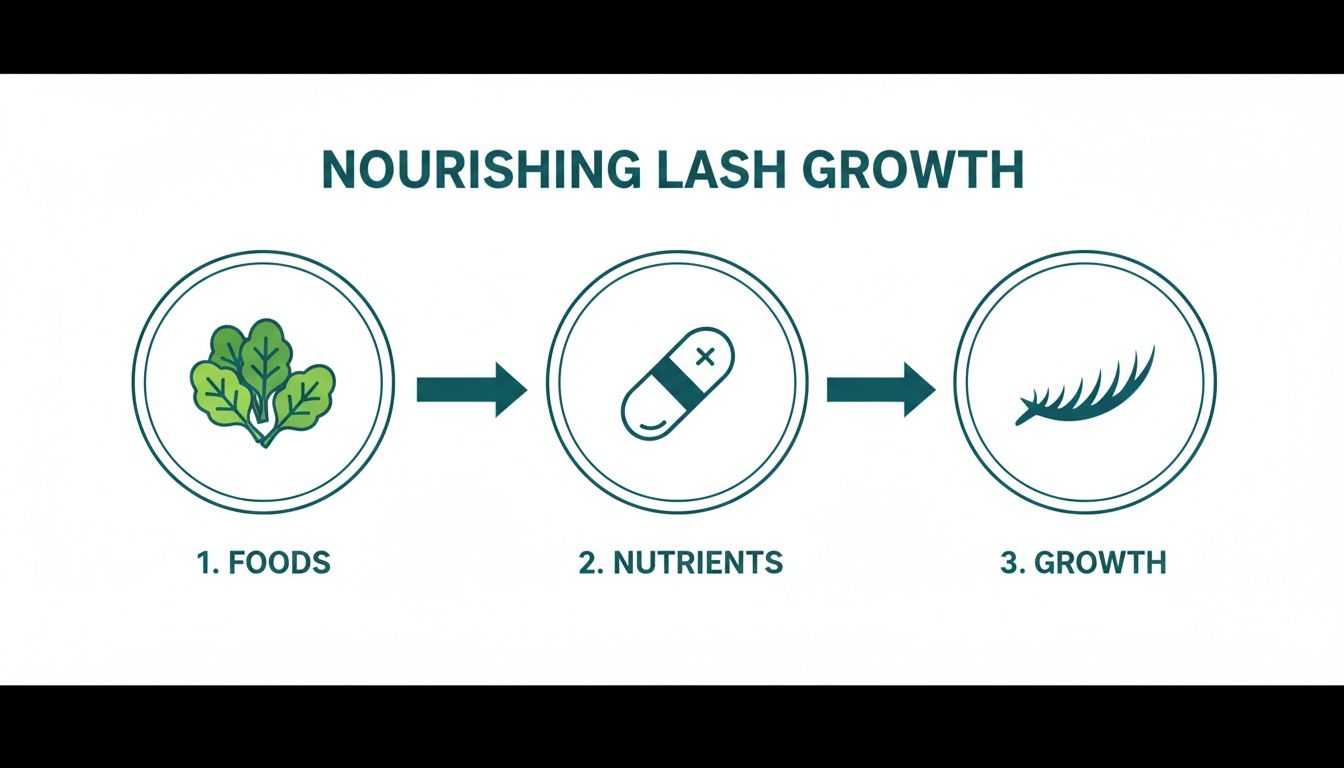
It’s a simple visual reminder that what you eat directly provides the building blocks your body needs to support hair growth everywhere—including your eyelashes.
Key Ingredients for Your DIY Lash Serum
Choosing the right ingredients is everything. This table breaks down a few popular choices to help you decide what's best for your lash goals, whether you're aiming for simple conditioning or a little extra boost.
| Ingredient | Primary Benefit | Best For |
|---|---|---|
| Castor Oil | Deeply moisturizes and coats lashes to prevent breakage | Dry, brittle lashes needing intensive conditioning |
| Jojoba Oil | Lightweight conditioning that mimics the skin's natural oil | All lash types, especially for a non-greasy feel |
| Almond Oil | Rich in Vitamin E, nourishes and supports lashes | Weak lashes that are prone to falling out |
| Myristoyl Pentapeptide-17 | Supports keratin production for a fuller, denser appearance | Anyone looking to visibly enhance the look of their lashes |
| Aloe Vera Gel | Soothing and hydrating, provides a lightweight base | A water-based serum for sensitive skin |
Ultimately, the best formula is the one that works for you. Don't be afraid to start simple and see how your lashes respond.
Safe Application and Best Practices
How you apply your serum matters just as much as what’s inside it. The right technique ensures you get all the benefits without accidentally irritating your eyes.
Application Steps:
- Start with a clean slate. Always, always remove your makeup and wash your face before you apply anything.
- Do a patch test. Before going near your eyes, dab a small amount on your inner arm and wait 24 hours to see if any redness or irritation pops up.
- Use a clean applicator. Dip a clean mascara wand (a spoolie) or a thin eyeliner brush into your serum.
- A little goes a long way. Gently sweep the applicator along your upper lash line, moving from the inner to the outer corner. Try your best not to get the serum directly in your eye.
- Apply at night. The best time to use your serum is before bed. That way, it can work its magic undisturbed while you sleep.
Proper storage is also key. Keep your DIY serum in a cool, dark place and make a fresh batch every 3-4 weeks. This is especially important for water-based formulas to maintain their quality and prevent any bacterial growth.
Your Daily Routine for Resilient Lashes
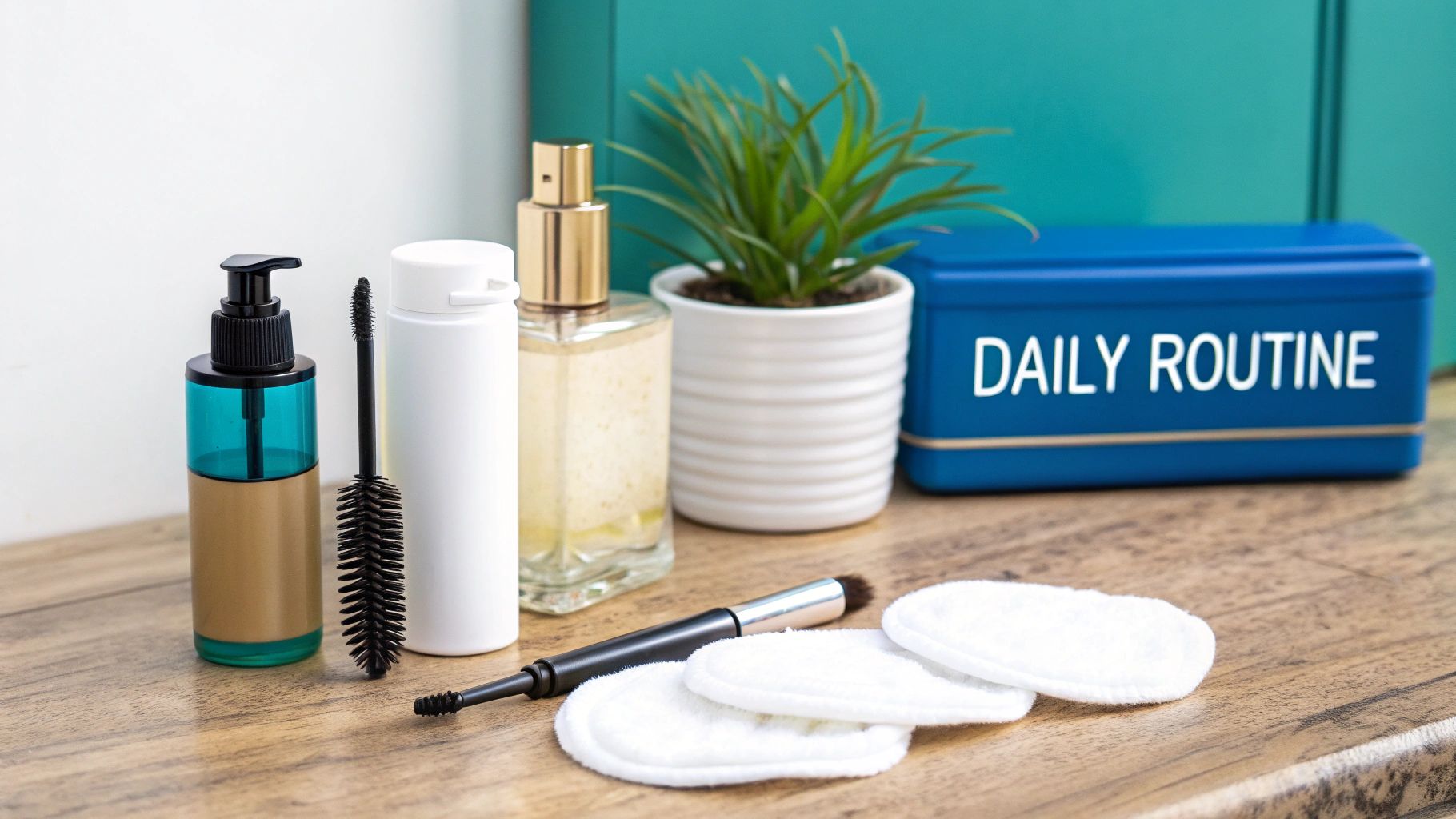
Putting in the work with serums and supplements is fantastic, but if you aren't careful with your daily habits, you might be undermining your own efforts. The real secret to strong, healthy-looking lashes lies in the small, consistent things you do every day.
Think about it this way: using a conditioning serum but then scrubbing your eyes raw every night is like watering a plant you keep kicking over. To see real progress, you have to protect your lashes from daily wear and tear. A few simple tweaks to your makeup and skincare routine can make all the difference.
The Art of Gentle Makeup Removal
The end of the day is a critical moment for your lashes. The goal when removing makeup is to dissolve it, not scrub it into submission. Aggressively rubbing a cotton pad back and forth is one of the quickest ways to cause breakage and premature shedding.
Instead, let your makeup remover do the heavy lifting with the soak-and-swipe method. First, douse a soft cotton pad with a gentle, oil-free makeup remover. Press it gently against your closed eye and just hold it there for 15-20 seconds. This gives the product time to break down stubborn mascara, letting you wipe it away with a single, gentle downward motion. No harsh side-to-side friction needed.
Key Takeaway: Patience is your best friend during makeup removal. Letting the remover dissolve everything prevents the physical stress that weakens lash roots. Never, ever rush this step.
Rethinking Your Mascara Choices
We all love a good waterproof mascara for special occasions, but its staying power can be a double-edged sword. The very polymers that make it smudge-proof also make it incredibly drying and tough to remove, which often leads to more aggressive rubbing and pulling.
For daily wear, try switching to a high-quality, non-waterproof mascara. These formulas are far gentler on your lashes and come off with much less effort. You can still find amazing options that deliver volume and length without the dehydrating side effects that make lashes brittle and prone to snapping.
Essential Rules for Eyelash Tools
The tools you use can be your lashes' best friend or their worst enemy. It all comes down to technique, especially with the trusty eyelash curler.
- Always Curl Before Mascara: This is the golden rule. Curling your lashes after applying mascara is like trying to bend a dry twig—they're stiff and far more likely to crack or break. Always curl clean, bare lashes.
- Avoid Clamping Too Hard: A gentle squeeze is all you need. Press down lightly near the base of your lashes, hold for just a few seconds, and release. Don't pull or crimp, as that can cause damage right at the root.
- Keep Your Tools Clean: Your eyelash curler can easily become a breeding ground for bacteria. To prevent eye irritation that can impact your follicles, clean the pad regularly with a bit of rubbing alcohol.
By weaving these simple, mindful habits into your daily routine, you're creating a protective shield for your lashes, allowing them to truly thrive. These small adjustments are the foundation for any lash conditioning journey, ensuring they're cared for from morning to night.
Your Top Eyelash Care Questions, Answered
As you start this journey to healthier, fuller-looking lashes, you’re bound to have some questions. It’s totally normal. With so much advice floating around, it’s easy to feel a bit lost. That's why I've rounded up some of the most common questions I hear to give you clear, straightforward answers.
Think of this as your personal FAQ for all those "but what if..." moments. The goal here is to help you feel confident that you’re taking the right steps for your lashes, safely and effectively.
How Long Until I See a Difference in My Eyelashes?
This is the big one, isn't it? The honest answer comes down to biology and a little bit of patience. Your results are tied directly to your lash growth cycle, which has a few different phases: growth (anagen), transition (catagen), and rest (telogen). A single lash takes several months to complete this entire journey.
If you’re consistent with gentle care and daily use of a good conditioning serum, you could start seeing lashes that look healthier and feel more conditioned within 4 to 8 weeks. Just remember, everyone’s timeline is a little different. Consistency really is your best friend here.
Is It Actually Safe to Put Castor Oil on Eyelashes?
Castor oil is a long-time favorite in the DIY beauty world, and for good reason. It’s incredibly moisturizing, which helps condition the lashes, making them less brittle and prone to breakage. While it's not a magic growth stimulant, it does an excellent job of protecting the lashes you already have so they can reach their full potential.
Want to use it safely? It’s simple:
- Choose Wisely: Always go for a 100% pure, cold-pressed, hexane-free castor oil. Quality matters, especially around your eyes.
- Patch Test First: Before you go near your eyes, do a quick patch test on your inner arm to make sure you don't have a reaction.
- Apply Sparingly: Use a clean spoolie (mascara wand) to apply a very light coat to your lashes, focusing on the middle and ends. Be super careful to avoid getting it directly in your eye or on your waterline to prevent irritation.
Can Eyelash Extensions Damage My Natural Lashes?
Extensions can give you that instant glam factor, but they aren't without risks if they’re not done right. The adhesive and the weight of the extensions can put a strain on your natural lash follicles. Over time, that constant tension can lead to breakage or cause your natural lashes to shed prematurely.
To keep your lashes safe, always go to a certified, experienced technician who knows what they're doing. It’s also a great idea to give your natural lashes a break between sets to let them rest and recover. If you're curious about what a healthy lash journey looks like, check out these real-life eyelash serum before and after results.
Can I Use a Lash Serum with Sensitive Eyes or Contacts?
Absolutely, but you'll need to be extra careful. Having sensitive eyes or wearing contacts doesn't mean you have to miss out on lash serums; you just need to be more mindful.
A non-negotiable first step is to patch test any new product. Dab a small amount on a discreet patch of skin, like your inner arm, and wait 24-48 hours. This simple check can save you from a world of irritation.
When applying, use a tiny amount and stick to nighttime application after you’ve taken your contacts out for the day. If you notice any redness, itching, or irritation, stop using it immediately. For those looking into all their options, you might even be curious about prescription treatments like Latisse for eyelash growth. For the super-sensitive, though, you can never go wrong by focusing on a nutrient-rich diet and a gentle daily routine.
At Skin Perfection, we're passionate about empowering you with the knowledge and ingredients to build a skincare routine you love. Whether you're a DIY pro looking for high-performance peptides or searching for perfectly formulated products, we’re here to support your journey to healthy, beautiful skin. Explore our collections today at https://www.naturalorganicskincare.com.