

 Buy with Prime


You've probably seen the promise everywhere: brush castor oil onto your lashes at night, wake up with longer, thicker eyelashes, and repeat until the difference becomes obvious. The appeal is understandable, especially when your lashes look dry, brittle, or less noticeable than you'd like. But the most responsible answer to how to use castor oil for eyelashes starts by separating a glossy cosmetic effect from biological growth.
There's no scientific evidence that castor oil makes human eyelashes grow longer or thicker, and medical sources report that clinical trials haven't demonstrated a lash-growth effect in humans (Medical News Today's evidence review). Castor oil is better understood as a conditioning coat. A very thin layer may make existing lashes look shinier, softer, or visually denser because the oil coats the shaft.
That distinction guides everything that follows. You'll learn how to patch-test, prepare a clean applicator, apply a minimal amount without touching the eye surface, and decide whether daily or occasional use makes sense for your eye sensitivity. For broader cosmetic care ideas, compare this approach with a castor oil skin buyer guide and routine tips, and review DIY lash extension aftercare if extensions are part of your routine.
Table of Contents
- Introduction to Castor Oil and Eyelash Appearance
- What You Need Before You Start
- How to Apply Castor Oil to Eyelashes Without Irritation
- How Long to Try It and What Results to Expect
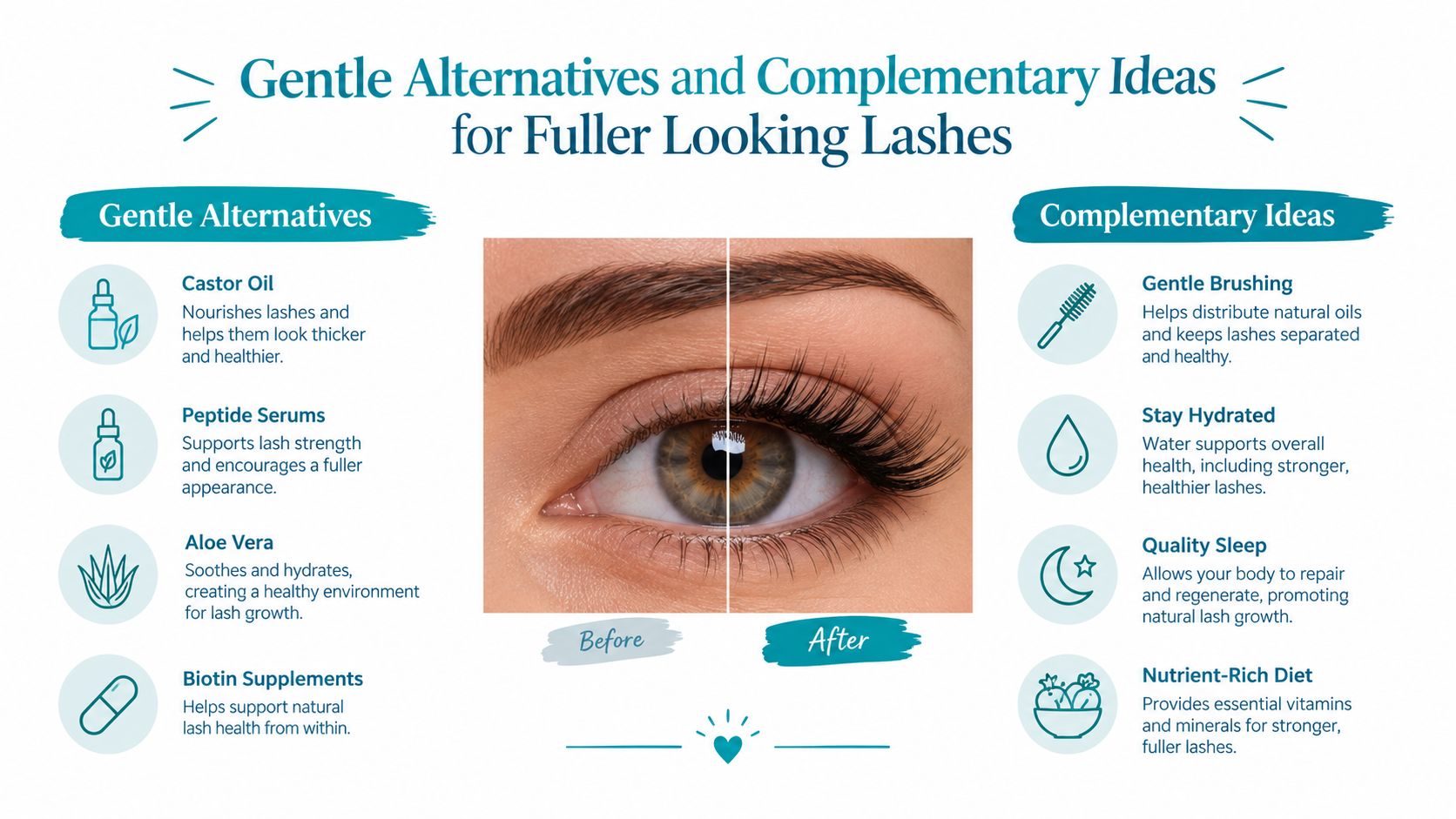
- Gentle Alternatives and Complementary Ideas for Fuller Looking Lashes
- Final Takeaways and Safe Routine Checklist
Introduction to Castor Oil and Eyelash Appearance
If your lashes look dry after cleansing, a thin layer of castor oil may make them appear glossier and more defined. Its dense texture sits on the lash shaft, much like a clear conditioning coat on hair. The visible effect comes from coating existing hairs, not from creating additional follicles.
Current medical guidance reports no established clinical proof that castor oil stimulates new eyelash growth (Medical News Today). Use it with modest expectations. It cannot promise a permanent increase in length, new lash growth, or a guaranteed answer for sparse areas. Fuller-looking lashes after application are more reasonably explained by shine, softness, and the way coated hairs stand out.
Cosmetic conditioning, not treatment language
Skin Perfection presents its skincare products and lotion-making supplies for cosmetic use, focused on beautifying the skin's appearance. The same boundary applies to lash care. Castor oil should be described as a cosmetic conditioner, not as something that fixes, repairs, heals, or treats an eye or eyelid condition.
Etsy's medical claims policy prohibits listings that say a product can treat, mitigate, diagnose, or cure a disease or medical condition. It also restricts claims that a product is, or works like, an analgesic, antibiotic, antiseptic, antiviral, anti-inflammatory, steroid, vaccine, decongestant, or prescription drug, including claims that it is FDA approved. Safer cosmetic wording stays with conditioning, shine, softness, and fuller-looking lashes.
A 2021 randomized, investigator-masked paired-eye study provides limited context rather than proof of growth. 26 people with blepharitis applied 100% cold-pressed castor oil twice daily for 28 days to one eye. The investigators reported improvements in lash-related health markers, including reduced matting, madarosis, and crusting, with p-values below 0.05 to 0.01, and no adverse events in that small sample (study PDF). Those findings concern a selected group and short-term periocular conditioning. They do not establish new lash growth for everyone.
For broader cosmetic context, compare this approach with a castor oil skin buyer guide and routine tips, or review DIY lash extension aftercare if extensions are part of your routine.
What You Need Before You Start
Prepare the tools before oil gets anywhere near your eyes. Choose a simple, 100% cold-pressed castor oil from a reputable source, preferably in packaging that lets you dispense a controlled amount. Avoid fragranced blends or products with unfamiliar additives around the eye area. A clean spoolie or cotton swab gives you better control than applying oil directly from the bottle.
You'll also need a gentle facial cleanser, clean water, tissues, and a well-lit mirror. Wash your hands first, clean the work surface, and keep the bottle closed when you're not dispensing product. A hygienic setup matters because the lash line is delicate and the applicator will be used close to the eye.
Make a go or no-go decision
Patch-test the oil on skin away from the eye, such as the inner forearm. Apply a small amount, leave it undisturbed, and watch for redness, itching, burning, swelling, or a rash before trying it near your lashes. A patch test can't guarantee eye-area tolerance, but it's a sensible first filter.
Extra caution is appropriate if you have dry eyes, sensitive eyes, or a history of eyelid dermatitis. Periocular castor oil can cause irritation or allergic contact dermatitis, and oil entering the eye may create temporary blurred vision. Some independent guidance also advises people who are pregnant or breastfeeding to seek individualized professional advice before use (GoodRx's safety discussion).
Skip the routine if the skin around your eyes is already irritated, broken, or reacting to another product. Don't use castor oil as a substitute for an eye professional's evaluation when true lash loss, persistent redness, swelling, crusting, or discomfort is present.
For people who make skincare at home, best carrier oils for skin can help explain why texture, purity, and intended application area matter. Keep facial products separate from lash tools, and don't assume that an ingredient suitable for a cheek or elbow is automatically suitable for the eye area.
If your nighttime routine already includes a separate facial moisturizer, HydroGlow Anti-Aging Night Mask is a cosmetic option formulated with hyaluronic acids, polyglutamic acid, sea silt ferment, algae extract, jojoba, squalane, aloe, glycerin, and triglycerides. Keep it on facial skin only, away from the lash line and eye surface.
How to Apply Castor Oil to Eyelashes Without Irritation
The safest technique uses less oil than you think you need. Castor oil is thick, so excess product can migrate into the eye, smear across the lid, or leave the lash line feeling heavy. The aim is a barely visible film on the outer lashes and, if tolerated, the upper lash line.
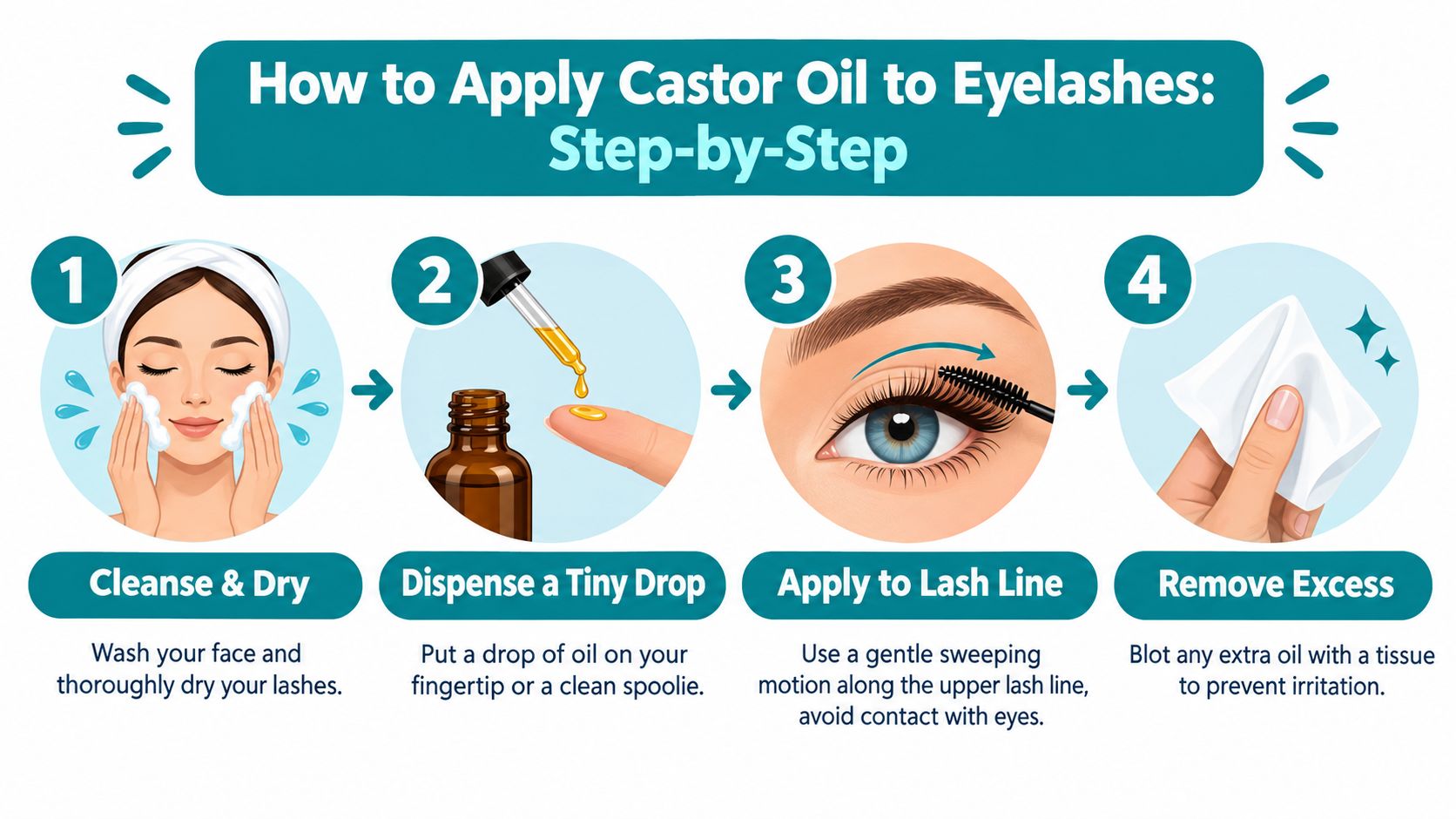
Start by removing makeup and cleansing your face. Rinse away cleanser thoroughly, then dry the lashes and surrounding skin completely. Water, cleanser residue, and makeup can make the application less predictable.
A thin-coat method
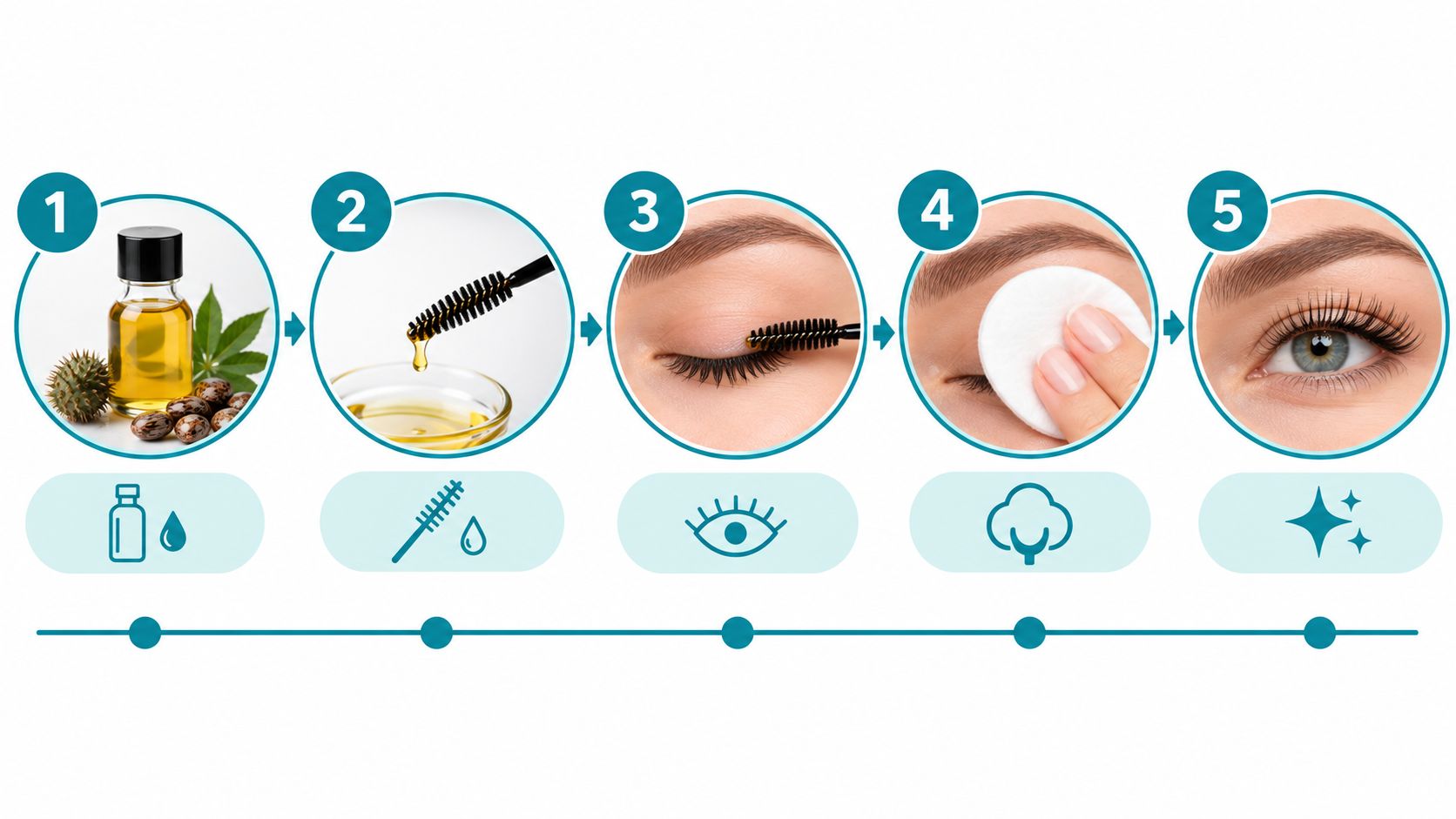
- Dispense a tiny amount. Place a small drop on a clean spoolie or cotton swab. Don't load the applicator until it looks wet and saturated. If it seems excessive, blot it on a tissue before approaching your eye.
- Keep your gaze steady. Sit at a mirror, rest your elbow on a stable surface, and apply with the eye relaxed. This reduces sudden movements while you work close to the lash line.
- Coat the upper lash shafts lightly. Sweep from the middle of the lashes toward the tips, then use the remaining trace of product near the upper lash line if your skin tolerated the patch test. Keep the oil away from the waterline and the eye surface.
- Leave lower lashes alone at first. Lower-lash application requires more precision and gives the product an easier path into the eye. You can assess your tolerance with the upper lashes before deciding whether the lower lashes are worth the added risk.
- Blot immediately. If oil collects at the lid margin, dab it away with a clean tissue. Don't add more to compensate for product that you removed. A thin, even film is the intended cosmetic effect.
Nighttime can be practical because you won't need to apply eye makeup over the oil. Still, leaving it on overnight isn't mandatory, and longer contact doesn't establish a growth benefit. In the morning, cleanse gently and avoid rubbing the lashes.
Use a fresh disposable spoolie or a properly cleaned, fully dry reusable tool each time. Don't double-dip a used applicator into the bottle, don't share the oil, and don't touch the bottle opening with the spoolie. For related cosmetic guidance, see how to use lash serum, while remembering that products marketed for the eye area can have different formulas and instructions.
Stop signal: Burning, redness, swelling, persistent watering, pain, or blurred vision means stop immediately. If oil enters the eye, rinse gently with clean water. Seek professional care if symptoms continue or worsen.
How Long to Try It and What Results to Expect
Judge castor oil by appearance and tolerance, not by a promised growth timeline. A conditioning coat may make lashes look glossier, smoother, or less dry soon after application. Those changes describe the surface of existing lashes. They don't prove that new lashes have formed or that follicles have become more active.
A reasonable cosmetic trial can involve observing your lashes over 4 to 8 weeks, but that window shouldn't be presented as a guaranteed growth schedule. The evidence does not establish that castor oil creates measurable new lash growth. Instead, use the period to decide whether you like the finish and whether your eye area remains comfortable.
Track cosmetic change honestly
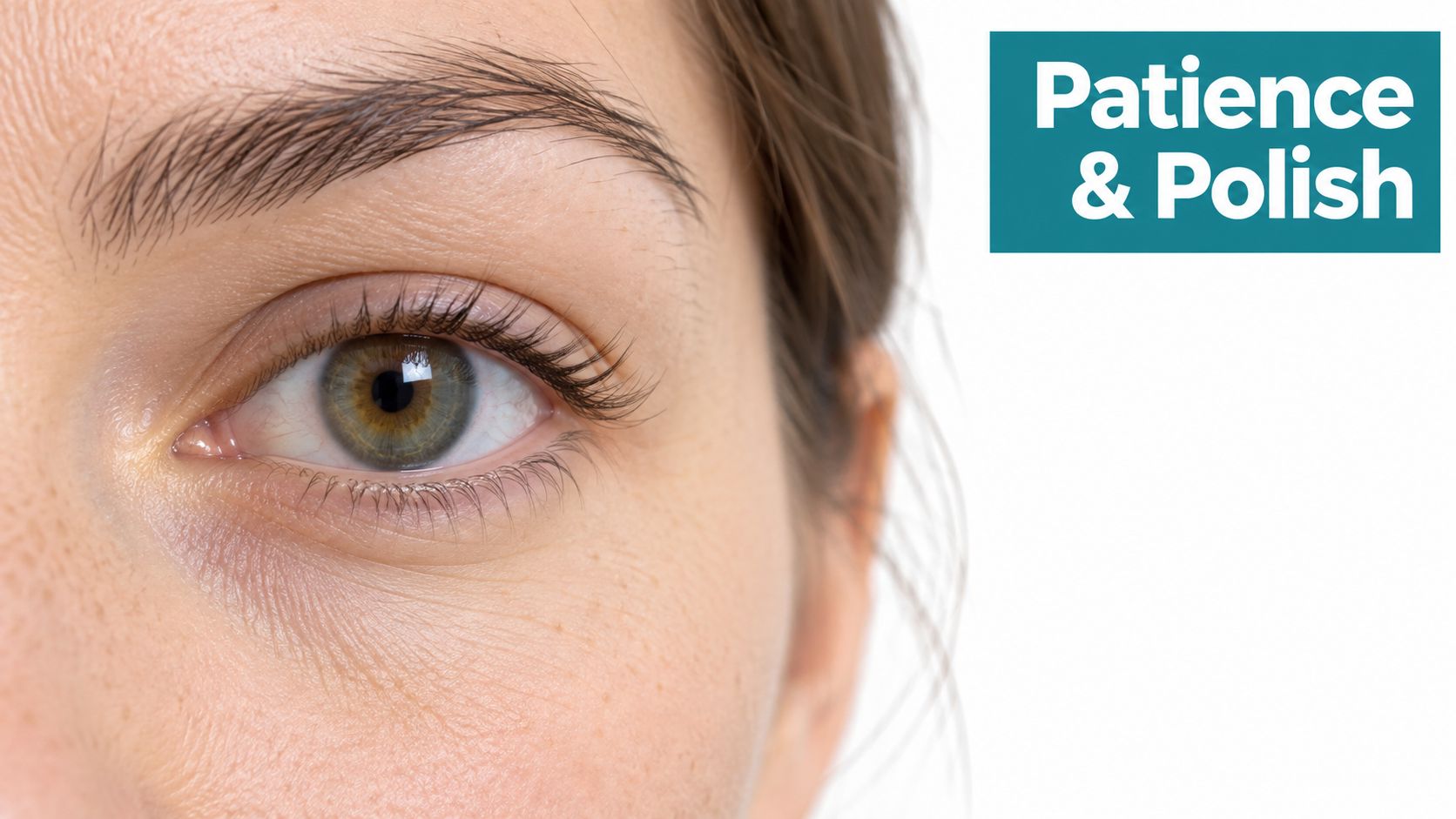
Take a baseline photograph before starting. Use the same angle, lighting, distance, and makeup-free conditions each time you compare. A close-up taken in bright, direct light can make lashes appear different from a softer bathroom photograph, so consistency matters more than dramatic framing.
Look for changes such as:
- Surface finish: Do the lashes look shinier or more defined?
- Texture: Do they appear softer or less dry?
- Tolerance: Is there itching, redness, watering, or heaviness?
- Routine fit: Can you apply a thin coat without touching the eye?
Normal lash shedding can make day-to-day comparisons confusing. Don't treat every shed lash as evidence that the routine failed, and don't interpret a temporary glossy effect as biological growth. If you see ongoing thinning, patches, or sudden lash loss, pause the experiment and seek professional input rather than increasing the amount of oil.
Daily use also deserves more caution than occasional use. Repeated exposure may be unsuitable for people with sensitive eyes, dry eyes, or a history of eyelid dermatitis, even if an occasional application feels comfortable. The small blepharitis study reported good short-term tolerability, but its participants and duration were limited, so it can't answer every question about long-term daily use (clinical study details).
If your broader goal is hydrated, healthy-looking facial skin rather than lash growth, Sodium Hyaluronate Powder Pure Hyaluronic Acid is a cosmetic-grade ingredient for formulating water-based serums, creams, and lotions. It's a separate facial formulation choice, not an eye-area substitute. You can also compare documentation methods with eyelash serum before and after.
Gentle Alternatives and Complementary Ideas for Fuller Looking Lashes
Castor oil is only one cosmetic route to a fuller-looking lash line. If you dislike its heaviness or your eyes react easily, a lightweight lash conditioner may be more comfortable. Products with cosmetic peptides or hyaluronic acid can focus on the appearance of softness and hydration, but you should still check the ingredient list and keep any formula out of the eye itself.
Makeup can create a more immediate visual difference without asking the oil to do more than it can. A lash curler used gently before mascara can lift the existing lashes, while a clean mascara wand can separate clumps. A dark, lengthening mascara may define the lash tips, and a fine line of eyeliner close to the upper lashes can make the lash band look denser. Remove makeup carefully at night, because aggressive rubbing can make the eye area feel irritated and can pull on lashes.
Choose by sensitivity and routine
| Your priority | A practical cosmetic choice | What to watch |
|---|---|---|
| Lowest product complexity | A thin castor oil coat on the outer lash shafts | Keep it away from the eye surface and stop at the first sign of irritation |
| Lightweight feel | A purpose-made lash conditioner | Read eye-area directions and avoid layering several new products at once |
| Immediate definition | Lash curling and mascara | Remove makeup gently and replace eye makeup when it becomes old or contaminated |
| Facial overnight hydration | A separate cosmetic night moisturizer or mask | Keep facial products off the lash line |
A facial product shouldn't be repurposed as a lash product because it feels gentle on the cheeks. For example, Skin Perfection's HydroGlow mask is designed as an overnight facial cosmetic with hydrating ingredients. It belongs on facial skin, not on eyelashes or inside the eye area.
If you're comparing lash-serum categories, Finding Favourites lash serum dupes can provide a starting point for evaluating alternatives by texture, routine, and ingredient approach. Treat “enhancing” language carefully, and distinguish cosmetic conditioning from claims about treating a condition or producing biological growth.
DIY formulators can explore how to make eyelashes grow, but any cosmetic project intended for use near the eyes needs especially conservative ingredient selection, sanitation, preservation, and labeling. A simple routine you can perform gently is safer than a complicated mixture that encourages repeated touching or experimentation around the eye.
Final Takeaways and Safe Routine Checklist
Castor oil is best understood as a cosmetic conditioning coat. It can add surface slip and shine, but it should not be presented as a proven way to make human eyelashes longer or thicker. Cosmetic care improves appearance; it does not establish biological growth or treat eyelid conditions.
Use a low-contact routine:
- Patch-test first: Apply a small amount to skin away from the eye and watch for a reaction.
- Cleanse and dry: Remove makeup and cleanser residue before use.
- Use a tiny amount: A clean spoolie or cotton swab needs only a light film.
- Stay on the outside: Brush the upper lash shafts and, if comfortable, the outer upper lash line. Keep oil away from the waterline and eye surface.
- Blot excess: Remove visible pooling so it is less likely to migrate.
- Choose frequency carefully: Occasional use may suit sensitive eyes better than daily application.
- Stop promptly: Burning, redness, swelling, tearing, pain, or blurred vision requires stopping the routine.
- Seek evaluation for persistent loss: Sudden or ongoing lash loss calls for professional assessment, not more oil.
A simple coat is like a thin protective layer on a hair fiber. It may improve feel and appearance while it remains in place, yet it cannot replace medical care. Skin Perfection follows cosmetic labeling principles and Etsy restrictions by describing conditioning, hydration, texture, shine, and appearance rather than treatment, cure, FDA approval, or repair of a medical condition.
Skin Perfection offers cosmetic skincare products and lotion-making supplies. Visit Skin Perfection for facial-care and DIY formulation ingredients that support gentle routines without overstating cosmetic results.