

 Buy with Prime



Your lotion has come together, the texture looks right, and the empty bottles are waiting beside the mixing vessel. Then you reach for Liquid Germall Plus and realize the recipe says little more than “add preservative.” How much belongs in the finished batch, when should you add it, and what tells you the product is ready to fill?
Those questions matter more than whether the cream looks good on the spatula. Preservation is a documented release process, not a finishing touch. A useful formula connects the preservative choice to its addition method, final pH, packaging, and testing, so you can repeat the batch rather than just repeat its appearance.
Table of Contents
- What Liquid Germall Plus Actually Is
- Recommended Usage Rates and pH Window
- When and How to Add It to Emulsions
- Compatibility With Natural and DIY Systems
- Common Failure Modes and Troubleshooting
- A Sample Small-Batch Workflow
- Labeling, Safety, and What Not to Claim
What Liquid Germall Plus Actually Is
When you're finishing a water-containing lotion or serum, Liquid Germall Plus is a commercial preservation blend, not a single preservative molecule. Its ingredient names are propylene glycol, diazolidinyl urea, and iodopropynyl butylcarbamate, usually shortened to IPBC. Knowing those names helps you distinguish the product you bought from another preservative with a similar-sounding trade name.
Start with the documentation for the bottle in your workspace. Keep the supplier's technical sheet and safety data sheet together, and check that both identify the material you purchased. A recipe name alone isn't enough for ingredient calculations or a finished-product label.
Liquid Germall Plus Component Snapshot
| Component | Typical Role | Why It Matters |
|---|---|---|
| Propylene glycol | Liquid carrier within the blend | It's part of the supplied ingredient, not interchangeable with the complete preservation system. |
| Diazolidinyl urea | Preservative component | Its identity belongs in your formulation and labeling records. |
| Iodopropynyl butylcarbamate | Preservative component, commonly called IPBC | Its concentration matters when reviewing ingredient restrictions for the intended market. |
The blend is evaluated as a system. Don't assume that buying an individual component, or replacing the carrier, produces an equivalent ingredient.
Read Composition Figures Carefully
One SDS reports approximately 60% propylene glycol, 40% diazolidinyl urea, and 0.4% IPBC, while another gives broader ranges of 30–100% for propylene glycol and diazolidinyl urea and 0.3–1% for IPBC; these differing disclosure figures make supplier-specific documentation important for regulatory calculations, as illustrated by the Liquid Germall Plus safety data sheet. Don't turn approximate figures or disclosure ranges into an assumed exact manufacturing recipe.
Keep composition, handling hazards, and preservation performance separate in your records. An SDS addresses material safety; it isn't proof that your finished lotion will pass microbiological testing.
If you're comparing ingredient policies, ALODERMA's discussion of phenoxyethanol safety for sensitive skin offers a separate ingredient-specific resource. Use comparisons to sharpen your questions, not to transfer conclusions about one preservative to another.
Recommended Usage Rates and pH Window
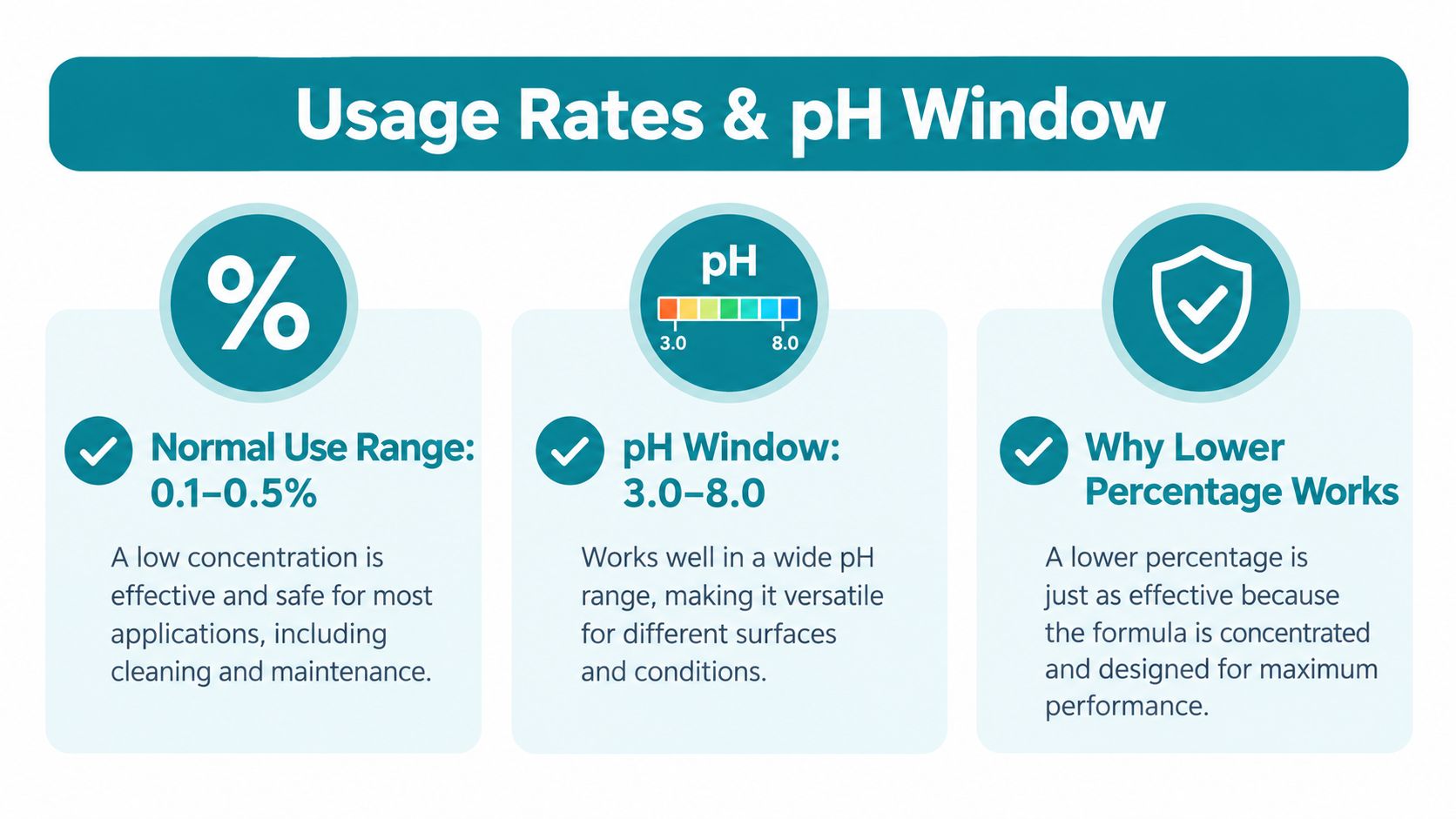
The supplier specifies a normal use range of 0.1–0.5% and an effective pH window of 3.0–8.0, but the lower end isn't an automatic success criterion because efficacy depends on microbial load, water activity, packaging, raw materials, and processing hygiene, according to Ashland's Liquid Germall preservative technical information.
Those limits define a formulation working space. They don't select the right dose for every cream, lotion, or serum, and they don't establish a universal pass rate.
Choose a Target You Can Defend
A practical development decision starts with the whole product. Review the raw materials, intended container, manufacturing conditions, and expected handling before choosing a target within the supplier's range.
- Formula review: Record the water-containing ingredients and anything that changes the preservation demands of the product.
- Packaging review: Choose the intended container before testing, rather than treating packaging as a design decision made afterward.
- Validation review: Support the target with finished-product challenge testing instead of assuming a familiar recipe makes testing unnecessary.
For a more demanding formulation, evaluating a target toward the upper end may be a reasonable development choice. It's still a choice to test, not permission to skip validation or exceed the supplier's recommendation.
Practical rule: A recommended range tells you where to develop. A challenge test tells you whether the finished formulation's preservation system performs.
Record the Finished pH
Measure pH after the formulation is complete, using a suitable pH meter and a consistent measurement procedure. Record pH at filling, not just the pH of the water before the remaining ingredients went in.
Don't adjust pH merely to make the preservative fit without checking the needs of the rest of the formula. If you're evaluating a different system, the Euxyl PE 9010 formulation guide can serve as a separate comparison resource. Each candidate needs its own technical review; preservative names aren't interchangeable instructions.
When and How to Add It to Emulsions
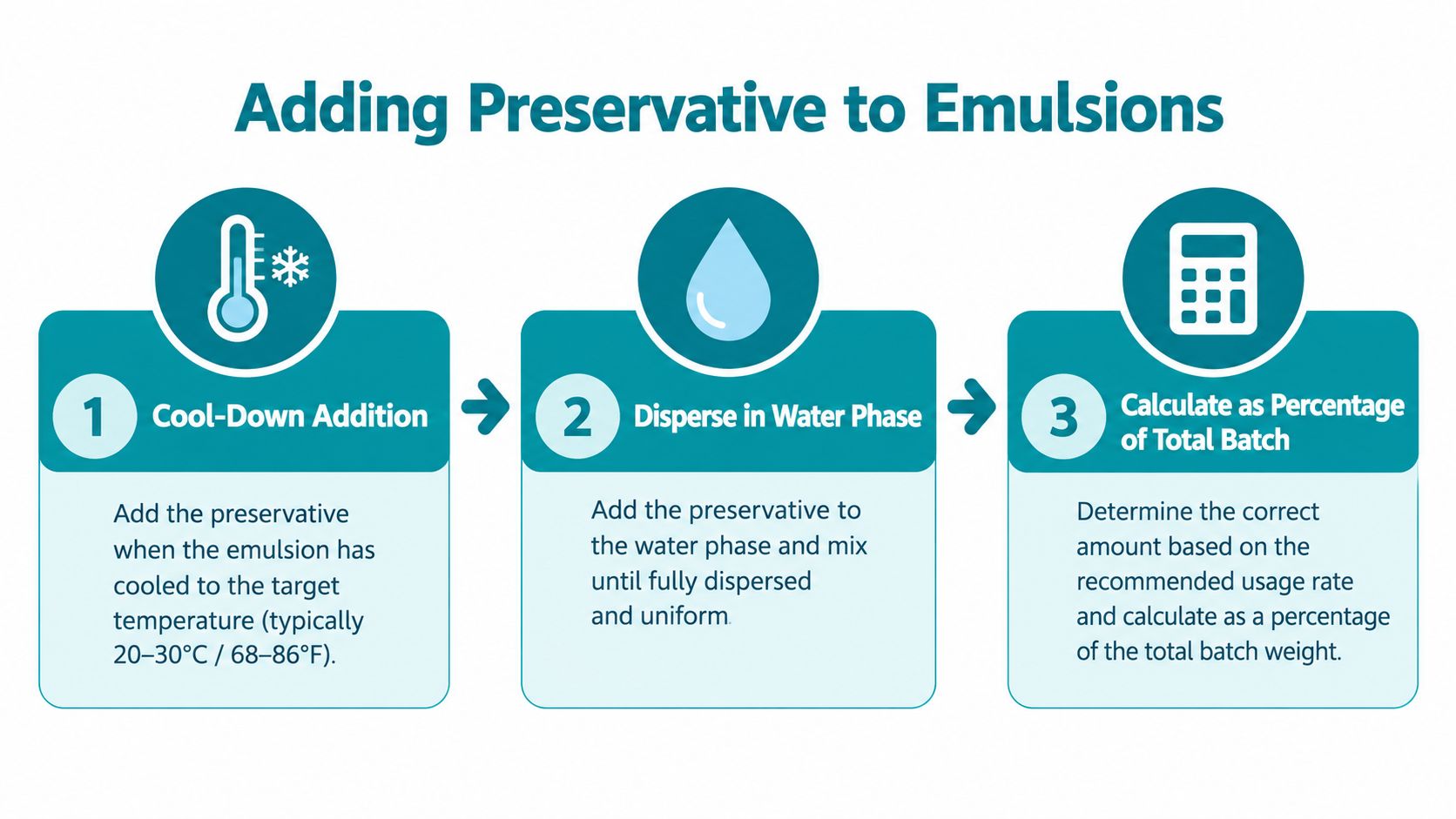
Calculate Liquid Germall Plus against the finished batch weight, not just the water phase. The ingredient goes into the water phase or fully emulsified product during cool-down, but its dosing basis remains the complete formula.
That distinction is easy to miss when a worksheet separates ingredients into heated water, heated oil, and cool-down groups. Those groups organize processing. They don't create separate denominators for calculating the preservative amount.
Set Up the Addition Before Heating
Write the weighed preservative amount into the batch sheet before you begin. Include it in the planned finished formula rather than pouring an unrecorded amount into an already completed batch.
Use a balance suitable for the small quantity you're weighing. Drops aren't an adequate substitute for a weight-based formula, and judging the amount by the look or feel of the emulsion won't produce a reproducible result.
For an emulsion, keep emulsification and preservation as distinct operations. The guide to what emulsifying wax does is useful if you're still sorting out those functions. A well-formed emulsion hasn't demonstrated adequate preservation just because it holds together.
Control Cool-Down and Mixing
Follow the current supplier's temperature instructions for your material. Use a thermometer, record the addition temperature, and don't substitute “warm to the touch” for an actual processing check.
- Add in the appropriate stage: Incorporate the preservative during cool-down into the water-containing system or completed emulsion, rather than defaulting to the heated oil phase.
- Mix throughout the vessel: Account for material around the sides and bottom, not just the portion moving beneath the mixer.
- Finish before measuring: Complete the remaining additions and any justified pH adjustment before recording the final pH.
The broad working window discussed earlier doesn't justify adding the ingredient wherever it's convenient. Addition timing and uniform distribution are separate process controls.
Avoid unnecessary improvisation when a batch thickens during cooling. Changing the mixing method, adding extra liquid, or adjusting ingredients by feel changes the process you intended to validate. Record deviations and assess them before filling.
Compatibility With Natural and DIY Systems
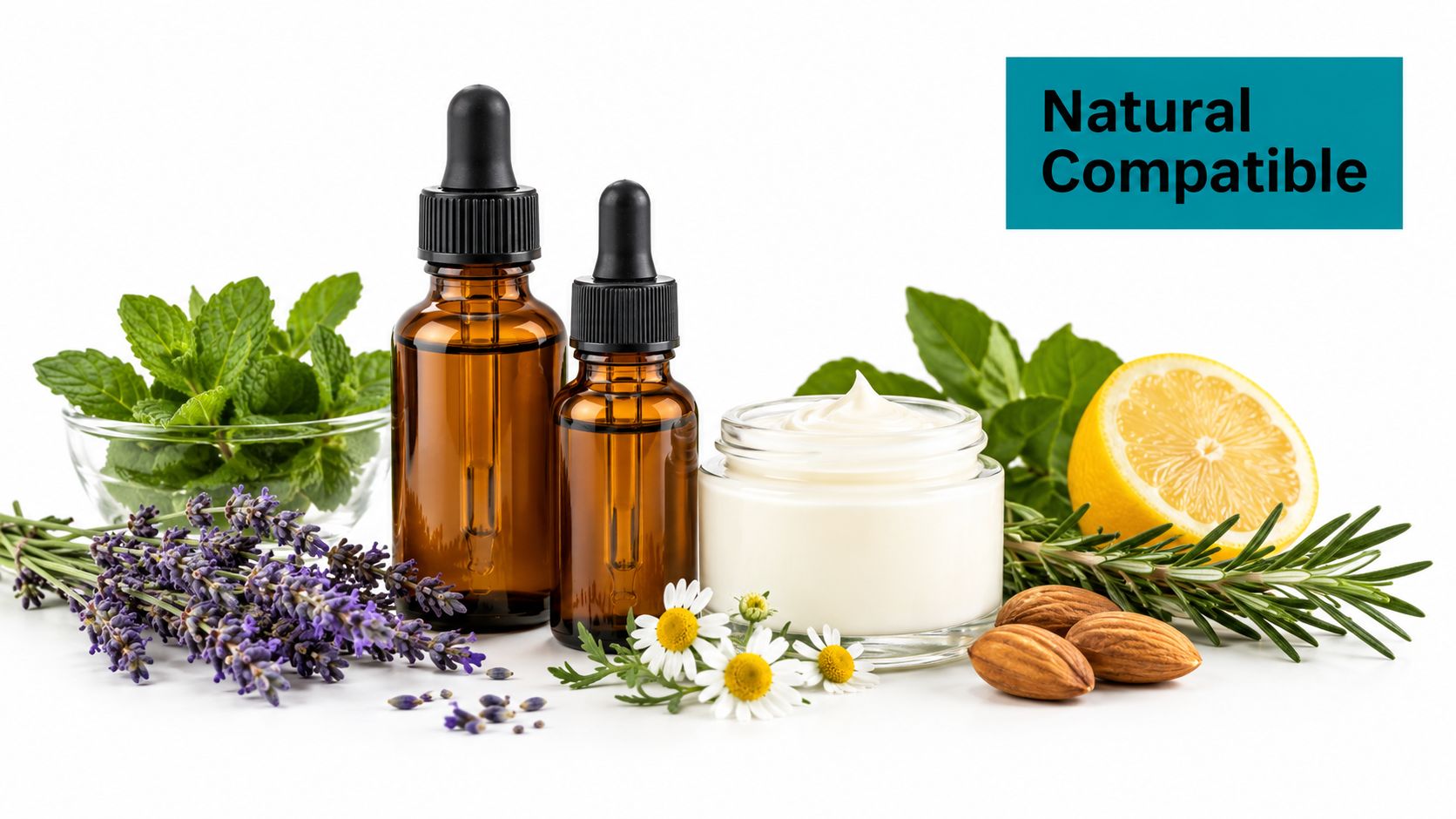
Technical compatibility and ingredient-policy compatibility are different questions. Liquid Germall Plus can be useful in water-based creams, lotions, shampoos, and serums, but using it doesn't automatically make a finished product natural, organic, or eligible for every clean-beauty standard, as explained in Ashland's Liquid Germall Plus product information.
A formulator needs to answer both questions before settling on the system. A product can meet its preservation requirements yet conflict with a certification rule or a brand's published ingredient policy.
Compare Systems Without Assuming Equivalence
Leucidal Liquid Radish Root is another option to investigate when considering a natural-positioned preservation strategy. It shouldn't be treated as a drop-in replacement for Liquid Germall Plus; obtain its current supplier guidance rather than copying the dosing and processing method from a different ingredient.
| Decision | Liquid Germall Plus | Leucidal Liquid Radish Root |
|---|---|---|
| Formulation fit | Review the documented blend and operating requirements. | Review the specific supplied material and its own technical requirements. |
| Label expectations | Check the blend against the brand's ingredient policy. | Verify natural-positioning language and certification eligibility rather than assuming them. |
| Performance evidence | Validate the finished formula. | Validate the finished formula independently. |
| Development risk | Don't mistake a familiar ingredient for a tested product. | Don't mistake a natural-oriented name for equivalent protection. |
The useful comparison isn't which ingredient sounds more appealing. It's which preservation strategy can satisfy the formula, the intended market, and the claims you plan to make.
Set the Policy Before Reformulating
Define what “natural” means for the project. A personal preference, an internal ingredient exclusion list, and a formal certification requirement aren't the same standard.
Avoiding a conventional preservative doesn't make a high-water formulation safer. An inadequately preserved product can support bacterial, yeast, or mold growth; the supplier information above describes preservation as a functional requirement, not a marketing preference.
Use the natural skincare preservative guide to organize the alternatives you want to investigate. Then request the relevant supplier documents and certification evidence. Don't fill gaps in those documents with assumptions about country-specific legality, consumer tolerance, or finished-product performance.
Common Failure Modes and Troubleshooting
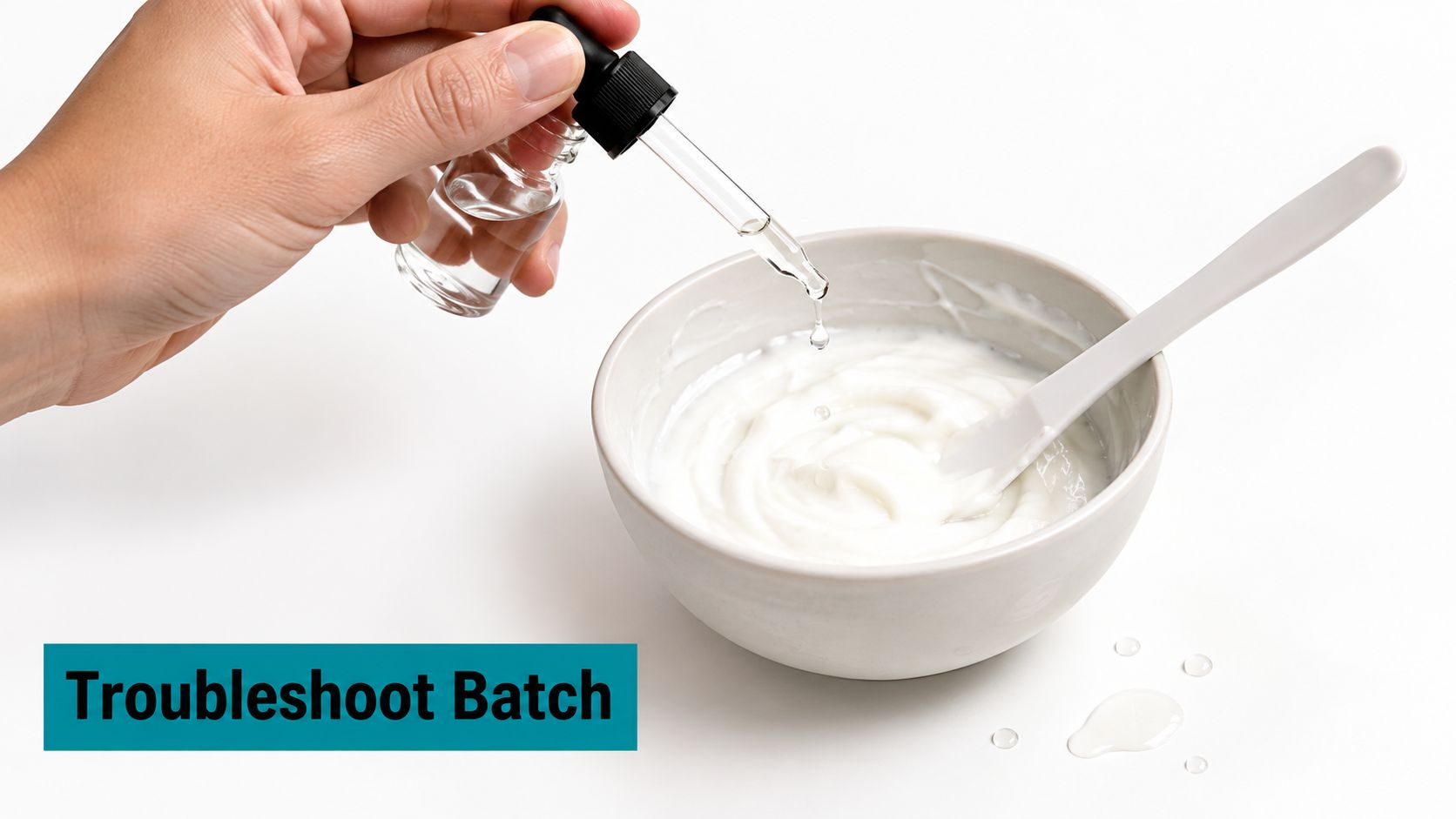
A cream can look convincing while its batch record reveals a preservation problem. The preservative was weighed against the wrong portion of the formula, mixing stopped before the vessel was uniform, or filling introduced contamination after an otherwise controlled process. These are process failures, not reasons to keep increasing the dose.
Treat troubleshooting as an investigation. Identify what happened before deciding what to change, and keep suspected product out of use or sale while you assess it.
Investigate the Record, Not Just the Jar
Under-dosing calls for a calculation check. Compare the intended finished weight, actual preservative weight, and any additions made after weighing. Don't assume the worksheet remained accurate after an improvised change.
Poor dispersion calls for a processing review. Examine the mixing equipment, vessel shape, batch consistency, and whether the method reached the entire product. More preservative won't correct a method that leaves part of the batch inadequately mixed.
Contamination during filling calls for a separate hygiene review. Inspect the filling tools, container preparation, handling, and storage of packaging. A wide pH window cannot compensate for dirty equipment or a poorly controlled filling operation.
A clean-looking jar isn't a release result. Investigate the manufacturing record and test the product.
Separate Warning Signs From a Diagnosis
An unexpected odor, color change, or separation warrants holding the batch for assessment. These observations don't identify the cause by themselves, and a product without obvious changes hasn't demonstrated microbiological acceptability.
- Hold the batch: Keep it separate from approved stock and retain the associated manufacturing records.
- Review deviations: Compare ingredients, processing, filling, and packaging with the intended method.
- Seek appropriate testing: Use laboratory assessment to resolve preservation questions rather than relying on appearance.
- Avoid casual salvage: Don't add more preservative to a suspect cream and assume it's ready to distribute.
A bacterial test kit may be worth discussing when considering screening tools, but don't confuse screening with a standardized preservative-efficacy challenge test. Finished-product challenge outcomes are formulation-specific, and the supplier's recommended range doesn't provide a universal success percentage.
A Sample Small-Batch Workflow
Use a lightweight water-based serum as a development example. Start with a complete formula and the preservative target selected through your technical review, then write the processing method before you weigh anything. This is a workflow template, not a validated recipe.
Keep the formula and the release record linked. Someone reviewing the batch should be able to identify what you intended to make, what you made, and what evidence supported release.
Build the Batch Record
Begin with the planned finished batch weight and a complete ingredient list. Record supplier identities and raw-material lot information so an unexpected result can be traced to the materials used.
Weigh the ingredients using appropriate equipment and follow the documented processing sequence. At the designated cool-down stage, add the preweighed preservative and mix until uniform, following the incorporation method already established.
Complete the formula before checking its final pH. Fill into the intended packaging using the documented handling procedure, and retain samples for the testing plan.
Define Release Criteria Before Filling
| Release Record | What to Capture |
|---|---|
| Batch size | Planned and actual finished weight |
| Preservative percentage | Selected target and weighed amount |
| pH at filling | Measured result and measurement procedure |
| Packaging type | Container, closure, and filling method |
| Challenge-test results | Finished-product test report and acceptance decision |
These entries shouldn't be reconstructed from memory after the bottles are labeled. Record them as the work happens, including deviations that might affect the outcome.
Release standard: Submit the finished product for standardized preservative-efficacy testing. Testing the preservative ingredient alone doesn't validate the serum.
Keep development batches distinct from batches approved for distribution. If the test result doesn't meet the acceptance criteria, revise the formulation or process deliberately and evaluate the revised product.
A changed fragrance, botanical ingredient, container, or mixing method deserves a documented review. Don't assume an earlier result applies automatically to a materially different product. The value of this workflow is that it gives you a traceable method for deciding, rather than a percentage to memorize.
Labeling, Safety, and What Not to Claim
Preserving a cosmetic product isn't the same as making a medical claim about the person using it. Under the Federal Food, Drug, and Cosmetic Act, cosmetics are intended for cleansing, beautifying, promoting attractiveness, or altering appearance; disease-related intended uses or claims about affecting body structure or function can place a product in the drug category, as described in the FDA Cosmetics Labeling Guide.
Describe Liquid Germall Plus by its formulation role. For finished skincare, keep the language focused on cosmetic appearance and beautification.
Review Every Customer-Facing Claim
FDA doesn't generally pre-approve cosmetics, cosmetic ingredients, or their labeling, with most color additives being the principal exception, so don't present the preservative or finished lotion as FDA-approved; see FDA's explanation of approval terminology.
Etsy's medical-claims policy applies to explicit and implied claims in titles, descriptions, and images. Its boundaries include:
- Medical conditions: No claims to treat, mitigate, diagnose, or cure serious diseases, cancer, heart disease, sexual dysfunction, or impotence.
- Drug equivalence: No claims that an item is, or is as effective as, an analgesic, antibiotic, antiseptic, antiviral, anti-inflammatory, steroid, vaccine, decongestant, or prescription drug.
- Approval language: No claims that the item is FDA-approved.
Keep Safety Documentation Internal
Follow the SDS handling precautions, including gloves, eye protection, and avoiding direct contact with the concentrate. Keep supplier documents, formulation records, and testing evidence alongside your labeling review.
Use the cosmetic regulations guide when reviewing storefront wording. Check images and promotional copy as carefully as the ingredient description.
Skin Perfection offers skincare products that beautify the skin and lotion-making supplies for custom cosmetic formulations. Visit Skin Perfection to explore ready-made skincare and DIY supplies, and use a documented preservation plan when developing your next water-containing lotion or serum.