

 Buy with Prime


Natural anti-aging skincare is so much more than just simple botanical oils or kitchen-remedy masks. It's a thoughtful marriage of nature’s most powerful botanicals with incredible cosmetic science.
This modern approach is all about choosing formulas that prioritize plant-derived actives, peptides, and stem cells. The goal is to support the skin's appearance, helping it look smoother, feel firmer, and glow with radiance. We've moved way beyond the basics to deliver sophisticated, high-performance cosmetic results.
The Evolution of Natural Anti-Aging Skin Care

The whole idea of "natural" skincare has completely transformed. It's no longer just about mashed-up avocados. Today, natural skincare sits at the exciting crossroads of potent botanicals and scientific innovation, delivering serious cosmetic benefits without compromise.
Think of it as the difference between a simple backyard garden and a state-of-the-art greenhouse. Both are rooted in nature, but one is fine-tuned to produce exceptional results.
This massive shift is really being driven by you—the consumer. Shoppers are more informed than ever, and they're actively looking for clean formulas with recognizable, effective ingredients that help them achieve a youthful, healthy-looking glow.
The Science-Forward Shift in Natural Beauty
The new wave of natural anti-aging skincare is all about isolating and concentrating the most effective parts of plants. We're using cosmetic science to create powerful actives that work beautifully to enhance your skin's appearance.
This means we’re focusing on ingredients like:
- Plant-Derived Actives: These are concentrated extracts like Bakuchiol or botanical Vitamin C, which are amazing for improving the look of skin texture and evening out tone.
- Clinically-Inspired Peptides: Think of these as smart ingredients. Peptides like Argireline and Matrixyl 3000 are famous for how they help minimize the appearance of fine lines and support a firmer look.
- Innovative Plant Stem Cells: We can now source ingredients from incredibly resilient plants like apples and edelweiss. These stem cells offer fantastic antioxidant properties that help maintain your skin's vitality and look.
By focusing on these high-performance, nature-derived ingredients, you can build a regimen that effectively supports your skin's appearance, helping you achieve a more radiant and youthful look.
Responding to Consumer Demand for Clean and Effective Formulas
The move toward clean, natural skincare isn't just a passing trend; it's a force that's reshaping the entire market. The global natural skin care market is projected to grow from about $21.09 billion to $22.8 billion just between this year and the next.
What's really telling is that consumer surveys show around 59% of skincare users prefer products made from natural ingredients. Over half are actively looking for 'clean' on the label. If you want to dive deeper, you can learn more about the rising demand for natural and organic products in our detailed guide. This makes it crystal clear: people expect their products to be both safe and results-driven.
In this guide, we’re going to give you a complete framework for understanding and using these advanced natural ingredients. We’ll introduce you to the key players, show you how to build a daily regimen customized for you, and even share some formulas for creating your own beautiful products.
Understanding How Skin Appearance Changes Over Time

Before we can really appreciate how natural anti-aging skincare works its magic, it helps to understand what’s happening to our skin on the surface. Imagine youthful skin is like a brand-new piece of silk—perfectly smooth, taut, and with a beautiful, even sheen. It’s plump to the touch and bounces right back.
Over time, that luxurious fabric naturally changes. This is due to a mix of intrinsic factors (your body's own aging clock) and extrinsic factors (hello, sun exposure and pollution). The silk might start to lose some of its tautness, and fine creases may appear where it’s been folded or moved again and again.
This picture helps us visualize the common cosmetic shifts people notice. It's not about addressing anything broken, but about understanding the visible changes that are a completely normal part of life. A smart skincare routine is all about helping your skin look and feel its absolute best through every single stage.
The Look of Fine Lines and Wrinkles
One of the first things most people notice is the arrival of fine lines and wrinkles. They often pop up in areas where we make frequent expressions, like around our eyes (crow's feet) or mouth (laugh lines). At first, they just look like tiny, shallow creases etched into the skin.
These lines form as the skin's internal support system, made of things like collagen and elastin, becomes less dense. Think of it like the frame of a tent; if you start removing a few poles, the canvas isn't going to stay as tight and will start to show little folds. In the same way, as the skin's structural network changes, the surface doesn't look quite as perfectly smooth.
Changes in Skin Tone and Texture
Another common shift is in the skin's overall tone and texture. A complexion that was once totally uniform might start to show some variations in color, making it look a little less even. Years of sun exposure are a major player here.
At the same time, the surface of the skin can start to feel less silky. Our natural ability to shed dead skin cells slows down, and this buildup can leave the skin looking a bit dull and feeling rough. This is exactly why so many natural anti-aging skin care routines are packed with ingredients that help promote a brighter, more even-toned appearance.
A key goal of a supportive skincare regimen is to address these visible texture and tone concerns, helping to restore the appearance of radiance and smoothness to the skin's surface.
A Noticeable Loss of Firmness
Finally, many of us see a change in the skin’s firmness over the years. Young skin has that amazing natural plumpness and bounce. As skin matures, it can start to look and feel less resilient.
This shift is directly connected to hydration levels and the condition of its structural proteins. Key components like hyaluronic acid—a natural substance that grabs onto water to keep skin hydrated—become less plentiful. This can lead to a loss of volume and a less "bouncy" feel, making the skin appear less firm. A great skincare routine can help replenish hydration and nourish the skin, promoting a plumper, more youthful look.
Meet the Power Players in Natural Formulations
When you start looking into modern natural anti aging skin care, you quickly realize it’s not about finding one single miracle ingredient. It’s more like building a team of specialists, where each player has a unique role in improving your skin's appearance. Think of it like assembling a superhero team—you need different experts for different jobs.
This section will walk you through the three main categories of ingredients that are the backbone of today’s most effective natural formulas. We'll explore powerful botanicals, intelligent peptides, and tough plant stem cells to see how they each contribute to a more vibrant, youthful look.
Plant-Derived Actives: The Botanical Specialists
Plant-derived actives are really the foundation of any great natural skincare routine. These are concentrated compounds and extracts taken directly from nature, chosen for their well-documented ability to beautify the skin. They're nature’s specialists, offering a huge range of benefits for a brighter, smoother-looking complexion.
A few standouts you’ll see often include:
- Bakuchiol: Often talked about as a gentle alternative to retinol, Bakuchiol comes from the babchi plant. It's a star at minimizing the look of fine lines and refining skin texture, but without the irritation some people experience from other ingredients.
- Botanical Vitamin C: This isn't your average vitamin C. Sourced from fruits packed with it, like kakadu plum or acerola cherry, this antioxidant powerhouse is essential for supporting a bright, even-looking skin tone. It also helps defend the skin from environmental stressors that can make it look dull.
- Green Tea Extract: Loaded with compounds called polyphenols, green tea extract is a fantastic antioxidant. It’s great for promoting a calm, clear complexion and helping skin hold onto its youthful appearance.
You can think of these botanical ingredients as the dedicated gardeners for your skin, tending to its surface to keep it looking healthy and radiant.
Clinically-Inspired Peptides: The Smart Communicators
Peptides are short chains of amino acids, which are the fundamental building blocks of proteins like collagen and elastin in our skin. In skincare, they act like tiny messengers, delivering specific signals to your skin to support its appearance. They are the high-tech communicators in your routine, targeting specific cosmetic concerns with incredible precision.
They’re best known for their ability to promote a firmer, smoother look. Two of the most recognized peptides are:
- Argireline: Sometimes nicknamed "botox in a bottle," this peptide is famous for its remarkable ability to reduce the appearance of expression lines, like crow's feet and forehead wrinkles. The result is a visibly smoother finish.
- Matrixyl 3000: This is actually a tag team of two different peptides. It works by supporting the skin's underlying structure, which helps improve the look of firmness and elasticity for a more youthful contour.
By bringing peptides into your routine, you're using clinically-inspired technology to address the visible signs of aging in a focused, effective way.
The real magic in modern skincare happens when natural botanicals and advanced peptides work together. One provides foundational, holistic support, while the other offers precise, targeted action to beautify the skin.
Innovative Plant Stem Cells: The Resilient Protectors
Plant stem cells are one of the most exciting frontiers in natural skincare. These ingredients are sourced from incredibly hardy plants known for their ability to thrive in harsh conditions—like the Swiss apple or edelweiss. They bring that same resilience right to your skin. They are absolute masters of protection.
Their main job is to provide powerful antioxidant support, helping to shield your skin from daily environmental aggressors like pollution and UV exposure. This protection is absolutely key to maintaining a youthful appearance over time. This ingredient category is gaining serious traction, contributing to a market that just keeps growing.
The global anti-aging market is projected to hit about $85.13 billion soon, and skincare products make up a huge piece of that pie. Innovation trends show a clear pivot to nature. For example, one supplier recently launched a natural ingredient from Ginkgo biloba designed to target cells linked to visible skin aging. These developments really show the commercial demand for blending science with nature.
To help visualize how these ingredient categories work, here's a simple breakdown of their functions:
Key Natural Ingredient Functions
| Ingredient Category | Example | Primary Cosmetic Function | Helps Improve the Appearance Of |
|---|---|---|---|
| Plant-Derived Actives | Bakuchiol | Surface Refinement & Antioxidant | Fine lines, uneven tone, dullness |
| Peptides | Argireline | Targeted Signaling | Expression lines, loss of firmness |
| Plant Stem Cells | Edelweiss Stem Cells | Environmental Defense | Signs of stress, premature aging |
As you can see, each group brings something unique to the table. Using all three creates a well-rounded, multifaceted approach to skincare.
To learn more about specific ingredients within these groups, check out our guide on the best anti-aging ingredients for a deeper dive. And remember, a truly radiant complexion isn't just about what you put on your skin. Explore the best vitamins for glowing skin to understand how what you put in your body contributes to your external radiance.
Building Your Daily Natural Skin Care Regimen
Knowing which ingredients are powerful is one thing, but actually putting them together into a daily routine is where you’ll see a real difference. The good news is, creating an effective natural anti aging skin care regimen doesn't have to be a complicated puzzle. A simple, consistent framework for morning and night is always the best place to start.
Think of your routine as a simple four-step process: Cleanse, Target, Moisturize, and Protect. This structure ensures your skin gets exactly what it needs, day in and day out. From this foundation, you can customize your regimen with boosters to zero in on your unique skin goals.
The Core Four Steps of Your Routine
A solid routine is all about consistency. These four steps create a reliable foundation that works for pretty much everyone, letting you swap out products based on what your skin is telling you.
- Cleanse: Always start with a gentle, non-stripping cleanser. This clears away impurities and preps your skin to better absorb the products that come next.
- Target: This is where your heavy hitters come in—concentrated formulas like serums. They contain potent actives designed to address specific concerns, like the look of fine lines or an uneven skin tone.
- Moisturize: Next up, lock in hydration with a moisturizer that’s right for your skin. This step is crucial for maintaining a supple, plump appearance.
- Protect (AM Only): In the morning, this is the most critical step of all. Applying a broad-spectrum SPF shields your skin from the environmental factors that can speed up the appearance of aging.
This straightforward approach makes it much easier to build habits that lead to beautiful skin. If you're just getting your feet wet, our complete guide to creating a skincare routine for beginners offers even more foundational tips.
Tailoring Your Regimen to Your Skin's Appearance
The beauty of a simple framework is how flexible it is. You can easily adapt it by choosing products that match how your skin looks and feels, personalizing your routine for the best possible cosmetic results.
- For Skin That Appears Oily or Congested: You'll want to opt for lightweight textures. A gel cleanser, a water-based serum with Hyaluronic Acid for weightless hydration, and a light lotion will feel most comfortable and keep things in balance.
- For Skin That Appears Dry or Dehydrated: This is where you focus on richer, more nourishing formulas. A creamy cleanser, a peptide-packed serum, and a botanical cream loaded with nourishing oils will help skin look and feel much more supple and hydrated.
Recent data shows just how people build these routines. Creams and lotions are the go-to formats, preferred by roughly 56% of consumers. In the anti-aging world, moisturizers bring in huge revenue, while serums are on track to grow at a 9.1% CAGR over the next five years. This tells us there's a huge demand for these high-performance, targeted formulas.
Customizing With Booster Ingredients
Once you’ve got your core routine down pat, you can really elevate it by adding "booster" ingredients to your favorite base products. It's a fantastic way to create a bespoke formula without having to buy a whole new lineup.
Think of your favorite moisturizer or serum as a blank canvas. Adding a few drops of a concentrated active, like a peptide or antioxidant, allows you to paint a picture of exactly the results you want to see.
For example, you could add a few drops of Matrixyl 3000 into your nightly moisturizer to help promote a firmer look. Or, try mixing a potent Vitamin C powder into your morning serum for an extra boost of radiance. This approach puts you in the driver's seat, empowering you to create a regimen that's truly your own.
This diagram breaks down the key ingredient categories you can use to build and boost your routine.
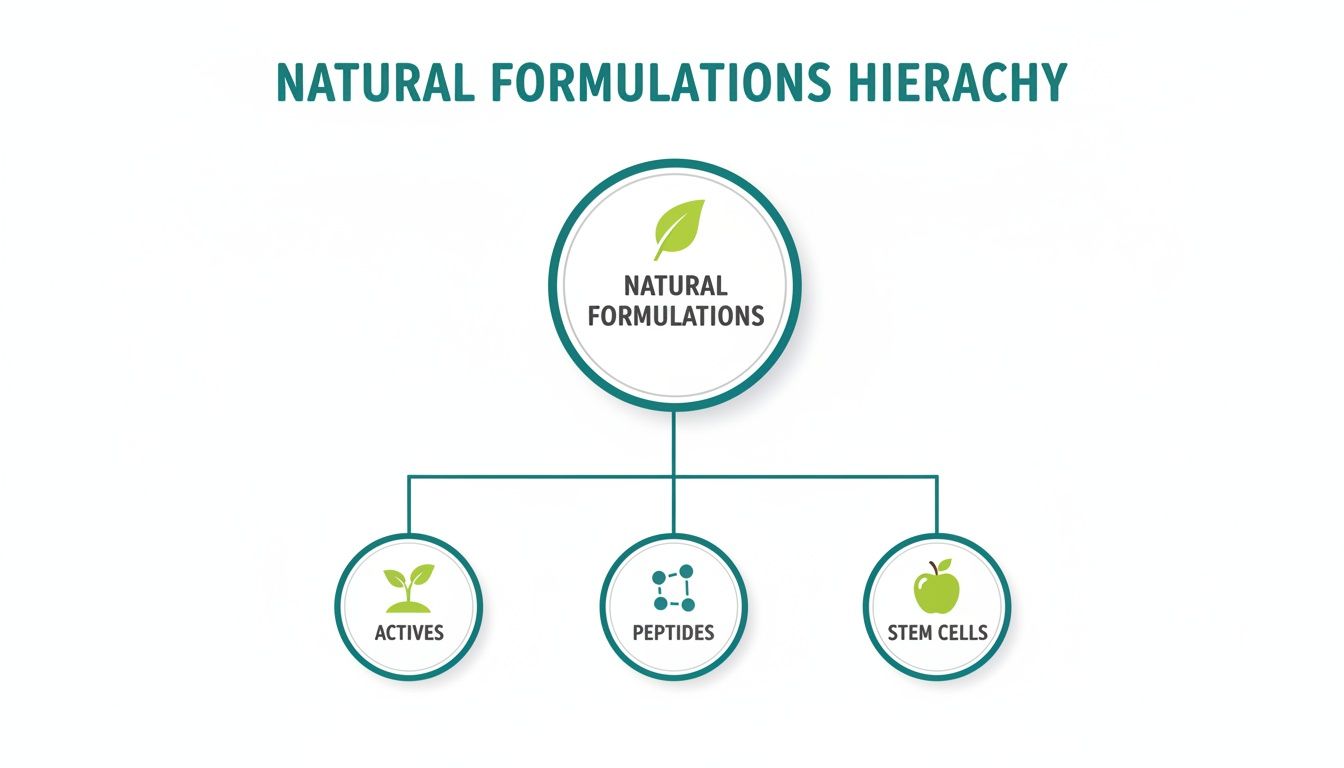
As you can see, powerful actives, peptides, and stem cells are the pillars of modern natural formulations designed to help you achieve that youthful look.
Your Guide to Creating DIY Natural Skincare
For anyone who loves a good hands-on project, making your own skincare is more than just rewarding—it’s a chance to personally connect with the ingredients that make your skin glow. When you create your own products, you get to call the shots, customizing formulas to get them just right for you.
Here, we'll walk through two simple guides for whipping up beautiful, effective skincare using top-notch cosmetic ingredients. These formulas are designed to be straightforward, focusing on adding powerhouse actives to a simple, stable base. This is the perfect way to experience the cosmetic benefits of premium ingredients like peptides and antioxidants firsthand.
DIY Radiance-Boosting Vitamin C Serum
Vitamin C is an absolute powerhouse antioxidant, famous for helping to promote a bright, even-toned complexion. Adding Ferulic Acid into the mix helps keep the Vitamin C stable and effective, making this serum a fantastic part of your morning routine to enhance your skin's appearance against daily environmental stressors.
Ingredients You Will Need:
- 1 oz Distilled Water: This will be the base of your serum.
- 1/4 tsp L-Ascorbic Acid Powder (Vitamin C): The star of the show for a brighter-looking complexion.
- 1/8 tsp Ferulic Acid Powder: A fellow antioxidant that works beautifully with Vitamin C.
- 1/2 tsp Glycerin: A humectant that helps draw moisture to the skin.
- A Dark Glass Dropper Bottle: This is crucial for protecting your formula from light, which can degrade it.
Step-by-Step Instructions:
- In a small, sanitized glass bowl, combine the L-Ascorbic Acid and Ferulic Acid powders.
- Add the distilled water and stir with a clean utensil until the powders have completely dissolved. Be patient; this might take a minute or two.
- Once the solution is clear, stir in the glycerin until it's well mixed.
- Carefully pour your new serum into the dark glass dropper bottle and screw the lid on tight.
- Store it in the refrigerator to keep it fresh and potent. It’s best to use it up within one to two weeks.
DIY Firming Peptide Moisturizer
Peptides have earned their stellar reputation for supporting a firmer, more youthful appearance. By simply adding a celebrated peptide blend like Matrixyl 3000 to a pre-made cream base, you can easily upgrade it into a high-performance moisturizer that targets the look of fine lines and helps promote a smoother texture.
Ingredients You Will Need:
- 2 oz Unscented Cream Base: Start with a simple, high-quality base lotion or cream.
- 1 tsp Matrixyl 3000 Solution: This is your key peptide blend for a visible firming effect.
- A Clean, Sanitized Jar with a Lid: To store your finished moisturizer.
Step-by-Step Instructions:
- Scoop your cream base into a sanitized bowl.
- Add the Matrixyl 3000 solution directly into the cream.
- Using a clean spatula or a mini-mixer, gently but thoroughly blend the peptide into the cream until it's completely incorporated.
- Transfer your newly supercharged moisturizer into its clean jar.
- Store it in a cool, dark place. This creation should stay fresh for the normal shelf life of the base cream you used.
Safety First: The Importance of Patch Testing
Before you slather any new creation on your face, it’s absolutely essential to do a patch test. Apply a tiny amount of the product to a discreet patch of skin, like your inner arm, and wait 24 hours to make sure it’s a good fit for you. This simple step is a cornerstone of smart, responsible cosmetic crafting.
For more inspiration and even more advanced projects, feel free to explore our full library of articles on how to make your own skin care products. Crafting your own formulas is an amazing journey of discovery, empowering you to hit your skin goals with products made by you, for you.
How to Read Labels and Choose Products Wisely
Walking down the skincare aisle can feel like a pop quiz you didn't study for. With countless jars and bottles all promising the fountain of youth, how do you know what actually works? The secret is learning to read the ingredient label. Think of it as your own personal decoder ring—it lets you see past the flashy marketing and find the formulas that will truly deliver for your skin.
This one skill is probably the most powerful tool you can have in your skincare arsenal. It helps you cut through the noise and spot the powerhouse actives, peptides, and botanical extracts that matter. It's how you become a savvy, confident shopper who knows exactly what they're putting on their skin.
Decoding the Ingredient List (INCI)
Every legitimate skincare product has an ingredient list, usually identified by the term "INCI" (International Nomenclature of Cosmetic Ingredients). This is just a fancy, standardized way of listing everything in the bottle. The most important thing to know is that ingredients are listed in descending order of concentration. What's at the top of the list makes up the majority of the formula, while the stuff at the very bottom is present in the smallest amounts.
This order is your best friend when evaluating a product. If you see a star ingredient like Vitamin C or a specific peptide listed near the top, you can feel confident that it's in a meaningful concentration. But if it’s buried way down at the end, after all the preservatives and fragrances, its effect is likely to be minimal at best. Truly understanding how to read product labels wisely is a game-changer for your skin's appearance.
For a deeper dive into this, check out our guide on how to read a skincare label.
Green Flags and Red Flags to Look For
To make things easier, it helps to have a mental checklist of what to look for—and what to be wary of. These are simple signposts that can quickly tell you if a product is worth your time and money.
Green Flags (What to Look For):
- Key Actives High on the List: Seeing ingredients like Hyaluronic Acid, Niacinamide, or specific peptides within the first few lines is a fantastic sign.
- Transparent Sourcing: Brands that tell you where their ingredients come from show a real commitment to quality and traceability.
- Specific Ingredient Names: Look for precise names like "Bakuchiol" or "Matrixyl 3000" instead of vague, fluffy terms like "botanical blend."
A product label that proudly lists its star ingredients in high concentrations is basically shouting its confidence from the rooftops. It tells you the formula was built with a clear purpose, empowering you to make a choice that will actually support your skin.
Red Flags (What to Be Cautious Of):
- Vague, Unsupported Promises: Be skeptical of broad claims like "erases all wrinkles" that aren't backed up by proven ingredients on the label.
- "Fragrance" or "Parfum" High Up: These can be irritating for sensitive skin, and their high placement often means the formula is less about performance and more about scent.
- Relying on Buzzwords Alone: Words like "natural" or "clean" are great, but they need to be supported by a strong, transparent ingredient list. Don't let them be a substitute for real substance.
Common Questions About Natural Skin Care
Jumping into the world of natural anti-aging skincare can definitely bring up a few questions. Let's tackle some of the most common ones so you can feel confident building out your perfect routine.
How Long Until I See a Visible Difference?
Patience and consistency are your two best friends on any skincare journey. It's true that some ingredients, like hyaluronic acid, can give you a plumper, more refreshed look almost right away. But the real cosmetic magic happens over time.
For the actives that really go to work on skin tone and texture, you'll want to give it about 4 to 8 weeks to see a noticeable difference. This timing lines up with your skin's natural renewal cycle, so sticking with your new routine is absolutely key to getting the appearance you want.
Are Natural Ingredients Always Better for Sensitive Skin?
This is a big one. The word "natural" doesn't automatically mean "allergy-proof." While so many people with sensitive skin get amazing cosmetic results with botanicals, it’s good to remember that potent natural compounds—like certain essential oils or plant extracts—can still be sensitizing for some.
The golden rule for everyone, no matter your skin type, is to always patch-test a new product. Just apply a small amount to a discreet spot, like your inner arm, and wait 24 hours. This little step is the best way to make sure it’s a good fit for your skin before putting it all over your face.
Can I Combine Different Natural Ingredients?
Absolutely! In fact, layering products with different peptides, botanicals, and plant stem cells is how you create a beautifully well-rounded routine. The only trick is applying them in the right order so they can do their jobs without interfering with each other.
A simple guideline is to apply your products from the thinnest to the thickest consistency. Think of it like this:
- Water-Based Serums: These go on first. Their lightweight texture absorbs super quickly, delivering active ingredients to the skin.
- Lotions or Creams: Next up is your moisturizer. This layer locks in all the goodness from your serum and keeps your skin hydrated.
- Oils (If You Use Them): Oils should always go on last. They act as a sealant, locking everything in and providing an extra barrier of protection.
Following this order helps make sure every product gets absorbed properly without pilling or feeling heavy on your skin.
Ready to build a skincare routine that blends the best of nature and science? Explore the high-performance actives and DIY supplies from Skin Perfection and start your journey to a more radiant-looking you. Visit us today to discover your perfect formula.