

 Buy with Prime
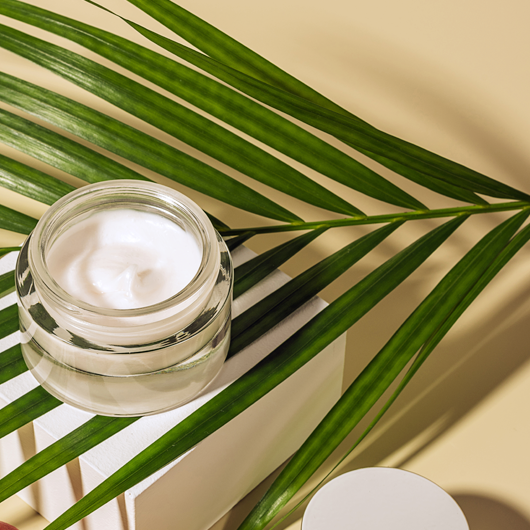


The most popular advice about palmitoyl tripeptide 38 is also the least useful: add the peptide to a serum and expect the ingredient itself to explain every visible change. Published evidence doesn't support that simple story. The human studies most often cited tested the peptide inside complex formulas, so the relevant question for a buyer, esthetician, or DIY formulator isn't only whether the ingredient is promising. It's whether the finished delivery system, companion actives, preservation, and base formula allow it to contribute meaningfully.
That distinction matters because a peptide can have a plausible laboratory mechanism without producing the same result as an isolated active in everyday skincare. Palmitoyl tripeptide 38 deserves attention for fine-line and texture-focused cosmetic formulas, but it should be approached as a formulation-dependent support ingredient, not a dramatic standalone solution.
Table of Contents
- What the Research Actually Shows About Palmitoyl Tripeptide 38
- Understanding the Molecular Structure and Mechanism
- Clinical Evidence and Study Limitations
- Formulation Guidelines and Usage Levels
- Comparing Palmitoyl Tripeptide 38 to Other Anti-Aging Actives
- Safety Profile and Regulatory Considerations
- Realistic Expectations and Usage Scenarios
- Making the Decision for Your Formulation or Routine
What the Research Actually Shows About Palmitoyl Tripeptide 38
Palmitoyl tripeptide 38 is also known as Matrixyl Synthe'6, and ingredient documentation describes it as a synthetic lipopeptide derived from the tripeptide KMK, a sequence naturally found in collagen VI and laminin. It's used in anti-wrinkle cosmetic applications, but the wording matters. The available human evidence doesn't establish that a jar containing the peptide alone produces every result associated with the Matrixyl name.
A 2020 peer-reviewed paper summarized earlier evidence involving a randomized, vehicle-controlled clinical trial. In that research, a topical preparation containing 5 ppm palmitoyl tripeptide 38 was associated with smoothing of forehead and crow's-feet wrinkles. The same documentation also summarized a 56-day study involving 35 women over age 40, who used once daily a serum containing vitamins C and E plus palmitoyl tripeptide 38 and reported noticeable improvements in skin appearance and structure. These details are documented in the ingredient research summary from ExperChem.
The formula is part of the evidence
The strongest human evidence isn't peptide-pure. One study used the peptide with vitamins C and E, while other clinical work examined formulas containing additional humectants, botanical ingredients, or other cosmetic actives. That means the observed outcome belongs to the complete product, not automatically to palmitoyl tripeptide 38 in isolation.
Many product descriptions overreach. An in-vitro result can show that a peptide interacts with cultured cells or supports production of particular matrix-related proteins. It can't, by itself, establish how much active reaches the relevant skin layers, whether the finished formula preserves the molecule, or whether the consumer's visible improvement came primarily from hydration and surface smoothing.
For a broader primer on how bioactive peptides are discussed in skincare, the bioactive peptides guide provides useful context. Readers who want a consumer-oriented overview of peptide creams can also compare how claims are framed in the ArtNaturals peptide cream guide.
Practical reading rule: Treat the clinical result as evidence for the tested formula first, and evidence for the isolated peptide only when the study actually isolates it.
The balanced conclusion is encouraging but limited. Palmitoyl tripeptide 38 has documented human-use studies, including a specific dose level in published cosmetic research. It may support a smoother-looking, more even skin appearance, but the research doesn't justify presenting it as a guaranteed wrinkle eraser or as a substitute for every established anti-aging active.
Understanding the Molecular Structure and Mechanism
The INCI ingredient Palmitoyl Tripeptide-38 combines a short peptide sequence with a fatty chain. Technical summaries describe the sequence as Lys-Met(O2)-Lys, often abbreviated KMK, with an oxidized methionine residue. The peptide portion provides the signaling concept, while the attached lipid changes how the molecule behaves in a cosmetic formula and at the skin surface.
The C16 palmitoyl chain increases lipophilicity, meaning the molecule has greater compatibility with oily environments than an unmodified, highly water-loving peptide. That modification is one reason palmitoylated peptides are attractive in leave-on creams and serums. The oxidized methionine is described in technical material as a stability-oriented modification, although stability still depends on the finished formula rather than on molecular design alone.

Why the matrikine label matters
Palmitoyl tripeptide 38 is commonly described as a matrikine-type peptide. In skincare language, that means it's intended to participate in signaling associated with the extracellular matrix, the network of structural materials that influences the skin's firmness, organization, and water-handling environment.
An ingredient fact sheet reports in-vitro work in which palmitoyl tripeptide 38 showed a matrikine-like effect associated with six major proteins:
- Collagen I
- Collagen II
- Collagen IV
- Fibronectin
- Hyaluronic acid
- Laminin 5
Those findings help explain the ingredient's positioning in firming and anti-wrinkle products, but they remain laboratory observations. They don't prove that a topical product will stimulate all six targets in human skin to the same degree.
Formulation chemistry controls the practical result
A supplier technical summary describes the ingredient as a pre-diluted raw-material system that may contain glycerin, water, and hydroxypropyl cyclodextrin. That carrier format is important. DIY formulators shouldn't assume they're weighing a pure bulk peptide powder when they buy a commercial Matrixyl Synthe'6-type material.
Hyaluronic acid can serve a different role in the same product. For example, Sodium Hyaluronate Powder Pure Hyaluronic Acid is described as a cosmetic-grade powder for water-based serums and creams, with a stated High-Molecular-Weight NASHA grade of 800–1500 Daltons and typical DIY serum concentrations of 0.1–2%. That kind of humectant can improve the sensory and hydration profile of a formula, but improved hydration shouldn't be mistaken for proof that it amplifies the peptide's signaling.
For related ingredient science, the peptides for collagen production resource offers additional background. The central formulation lesson remains simple: molecular structure creates a rationale, while the finished product determines exposure, stability, and user experience.
Clinical Evidence and Study Limitations
The published evidence supports a narrower conclusion than the marketing language often suggests. A secondary peptide reference describes a 25-participant placebo-controlled study in which a preparation containing 2% palmitoyl tripeptide 38 was associated with reduced forehead wrinkle volume and depth after 2 months. The placebo comparison strengthens the design, but the small group and short observation period limit how confidently the result can be generalized.
The more frequently cited study of 35 women over age 40 used a serum once daily for 56 days. Its limitation is not sample size. The serum also contained vitamins C and E, so the reported changes in appearance and structure cannot be assigned to palmitoyl tripeptide 38 alone. The open-label design adds further uncertainty because the base formula, hydration, application consistency, and participant expectations may all have influenced the assessment.
What the complex formulas measured
A separate 30-day clinical trial involved 35 volunteers using a complex serum containing palmitoyl tripeptide 38, hydrolyzed hyaluronic acid, bakuchiol, botanical ingredients, and vitamins. Reported improvements included hydration and several skin-quality measures. Those findings support the possibility that a well-built multi-active serum can perform well, while leaving the stand-alone peptide question unanswered.
This distinction matters for both formulators and estheticians. A product may show a visible benefit because its active blend, vehicle, humectants, and application routine work together. That does not demonstrate that palmitoyl tripeptide 38 produces the same result by itself, or that adding a companion ingredient directly increases peptide signaling.
| Evidence question | What the studies support | What they don't establish |
|---|---|---|
| Can a topical formula improve visible wrinkles? | Some tested formulas reported wrinkle improvements | A universal result from the peptide alone |
| Does the peptide work in a complex serum? | Clinical data supports promising formula-level outcomes | Which ingredient contributed most |
| Can hydration improve? | Hydration improvements were reported in a complex serum | That hydration equals structural remodeling |
| Is the evidence broad and long-term? | The research provides short-term cosmetic observations | Long-term outcomes or every proposed use |
The missing control is often the peptide-only formula. Without that comparison, readers cannot determine how much benefit comes from palmitoyl tripeptide 38 rather than the complete system.
A further clinical comparison reported no noticeable irritation, erythema, or allergic reactions and found improvements in moisture and elasticity over 12 weeks, according to the cited secondary clinical reference. This supports a favorable short-term tolerability signal, but it does not establish long-term performance or provide a head-to-head comparison with retinoids.
Use the evidence to support cosmetic positioning around the appearance of fine lines, texture, moisture, and firmness. Keep the claim tied to the tested formula. Published studies do not justify presenting palmitoyl tripeptide 38 as an independently proven solution for every reported outcome.
Formulation Guidelines and Usage Levels
Palmitoyl Tripeptide-38 is usually supplied as a pre-diluted liquid active, not as a bulk powder. Technical material describes carriers such as glycerin, water, and hydroxypropyl cyclodextrin, while a supplier product page gives a typical use level of 2%–4% for anti-aging and anti-wrinkle creams and lotions. That percentage refers to the supplier's raw-material system, so check the documentation for the exact product you have before calculating a batch.

Build around the supplied material
Start by reading the technical data sheet rather than treating the INCI name as a complete formulation instruction. Confirm:
- Carrier composition: Glycerin, water, and cyclodextrin can change viscosity, skin feel, and addition calculations.
- Preservative package: One supplier formula lists gluconolactone and sodium benzoate in a stabilized liquid active. Don't assume every supplier uses the same system.
- Recommended use level: Use 2%–4% only when that range applies to the exact raw material.
- Processing instructions: Follow the supplier's temperature and addition guidance to reduce unnecessary stress on the peptide system.
The practical target is a water-compatible leave-on serum or cream. Add the active during cool-down when the base has reached the supplier's recommended processing condition, and mix thoroughly without prolonged high-shear treatment unless the documentation supports it. Avoid guessing at pH compatibility. The supplied data emphasizes verifying pH, carrier, preservative, and peptide-integrity requirements before compounding, but it doesn't provide one universal pH range that can safely be applied to every commercial preparation.
Preservation isn't optional
A peptide active doesn't replace a complete preservation strategy. Water-based products require a compatible preservative system, suitable packaging, and a documented manufacturing process. Test the completed formula, not just the raw active, because the peptide carrier can alter the system's water activity, pH, and preservative environment.
A reconstitution solution may look relevant when working with specialized actives, but palmitoyl tripeptide 38 supplied for cosmetics shouldn't automatically be treated like a freeze-dried material requiring reconstitution. Use only the solvent or diluent specified by the supplier. For broader practical guidance, the cosmetic formulation library is a useful reference point.
Formulator's checkpoint: Record the raw-material concentration, carrier, batch addition temperature, pH, preservative system, and final packaging. Without those details, a failed trial teaches you very little.
Comparing Palmitoyl Tripeptide 38 to Other Anti-Aging Actives
Palmitoyl tripeptide 38 occupies a middle ground. It has a targeted signaling rationale and some human-use evidence, yet the published studies are generally small, short, and formulation-dependent. Retinoids have a more established reputation for visible skin renewal but can be difficult for reactive skin. Vitamin C contributes antioxidant and appearance benefits, while hyaluronic acid primarily changes hydration and surface feel.
The right comparison depends on the job you want the formula to perform. A peptide may suit a daily leave-on product designed for incremental support, while a different active may be more appropriate when the primary concern is rapid exfoliation, strong retinoid activity, or immediate water-binding hydration.
| Ingredient | Irritation Risk | Timeline to Results | Best For |
|---|---|---|---|
| Palmitoyl tripeptide 38 | Clinical comparisons reported no noticeable irritation, erythema, or allergic reactions, but individual tolerance still varies | Published studies assessed outcomes over 30 days, 56 days, 2 months, or 12 weeks, depending on the formula and design | Fine lines, texture, and a low-irritation cosmetic support approach |
| Retinoids | More likely to cause dryness or irritation, particularly during introduction | Often requires consistent use and gradual tolerance-building | Stronger renewal-focused routines when the user can tolerate the active |
| Vitamin C | Can be unstable or irritating depending on the form and formula | Variable, depending on derivative, concentration, and product stability | Antioxidant support and brighter-looking skin |
| Hyaluronic acid | Generally focused on hydration rather than irritation from renewal activity | Surface hydration can feel immediate, while broader appearance changes depend on routine consistency | Dryness, dehydration, and a plumper surface appearance |
| Other peptides | Varies widely by sequence, carrier, and formula | Evidence and timing differ by peptide | Targeted cosmetic support when the supplier provides suitable documentation |
The available evidence doesn't justify calling palmitoyl tripeptide 38 as effective as a prescription drug or as a proven replacement for retinoids. It may be easier to place in a sensitive-skin routine, but “gentler” doesn't mean “equally powerful.”
For readers comparing copper peptides, the research on GHK-Cu for labs can help distinguish a different peptide category from palmitoyl tripeptide 38. Those considering copper-peptide routines can also review how to use copper peptides, while remembering that compatibility depends on the complete formula.
Safety Profile and Regulatory Considerations
Clinical comparisons cited in the available material reported no noticeable irritation, erythema, or allergic reactions, and another study reported improvements in moisture and elasticity over 12 weeks. Those findings are reassuring, but they don't guarantee that every user will tolerate every finished product. The preservative system, fragrance, solvent, companion actives, and individual sensitivity can all affect the experience.
Patch testing remains sensible for a new serum or cream. Apply a small amount to a limited area according to your own professional protocol, observe for delayed discomfort, and stop if significant irritation develops. Estheticians should also consider the client's existing routine, recent exfoliation, professional procedures, and known sensitivities before introducing a multi-active product.
Cosmetic language matters
Our company, Skin Perfection, sells skincare products and lotion-making supplies, and our products are intended to beautify the skin. We follow FDA rules and regulations by avoiding drug claims in product listings. Cosmetic products don't fix, repair, or heal skin, and product descriptions shouldn't imply that they diagnose, mitigate, treat, or cure a medical condition.
Etsy policies also prohibit explicit or implied claims that an item can treat, mitigate, diagnose, or cure serious diseases or medical conditions. Prohibited positioning includes describing a cosmetic as an analgesic, antibiotic, antiseptic, antiviral, anti-inflammatory, steroid, vaccine, decongestant, prescription drug, or FDA-approved product.
Label the ingredient accurately
Use the correct INCI name, Palmitoyl Tripeptide-38, and identify the raw-material carrier where applicable. Keep claims cosmetic and appearance-based, such as helping skin look smoother, more hydrated, or visibly firmer, only when the finished product and substantiation support that wording. Don't claim that the FDA approved the product, and don't imply that a peptide serum has the status or efficacy of a prescription treatment.
Good compliance protects both the customer and the formulator. It also forces clearer communication about what the product is designed to do.
Realistic Expectations and Usage Scenarios
Palmitoyl tripeptide 38 makes the most sense when expectations are incremental. The published studies assessed changes in wrinkles, roughness, redness, homogeneity, radiance, complexion, hydration, moisture, and elasticity, but the evidence doesn't support promising a dramatic transformation from the peptide alone.
The most defensible use cases are:
- Fine-line-focused leave-on products: A serum or cream can position the peptide around a smoother-looking appearance and improved cosmetic texture.
- Sensitive-skin routines: The reported tolerability findings make it worth considering where a user wants a peptide option, although patch testing remains appropriate.
- Maintenance between professional treatments: A well-preserved cosmetic formula may provide a consistent daily step without making procedure-like claims.
- Formula design: The peptide can complement hydration-focused ingredients, but the final result belongs to the entire formula.
The timelines in the evidence are measured in weeks rather than overnight. One complex serum trial ran for 30 days, another for 56 days, and other cited work assessed outcomes after 2 months or 12 weeks. These timeframes can guide a reasonable evaluation window, but they don't guarantee that every skin type will respond on the same schedule.
For a practical discussion of evaluation timing, see how long peptides take to work. Keep the test controlled by changing one product at a time, photographing under consistent lighting, and tracking texture and hydration rather than relying on memory.
Evidence doesn't currently justify extending palmitoyl tripeptide 38 claims to scalp applications, lash or brow enhancement, or long-term structural remodeling. Those uses may appear in marketing, but the cited human research doesn't establish them.
Making the Decision for Your Formulation or Routine
Choose palmitoyl tripeptide 38 when you want a leave-on cosmetic peptide with a plausible matrix-signaling mechanism, documented human-use research, and a place in a fine-line or firming formula. Be more cautious when a supplier presents a complex serum result as proof that the isolated peptide explains the entire outcome.
Before purchasing, ask four practical questions:
- What exactly am I buying? Confirm whether the material is pre-diluted and identify its carrier.
- What is the supplier's use level? The documented typical range is 2%–4% for one supplier's cosmetic raw material, but follow the specification for your own material.
- How will I preserve it? Check the preservative package, pH guidance, storage instructions, and finished-product testing requirements.
- What result am I measuring? Define whether you're evaluating hydration, texture, radiance, or the appearance of fine lines, rather than using a vague “anti-aging” endpoint.

For a small-batch test, make a properly preserved base, document the peptide material and addition conditions, and compare it with a similar base without the peptide when your process allows. That won't produce a formal clinical trial, but it can stop you from attributing every improvement to one ingredient.
Skin Perfection offers skincare products and lotion-making supplies for people who want ready-made cosmetic care or want to develop their own formulas. Visit Skin Perfection to explore peptide-focused skincare and formulation ingredients with a clearer understanding of what palmitoyl tripeptide 38 can, and can't, reasonably contribute.