

 Buy with Prime

How to Make a Natural DIY Dry Shampoo
-
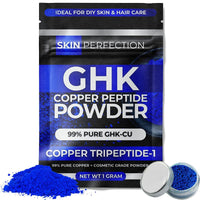
GHK-Cu Copper Peptide Powder, 99% Pure (1 Gram)
Regenerating Renewal
-
Sale

Eyelash Peptide for Lashes and Brows
Grow & Thicken
-

Anti-Age Essential Oil Blend
Anti-Aging Essential Oil Blend
-
Sold out

Plant Therapy Hair Therapy Essential Oil Blend
-
Organic Lemongrass Essential Oil
Energizing Essential Oil


How to Make a Natural DIY Dry Shampoo
A natural DIY dry shampoo is a fine, oil-absorbing powder, usually arrowroot or cornstarch blended with kaolin clay, that you dust onto the roots to soak up excess oil and make hair look and feel fresher between washes. Blonde and light hair can use the white base as is, while cocoa powder tints it for brown and black hair. It takes about five minutes to make, contains no water, and needs no preservative.

Below are dry shampoo formulas for every hair color in grams and percentages, plus three simple hair-care extras: a peptide scalp tonic, a sea salt texture spray, and a flaxseed curl gel.
How Often Should You Use Dry Shampoo?
Dermatologist Dr. Anthony Rossi of Memorial Sloan Kettering, interviewed by CNN in 2022, said most people do well washing their hair once or twice a week, that very oily scalps may need daily washing, and that chemically treated, curly, or coily hair may need it even less. He described dry shampoo as fine to use in a pinch but not something to rely on every day, and said it should be washed out. Combing and massaging the scalp between washes also helps.
A homemade powder also skips the aerosol can. In October 2022, Unilever recalled select aerosol dry shampoos from several of its brands because of potentially elevated benzene levels, which the company traced to the propellant, according to the recall notice posted by the FDA.
Equipment and Sanitation
- Digital scale that reads to 0.1 g and a small whisk or fork
- Fine sieve to remove lumps
- Shaker jar or a clean mineral makeup jar with sifter holes
- A large, fluffy makeup brush for application
Make sure every bowl and jar is completely dry. For the water-based recipes further down, also spray tools and bottles with 70% isopropyl alcohol and let them air dry.
Dry Shampoo for Light Hair (50 g)
| Ingredient | Grams | % |
|---|---|---|
| Arrowroot powder or cornstarch | 34.0 | 68% |
| Kaolin clay | 15.0 | 30% |
| Plant Therapy Hair Therapy Essential Oil Blend | 1.0 | 2% |
- Sift the arrowroot and kaolin into a dry bowl.
- Add the Hair Therapy blend a few drops at a time while whisking, breaking up any damp clumps with the back of a spoon. Its product page directs a 1 to 2% dilution for scalp and hair, and this recipe uses the 2% maximum.
- Sift once more, then spoon into the shaker jar.
Dry Shampoo for Brown and Black Hair (50 g)
| Ingredient | Grams | % |
|---|---|---|
| Arrowroot powder or cornstarch | 24.0 | 48% |
| Unsweetened cocoa powder | 15.0 | 30% |
| Kaolin clay | 10.0 | 20% |
| Plant Therapy Hair Therapy Essential Oil Blend | 1.0 | 2% |
For very dark hair, swap 5 g of the arrowroot for more cocoa. For red and auburn hair, blend the light and dark formulas half and half and adjust until the powder disappears into your color. We skip cinnamon, a common add-in, because it can feel warm or sting on the scalp.
How to Apply Dry Shampoo
- Apply to dry hair. Part your hair in sections where it looks oily, usually the crown and hairline.
- Dip the brush into the powder, tap off the excess, and dust it along the roots. Start with a little; you can always add more.
- Wait two to five minutes so the powder can absorb oil.
- Massage the roots with your fingertips, then brush or blow dry on cool to remove the excess and add volume.
Peptide Scalp Tonic (100 g)
| Ingredient | Grams | % |
|---|---|---|
| Aloe Vera Gel Serum Base | 69.0 | 69% |
| Rose hydrosol | 30.0 | 30% |
| GHK-Cu Copper Peptide Powder | 1.0 | 1% |
The GHK-Cu product page recommends a 1% concentration, 1 g per 100 ml. Dissolve the powder in the rose hydrosol, then whisk it into the aloe base. Because the aloe base is already preserved and its directions allow up to 60% added ingredients, this 31% addition needs no extra preservative. Do not combine GHK-Cu with vitamin C. Apply a few drops to the scalp after washing and massage in for a conditioned, healthy-looking scalp. Refrigerate and use within about three months.
Sea Salt Texture Spray (100 g)
| Ingredient | Grams | % |
|---|---|---|
| Distilled water | 88.0 | 88% |
| Epsom salt | 6.0 | 6% |
| Fine sea salt | 3.0 | 3% |
| Vegetable glycerin | 1.0 | 1% |
| GSB Natural Preservative Powder | 2.0 | 2% |
GSB is used at 0.75 to 2%, and 2% is the rate when it is the only preservative, as here. Dissolve the GSB and salts in the water at room temperature, add the glycerin, and check that the pH is between 4.5 and 5.5, inside GSB's working range of 3 to 6. Spritz onto damp hair and scrunch for beachy texture. Salt can feel drying, so use it a few times a week rather than daily.
Flaxseed Curl Gel (about 100 g)
Simmer 20 g whole flaxseed in 300 g distilled water for 10 minutes, stirring often, then strain through a fine sieve while hot. Weigh out 96 g of the gel, cool it to below 40°C (104°F), and stir in 4 g Leucidal SF Complete (4%, the top of its 2 to 4% range). Pour into a clean jar and refrigerate. Even preserved, a plant gel like this is best used within about two weeks.
Shelf Life and Storage
- Dry shampoo powders: water free, so no preservative is needed. Keep the jar closed and dry, and use within about a year. Discard if it clumps or smells off.
- Scalp tonic: refrigerate and use within about three months, or by the aloe base's own date.
- Sea salt spray: use within about three months.
- Flaxseed gel: refrigerate and use within about two weeks.
These are formulator estimates. Homemade products are not challenge tested, so discard anything that changes color, smell, or texture.
Patch Test and Safety
Patch test each recipe behind the ear or on the inner arm for 24 hours. With a sensitive scalp, make the dry shampoo unscented first, then add the Hair Therapy blend at its lowest rate of 1% (0.5 g per 50 g batch). Apply powder gently and avoid breathing in the dust, and keep the tonic and spray away from the eyes. If you have ongoing scalp flaking, redness, or shedding, see a dermatologist.
Troubleshooting
- White cast: too much powder or the wrong shade. Use less, add cocoa, and brush out thoroughly.
- Powder feels gritty: sift it twice.
- Not absorbing enough oil: increase the kaolin by 5 g and reduce the arrowroot to match.
- Sea salt spray feels sticky: leave out the glycerin.
Frequently Asked Questions
What can I use as a natural dry shampoo?
Arrowroot powder or cornstarch is the classic base, and kaolin clay boosts oil absorption. Add unsweetened cocoa powder to tint it for brown or black hair.
Does homemade dry shampoo work?
Yes, for absorbing oil at the roots and adding volume between washes. It does not clean the scalp the way shampoo does, so it is a short-term refresh, not a replacement for washing.
Is cornstarch or arrowroot better for dry shampoo?
Both absorb oil well. Arrowroot feels a little finer and lighter, while cornstarch is easy to find. Either works when blended with kaolin clay.
How do I make dry shampoo for dark hair?
Replace part of the white powder with unsweetened cocoa powder, about 30% of the blend, and increase it for very dark hair. Test a small amount at the roots to match your shade.
How often can I use dry shampoo?
Use it between washes rather than every day. Dermatologist Dr. Anthony Rossi has said it is fine in a pinch, but it should be washed out and not relied on constantly.
Do I need a preservative in homemade dry shampoo?
No. A powder with no water does not need a preservative as long as you keep the jar dry. Water-based sprays and tonics do need one.
Shop This Collection
Scent your dry shampoo with the Plant Therapy Hair Therapy Essential Oil Blend, and make the scalp tonic with GHK-Cu Copper Peptide Powder and our Aloe Vera Gel Serum Base. Learn more about kaolin in our facial clays glossary entry.
Sources
- Rogers K. Concerned about carcinogens in some dry shampoos? There are alternatives, experts say. CNN, November 2022 (interview with dermatologist Dr. Anthony Rossi). kwwl.com
- U.S. Food and Drug Administration. Unilever Issues Voluntary U.S. Recall of Select Dry Shampoos Due to Potential Presence of Benzene, October 2022. fda.gov
- Skin Perfection product pages: Plant Therapy Hair Therapy Essential Oil Blend (dilute to 1 to 2%), GHK-Cu Copper Peptide Powder (1%, 1 g per 100 ml; not with vitamin C), Aloe Vera Gel Serum Base (up to 60% additions), GSB Natural Preservative Powder (pH 3 to 6), Leucidal SF Complete (2 to 4%).
- Skin Perfection formulating guidance: GSB 0.75 to 2%, 2% as the sole preservative, 1% when combined with another preservative.
These statements have not been evaluated by the Food and Drug Administration. These products are not intended to diagnose, treat, cure, or prevent any disease.
About the Author
Written by Kari Thomas, cosmetic formulator and founder of Skin Perfection.