

 Buy with Prime


When you start looking into how to manage a receding hairline, the conversation almost always begins with creating a healthy scalp environment through a consistent, gentle care routine. The most effective strategies usually blend lifestyle adjustments, thoughtful scalp care, and the right topical products to help hair appear fuller and healthier.
Understanding What Influences Your Hairline
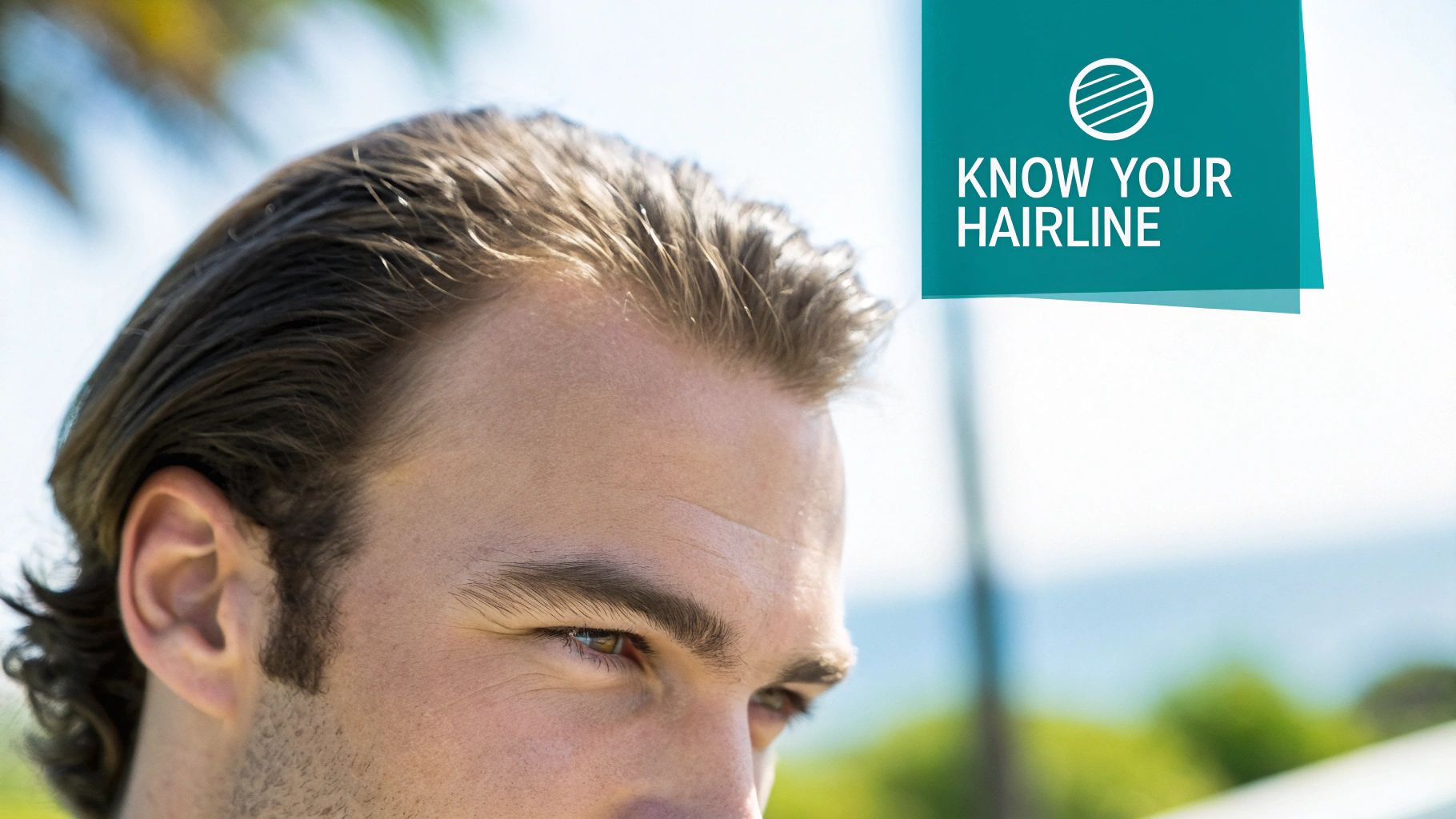
Before jumping into solutions, it’s really helpful to get a handle on what might be influencing your hairline's appearance. Noticing changes can be stressful, but being informed is the best first step toward making confident choices about your personal care.
Several things can contribute to a thinning hairline, and they often work together. Once you recognize these influences, you can start building a scalp wellness plan that makes sense for you.
Key Factors Affecting Hairline Appearance
Genetics is usually the biggest player in how your hairline matures. If you have close family members who’ve experienced similar changes, it’s a good bet that it’s a contributing factor for you, too. This is incredibly common and affects a huge percentage of adults as they get older.
Hormonal shifts are another major piece of the puzzle. Fluctuations, particularly those involving dihydrotestosterone (DHT), can impact hair follicles. Major life stages like menopause or events like pregnancy can also temporarily change your hair's appearance due to these hormonal swings. For a deeper dive, you can explore more about what causes hair loss in women.
The foundation of a healthy-looking hairline is a well-cared-for scalp. Proactive and gentle care is the most empowering step you can take to support your hair's appearance.
Lifestyle and Environmental Contributors
Beyond your biology, your daily habits and environment absolutely make a difference. Taking a look at these external factors can help you make small, meaningful adjustments to your routine.
- Styling Habits: Constantly pulling your hair back into tight ponytails, braids, or buns can create a lot of tension along the hairline. Over time, this physical stress can take a toll on the delicate follicles in that area.
- Nutritional Support: Just like your skin, your hair is a reflection of your overall wellness. A balanced diet packed with essential vitamins and minerals gives your body the building blocks it needs to maintain healthy-looking hair.
- Stress Management: High levels of physical or emotional stress can throw your body's natural rhythms out of whack, and sometimes that shows up in changes to your hair's appearance.
Ultimately, getting to grips with these root causes isn't about placing blame—it's about empowerment. When you understand the "why," you can move forward with a plan that focuses on nurturing your scalp from the inside out. If you're noticing changes and want to learn more, our guide on why your hair might be falling out offers some additional perspectives.
Building Your Daily Scalp Care Ritual
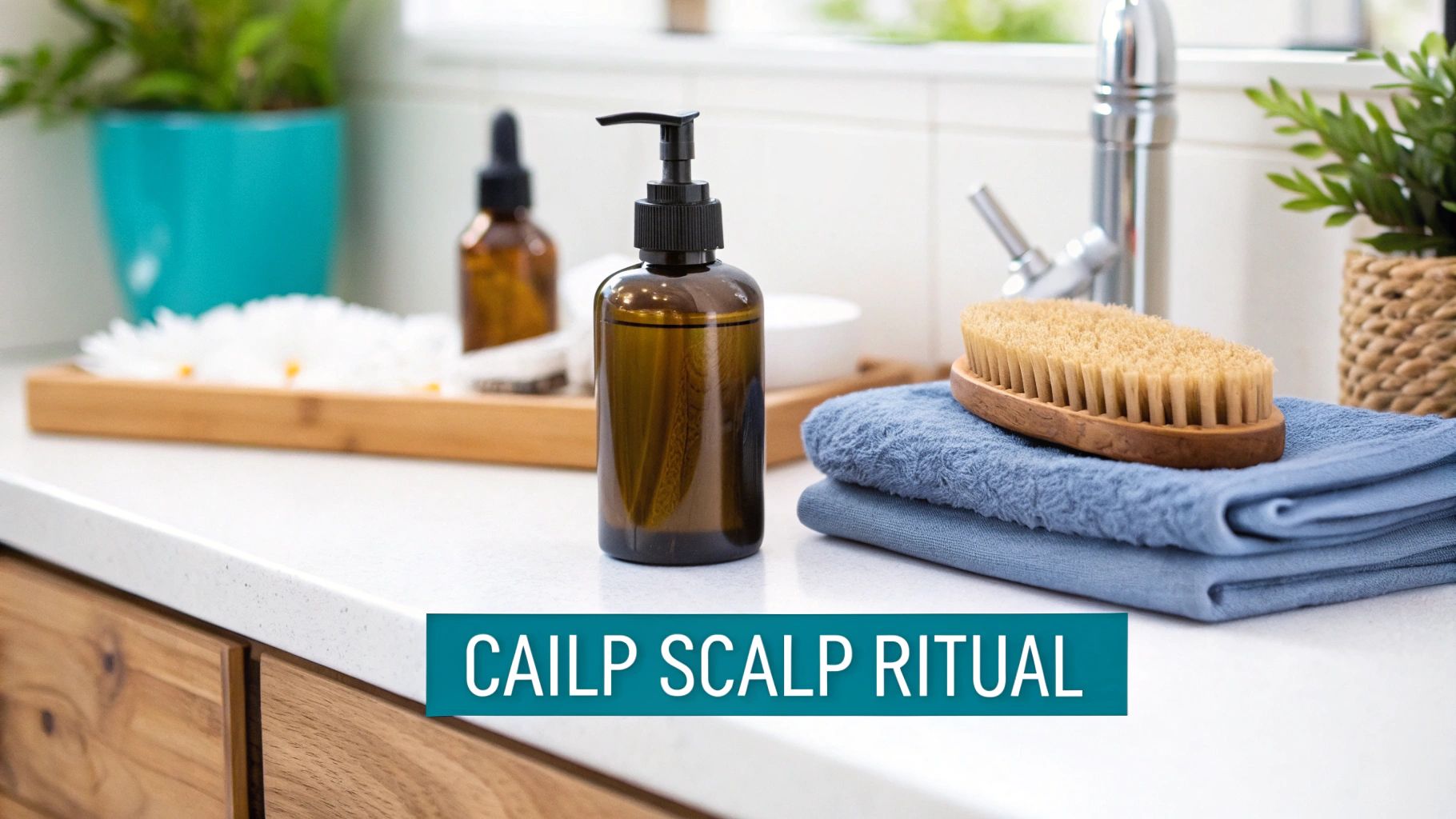
Creating a healthy environment for your hair starts at the root—literally. Think of your daily scalp care not as another chore, but as a mindful practice, much like your skincare routine. This isn't about aggressive scrubbing or complicated steps. It's about gentle, consistent care that builds a strong foundation for your hair's appearance.
The goal here is simple: balance. You want to cleanse away the daily grime and buildup without stripping away the natural oils your scalp needs to stay protected and moisturized. Nailing this balance is one of the most fundamental steps you can take to improve the appearance of a receding hairline.
Gentle Cleansing Is Non-Negotiable
What you use in the shower really sets the tone for your scalp's condition. Many popular shampoos are packed with harsh sulfates, like sodium lauryl sulfate (SLS). Sure, they create that rich, satisfying lather we've been conditioned to think means "clean," but they can be incredibly drying for the delicate skin on your scalp.
When your scalp is constantly being stripped of moisture, it can get irritated or go into oil-production overdrive to compensate. Neither of those scenarios is great for encouraging a healthy-looking hairline.
The solution? Look for cleansers formulated with mild, plant-derived surfactants. These get the job done just as effectively, cleaning your hair and scalp without causing that dreaded dryness and irritation. It's a small switch with a big impact.
The Power of Scalp Hydration and Massage
Just like the skin on your face, your scalp needs moisture to feel and look its best. After washing your hair, think about applying a lightweight, hydrating scalp serum or toner. Look for ingredients like hyaluronic acid, which is a powerhouse at drawing moisture into the skin and keeping your scalp feeling supple and comfortable.
Take it one step further by pairing your product with a gentle massage. This doesn't have to take long. Just use the pads of your fingers to apply light-to-medium pressure in small, circular motions all over your scalp. Pay a little extra attention to your hairline. A simple, two-minute massage each day not only feels amazing but helps create a stimulated, invigorated environment for your hair follicles.
A well-hydrated and invigorated scalp is the cornerstone of healthy-looking hair. Daily massage and proper moisturizing are not just pampering—they are foundational practices for supporting the appearance of a full hairline.
Your Daily Scalp Wellness Checklist
To make this daily ritual second nature, here’s a simple checklist. Think of it as your daily to-do list for a happy scalp.
| Action | Frequency | Primary Benefit |
|---|---|---|
| Gentle Cleansing | Daily or Every Other Day | Removes buildup without stripping natural oils. |
| Scalp Hydration | Daily | Moisturizes the skin to prevent dryness and irritation. |
| Scalp Massage | Daily (2-3 minutes) | Invigorates the skin and promotes a stimulated scalp. |
Sticking to this simple plan is a fantastic, proactive way to create the best possible conditions for your hair.
Choosing Your Products Wisely
It's clear that people are catching on to the importance of gentle, effective scalp care. The global market for products targeting hair appearance is on track to hit USD 4.45 billion by 2031, with a huge emphasis on natural and ingredient-conscious formulas. This shift shows that more and more of us are focusing on proactive, supportive routines.
When you're scanning product labels, here's a quick cheat sheet for what to look for and what to skip.
Ingredients to Embrace:
- Antioxidants: Think green tea extract. These help shield your scalp from daily environmental stressors.
- Peptides: Known for supporting the skin's natural proteins, peptides contribute to a more resilient scalp.
- Botanical Extracts: Soothing ingredients like aloe vera and chamomile are fantastic for calming and balancing the skin.
Ingredients to Avoid:
- Harsh Sulfates (SLS/SLES): As we mentioned, these are major culprits for stripping natural oils and causing dryness.
- Certain Alcohols: Short-chain alcohols like denatured alcohol can be incredibly drying, especially in high concentrations.
- Heavy Silicones: Some silicones can build up on the scalp over time. If you notice issues, opt for water-soluble or silicone-free products.
By building this simple ritual, you’re not just addressing an issue—you're cultivating a healthy environment from the ground up. If you're interested in learning more about the techniques, our guide on scalp massage for healthier-looking hair is a great next step. Remember, consistency is what will ultimately deliver the look you’re going for.
Integrating Supportive At-Home Options
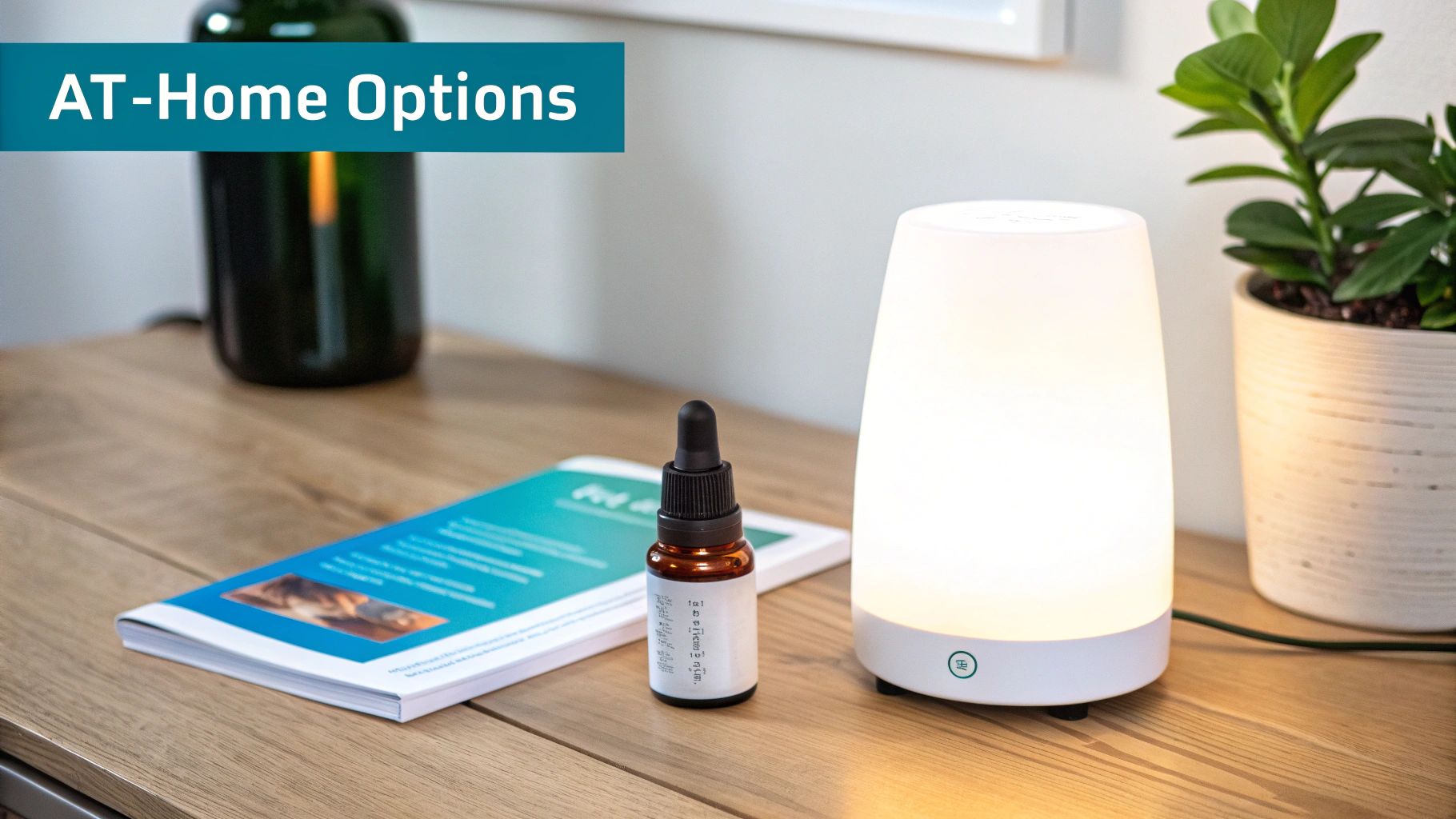
Once you’ve nailed down a consistent daily scalp care ritual, it's time to layer in some other at-home options to really complement your efforts. These aren't overnight fixes, but with steady use, they can go a long way in supporting the appearance of a fuller, denser hairline.
Think of it like this: your daily routine creates the perfect environment, and these next steps are the reinforcements you call in to support that foundation. The absolute key here is consistency. Just like any good skincare habit, these methods deliver their best results when they become a seamless part of your daily or weekly life.
Topical Applications: What to Look For
Topical products are probably the most common route people take when addressing a receding hairline. You apply them directly to the scalp, massaging them into the areas where hair seems thinnest, like the temples or right at the front.
These formulas are usually packed with ingredients designed to nourish the scalp and hair follicles. Proper, consistent application is everything if you want to see a difference in the appearance of your hair's thickness.
Consistent application of the right at-home options is more impactful than sporadic use of any single product. The goal is to create a sustained, supportive environment for your scalp and hair.
The Power of Low-Level Light Therapy
Beyond serums and foams, technology offers another non-invasive path to explore: low-level light therapy (LLLT). This approach uses red light wavelengths, usually delivered through devices like caps, helmets, or headbands that you can use right from your couch.
The idea behind LLLT is that specific frequencies of red light can help invigorate the scalp. It might sound a bit sci-fi, but the devices are surprisingly simple to use. Most just require you to wear them for a specific amount of time a few times a week.
Integrating LLLLT into Your Routine
- Be Patient and Consistent: Just like with topicals, LLLT devices need regular use over several months to really support the appearance of your hair.
- Follow the Directions: Every device is different, with its own instructions for how long and how often to use it. Sticking to the guidelines is essential.
- Use it as Part of a Team: LLLT works beautifully alongside your daily scalp care and other topical products, creating a multi-faceted strategy for your hairline.
Deciding between topicals and LLLT—or even using both—really comes down to your personal preference, lifestyle, and budget. Both are proactive ways to commit to your scalp's condition from the comfort of home. To dive deeper, you might want to check out our guide on how to thicken the appearance of thinning hair, which gets into even more supportive strategies.
When It's Time to Call in a Professional
A solid at-home routine is your first line of defense, and honestly, it can make a world of difference. But there are times when you might need to bring in the experts. If you feel like you've hit a plateau with your progress, or if the changes to your hairline seem to be speeding up, it’s probably time to explore more advanced options.
Knowing when to make that call is half the battle. A chat with a dermatologist or a trichologist—a specialist who lives and breathes hair and scalp conditions—can give you a much clearer picture of what's really going on and what your best next moves are.
Signs That Mean It's Time for a Consultation
Sometimes, your body sends signals that it’s time for a professional opinion. Don't brush these off; addressing things early almost always leads to better outcomes.
- Sudden, Rapid Shedding: If you're suddenly finding way more hair on your brush or in the shower drain over a short period, that's a good reason to get it checked out.
- Patchy or Uneven Hair Loss: Thinning that shows up in distinct patches or circles, rather than a slow, even recession, definitely warrants a professional look.
- Scalp Discomfort: If your scalp is constantly itchy, red, inflamed, or tender, it could point to an underlying skin condition that needs a proper diagnosis.
Exploring Platelet-Rich Plasma (PRP)
One of the professional options you'll hear a lot about is Platelet-Rich Plasma (PRP). This is a fascinating approach that uses your body's own components to support your scalp. The process is pretty straightforward: they draw a small amount of your blood, spin it in a centrifuge to separate and concentrate the platelets, and then inject that platelet-rich plasma back into the areas of your scalp that need it most.
The whole idea behind PRP is to use the natural growth factors found in your platelets to create a healthier environment for your hair follicles. Most people who go this route will get a series of treatments to keep things in top condition.
PRP has become incredibly popular, and the numbers back it up. The platelet-rich plasma therapy market was valued at USD 2,461.1 million in 2023 and is a huge piece of the overall hair restoration market, which is projected to climb to USD 18,923.4 million by 2030. You can dig into more of this market data on Grandview Research.
Understanding Hair Transplant Techniques
For anyone looking for a more permanent change to their hairline, a hair transplant is the most definitive option. This is a surgical procedure where a specialist moves healthy hair follicles from a dense part of your scalp (usually the back or sides) to the areas where your hairline is receding.
There are two main ways they do this:
- Follicular Unit Transplantation (FUT): This method involves removing a small strip of scalp tissue from the donor area. The surgeon then carefully dissects individual follicular units from that strip before transplanting them.
- Follicular Unit Extraction (FUE): With FUE, the surgeon extracts individual follicular units one by one directly from the scalp and then transplants them to the target area.
Both techniques are designed to create a fuller, natural-looking hairline. A good specialist will walk you through which method is the best fit for your specific hair type, degree of loss, and what you're hoping to achieve.
Of course, making smart decisions about your hair also means looking at it from the inside out. Don't forget that nutrition plays a huge role. You can learn more in our guide on the best vitamins to support healthy hair.
Crafting Your Own DIY Scalp Support Serum
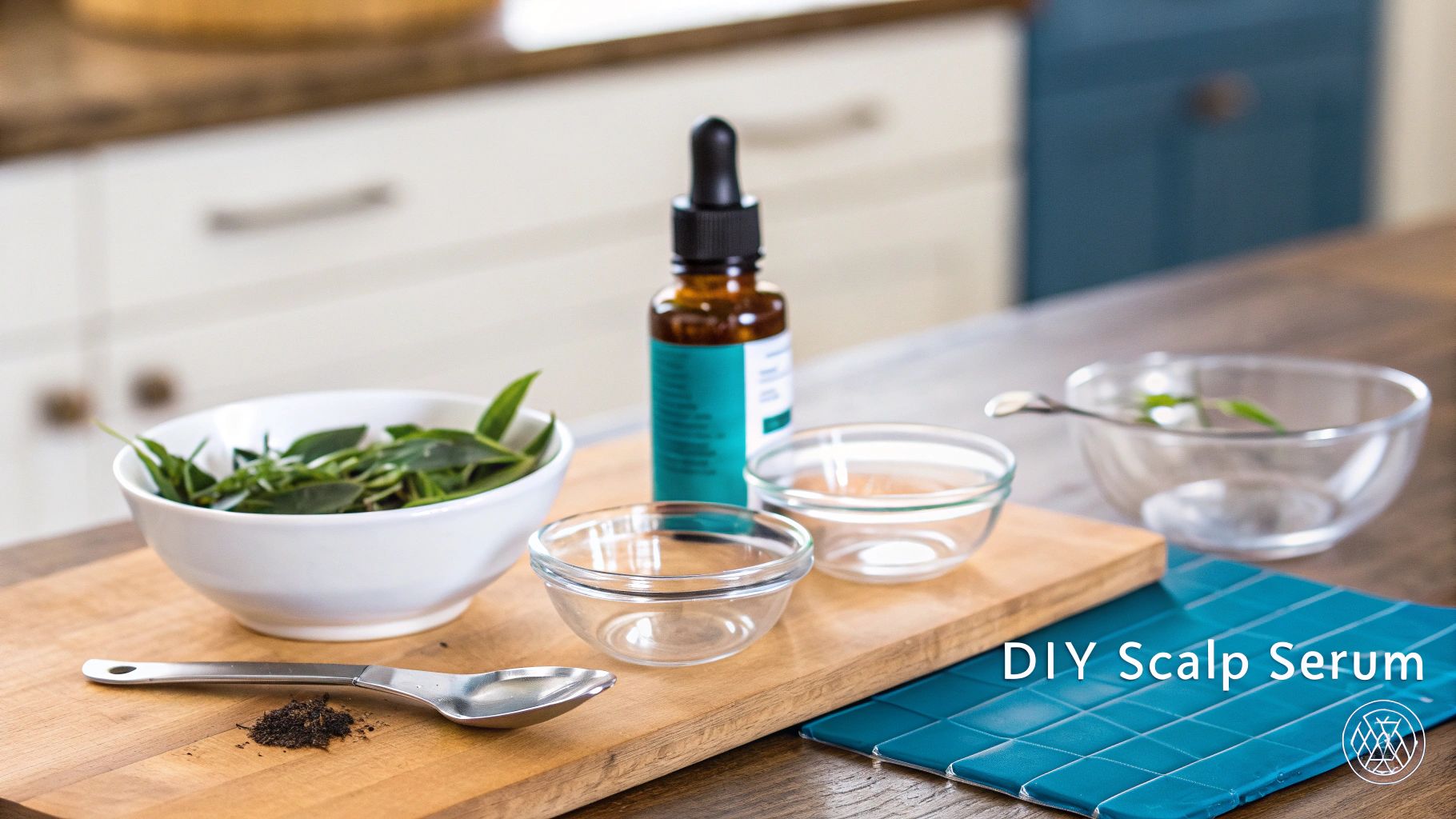
If you love a more hands-on approach to your personal care, creating your own scalp serum can be a really rewarding process. You get to control exactly what goes onto your skin, which is perfect if you’re leaning into a clean-beauty philosophy. And honestly, whipping up a simple, effective formula at home is much easier than you’d think.
The whole point is to blend ingredients that leave your scalp feeling hydrated, balanced, and calm. This creates the ideal environment for your hair to look its absolute best. Below are two simple recipes you can make with high-quality ingredients, each designed for different scalp needs.
Hydrating and Calming Scalp Blend
A well-hydrated scalp is a happy scalp, period. This recipe is all about delivering a major dose of moisture and soothing the skin. It’s perfect for anyone dealing with dryness or that tight feeling you can get along your hairline.
- Hyaluronic Acid Solution (1%): This is your base. As a powerhouse humectant, it pulls moisture into the skin, keeping your scalp supple and hydrated without ever feeling greasy. Make this the main liquid in your serum.
- Aloe Vera Gel (100% Pure): Famous for its calming abilities, aloe vera is a pro at soothing irritated skin. Adding just a little bit to your hyaluronic acid base creates a wonderfully refreshing and gentle formula.
- Glycerin (Vegetable): Another fantastic humectant. Just a few drops will boost the hydrating effects of your serum, leaving your scalp feeling soft and comfortable.
To make it, just combine the ingredients in a clean, sterilized dropper bottle and give it a good shake. Apply a few drops right onto your scalp, paying extra attention to the hairline, and gently massage it in.
Antioxidant-Rich Scalp Formula
This second formula is built to provide antioxidant support, helping to shield your scalp from daily environmental stressors. A protected scalp is simply better equipped to maintain a healthy appearance.
Remember, the key to any effective DIY formulation is consistency and using high-quality ingredients. Patch-testing any new creation on a small area of skin before applying it to your entire scalp is always the smartest first step.
To get started, you’ll need a few key ingredients.
Core Ingredients:
- Distilled Water or Rosewater: Use this as a clean, simple base. Rosewater is a great choice because it can add an extra calming benefit.
- Green Tea Extract: This stuff is packed with antioxidants, making it a stellar addition for protecting the skin on your scalp.
- Peptides: Bringing in a cosmetic peptide solution, like Palmitoyl Tripeptide-5, can help support the skin's structure and overall resilience.
For anyone new to formulating with these kinds of ingredients, you can find a ton of helpful tips and guidance by exploring our resources on cosmetic formulation. Just mix your chosen ingredients, apply daily to a clean scalp, and enjoy your personalized approach to supporting a healthy-looking hairline.
Your Hairline Questions, Answered
When you're dealing with hairline concerns, a lot of questions pop up. From natural options to specific product ingredients, getting straightforward answers is the first step toward feeling in control. Let's tackle some of the most common questions.
Think of it this way: building a healthier-looking hairline is all about consistency, patience, and really understanding what your scalp and hair need.
Can I Really Improve How My Hairline Looks Naturally?
Absolutely. A natural-first approach can be incredibly effective for supporting a fuller-looking hairline. It all starts with a consistent daily scalp care ritual. We're talking gentle cleansing, proper hydration, and—my personal favorite—an invigorating scalp massage.
But it doesn't stop there. Your lifestyle choices are a huge piece of the puzzle. Focusing on a nutrient-dense diet and finding healthy ways to manage stress are non-negotiables. When you add in serums with powerful, plant-derived ingredients like peptides and antioxidants, you're creating the ideal environment for your hair to look its absolute best.
How Long Until I Actually See A Difference?
This is where patience and consistency become your best friends. Hair has its own cycles, and you really need to commit to any new routine—whether it's a daily scalp massage or a new serum—for at least 3 to 6 months before you can expect to see noticeable changes.
A great tip is to take photos once a month in the same spot with the same lighting. This creates a visual diary that can help you track those subtle shifts over time and keep you motivated when it feels like nothing is happening.
The journey to a healthy-looking hairline is a marathon, not a sprint. It's the small, consistent actions you take every single day that build up to create the most visible and lasting results.
What Ingredients Should I Look For In Hairline Products?
When you're scanning labels, you want to be an informed consumer. Focus on ingredients that are known for their scalp-supporting properties.
Here’s a quick list of what to look for:
- Peptides: These are fantastic for supporting the skin's natural structure, which helps create a more resilient scalp.
- Antioxidants: Think ingredients like green tea extract. They help shield your scalp from daily environmental stressors that can take a toll.
- Hydrators: Look for things like hyaluronic acid. It’s a moisture magnet that helps keep your scalp hydrated and prevents that tight, dry feeling.
- Botanicals: Invigorating extracts like rosemary or peppermint are great for helping the scalp feel refreshed and stimulated.
Always try to find brands that are committed to clean, safe, and transparent formulas. You deserve that peace of mind.
Do My Hairstyles Actually Affect My Hairline?
Yes, one hundred percent. The way you style your hair can have a huge impact on the appearance of your hairline. Any style that pulls and creates constant tension—like super tight ponytails, buns, or braids—puts a lot of physical stress on the follicles right at the front of your scalp.
Making a simple switch to looser styles can make a world of difference. Give your hair regular breaks from being pulled back tightly. This small change reduces the strain on this delicate area and supports a healthier hairline in the long run.
At Skin Perfection, we're passionate about providing high-quality, plant-derived ingredients for your DIY beauty creations. We want to empower you to create personalized solutions for your scalp care journey. Explore our collection of cosmetic actives and start crafting your own supportive serums at Natural Organic Skincare.