

 Buy with Prime



Can you use peptides with retinol? Often, yes, when the retinoid is introduced gradually and the complete product has been checked for stability and tolerability.
The safer question is how the pair reaches your skin. A familiar label claim says any peptide serum can sit under any retinol cream, but three variables decide the result: the finished formula, the retinol strength, and your skin's current tolerance. That is why the same two ingredient names can feel calm in one routine and rough in another. A tested product, two separate products layered on one night, and powder stirred into a serum at the counter are three different bets. The ingredient list is the recipe title; the formula is the cooked dish.
Table of Contents
- Whether Peptides and Retinol Can Be Used Together
- Which Peptide Types Pair Best With Retinol
- Choose a Peptide and Retinol Routine for Your Skin
- Actives to Keep Out of the Same Routine
- How to Layer Peptides and Retinol Step by Step
- Irritation Signs and How to Calm Them
- Why Home Mixing Carries More Risk Than a Finished Product
Whether Peptides and Retinol Can Be Used Together
The honest version of this answer is narrower than the heading suggests. The studies behind this pairing tested finished formulas, products where a chemist already settled pH, stability, and strength. Their results describe what one tested product did, not what any two bottles will do when they meet on your face.
In an open-label trial, healthy men and women applied a cream combining retinol, a tripeptide, and glaucine to the face and neck, and investigators reported visible improvement in the appearance of photoaged skin. A separate trial reported in the Journal of Cosmetic Dermatology followed women aged 40 to 65 using a topical that paired a 9.5% peptide blend (acetyl hexapeptide-8, palmitoyl hexapeptide-12, palmitoyl tripeptide-1, and palmitoyl tetrapeptide-7) with 0.1% hydroxypinacolone retinoate, a retinoid ester. The formula stayed tolerable and produced statistically significant improvement across 16 appearance-related measures, including fine lines, wrinkles, texture, smoothness, and nasolabial folds.
Retinol's record runs much longer than cosmetic peptides. A 2005 U.S. double-blind randomized trial by Kang and colleagues enrolled 204 participants (101 on 0.05% tretinoin and 103 on vehicle, with average ages of 63.2 and 62.4 years), as listed in a systematic-review evidence table. That was a prescription tretinoin study, not a cosmetic retinol product. It explains why retinoids hold the stronger track record for the look of photoaged skin, while peptide results hinge on the exact peptide and the formula built around it.
Those findings support pairing the two in one routine. Each result still belongs to the specific blend that was tested, so the evidence travels with the formula itself.
Three things decide the answer on your own shelf. The formula sets pH, preservation, and how the ingredients sit together. The retinol strength sets how much dryness, redness, and peeling you are likely to meet. Your skin sets the pace, especially if it is sensitive or already handling other strong actives. Moisturizer and daily broad-spectrum sunscreen belong in the plan from night one.
Which Peptide Types Pair Best With Retinol
Which peptides sit comfortably next to retinol? The word "peptides" works like "vegetables" on a recipe card: it names a family, not how each member behaves. Signal peptides such as acetyl hexapeptide-8, palmitoyl tripeptide-1, and palmitoyl tetrapeptide-7 generally share a routine with retinol without extra precautions. Copper peptides call for more caution on sensitive skin, because stacking potentially irritating actives can raise discomfort, as a 2024 dermatologist-reviewed consumer guide notes.
The names in finished formulas aren't interchangeable.
- Acetyl hexapeptide-8, palmitoyl hexapeptide-12, palmitoyl tripeptide-1, and palmitoyl tetrapeptide-7 are short amino-acid chains sold under trade names. A percentage on the label, such as a 9.5% peptide blend, is the share of that blend in the jar, not a promise that each chain did the work alone.
- Pea peptide is a plant-derived peptide. In one small adult study, a multi-ingredient formula pairing a retinoid with pea peptide and antioxidants improved hydration, elasticity, and several visible skin measures from baseline. The sample was small, and the mix can't prove the pea peptide caused the change, or that the same look applies to copper peptides, signal peptides, or a homemade blend.
- Copper peptides carry a copper ion. On skin that already stings from retinol, that extra active is the one to pause, not the one to add first.
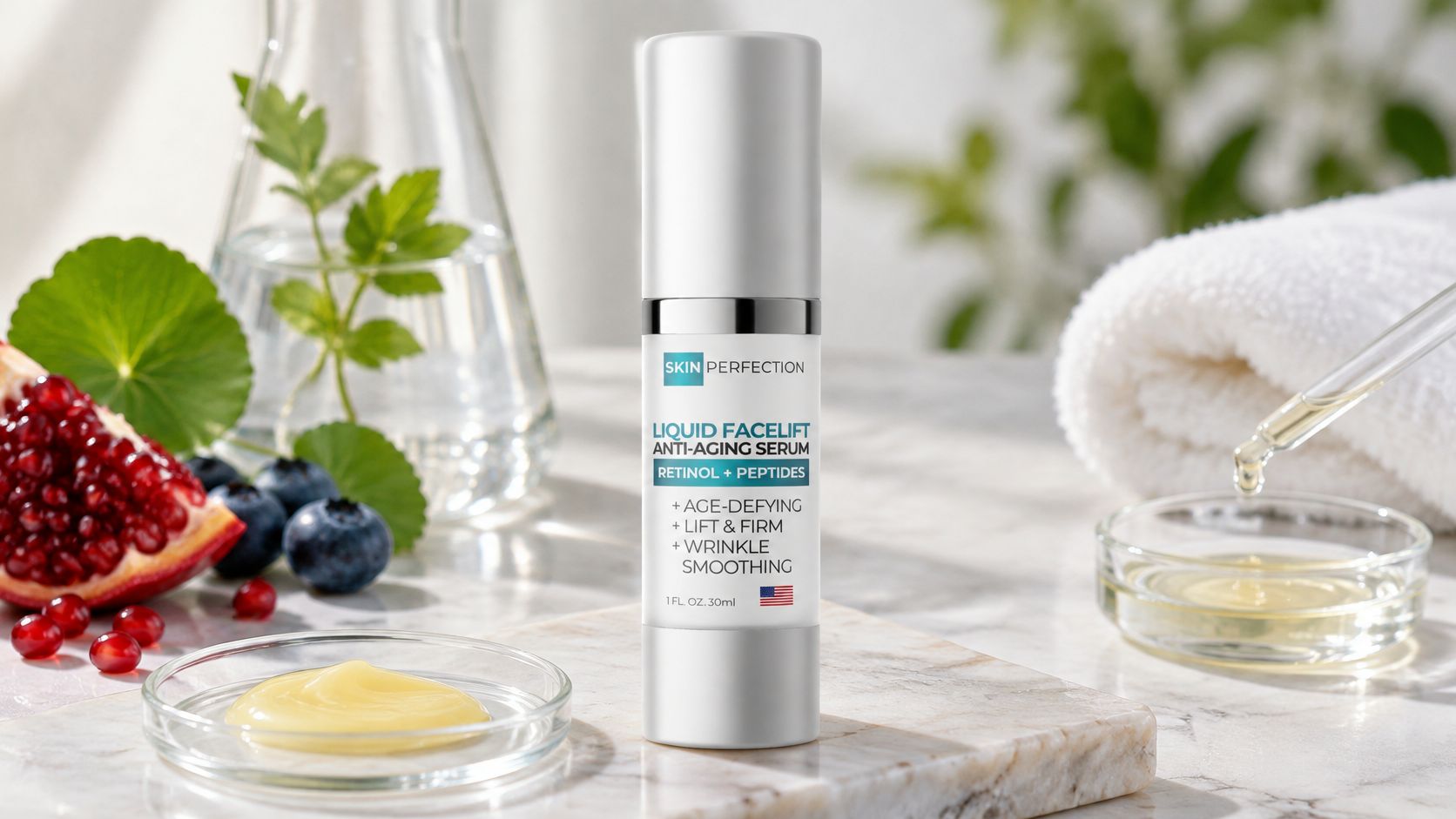
A finished pairing looks like Liquid Facelift Collagen Serum, a Skin Perfection serum that combines peptides and retinol in one formula. Retinol can still sting inside a combined product. What the finished formula removes is the guesswork of pairing two separate bottles, because compatibility depends on how the formula is built, not just the ingredient names on it. For a wider map of peptide names, see our notes on peptides people look for in anti-aging routines.
Before you buy, read four lines on the label: the peptide name, its percentage, the retinol strength, and whether the maker describes stability and tolerability testing. Start with the lowest retinol strength and one peptide at a time, so a sting traces to one change. Three questions do the checking: which peptide, at what concentration, for which skin type.
Choose a Peptide and Retinol Routine for Your Skin
| Routine | Best suited to | How to start | Irritation risk |
|---|---|---|---|
| Finished peptide and retinol product | Skin that tolerates retinol and readers who want one step | Use every third night, then move to every other night | Lower, since the maker set pH, stability and preservation |
| Separate peptide serum and retinol, same night | People already using retinol without stinging | Peptide first, retinol after one to two minutes | Moderate, because two actives stack |
| Retinol and peptide on alternate nights | New, sensitive or reactive skin | Retinol one night, peptide the next, for two weeks | Lower on any single night |
| Raw peptide powder mixed into retinol at home | Experienced formulators with stability testing | Not recommended for beginners | Highest and hardest to predict |
A finished product is one formula. The maker set the pH, the preservation, and the stability work, and you run one tolerance test instead of two. Same-night layering suits someone who already uses retinol with no sting. You add a peptide serum, not a second experiment. Alternate nights cut the load for new or reactive skin, because only one active lands on any given evening. Raw powder in a retinol jar is the least predictable row, and it belongs with people who can test a batch.
Match the row to where you are now.
- New to retinol, or easily stung. Alternate nights, and patch test before the full face.
- Already using retinol with no irritation. Put the peptide serum on first, then retinol, on the same night.
- You want one step. Pick a finished product that already pairs the two, and read the strength and stability notes on the label.
- You want to customize. Keep retinol in its own tested product. Our Serum Boosters let you customize a routine with anti-aging peptides, one change at a time, not a scoop of powder into the retinoid.
This week, notice how your skin handles retinol on its own. Then pick the matching row.
Actives to Keep Out of the Same Routine
Most irritation in a combined routine comes from stacking exfoliating or strong actives, not from the peptide. Keep these off the same evening as retinol.
- Alpha-hydroxy acids, including glycolic acid and lactic acid, lift surface cells and add dryness.
- Beta-hydroxy acids, including salicylic acid, do the same in oilier areas and around pores.
- Benzoyl peroxide is a separate source of dryness and redness.
- L-ascorbic acid (vitamin C) serums belong in the morning for many people. A strong acid serum on a retinol night is a common sting. Our notes on vitamin C powder for the face cover daytime use.
- Physical scrubs and fruit masks add friction or fruit acids on skin that's already working.
Each of these is its own source of dryness, stinging, or redness. On the same night, those effects add up. Give each one its own night, or use the vitamin C serum in the morning.
A simple three-night pattern
Night one: retinol, then moisturizer. Night two: peptide serum, then moisturizer. Night three: a gentle cleanser only, nothing active.
Exfoliating acids belong on a rest night, never the night before retinol, and only after two weeks without stinging. Skip fruit masks and scrubs the day before a retinol night and the day after. If a product is labelled as exfoliating, treat it as an exfoliant and separate it from retinol, even when the brand name doesn't say acid.
Practical rule: one strong active per night until your skin has been calm for two weeks.
How to Layer Peptides and Retinol Step by Step
An eight-week trial recorded on PubMed tested a stabilized formula containing low-dose retinol, a synthetic retinoid ester, pea peptide, and antioxidants on 30 adults aged 35 to 70. Investigators reported significant improvements from baseline in hydration, transepidermal water loss, elasticity, smoothness, radiance, pigmentation, pore appearance, and overall skin tone, with no irritation under those study conditions. That result belongs to the complete formula as it was built and tested. Two separate bottles with matching ingredient names can still behave differently on your face, because the base, the concentration, and the pH each shape how gentle the pairing feels.
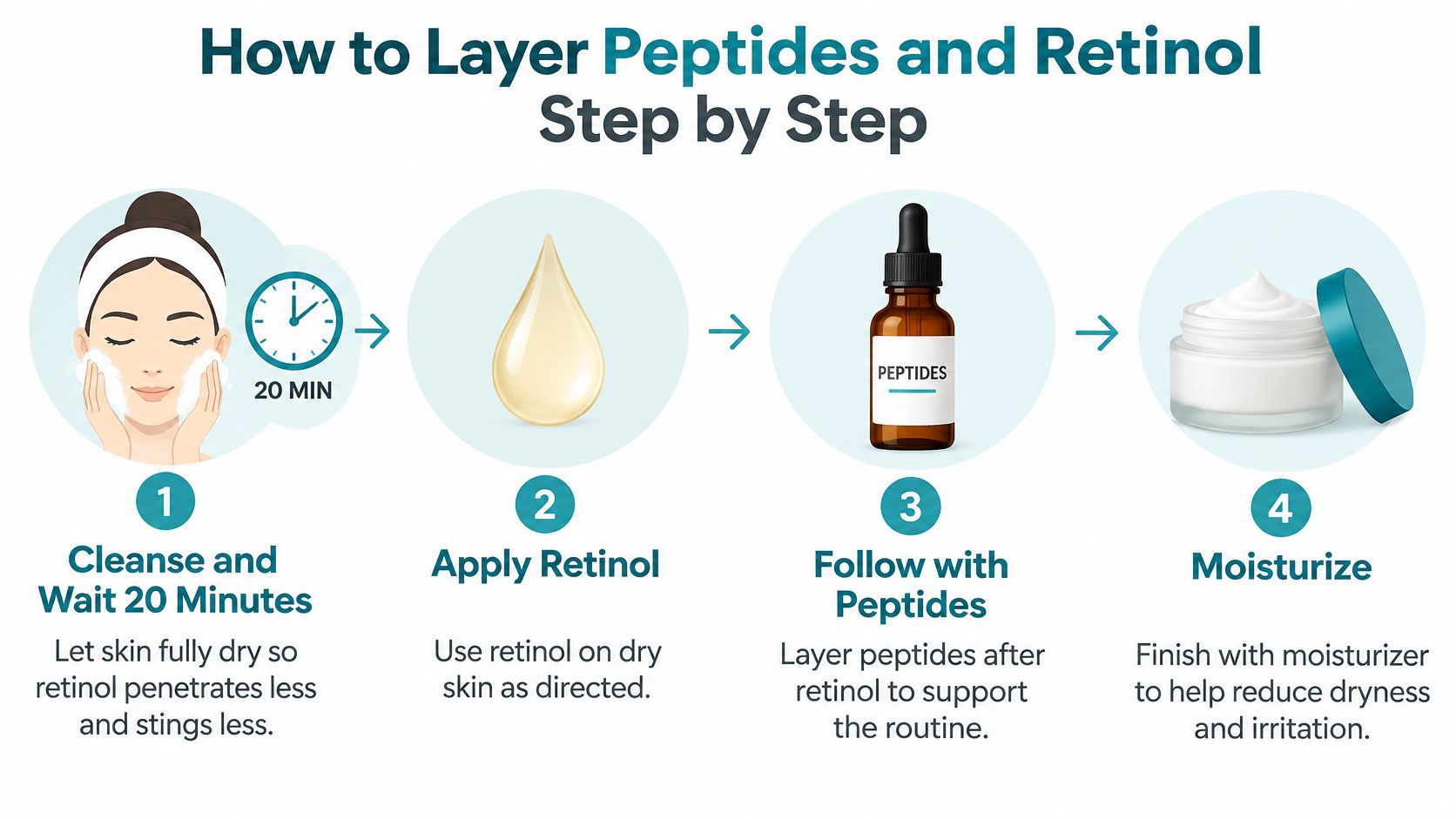
When you work with two separate products, layer them in this order. A fuller walk-through of textures sits in our guide to how to layer skincare serums.
- Cleanse, then let the skin dry fully. Retinol on damp skin sinks in faster and stings more, and waiting about 20 minutes after washing is the usual fix. The common slip is applying while the face still feels cool from water.
- Apply the peptide serum on dry skin, thinner texture first. You're giving that serum clean contact before anything occlusive goes on.
- Wait one to two minutes so the serum settles. Layering wet-on-wet just smears both products into each other.
- Apply a pea-sized amount of retinol to the face and neck, staying clear of the eye area and the corners of the nose and mouth. More than a pea is the usual reason peeling shows up by morning.
- Seal with a moisturizer to offset the dryness retinol can bring. Skipping this step is what turns a tolerable night into a tight morning.
- The next morning, use broad-spectrum sunscreen. Retinoid routines can raise irritation from sun and weather. Skip fruit masks on sunburned or broken skin, and on the day before or after a chemical peel or a retinoid night.
Begin on spaced nights rather than nightly, and tighten the gap only while mornings stay calm, with no burning and no tightness beyond ordinary dryness. Nightly use on day one is the mistake that causes most of the trouble. Judge the result in cosmetic terms: more even-looking, comfortable skin rather than a medical change. If you use a finished product that already combines peptide and retinol, it replaces steps 2 and 3 with a single application and runs on the same spaced-night pattern.
Irritation Signs and How to Calm Them
Irritation works like a smoke alarm. A brief chirp can be ordinary adjustment. A continuous alarm means you stop and look for the cause before the skin gets worse.
| Symptom | Likely cause | What to do |
|---|---|---|
| Stinging or burning within minutes | Retinol on damp skin or a strength that is too high | Rinse, apply moisturizer, skip retinol until calm |
| Dry, tight or flaky patches | Retinol used too often | Drop to every third night and moisturize twice daily |
| Redness or swelling that spreads or lasts | Several actives stacked on the same night | Pause layering, then reintroduce on alternate nights; seek professional advice if it persists |
| Peeling beyond mild flaking | Too much product or too many nights | Reduce the amount and frequency, and stop until the skin settles |
Mild dryness and light flaking in the first weeks are the usual adjustment, and that mild irritation usually eases within days of using less product on fewer nights. Stinging that lasts, swelling, spreading redness, or peeling past light flakes are stop signs.
How to read a patch test
The earlier patch test already told you whether this pairing belongs on the full face. If that jawline patch burns, swells, or stays red into the next day, leave the rest of the face alone.
Pause retinol first. With a finished peptide-and-retinol formula, that is one product, so you pause that single step and the formula's balance stays intact. If you layered two separate products, pause the retinol. Keep the peptide only if the skin stays comfortable without the retinoid. A home mix is harder to read, because you cannot tell which ingredient, or which strength, set off the alarm. Keep the cleanser gentle, moisturize morning and night, and use sunscreen every day. Bring retinol back at a lower frequency only after the skin has settled.
Persistent burning, swelling, or dermatitis means you reduce frequency or stop, and you get professional advice rather than adding another active. More on that pause is in how to care for irritated skin.
Pushing through turns a short sting into a week of peeling.
Why Home Mixing Carries More Risk Than a Finished Product
The concern is retinol that loses potency, plus irritation you cannot trace. Retinol can be affected by light, oxygen, heat, and heavy metals. A review of retinol stability explains why packaging that limits air exposure, antioxidant protection, and cool storage matter. A home-mixed batch may lose strength before you finish it, while peptide performance can also depend on the formula and how well it delivers the ingredient to skin.
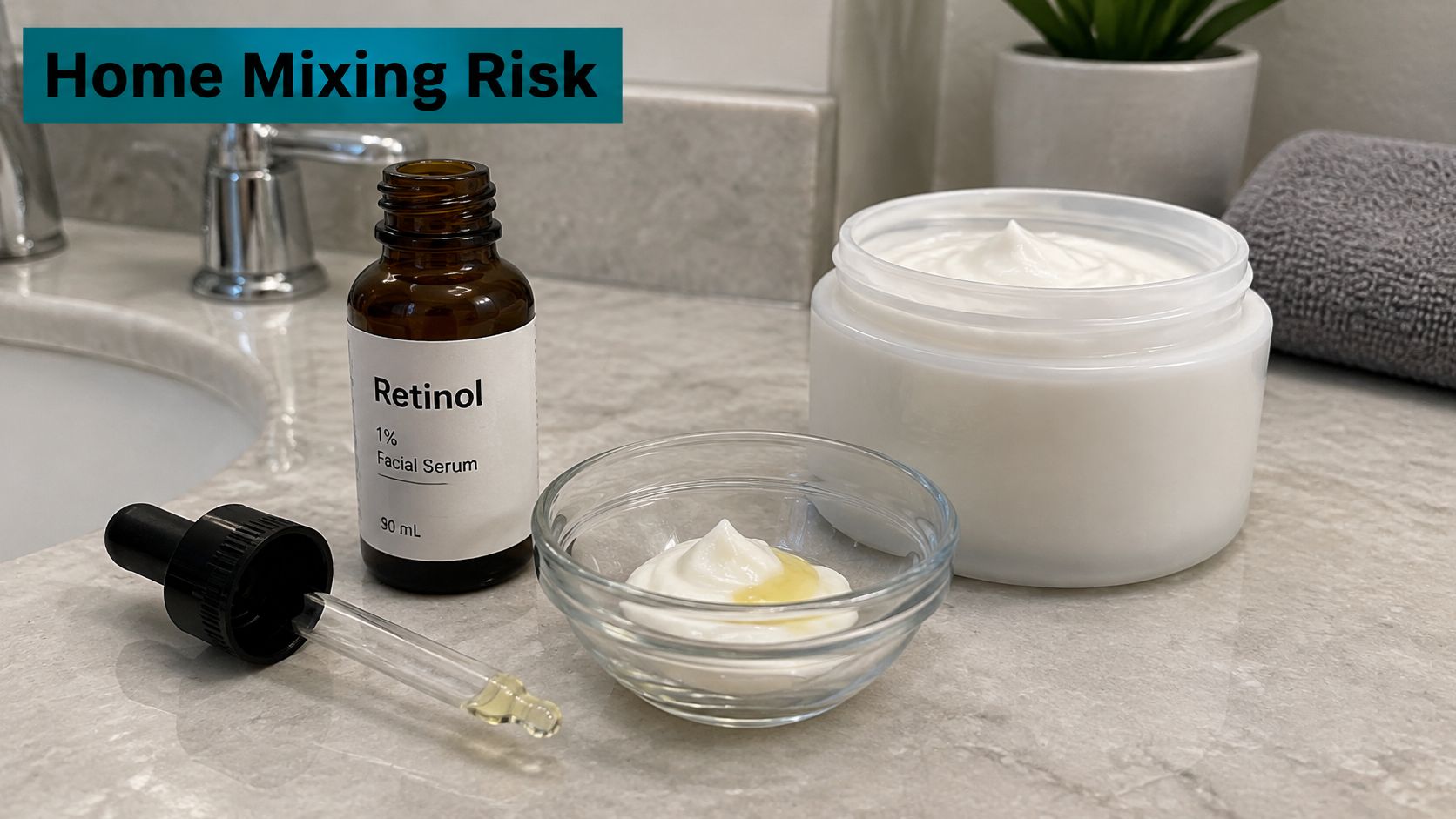
A finished formula is more than a list of compatible ingredients. Concentration, pH, preservation, oxygen exposure, packaging, and stability all affect how a product performs. Combining two products in your routine keeps their original formulas intact; stirring a peptide into a retinol product changes the formula without testing how the ingredients will behave together.
Skin Perfection offers products infused with professional-strength anti-aging peptides, as well as Serum Boosters that let customers customize skincare with anti-aging peptides. If you add a peptide booster to a moisturizer, follow the product directions and guidance for adding peptides to moisturizer, rather than improvising a retinol mixture. A separately packaged peptide product and retinol are easier to use as directed than a home-blended batch.
Choose a routine you can keep consistent: use each product as directed, and avoid changing several formula variables at once. If a product stings or irritates your skin, stop using it and return to a simpler routine.
Skin Perfection carries peptide serums, retinol options, and lotion-making supplies. For a retinol routine, a finished peptide product or a booster used as directed offers a more controlled approach than mixing raw ingredients at home. Compare the available peptide serums and serum boosters to find an option that fits your routine.