

 Buy with Prime
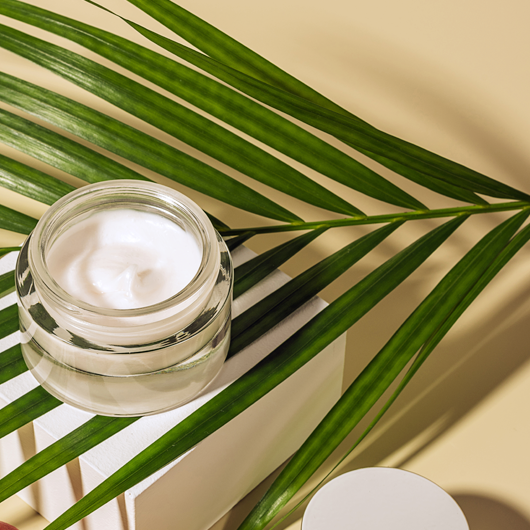


You're holding a jar of pale, brittle flakes beside a bottle of golden castor oil, and the names suggest they should behave similarly. Yet one pours, while the other resists a spatula and needs heat before it will blend. That difference is the reason hydrogenated castor oil, also called castor wax, matters to formulators.
Hydrogenated castor oil is a solid structuring ingredient, not just castor oil in a different package. It can add body to sticks and balms, support consistency in oil-rich systems, and contribute to the physical stability of a finished formula. Its PEG relatives belong to a different functional family, even though their names look closely related. The practical question isn't only whether the ingredient is considered safe. It's what the material does in your formula, how you process it, and which version you're using.
Table of Contents
- The Waxy Cousin of Castor Oil
- How Hydrogenation Changes the Molecule
- Hydrogenated Castor Oil Compared to Regular Castor Oil
- Where Formulators Use Hydrogenated Castor Oil
- Bench-Level Formulation Guidance
- Safety and Regulatory Notes
- Support Ingredient, Not Active
The Waxy Cousin of Castor Oil
A DIY formulator opens the wax shelf looking for an ingredient to firm a lip balm. The jar is labeled hydrogenated castor oil, and inside are pale flakes with a brittle, almost crystalline appearance. Beside it sits regular castor oil, a familiar liquid that flows easily at room temperature. The natural question is obvious: if both came from castor oil, why doesn't the wax pour?
The answer is chemical conversion. Hydrogenated castor oil is castor oil that has undergone catalytic hydrogenation, a process that converts much of its unsaturated ricinoleic acid fraction into saturated triglycerides of 12-hydroxystearic acid. Ricinoleic acid makes up about 85% of castor oil, according to independent hydrogenated castor oil product data. After hydrogenation, the material changes from a liquid vegetable oil into a hard wax.
That change gives the ingredient a different job. Regular castor oil can act as a liquid emollient, while hydrogenated castor oil works primarily as a structurant, lubricant, consistency modifier, and excipient. A formulator might choose the wax for a balm that needs more body, a stick that must hold its shape, or an oil-rich formula that needs a firmer internal matrix.
What the name tells you
The word “hydrogenated” describes processing, not a claim about skin performance. The word “castor” identifies the botanical source. The finished material is a defined cosmetic raw material with its own physical constants and handling requirements.
The USP-NF definition of hydrogenated castor oil describes it as refined, bleached, hydrogenated, and deodorized castor oil. The monograph also says it consists mainly of at least 70.0% of the triglyceride of hydroxystearic acid, which helps distinguish it from generic castor oil.
This guide follows the ingredient from molecular transformation to bench behavior. You'll see how it compares with regular castor oil, where it fits in skincare and haircare, how to melt and troubleshoot it, and why PEG-40 hydrogenated castor oil isn't interchangeable with the parent wax.
How Hydrogenation Changes the Molecule
Castor oil contains a high proportion of ricinoleic acid, a fatty acid with both an unsaturated double bond and a hydroxyl group. The double bond in ricinoleic acid is a reactive site that shifts during catalytic hydrogenation. Hydrogen is added across that bond, commonly with a nickel catalyst in industrial processing, so the chain becomes more saturated and packs together more efficiently.
That tighter packing changes the material's physical state. A liquid oil becomes a solid at room temperature, generally supplied as white to off-white flakes or powder. The material is nearly odorless or has a low characteristic odor, and it is practically insoluble in water. Neutral product information places its melting behavior around 83–87°C, while commercial grades commonly specify 85–88°C, depending on grade and test method, as described by castor wax product information.

Why the hydroxyl group still matters
Hydrogenation removes much of the unsaturation, but it does not erase the hydroxyl functionality associated with the ricinoleic acid structure. That retained polarity gives hydrogenated castor oil an amphiphilic character. It remains water-insoluble, yet it can interact with oils, waxes, and interfaces differently from a fully nonpolar hydrocarbon wax.
For a formulator, the practical result is structure. HCO can build a firm internal network in an anhydrous stick, add body to a balm, and support consistency in an oil-rich cream. Its low iodine value, specified at or below 5 g I₂/100 g, indicates very low unsaturation. Its melting range also supports controlled thickening and solid-body formation.
Bench principle: A high melting point does not automatically make a wax better. It means the heat cycle, cooling profile, and wax blend must suit that material.
Ingredient education often places hydrogenated castor oil beside emulsifiers, oils, and waxes because each raw material changes texture and stability in a different way. This guide to cosmetic raw ingredients provides a useful reference for comparing those roles.
Hydrogenated castor oil also serves as the parent material for PEG-derived hydrogenated castor oils. Ethoxylation changes water compatibility and shifts the ingredient toward solubilizing and surfactant behavior. Therefore, the wax and PEG-40 hydrogenated castor oil require separate evaluation in sticks, balms, serums, and lash products rather than being treated as interchangeable grades.
Hydrogenated Castor Oil Compared to Regular Castor Oil
The clearest distinction lies in the formulation role, not the shared botanical origin. Hydrogenation converts castor oil from a mobile liquid into a firm wax, so the two materials require different handling and serve different jobs.
| Criterion | Hydrogenated Castor Oil | Regular Castor Oil |
|---|---|---|
| Physical form at room temperature | Hard, brittle wax in flakes or powder form | Liquid vegetable oil |
| Melting behavior | Commonly specified around 85–88°C, depending on grade and method | Remains a liquid under ordinary room conditions |
| Water behavior | Practically insoluble in water | Oil-phase material, also not directly water-soluble |
| Primary formulation role | Structurant, consistency modifier, lubricant, and excipient | Liquid emollient and oil-phase ingredient |
| Oxidative profile | Very low unsaturation and greater resistance to oxidation than the starting oil | Contains a high proportion of unsaturated ricinoleic acid |
| Product roles | Sticks, balms, greases, tablet formulations, and structured creams | Serums, oils, massage blends, and fluid emollient systems |
The specifications make the structural difference concrete. Commercial grades commonly list a melting point of 85–88°C, a hydroxyl value of 150–165 mg KOH/g, an acid value at or below 4 mg KOH/g, and an iodine value at or below 5 g I₂/100 g. These figures help a formulator anticipate heating, cooling, storage, and application behavior.
Choose by function, not by family name
Regular castor oil supplies a fluid oil with the characteristic slip and richness of castor-derived triglycerides. Hydrogenated castor oil supplies structure without adding water. In a serum, HCO will not recreate the flow or skin feel of regular castor oil. In a stick, replacing HCO with liquid castor oil removes much of the rigidity and shape retention.
That distinction also matters for PEG relatives. PEG-40 hydrogenated castor oil is a separate, more water-compatible ingredient with a different formulation role. Treating it as interchangeable with the wax can lead to the wrong choice for a balm, serum, or lash product.
For a practical naming and function check, consult this castor oil lotion guide, then verify the exact INCI name, grade, and supplier documentation before batching.
Where Formulators Use Hydrogenated Castor Oil
Hydrogenated castor oil earns its place when a product needs a stronger body, a more stable shape, or a richer payoff. The same wax can behave differently depending on the rest of the formula, so product format matters more than the ingredient name alone.
Anhydrous sticks are the clearest example. Lip balms, deodorant sticks, cleansing balms, solid perfumes, and makeup sticks use oil-phase structuring materials to create a coherent solid. HCO can contribute hardness, glide, and a controlled melt during application. A stick with too little structure may slump or feel greasy. A stick with too much may drag, crack, or feel brittle.

Match the wax to the product format
In body butters, salves, and thick balms, HCO helps lift consistency and reinforce the oil-and-butter matrix. The result can feel more substantial than a formula built only from liquid oils. It may also help a product maintain its shape during ordinary handling, although the final result depends on the entire wax system.
In emulsions, the role is more nuanced. HCO can act as a consistency modifier and may support emulsion structure, but it isn't a replacement for a complete emulsifier system. Water-in-oil and oil-in-water formulas require appropriate emulsifier selection, phase balance, and processing. The wax can support the texture, but it can't rescue an incompatible emulsion design.
Haircare products use the same structural principle in a different sensory setting. Conditioning butters, edge-control products, and pomades may use HCO to create body and hold. A formulator must balance that structure against tack, drag, buildup, and spreadability. Lash and brow products require extra attention to smooth application, particle control, packaging, and eye-area suitability. Public safety literature supports cosmetic use, but it doesn't provide a universal performance answer for every lash or brow format.
Clear serums deserve caution. The wax is water-insoluble and doesn't naturally belong in a transparent, low-viscosity water system. If your target is a clear serum, a PEG derivative or another suitable solubilizer may be more appropriate. For terminology and ingredient-family context, consult this explanation of PEG-40 hydrogenated castor oil.
Bench-Level Formulation Guidance
Bench work starts with the supplier's specification, because HCO grades can differ in particle form, melting behavior, and finished texture. Treat the rates below as screening points, not guaranteed results. Start at the lower end when you want a softer, more spreadable texture, then test upwards while checking hardness, pay-off, cooling behavior, and storage stability.
| Product Type | Typical Usage (%) | Phase | Notes |
|---|---|---|---|
| Lotions and emulsions | 1–5% | Oil phase | Adds consistency and supports body |
| Body butters and balms | 5–15% | Oil phase | Reinforces the wax-and-butter matrix |
| Anhydrous sticks and pomades | Up to 25–40% | Oil phase | Builds substantial hardness and structure |
For commercial constants, review the supplier's technical documentation, including the stated melting range and acid or hydroxyl values. These values help identify the material you received, but they do not predict the exact feel of every finished formula.
Heat the complete oil phase
HCO's commonly specified melting range is 85–88°C, so melt it fully in the oil phase before judging texture. Add it with other high-melting waxes, butters, fatty alcohols, or oil-soluble ingredients. Any remaining flakes can leave microscopic crystals, which may later feel grainy or uneven.
Heat until every visible flake disappears, mix until the phase is uniform, then cool with controlled agitation. Cooling controls the wax network in much the same way that cooling controls the set of a candle. A slow or uneven cycle can produce unexpected hardness or surface changes, while overly rapid cooling may give the product a less polished feel.
Troubleshoot by symptom
- Brittleness: Reduce the total hard-structurant load or balance HCO with more flexible oils and softer butters. A stick that snaps during application is too rigid for its intended pay-off.
- Sweating: Review the liquid-oil balance and cooling process. Oil migration can occur when the internal matrix cannot hold the mobile phase effectively.
- Syneresis: Check whether the wax and butter network separates during storage. A compatible co-structurant and a more uniform cooling cycle may improve the matrix.
- Tack: Reduce overly sticky co-ingredients or rebalance with lighter-feeling oils. HCO adds body, but it does not automatically create a dry finish.
- Poor emulsion texture: Confirm that the emulsifier system, phase ratio, and shear suit the formula. HCO can support consistency, but it is not a universal emulsifier.
For lotion development, match the wax choice to a complete emulsifier strategy. This emulsifiers for lotion resource can help with that selection. Test the finished product for stability, packaging compatibility, and user application before scaling.
Safety and Regulatory Notes
The Cosmetic Ingredient Review Expert Panel concluded that hydrogenated castor oil is safe as a cosmetic ingredient in the practices of use and concentrations assessed in its safety review. The panel reaffirmed that conclusion in a 2024 re-review summary, according to the CIR castor-oil safety re-review. This supports cosmetic use, but it doesn't turn HCO into an active ingredient or justify therapeutic language.
Labeling still matters. Hydrogenated castor oil should be identified by its correct INCI name and supported by supplier documentation, including the applicable specification, safety information, and batch records. Don't assume that a database entry for “hydrogenated castor oil” covers PEG-40 hydrogenated castor oil, PEG-60 hydrogenated castor oil, or another ethoxylated derivative.
HCO and PEG-HCO are different materials
Hydrogenated castor oil is the waxy, non-water-soluble parent material. PEG derivatives are produced through ethoxylation, which changes their water compatibility and functional behavior. PEG-40 hydrogenated castor oil is used primarily as a solubilizer, emulsifier, or surfactant, not as a high-melting wax.
| Attribute | Hydrogenated Castor Oil (HCO) | PEG-40 / PEG-7 Hydrogenated Castor Oil |
|---|---|---|
| Physical character | Waxy solid | Ethoxylated derivative with greater water compatibility |
| Main formulation role | Structure, consistency, lubrication | Solubilization, emulsification, and surfactant function |
| Typical system | Anhydrous sticks, balms, structured oil phases | Sprays, cleansers, lotions, shampoos, and low-viscosity systems |
| Processing focus | Full oil-phase melting and controlled cooling | Water compatibility, solubilization, and impurity specifications |
| Main confusion | Mistaken for regular castor oil | Mistaken for the parent HCO wax |
The CIR PEGylated oils review concluded that PEG-30 and PEG-40 hydrogenated castor oil are safe for cosmetic use at concentrations up to 100%, with qualification around formulation conditions. PEG ingredients also require attention to ethoxylation-related impurities such as 1,4-dioxane, so a formulator should obtain appropriate supplier documentation rather than treating all castor-derived ingredients as identical.
Store HCO in a cool, dry, well-closed container and protect it from unnecessary heat, light, and contamination. Whether a finished product can carry vegan or cruelty-free language depends on the complete formula, manufacturing controls, and substantiation for the specific product. Skin Perfection follows FDA and Etsy restrictions by avoiding claims that products treat, mitigate, diagnose, or cure disease, or that they function as prescription drugs, analgesics, antibiotics, antiseptics, antivirals, anti-inflammatory products, steroids, vaccines, decongestants, or FDA-approved medicines.
Support Ingredient, Not Active
Plant origin doesn't make a wax therapeutic. Hydrogenated castor oil contributes texture, viscosity, structure, lubrication, and formulation stability. It isn't a bioactive that should carry anti-aging, hair-growth, or disease-related claims on its own.
Consider a lip balm. HCO can help set the gloss and rigidity of the stick, so the balm keeps its shape and leaves a coherent film during application. The wax supports the delivery format. It doesn't independently hydrate, stimulate growth, or change the biology of the lips.
A deodorant stick shows the same division of labor. HCO can help suspend and organize the oil-phase ingredients, including the materials selected for odor-control function. The finished product's intended cosmetic performance comes from the whole formula, not from assigning an unsupported active claim to the structuring wax.
Read a serum by its actual function
In a serum, HCO may thicken an oil-rich system or add a more substantial skin feel. It won't automatically penetrate the skin, and it doesn't transform a supporting ingredient into an active. If a formula contains a recognized cosmetic active, evaluate that ingredient and its substantiated use separately from the wax that gives the product body.

Formulator's checklist: Ask whether HCO is providing texture, stability, lubrication, or delivery support. Then judge the ingredient against that role, not against vague “natural” expectations.
This functional view also helps with lash and brow products. HCO may help create a smooth, structured anhydrous base, but the evidence does not establish a universal lash-thickening or brow-growth effect for the wax itself. Eye-area products need careful raw-material selection, clean processing, suitable packaging, and testing appropriate to the intended use.
For a broader look at oil-phase materials and their cosmetic roles, explore this guide to natural emollients for skin. Skin Perfection keeps its product language cosmetic and compliant. Its products beautify the skin and support appearance, without presenting them as treatments or medicines.
Skin Perfection offers skincare products and lotion-making supplies for enthusiasts, estheticians, and professionals who want to understand the ingredients behind texture and appearance. Visit Skin Perfection to explore cosmetic formulas and raw materials that can help you make more informed choices at the bench.