

 Buy with Prime
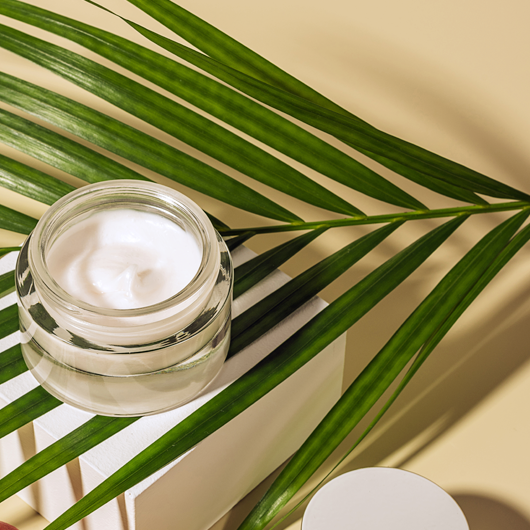


Which natural ingredient is best for dry skin, and why do so many beautifully marketed oils still leave your face tight, flaky, or dull? The better question is which formula supports the skin barrier, because an impressive ingredient can't compensate for an incomplete moisturizer.
A natural face moisturizer for dry skin should do more than add a temporary slippery feel. It should combine water-attracting humectants, softening emollients, and water-sealing occlusives in a texture you'll use. You'll also need to read labels critically, decide whether you want a ready-made formula or a DIY ingredient, and understand where cosmetic language ends.
Skin Perfection sells skincare products and lotion-making supplies designed to beautify the skin. Its product listings follow FDA rules and regulations for cosmetic claims, and its Etsy listings follow Etsy's restrictions on disease-related and drug-comparison claims. Products aren't presented as fixing, repairing, or healing skin, and the brand doesn't claim that any product is FDA approved.
Table of Contents
- Why Dry Skin Is Really a Barrier Problem
- The Ingredient Trio That Actually Hydrates
- Matching Texture to Climate and Routine
- Irritants That Quietly Sabotage Natural Formulas
- A First-Timer DIY Recipe With Hyaluronic Acid
- How Skin Perfection Formulas Fit the Framework
- Your Twice-Daily Routine and 30-Day Plan
Why Dry Skin Is Really a Barrier Problem
Why can skin feel tight after cleansing, show flakes beneath foundation, or remain dull after moisturizer? Those signs often point to a weak moisture barrier, not just a need for more water or a larger amount of product.
The outer layer functions as a wall, with skin cells forming the bricks and lipids and proteins filling the spaces between them. This structure helps retain water and keep irritants out. As it becomes less effective, water escapes more readily through transepidermal water loss. Skin may then feel rough, sting easily, or make fine lines look more noticeable.
Dry skin occurs when stratum corneum moisture falls below 10%. Low humidity, harsh chemicals, and frequent washing are major contributors to xerosis, according to the clinical and historical context summarized in this dermatology reference. Drinking water still supports overall health, but topical care must also improve the surface conditions that let moisture escape.

The outer layer needs more than water
A humectant attracts water, yet that water may not provide lasting comfort if the surface continues losing moisture quickly. Emollients smooth uneven spaces between rough cells, while occlusives form a protective film that slows evaporation. A well-built natural formula coordinates these roles instead of relying on one attractive ingredient.
The clinical case for regular moisturizing is also strong. An analysis of 8,392 patients classified 60.42% as having dry skin, while 52.25% reported dryness as a presenting complaint. 89.7% improved with moisturizer use, according to the same national moisturizer analysis. The buyer-friendly lesson is clear: moisturizer supports more than a temporarily glossy finish. Consistent application matters.
Practical rule: If a product leaves your face wet but not comfortable, it may be adding water without giving that water enough support.
Barrier-focused moisturization has a long history. Occlusive creams and petroleum-jelly formulations helped make this approach familiar. Vaseline was invented in 1859, patented in 1865, and launched as a brand in 1870. By 1874, it was selling at a rate of one tin per minute in the United States. That history shows how established occlusive care became for dry skin.
Read an ingredient label with the same question you would ask at a pharmacy: does the complete formula attract water, smooth the surface, and slow moisture loss without irritating your skin? That shift moves the decision away from choosing the most luxurious-sounding oil and toward selecting a formula that supports the barrier.
The Ingredient Trio That Actually Hydrates
A moisturizer works like a well-made bathrobe. Humectants act like a sponge, drawing and holding water. Emollients act like soft fabric, filling uneven spaces and making rough skin feel smoother. Occlusives act like the outer coat, slowing moisture loss from the surface.
Humectants include glycerin, hyaluronic acid, sodium PCA, panthenol, and aloe. They're useful when your face feels dehydrated or tight, but they're only one part of the formula. For a deeper look at plant-derived water-attracting ingredients, explore natural humectants for skin.
Emollients include squalane, jojoba oil, shea butter, fatty acids, and ceramides. They soften rough patches and improve slip, which helps makeup sit more evenly. Occlusives include beeswax and plant waxes such as candelilla. A balanced cream can combine all three without forcing you to layer separate products.
| Category | Job in Formula | Natural Examples | Best Use Case |
|---|---|---|---|
| Humectant | Attracts and holds water | Glycerin, aloe, panthenol, sodium PCA | Dehydrated, tight-feeling skin |
| Emollient | Smooths and softens the surface | Jojoba, squalane, shea butter, ceramides | Roughness, flaking, uneven feel |
| Occlusive | Slows moisture escaping | Beeswax, candelilla wax, plant oils | Night use, cold weather, very dry areas |
Ingredient names worth recognizing
Ceramides are especially relevant because they resemble the intercellular lipids that help organize the barrier. A randomized investigator-blinded split-leg study found that a ceramide-containing cream increased hydration and reduced visible dryness immediately and sustainably. After 4 weeks, stratum corneum levels of ceramide, cholesterol, and free fatty acids also increased, according to the PubMed study on ceramide moisturization.
You may also see ceramides 1, 3, and 6-II, peptide complexes such as palmitoyl tripeptide or copper peptides, and botanical extracts such as edelweiss or apple-fruit cell culture. These ingredients can add barrier support, signaling activity, or antioxidant positioning, but they don't replace the basic trio. A formula still needs an appropriate base.
For readers comparing small-batch options, small batch beauty on Loyaltie offers a useful example of how butters, oils, and botanical ingredients can appear in a balm-style format.

DIY makers may also consider Sodium Hyaluronate Powder Pure Hyaluronic Acid. The cosmetic-grade powder uses a High-Molecular-Weight NASHA grade with a stated molecular weight of 800 to 1500 Daltons, and it can be used for 0.1% to 2% hyaluronic acid serums, provided you understand preservation and formulation safety.
A rich occlusive load generally feels more comfortable at night, while a lighter humectant-emollient gel may sit better beneath sunscreen during the day. Scan your next label for at least one humectant, one emollient, and one occlusive. That checklist is more useful than choosing an ingredient just because it's natural.
Matching Texture to Climate and Routine
Texture determines whether a moisturizer becomes part of your routine or stays untouched in a drawer. A thin lotion may feel pleasant in humid weather but disappear too quickly on very dry skin. A rich balm may be comforting overnight but pill beneath foundation.
Thin lotions are usually water-heavy and fast-absorbing. They can suit oily or combination skin during humid summers, especially in the morning. Medium creams are the practical middle ground for many dry-skin routines, because they can carry humectants, emollients, and a moderate occlusive layer together.
Rich balms put more weight on the sealing step. They're useful in cold climates, during overnight care, or when a routine leaves the skin feeling especially exposed. Gel-creams sit between a watery gel and a cream, making them a reasonable choice for warm weather or for people who dislike a coated finish.
| Texture | Feel on Skin | Best Climate | Barrier Job |
|---|---|---|---|
| Thin lotion | Light and quick to absorb | Humid, warm conditions | Adds light hydration with limited sealing |
| Medium cream | Cushioned but wearable | Variable climates | Balances all three moisturizing roles |
| Rich balm | Dense and protective | Cold, dry conditions | Creates a stronger moisture seal |
| Gel-cream | Fresh and lightweight | Warm weather | Delivers humectants with lighter emollience |
Use the one-hour and makeup tests
If your skin still feels tight an hour after applying a cream, move upward to a richer cream or balm. If a balm pills under makeup, use less, allow more absorption time, or step down to a medium cream.
Layering can solve a texture mismatch. A humectant serum beneath a cream can add water without making the surface greasy. A balm over a cream can serve as a winter topcoat. Apply products from lighter to heavier, and reduce the amount if layers begin to roll.
A night mask can occupy the balm-adjacent part of a routine. HydroGlow Anti-Aging Night Mask is listed as a vegan, cruelty-free, paraben-free, and sulfate-free formula containing three types of hyaluronic acid, polyglutamic acid, jojoba, squalane, aloe, glycerin, and triglycerides.
For seasonal adjustments, use this seasonal skin protection guide as a reminder to reassess texture when humidity, temperature, and indoor heating change.
Choose your texture using three questions. What's the climate? What time of day will you apply it? Does your current barrier feel calm, tight, or reactive? Your answer may be a gel-cream in the morning, a cream during the day, and a balm only at night.
Irritants That Quietly Sabotage Natural Formulas
“Plant-based” doesn't automatically mean gentle. Essential oils, fragrant extracts, and certain solvents can still bother dry or reactive skin, especially when the formula offers more scent than barrier support.
Fragrance is the first category to inspect. Look for fragrance, parfum, and fragrant essential oils such as bergamot, lavender, and ylang-ylang. Citrus and floral oils can oxidize over time and may sensitize some users. A natural face moisturizer for dry skin doesn't need to smell like a garden to be effective.
Drying alcohols deserve a separate look. Alcohol denat. and ethanol evaporate quickly and can leave compromised skin feeling sharper or tighter. They aren't automatically unacceptable in every product, but a dry-skin moisturizer should make you question why a strong solvent appears prominently.
Harsh preservatives and surfactants also matter. Methylisothiazolinone and sodium lauryl sulfate are examples that may be unsuitable for a fragile-feeling routine. For broader ingredient-screening context, see this guide to ingredients to avoid in skincare.
A thirty-second label check
Read the top five ingredients first, then scan the rest for fragrance, drying alcohols, and known essential-oil allergens. Concentration matters, so an ingredient near the end of the list doesn't carry the same formulation weight as one near the beginning.
| Irritant to Avoid | Why It Hurts Dry Skin | Gentler Natural Swap |
|---|---|---|
| Fragrance or parfum | Adds scent without a necessary hydration role | Fragrance-free formula or a low-aroma botanical base |
| Bergamot, lavender, or ylang-ylang oil | May oxidize or sensitize delicate skin | Jojoba, squalane, or calendula-free fragrance-free options |
| Alcohol denat. or ethanol | Evaporates quickly and may increase tightness | Glycerin, aloe, or panthenol |
| Sodium lauryl sulfate | Strong cleansing action can feel stripping | Mild, non-sulfate cleansing agents |
| Methylisothiazolinone | May be unsuitable for reactive users | A properly preserved formula with a tolerability-focused system |
Test the product on a small area first. Within ten minutes, ask whether it tingles, stings, or makes the skin look pink. A slight cosmetic sensation isn't proof of harm, but repeated discomfort is a reason to stop and reassess.
Well-formulated natural products should feel almost boring on the skin. Comfort, even application, and a surface that feels less tight are more useful signals than intense cooling, fragrance, or a dramatic first application.
A First-Timer DIY Recipe With Hyaluronic Acid
DIY can be appealing because you control the ingredient list, concentration, and batch size. It can also reduce the mystery surrounding a finished product. The limitation is important, though: a simple serum can hydrate, but it can't replicate the stability, preservation, and balanced oil-water structure of a properly made cream.
The recipe below makes a 50 ml hydrating serum. It uses 1% sodium hyaluronate powder, 0.5% panthenol, and 0.3% squalane, plus either 0.5% leucidal liquid or 1% Cosgard as the broad-spectrum preservative option. Use a cosmetic scale rather than measuring powders by volume.
Formula for a 50 ml batch
- Distilled water: approximately 49.1 ml with leucidal liquid, or approximately 48.75 ml with Cosgard
- Sodium hyaluronate powder: 0.5 g
- Panthenol: 0.25 g
- Squalane: 0.15 g
- Leucidal liquid: 0.25 g, or Cosgard: 0.5 g
These amounts are percentage-based approximations for a beginner formula. Preservative compatibility, pH, packaging, and contamination control still matter. If you're new to preservation, use a supplier's technical documentation and consider working with a qualified formulator.

Mixing sequence
- Sanitize your tools. Clean and disinfect the beaker, spatula, scale, bottle, and work surface. Let everything dry before mixing.
- Add distilled water. Sprinkle the sodium hyaluronate slowly across the surface instead of dumping it in one clump. This reduces lumping.
- Hydrate patiently. Cover the mixture and refrigerate it for 12 to 24 hours, until it becomes clear or evenly hydrated. Stir gently rather than whipping air into it.
- Add the remaining ingredients. Mix in panthenol, squalane, and your chosen preservative. Since squalane is oil-soluble, it may need a suitable solubilizer or emulsifying approach to disperse evenly. Without one, the batch may separate.
- Check and package. Check that the pH is between 5 and 5.5, then transfer the serum into an amber dropper bottle.
For more guidance on the process, see this DIY hyaluronic acid serum resource.
Patch-test the finished serum on the inner forearm for 48 hours before facial use. Label the bottle with the ingredients and mixing date, keep it refrigerated, and treat two to three months as a cautious working shelf-life only if the preservative system and sanitation are appropriate. Discard it sooner if the smell, color, texture, or appearance changes.
This is a hydrating serum, not a replacement for a true cream. Apply it to slightly damp skin, then follow with an emollient-rich cream or balm to provide the missing outer seal.
How Skin Perfection Formulas Fit the Framework
A useful product comparison starts with function, not branding. Skin Perfection offers skincare products and lotion-making supplies, so its formulas can be considered through the same humectant, emollient, and occlusive framework used for any other natural face moisturizer for dry skin.
The Peptide Renewal Crème represents the medium-cream category. Its formula is described as pairing sodium hyaluronate and glycerin as humectants, squalane and shea as emollients, and a lightweight plant wax layer as an occlusive. That combination is designed to make the cream feel cushioned without relying on a heavy balm texture.
The Hydra-Balance Gel Cream fits a lighter routine. Its gel base and humectant-rich botanicals make it more suitable for oily or humid conditions, or for people who want a fresh daytime layer. It's the kind of format that can sit beneath sunscreen when a richer cream feels excessive.
The Plant Ceramide Balm occupies the richest position. Used over a serum, it supplies an occlusive final layer for nighttime or colder weather. A balm doesn't need to be used across the entire face if only the cheeks, mouth area, or forehead feel persistently dry.

What to verify before buying
Skin Perfection describes shared commitments including fragrance-free formulation, third-party stability testing, recyclable packaging, and ingredient traceability. Those details are useful because they address both tolerability and manufacturing transparency, but you should still read the current product label and follow its directions.
The broader natural skincare market is substantial. One industry report estimates the global natural skin care market at USD 15.99 billion in 2025, with a projection of USD 28.29 billion by 2035, reflecting sustained demand for clean-label hydration products. That projection appears in the natural skincare market report, and it doesn't prove that every natural formula performs well.
Choose one format based on your actual routine rather than buying a complete line. A gel cream may solve daytime shine and humidity, a medium cream may cover ordinary dryness, and a balm may be the right seasonal add-on. The formula's job matters more than the number of products on your shelf.
Your Twice-Daily Routine and 30-Day Plan
A dry-skin routine doesn't need many steps. It needs a consistent sequence that cleans without over-stripping, adds water, smooths with emollients, seals where necessary, and protects the surface during the day.
Morning
- Cleanse gently. Use lukewarm water and a mild cleanser, or rinse with water if cleansing leaves you tight.
- Mist or tone lightly. Apply a hydrating mist or toner if you enjoy the step, but don't treat it as the moisturizer.
- Use a peptide serum. Apply a thin layer and give it time to settle.
- Moisturize. Choose a formula containing humectants and emollients. Apply it to slightly damp skin.
- Finish with mineral sunscreen. Use broad-spectrum SPF 30 or higher as the final morning step.
Evening
Remove sunscreen and makeup with an oil cleanser, then follow with a gentle water-based cleanse. Apply a sodium-hyaluronate or ceramide serum, followed by a richer night cream or balm if your face feels tight.
The “1-cm finger rule” can help you start with a consistent amount, but the right quantity depends on the product and the size of the area. Apply thin layers and wait about 60 seconds between them if pilling occurs. Too much product, incompatible textures, or insufficient drying time can all make layers roll.
What to watch over thirty days
Set expectations around consistency rather than instant transformation. During days 1 to 7, look for less tightness and better comfort. During days 8 to 14, flaking may appear less prominent if the routine suits you. During days 15 to 30, assess texture, makeup application, and how often your skin feels reactive.
The clinical evidence supports disciplined application. In a controlled moisturizer-application study, using at least 1.0 mg/cm² twice daily, after bathing at night and in the morning, produced a moisturizing effect verified by physiological skin measures, as summarized in the clinical application evidence. The same source reports that a 20% glycerin cream performed similarly to a 4% urea and 4% sodium chloride cream for dryness, while severe or moderate smarting was reported by 10% with glycerin compared with 24% with the urea-saline cream, with p<0.0006.
Keep a shopping checklist:
- Humectant: Glycerin, hyaluronic acid, panthenol, or aloe
- Emollient: Squalane, jojoba, shea butter, or ceramides
- Occlusive: Beeswax, candelilla wax, or a suitable sealing oil
- Daily protection: Mineral sunscreen with SPF 30 or higher
- Testing step: A patch-tested sample before full-face use
Take one photo each week in similar lighting and adjust for the season. If the product stings, stop using it. If your face still feels tight after a week of consistent application, change the texture or formula instead of applying more.
Skin Perfection offers ready-made skincare formulas for different textures along with lotion-making supplies for DIY makers who want more control over ingredients. Visit Skin Perfection to compare a lightweight moisturizer, a richer barrier-focused option, or formulation ingredients that fit your dry-skin routine.