

 Buy with Prime
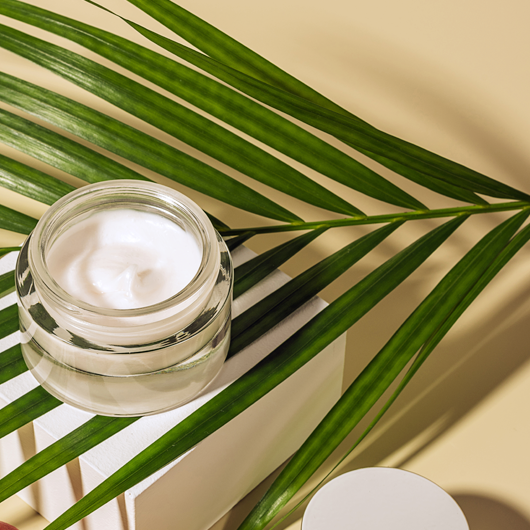
Peptides and retinol both aim at the look of fine lines, but they get there differently. Retinol is a form of vitamin A that skin converts into retinoic acid, and it can cause dryness or peeling. Peptides are short amino acid sequences chosen for roles such as signaling or carrying copper. Many people use both, and you can, with a little planning.
Key facts
- Retinol is a precursor that skin converts to retinoic acid through enzyme steps (Farris et al., 2024).
- Retinol is practically insoluble in water and soluble in oils (Thermo Scientific via Fisher).
- Heat, light and oxygen degrade retinol over time (Eastman).
- Copper Tripeptide-1 is water soluble, used at 0.5 to 5% of solution with a final pH of 5 to 7 (Lotioncrafter).
- Matrixyl 3000 (Palmitoyl Tripeptide-1, Palmitoyl Tetrapeptide-7) is water soluble, recommended at 3% (Sederma).
What is the difference between peptides and retinol?
Retinol is vitamin A in its alcohol form (CIR, 1987). Skin turns it into retinoic acid, the most active form of vitamin A in cells. A 2024 analysis explains that retinoic acid can irritate skin, and that precursors like retinol are gentler because the conversion steps limit how fast retinoic acid forms (Farris et al.).
Peptides are short amino acid sequences. Signal peptides such as Matrixyl 3000 are described in reviews as messengers aimed at the cells that make collagen; on a cosmetic label, they are used for the look of firmer, smoother skin. Carrier peptides such as GHK-Cu deliver copper. Peptides such as Argireline (Acetyl Hexapeptide-8) target the look of expression lines (Pintea et al., 2025).
Peptides vs retinol side by side
| Peptides (example: GHK-Cu, Matrixyl 3000) | Retinol | |
|---|---|---|
| INCI name | Copper Tripeptide-1; Palmitoyl Tripeptide-1, Palmitoyl Tetrapeptide-7 | Retinol |
| What it is | Short amino acid sequences | Vitamin A alcohol, a precursor of retinoic acid (Farris et al.) |
| How it works | Described in research as messengers to skin cells, or as copper carriers, by peptide type (Pintea et al.) | Converted in skin to retinoic acid (Farris et al.) |
| Typical usage rate | Copper peptide solution 0.5 to 5% (Lotioncrafter); Matrixyl 3000 at 3% (Sederma) | About half (49%) of retinol products in a 1981 industry survey used 0.1% or less (CIR, 1987) |
| pH working range | Copper peptide: final pH 5 to 7 (Lotioncrafter) | No supplier range in the sources I opened; more stable in alkaline than acidic solution (CIR) |
| Solubility | Water soluble | Insoluble in water, soluble in oils (Fisher) |
| Pairs well with | Hyaluronic acid (Pintea et al.); niacinamide and a retinol ester (Fu et al.) | Antioxidants that protect it in the formula, such as vitamin E and BHT (Eastman) |
| Keep apart from | Copper peptide: chelators and fruit acids in the formula (Lotioncrafter); vitamin C in the same application (Skin Perfection routine rule) | Strong acids, light, heat and air (Eastman) |
What does the research show?
Retinol: A 2024 pooled analysis combined six vehicle-controlled studies of a 0.1% stabilized retinol. It included 237 women on retinol and 234 on a plain base, average age 47, for 12 weeks. A dermatologist graded the look of wrinkles, crow's feet, fine lines and uneven tone. The retinol groups scored better than the base from week 4 onward. Irritation was uncommon: 5 people had peeling and 2 had redness, described as mild to moderate and short-lived (Farris et al.). The page does not state who funded it; three of the authors list Kenvue Inc. as their affiliation.
Peptides: Sederma, the maker of Matrixyl 3000, applied a 3% cream in a study of 23 women aged 42 to 67 for 2 months, with placebo on the other half of the face. After 2 months, the Matrixyl side showed a 39.4% drop in the surface occupied by deep wrinkles against the starting point, while the placebo side's 4.3% change was not significant (Sederma). Peptide studies tend to be smaller and more often supplier-run than retinol studies, and a 2017 review notes this limit (Schagen).
Can you use retinol and peptides together?
Yes. A 2010 study gave 99 women a cosmetic regimen that combined niacinamide, peptides and 0.3% retinyl propionate, a retinol ester, for 8 weeks. It was compared with a different regimen in 97 women. The cosmetic regimen improved the look of wrinkles more at 8 weeks and was better tolerated on every measure (Fu et al., 2010). The study listing gives Procter and Gamble as one author's affiliation.
My own routine rule for copper peptides is simple. If you use retinol every other night, use your copper peptide serum on the alternate nights. The 2010 study above combined peptides and a retinol ester in one regimen. See copper peptides vs retinol for the copper-specific details.
Which one suits you
- Your skin is easily irritated, or you are new to actives: a peptide serum is a reasonable place to start, since the retinol research above reports some peeling and redness.
- Your skin tolerates actives and you want larger studies behind your choice: the retinol analysis above pooled 471 women, far more than any single peptide study cited here. Start slowly and wear sunscreen.
- You want both: alternate them, as below.
How to use it in a routine
- Morning: cleanse, apply peptide serum, moisturizer, then sunscreen. For our GHK-Cu Copper Peptide Serum, use 2 to 3 drops on face and neck.
- Retinol nights: cleanse, apply retinol, then moisturizer.
- Off nights: cleanse, apply copper peptide serum, then moisturizer.
- Keep vitamin C out of the same application as copper peptides.
Read our complete guide to peptides in skincare, or browse the age-defying peptide collection.
Frequently asked questions
Are peptides better than retinol?
Neither is better for everyone. The retinol research cited here includes a 471-woman pooled analysis, but retinoids can cause peeling and redness in some people. Peptide studies are smaller and often supplier-run, and none compares peptides head to head with retinol. Pick based on how your skin tolerates actives, or alternate the two.
Can you use retinol and peptides together?
Yes. A 2010 study found a regimen combining peptides, niacinamide and a retinol ester was well tolerated over 8 weeks. With copper peptides, I recommend alternating: retinol one night, copper peptide serum the next. The 2010 study combined peptides and a retinol ester in the same regimen.
Should I apply peptides or retinol first?
On nights you use both kinds of products, apply the thinner, water-based layer first, then the richer one. Most peptide serums are water based, while retinol dissolves in oils rather than water. For copper peptides, skip layering and use them on the nights you do not use retinol.
Do peptides cause the same dryness as retinol?
There is no direct comparison to answer that. The peptide sources reviewed for this guide do not report side-effect counts the way the retinol analysis does. In that 2024 retinol analysis, 5 of 237 women had peeling and 2 had redness. Introduce any new active slowly and watch how your skin responds.
Sources
- Farris P, et al. Efficacy and Tolerability of Topical 0.1% Stabilized Bioactive Retinol for Photoaging: A Vehicle-Controlled Integrated Analysis. J Drugs Dermatol, 2024;23(4):209-215. jddonline.com
- Final Report on the Safety Assessment of Retinyl Palmitate and Retinol. J Am Coll Toxicol, 1987;6(3). journals.sagepub.com
- Thermo Scientific. Retinol product listing (Fisher Scientific). fishersci.it
- Eastman. High-purity pro-retinol ingredient brochure. eastman.com
- Pintea A, et al. Peptides: Emerging Candidates for the Prevention and Treatment of Skin Senescence: A Review. Biomolecules, 2025;15(1):88. pmc.ncbi.nlm.nih.gov/articles/PMC11762834
- Sederma. Matrixyl 3000 product data sheet (via distributor Pochteca). sip.pochteca.net
- Lotioncrafter. LCPeptide Copper raw material listing. lotioncrafter.com
- Schagen SK. Topical Peptide Treatments with Effective Anti-Aging Results. Cosmetics, 2017;4(2):16. mdpi.com/2079-9284/4/2/16
- Fu JJJ, et al. A randomized, controlled comparative study of the wrinkle reduction benefits of a cosmetic niacinamide/peptide/retinyl propionate product regimen. Br J Dermatol, 2010;162(3):647-654. scholars.mssm.edu