

 Buy with Prime
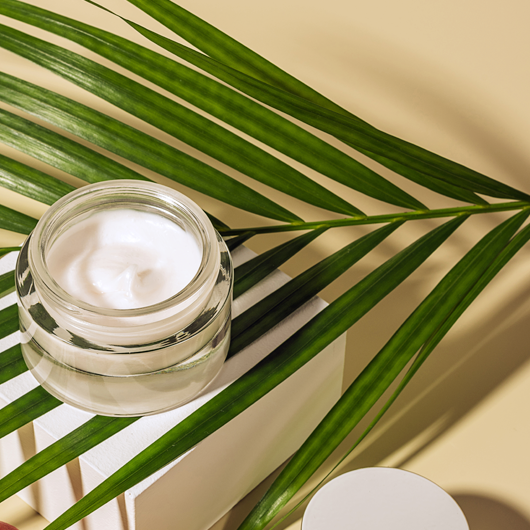
Copper peptides and retinol both aim at the look of fine lines and firmness, but they are very different ingredients. GHK-Cu (Copper Tripeptide-1) is a water-soluble copper peptide used for the look of firmer, smoother skin, while retinol is a fat-soluble form of vitamin A that skin converts to retinoic acid. You can use both, just not together: put retinol and copper peptide on alternate nights.
- INCI names: Copper Tripeptide-1 (SpecialChem) and Retinol (BASF Retinol 50 C via Azelis).
- Copper peptide usage rate: 0.05% to 1% (SpecialChem).
- Retinol in cosmetics: 0.0015% to 0.3% (Zasada and Budzisz, 2019), with 0.3% given as the maximum recommended in face creams (Milosheska and Roškar, 2022).
- Solubility: copper peptide is water soluble (Pickart et al., 2015); retinol is fat soluble (Zasada and Budzisz, 2019).
- Stability: GHK is stable at pH 4.5 to 7.4 (Pickart et al., 2015); retinol is sensitive to light, oxygen, heat and heavy metals (Milosheska and Roškar, 2022).
Copper peptides vs retinol: side by side
| GHK-Cu copper peptide | Retinol | |
|---|---|---|
| INCI name | Copper Tripeptide-1 | Retinol |
| What it is | The tripeptide glycyl-histidyl-lysine bound to copper, found naturally in human plasma (Pickart et al., 2015) | A form of vitamin A, a first-generation retinoid (Mambwe et al., 2024) |
| How it works | A copper-carrying peptide studied for its effects on collagen and gene activity in laboratory research (Pickart and Margolina, 2018) | Converted in skin cells to retinaldehyde, then to retinoic acid (Mambwe et al., 2024); about 10 to 20 times less potent than retinoic acid (Milosheska and Roškar; Zasada and Budzisz) |
| Typical usage rate | 0.05% to 1% (SpecialChem) | 0.0015% to 0.3% in cosmetics (Zasada and Budzisz) |
| pH working range | Stable at pH 4.5 to 7.4 (Pickart et al.); supplier asks for pH 5 to 7 (Lotioncrafter) | Not stated in the sources reviewed for this guide |
| Solubility | Water soluble | Fat soluble |
| Pairs well with | Water-based serums and moisturizers in a pH 5 to 7 range | Daily sunscreen (Milosheska and Roškar note sunscreen as the standard strategy against photoaging) |
| Keep apart from | Fruit acids and EDTA in the formula (Lotioncrafter); vitamin C in the same application and retinol on the same night (Skin Perfection routine rules) | Light, air and heat during storage; copper peptide on the same night (Skin Perfection routine rule) |
What the studies show for each
GHK-Cu: the human cosmetic studies are small and mostly older. A 12-week facial cream study in 71 women and a 12-week eye cream study in 41 women (both Leyden and colleagues, 2002) reported improvements in the look of fine lines, wrinkles, firmness and clarity. In a 2016 double-blind study, a GHK-Cu serum used twice daily for 8 weeks was reported to reduce wrinkle volume 55.8% compared with the base serum alone; the review does not give the number of participants (Pickart and Margolina, 2018; Pickart et al., 2015).
Retinol: in a randomized, double-blind study, 36 older adults (average age 87) applied 0.4% retinol lotion to one arm and a plain lotion to the other, up to three times a week for 24 weeks. The retinol side showed significantly more improvement in fine wrinkling (Kafi et al., Archives of Dermatology, 2007). A 2024 review also notes that several retinol trials combined it with other actives, so not every result can be credited to retinol alone (Mambwe et al., 2024).
Head to head: the only direct comparison I found is an older pilot in which skin biopsies showed more collagen production in 70% of women using a GHK-Cu cream versus 40% using retinoic acid, not cosmetic retinol (Pickart and Margolina, 2018). That is one small study, so read it as interesting, not settled.
The tradeoff: tolerance
Retinoids can cause mild to moderate irritation such as redness, peeling and burning, often short-lived (Mambwe et al., 2024). The same review cites a 12-day patch test in which a 0.3% retinol formula worked as well as a 1% formula. If your skin runs reactive, a lower retinol strength on fewer nights is a reasonable place to start.
Can you use retinol and peptides together?
Yes, in the same week, but not in the same application. Here is the Skin Perfection rule: if you use retinol every other night, use copper peptide serum on the alternate nights.
Why keep them apart? They are built for different environments. Copper peptide is water soluble and has a documented stability range of pH 4.5 to 7.4. Retinol is fat soluble and sensitive to light, oxygen, heat and heavy metals (Milosheska and Roškar, 2022). No study I found measured the two together, so this is a routine rule, not a lab finding. Giving each product its own night means neither has to share the skin's surface with the other, and you can tell which product your skin is reacting to if it gets irritated.
For non-copper peptides such as Matrixyl 3000 or Argireline, see our separate guide to peptides vs retinol.
Which one suits you
- Choose copper peptide if your skin does not tolerate retinol well, or you want a water-based serum you can use morning and evening.
- Choose retinol if you already tolerate it and want an ingredient with a randomized, vehicle-controlled trial on the look of fine wrinkles.
- Use both if you want to cover the look of fine lines from two angles. Alternate nights.
How to use it in a routine
- Night 1 (retinol night): cleanse, retinol, moisturizer.
- Night 2 (copper peptide night): cleanse, 2 to 3 drops of Skin Perfection 1% GHK-Cu Copper Peptide Serum on face and neck, moisturizer.
- Repeat the two-night rhythm through the week.
- Every morning: sunscreen. Keep vitamin C out of any application that includes copper peptide.
For everything about GHK-Cu, from label math to why it is blue, read the complete GHK-Cu copper peptide guide.
Frequently asked questions
Is GHK-Cu better than retinol?
Neither one wins on every count. Retinol has a randomized 24-week trial behind it for the look of fine wrinkles, but it can cause redness and peeling. GHK-Cu studies are smaller and older, and it is a water-based serum you can use morning or evening. Many people get the most from using both on alternate nights.
Can I use copper peptides and retinol on the same night?
The Skin Perfection rule is no. Retinol is fat soluble and sensitive to light, air, heat and heavy metals. Copper peptide is water soluble with a stability range of pH 4.5 to 7.4. No study has measured the two together, so put each on its own night and you will know which one your skin is responding to.
How often should I alternate them?
If you use retinol every other night, use copper peptide serum on the nights in between. That gives each product three or four nights a week. If your skin is new to retinol, start with fewer retinol nights and fill the rest with copper peptide.
Is retinol the same as retinoic acid?
No. Retinol is a cosmetic form of vitamin A. Skin converts it in two steps, first to retinaldehyde and then to retinoic acid. Two published reviews describe retinol as roughly 10 to 20 times less potent than retinoic acid, which is why the two are not interchangeable on a label.
Can I use copper peptides in the morning and retinol at night?
Yes. Copper peptide in the morning and retinol at night keeps them in separate applications. Just keep vitamin C out of the morning copper peptide step, finish with sunscreen, and keep copper peptide out of your retinol application at night.
Sources
- Pickart L, Vasquez-Soltero JM, Margolina A. GHK Peptide as a Natural Modulator of Multiple Cellular Pathways in Skin Regeneration. BioMed Research International, 2015. PMC4508379
- Pickart L, Margolina A. Regenerative and Protective Actions of the GHK-Cu Peptide in the Light of the New Gene Data. International Journal of Molecular Sciences, 2018. PMC6073405
- Mambwe B, et al. Cosmetic retinoid use in photoaged skin: A review of the compounds, their use and mechanisms of action. International Journal of Cosmetic Science, 2024. PMC11788006
- Milosheska D, Roškar R. Use of Retinoids in Topical Antiaging Treatments: A Focused Review of Clinical Evidence for Conventional and Nanoformulations. Advances in Therapy, 2022. PMC9618501
- Zasada M, Budzisz E. Retinoids: active molecules influencing skin structure formation in cosmetic and dermatological treatments. Advances in Dermatology and Allergology, 2019. PMC6791161
- Kafi R, et al. Improvement of naturally aged skin with vitamin A (retinol). Archives of Dermatology, 2007. PMID 17515510. Europe PMC record
- SpecialChem. Copper Tripeptide-1 INCI ingredient page. specialchem.com
- Lotioncrafter. LCPeptide Copper product and technical information. lotioncrafter.com
- Azelis. BASF Retinol 50 C product page. azelispc-us.com