

 Buy with Prime



Most brow growth before and after photos are styling stories with a growth caption. Look at the pair again. The "after" side usually has darker color, a tidier edge, smoother hair, or pigment sitting under the skin. Only one category in this list waits on a follicle, and it's the slowest one.
That's the sorting rule for everything below. Each example is filed by what produced the visible change, not by how dramatic it looks, so you can stop comparing a pencil-and-powder pair to a six-month grow-out pair and wondering why your own version isn't working. A set of brow tinting before and after photos is a good calibration exercise: notice how much of that transformation is color landing on hairs that were already there.
Read every pair the same way. Same lighting? Same angle? Is the brow edge drawn or grown? Is the tail filled or fuller? The timeline note in each example tells you how long the change takes to appear and how long it holds. Anything described as a product here is a cosmetic for the appearance of brows, never a correction for a hair condition. Photos illustrate the pattern; individual variation is wide. The comparison table condenses all six, and sudden or patchy loss belongs in a doctor's office, not a serum review.
Table of Contents
- 1. Brow Fill-In With Pencil and Powder for Sparse-to-Full Transformations
- 2. Brow Shaping and Grooming for Shape Refinement, Not Density
- 3. A Brow Conditioning Routine and What Eight Weeks of Use Looks Like
- 4. Brow Microblading and the Semi-Permanent Result
- 5. The Bold Brow Trend and What Color Really Changes
- 6. The Brow Grow-Out Timeline Over Several Months
- How the Six Brow Before-and-After Examples Compare
- Pick the Brow Result You Can Actually Maintain
1. Brow Fill-In With Pencil and Powder for Sparse-to-Full Transformations
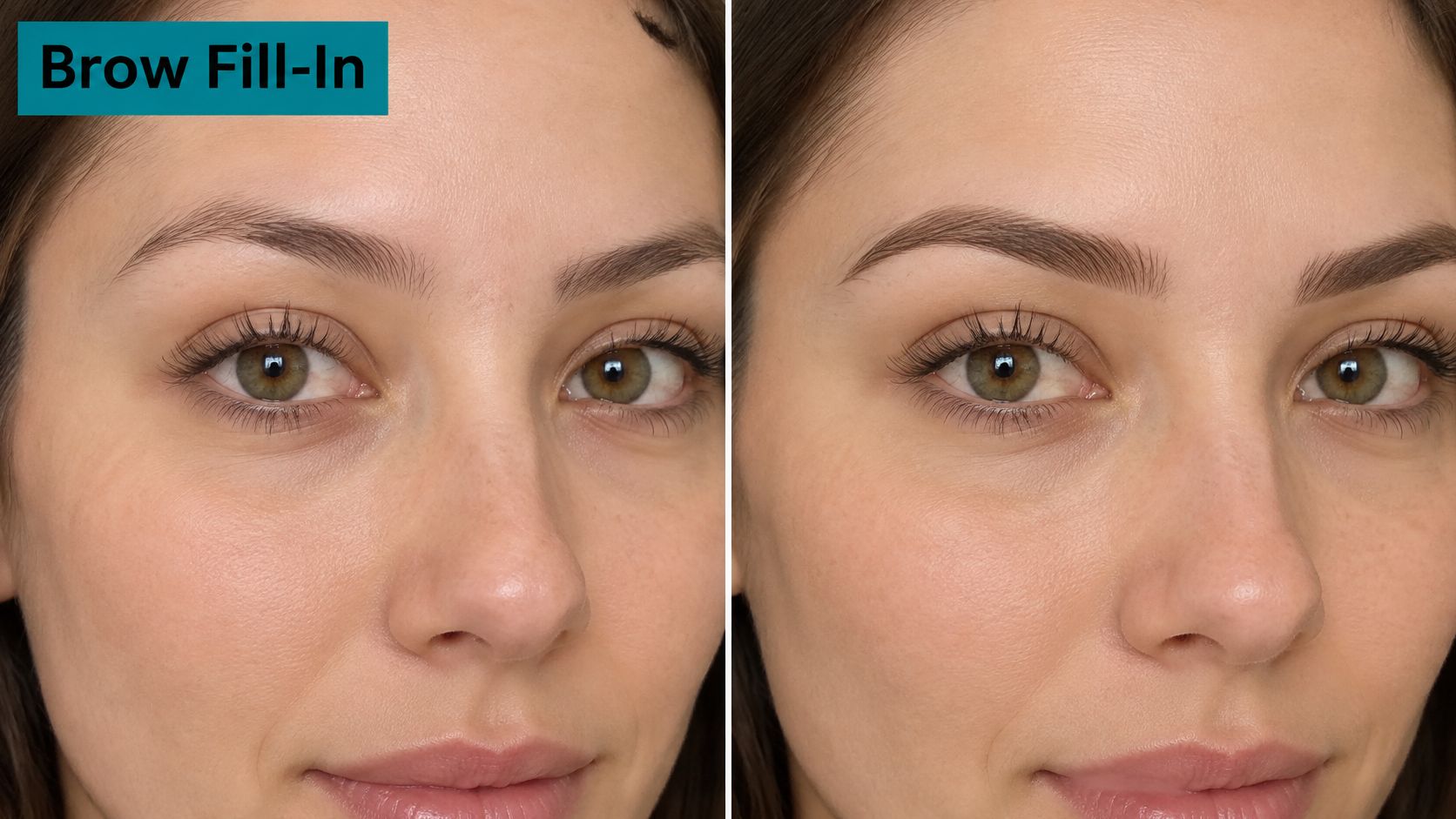
This is the only pair in the gallery you can reproduce before lunch. The before side shows a sparse, uneven tail with a faint middle section; the after side shows a defined arch with feathered strokes through the gaps. A second common pair runs light brows with no definition to a powder base plus a pencil tail that balances the frame. Nothing grew. Color went on and the shape got decided.
What the photo is actually showing
Pencil, powder and pomade are cosmetic color. They sit on skin and on the hair you already have, which matters for how you describe them. The FDA's explanation of cosmetic versus drug products is direct on this: intended use decides the category, a product marketed to beautify or promote attractiveness is generally a cosmetic, and claims that it affects the body's structure or functions make it a drug. Fuller-looking is a cosmetic sentence. Grows new hair is not.
Practical rule: judge a fill-in photo by the drawn edge, not the hair count. A crisp arch in the after shot and a fuzzy one in the before means you're looking at a pencil, not a follicle.
Doing it so the comparison holds up
- Brush up first. Comb brows upward with a spoolie so the gaps show themselves before you fill.
- Light strokes at the front. Build toward the tail and keep the head of the brow soft.
- Set with gel. Clear or tinted brow gel holds the strokes through a working day.
- Shoot in daylight. Front-facing photos near a window expose asymmetry that indoor bulbs hide.
Seven minutes, same result tomorrow. For the full order of steps, this guide on how to make eyebrows fuller walks through it.
2. Brow Shaping and Grooming for Shape Refinement, Not Density
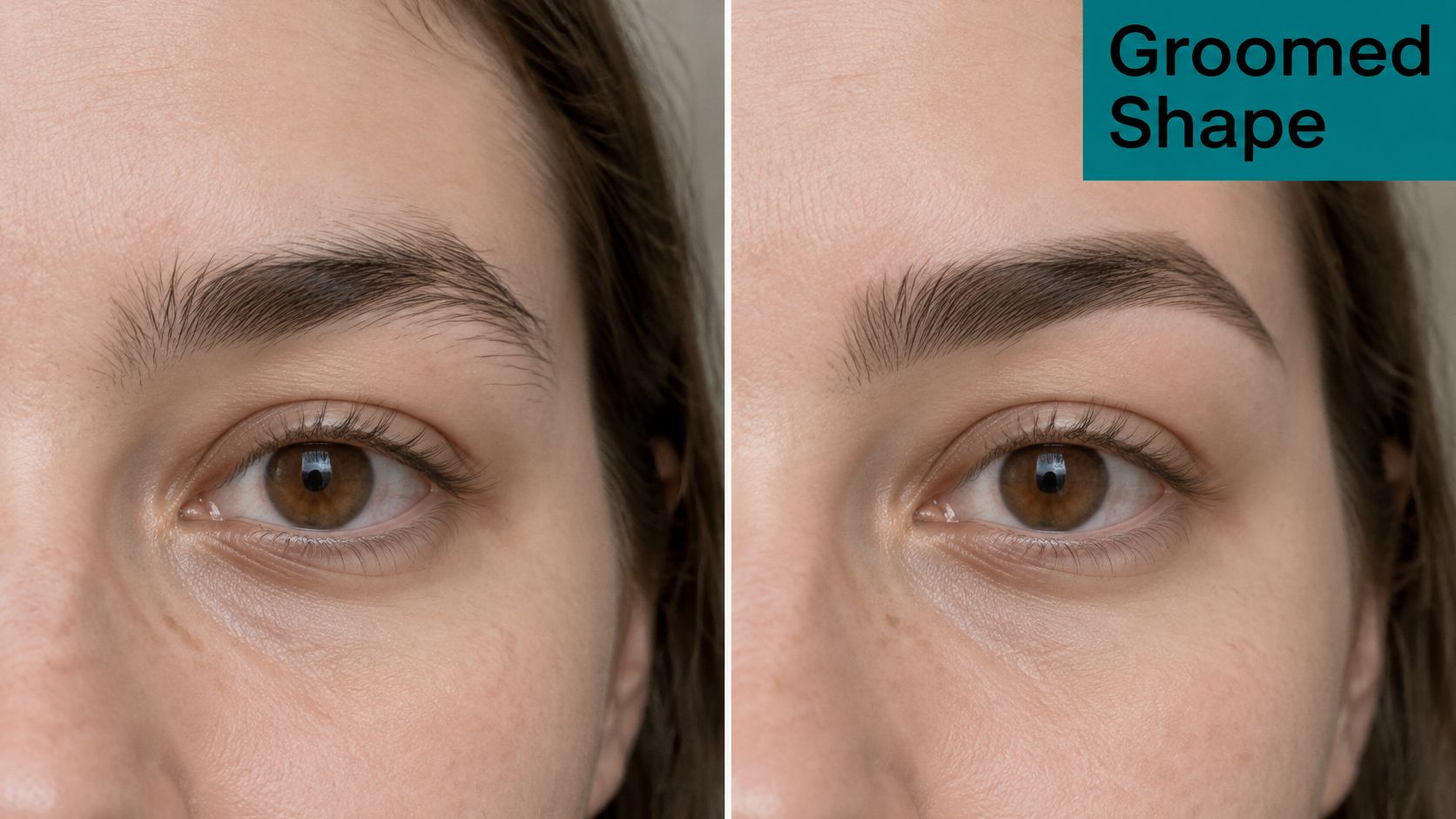
These before-and-after photos show a change in outline, not density. In the first pair, brushed and trimmed hairs reveal a soft arch that was harder to see beneath untidy strands. In the second, a shorter tail gives the brow a neater finish. The visible difference comes from arranging and removing hair.
Why a trim looks like density
Brow hairs grow in different directions, so a few crossing the outline can make the shape look less defined. Brush them into place, then clip only the tips that extend beyond the desired line. The remaining hairs form a cleaner silhouette, creating an optical gain, not a new follicle.
The sequence that works
Brush the head upward and the tail outward with a spoolie. Trim small amounts at a time, checking the shape from straight on between passes. Tweeze only hairs clearly outside the outline, then stop. Over-trimming can make a brow look thinner rather than more refined.
For an event three weeks away, schedule a tidy-up about two weeks beforehand. That leaves time for the shape to settle and avoids making a last-minute change. Grooming can refine the outline, while tinting changes its color; judge those results separately.
3. A Brow Conditioning Routine and What Eight Weeks of Use Looks Like
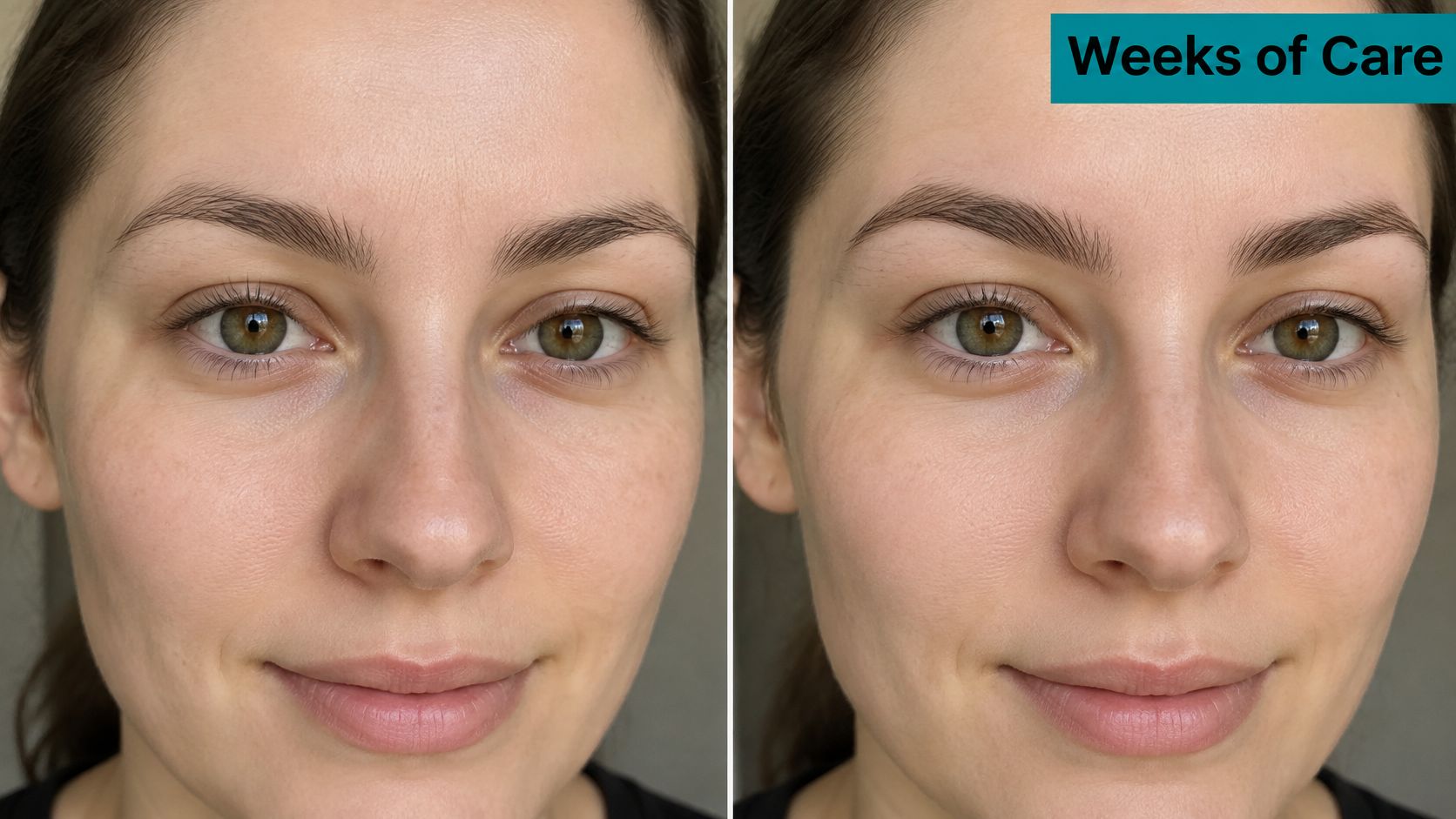
Before: dry, brittle brow hairs with uneven texture. After: softer, brushed-up brows that look more groomed after eight weeks of nightly use. A second pair runs flat, lifeless brows against brows that hold their shape through a working day two months later. Read those photos closely and you'll see the change sits on the surface of the hair and in how it lies.
What a conditioning step can and can't do
A lightweight oil or conditioning serum applied along the brow line at night smooths the cuticle and makes coarse hairs easier to direct. That's an appearance change, and it's one you can photograph. It doesn't add follicles, and a routine that claims otherwise is describing a different product category.
The published timelines are a useful reality check on how long any topical deserves. A 2023 randomized controlled trial in 60 adults with eyebrow hypotrichosis ran 16 weeks and reported mean hair-count increases of 5.97 for 0.03% bimatoprost, 5.45 for 0.01% bimatoprost and 4.96 for 2% minoxidil, with hair diameter improving too. A larger vehicle-controlled trial of bimatoprost 0.03% ran to seven months, producing 30.96 mm² mean eyebrow-fullness improvement against 6.42 mm² for vehicle. Those were pharmacological products under medical supervision, so the results don't travel to a cosmetic oil. The measuring window does.
Running the routine
- Patch test on the inner arm. Wait 24 hours before anything goes near the eye area.
- Small amount, clean spoolie. Two or three strokes along the brow line, brushed through.
- Photograph monthly in identical light. Same spot, same time of day, no brow makeup.
- Pair it with shaping. Conditioned hairs sit better after a trim, and the photos look different because of it.
Say you start in January. February's photo will show almost nothing, and April's is the one worth judging. More on the sequence lives in this guide to an eyebrow serum before and after routine.
4. Brow Microblading and the Semi-Permanent Result
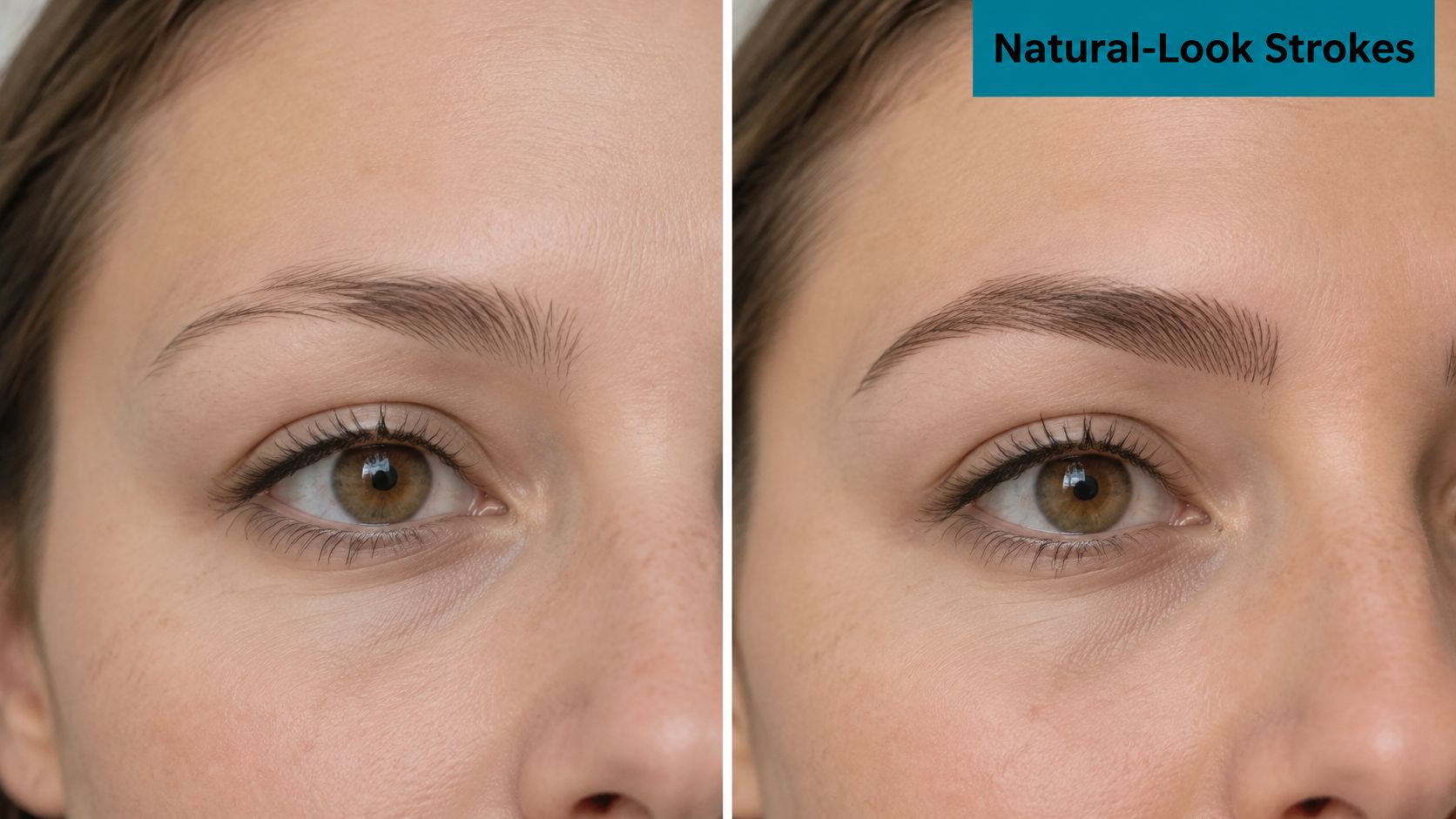
Microblading can make sparse brows look fuller, but the photo shows pigment, not new hair growth. A fine blade deposits pigment in hair-like strokes. In this comparison, the before shows gaps; the after shows a more defined shape. Judge the result by healed photos, when the color has softened and the strokes have settled into the skin.
Fresh versus healed, and the questions to ask
A day-one photo shows freshly worked brows, often with sharper edges and stronger color than the settled result. Ask to see healed images, including work on skin similar to yours. Pigment can look different on oily and dry skin, so a fresh photo alone is a poor guide to the final appearance.
Brow loss can also have causes that pigment cannot address. A dermatology review of eyebrow disorders describes conditions including alopecia areata, thyroid problems, nutritional issues, infection and scarring disease. If brow loss is unexplained or changing, get the cause assessed before covering it with pigment.
Booking it properly
- Check the technician's training. Ask where they trained, who certifies them, and how long they have worked on brows.
- Inspect the setup. Needles should be opened in front of you, and surfaces and gloves should be clean.
- Follow aftercare instructions. Avoid gym sweat, exfoliating acids and sun on the brows while they settle.
- Address skin concerns first. Ask a clinician about active eczema, psoriasis or an irritated flare before booking.
For a spring wedding, schedule the first session well ahead of the event so there is time for the touch-up and for the color to soften. If you are considering a topical alternative, this beginner's guide to making an eyelash and eyebrow follicle enhancing serum covers formulation basics. A serum is a different approach: cosmetic conditioning does not create the semi-permanent strokes shown here.
5. The Bold Brow Trend and What Color Really Changes
Color can make a brow look fuller without changing a single hair. In these photos, light, thin brows become darker, more defined brows with a clearer arch. The visible difference comes from pigment, placement and gel, not evidence of new growth.
Where the marketing gets ahead of the product
Bold-brow products often make confident claims about growth. In the US, cosmetics do not receive premarket approval. The FDA's guidance on cosmetic claims says claims must be truthful and not misleading, and that claims about affecting the structure or function of skin or hair may make a product a drug. Etsy's medical claims policy also prohibits claims that an item treats, mitigates, diagnoses or cures a condition, or works as well as a prescription product. A cosmetic can change how brows look. It cannot promise that brow hairs will grow.
Building a bold brow that still reads as brows
- Match rather than darken. A shade close to your hair color is easier to keep natural; a much darker shade can look drawn on.
- Build from the arch outward. Keep the center lighter to avoid a solid, block-like shape.
- Use gel with a light hand. Stiff wax can drag hairs, and repeated tugging can pull them out.
- Check the result in daylight. Indoor lighting can conceal harsh edges that stand out outside.
With strong eyeliner, a slightly lighter brow and softer edges can keep the two features from competing. Compare the finished look in daylight before settling on a shade. For product research, these notes on eyebrow growth serum claims can help you distinguish appearance claims from promises of hair growth.
6. The Brow Grow-Out Timeline Over Several Months
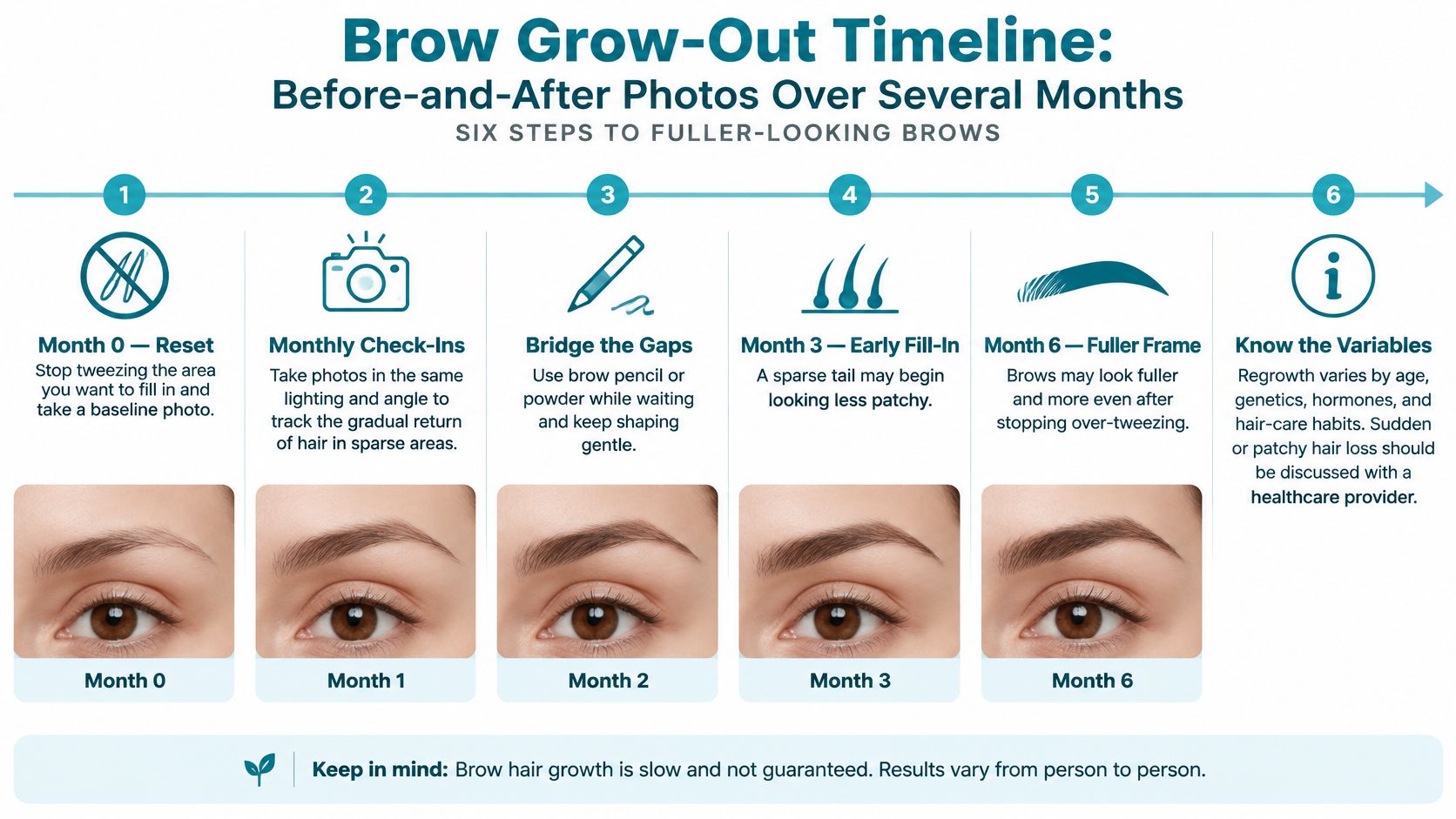
These before-and-after pairs show gradual regrowth, not a product changing hair growth. In the three-month comparison, the sparse tail looks more filled in. By six months, the brows appear fuller and more even. The dates matter: brow hair grows in cycles, and individual follicles do not change at the same time.
Why the wait is this long
A review of eyebrow hair growth and the hair follicle cycle describes eyebrow anagen, the active growth phase, as about 2 to 3 months, catagen as 2 to 3 weeks, and telogen, the resting phase, as another 2 to 3 months. Scalp anagen commonly lasts 2 to 8 years. Because follicles cycle asynchronously, a sparse patch may take several months to look different, and regrowth is not guaranteed.
A small 1999 eyebrow-shaving study offers a limited comparison: five adults had one eyebrow shaved, with the other left untreated. Four had fully regrown by four months; one 52-year-old with lighter, sparser brows needed six months. The study involved shaving, not tweezing, and five participants cannot establish a typical timeline for everyone. It does show why a grow-out can take months rather than weeks.
Keeping a grow-out honest
- Leave the area alone. Avoid tweezing, waxing or threading where you want hair to return.
- Fill gaps while you wait. Pencil can cover sparse spots without changing the growth timeline.
- Use the photo routine from section 3. Consistent comparison makes gradual changes easier to judge.
- Get sudden or patchy loss checked. That pattern calls for assessment rather than a routine grow-out.
For more on the sequence of natural regrowth, see this guide to natural brow growth.
How the Six Brow Before-and-After Examples Compare
The useful difference between these examples is what the photo can show: added color, a tidier shape, better-conditioned hair, pigment, styling, or regrowth. Reversibility varies, so compare the after photo with the kind of change you can maintain.
| Example | What the Photo Shows | Typical Time to Visible Result | Products or Tools | Reversibility |
|---|---|---|---|---|
| Brow fill-in with pencil and powder | Color placed over sparse areas | Immediate | Pencil, powder, spoolie | Washes off |
| Brow shaping and grooming | A cleaner outline from brushed, trimmed or tidied hairs | Immediate | Spoolie, scissors or tweezers | Hair grows back |
| Brow conditioning routine | Hairs that look softer and easier to manage; no guaranteed new growth | Several weeks | Serum or lightweight oil | Stops when routine stops |
| Brow microblading | Pigment in hair-like strokes | Visible immediately; softens as it heals | Technician and pigment | Semi-permanent |
| Bold brow trend | Darker color and a more structured outline | Immediate | Gel or pomade | Washes off |
| Brow grow-out timeline | Hair returning after tweezing stops | Several months; regrowth varies | Progress photos | Natural regrowth |
Pick the Brow Result You Can Actually Maintain
A before-and-after photo shows a cosmetic result, not proof of new hair growth. Decide which kind of change you want, then choose a method that fits its upkeep. Pencil and powder create definition in one sitting. Grooming refines shape, while a conditioning routine takes consistent use and time. Microblading involves a professional procedure and leaves a semi-permanent result.
Use daylight to judge whether the finished look suits your face, and consider how often you are willing to maintain it. Color and grooming are adjustable; microblading lasts longer but is less flexible. Conditioning may improve the appearance and manageability of brow hairs, but it does not guarantee regrowth.
Cosmetic products can change how brows look, not promise new hair growth. Sudden, patchy or one-sided brow loss is a clinical matter to discuss with a healthcare provider.
Skin Perfection offers the Lash & Brow Bulk Base and Eyelash Peptide as cosmetic formulation ingredients for a once-daily brow-conditioning routine. Follow the labeled usage rate and assess the appearance over several weeks. These products are for the appearance of brows, not a promise of hair growth.
To build a brow-conditioning step yourself, Skin Perfection offers the Lash & Brow Bulk Base and Eyelash Peptide as cosmetic ingredients for the appearance of lashes and brows. Visit Skin Perfection for these products.