

 Buy with Prime
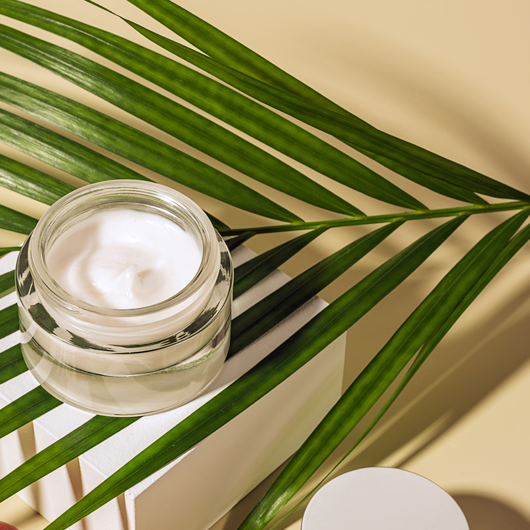


This is our honest review of the D20 Skin Prep Heavy Water Toner: what it is, what the evidence does and does not say about a heavy water base, the questions customers ask us most, and a realistic timeline for judging it on your own skin. If you want the full ingredient guide and step-by-step routine, read our D20 Heavy Water Toner Guide. In brief: D20 is a prep toner built on deuterium oxide (heavy water) with cucumber, honey, hyaluronic acid and borage oil, made for dry and mature skin that feels tight after cleansing.
Product update: The D20 Skin Prep Heavy Water Toner has been discontinued. Our closest current option is the Watermelon Brightening Tonic Facial Mist. Both are prep steps used after cleansing and before serums, but they are different formulas: the Watermelon Brightening Tonic is a fine spray mist built on organic aloe vera with a plant-based hyaluronic acid (Cassia Angustifolia seed polysaccharide), and it does not contain heavy water (deuterium oxide), borage oil, cucumber or honey.
The review below is about the discontinued D20 toner and is kept for reference. Its heavy water details do not apply to the Watermelon Brightening Tonic. Unlike D20, it lists glycolic acid and willow bark extract among its ingredients, so it is not acid-free the way D20 was.

Our Verdict in One Paragraph
D20 is a comfortable, hydrating prep step for skin that feels parched after washing. The part of the formula with the strongest published evidence is not the heavy water: it is the hyaluronic acid, a humectant with controlled human studies behind it. Heavy water itself is a real, measurable material with physical properties that differ from ordinary water, but we have not found a published human study that tested heavy water toner on skin. So we rate D20 on what it delivers in use: a cushiony, non-stripping feel, better slip for the serum that follows, and less tightness after cleansing. It is not a miracle water, and we will not call it one.
What Heavy Water Actually Is
Heavy water is water in which the two hydrogen atoms are deuterium, a stable (non-radioactive) form of hydrogen with one extra neutron. It is written D2O. It looks, smells and feels like ordinary water, but the heavier hydrogen changes several physical properties in ways that can be measured.
| Property (25 °C unless noted) | Ordinary water (H2O) | Heavy water (D2O) | Difference |
|---|---|---|---|
| Vapor pressure | 3.165 kPa | 2.734 kPa | About 14% lower |
| Viscosity | 0.8909 mPa·s | 1.095 mPa·s | About 23% higher |
| Density | 997.05 kg/m³ | 1104.36 kg/m³ | About 11% denser |
| Boiling point (1 atm) | 100.0 °C | 101.42 °C | 1.42 °C higher |
| Melting point (1 atm) | 0.00 °C | 3.82 °C | 3.82 °C higher |
What this means in a bottle: a lower vapor pressure means heavy water evaporates somewhat more slowly than ordinary water at the same temperature, and the higher viscosity gives it a slightly thicker, more cushioned feel. The difference is real, but it is modest. About 14% lower vapor pressure does not mean heavy water "refuses to evaporate." It means it leaves the surface a little more slowly. We would rather you know the actual number.
What the Evidence Supports, Ingredient by Ingredient
| Ingredient | Role in the formula | Strength of evidence |
|---|---|---|
| Deuterium oxide (heavy water) | Base liquid with lower vapor pressure and higher viscosity than ordinary water | Physical properties are well measured. We found no published human trial of a heavy water toner on skin hydration. |
| Hyaluronic acid | Humectant that holds water at the skin surface | Controlled human data: in a 76-woman study, 0.1% hyaluronic acid creams improved measured skin hydration and elasticity over 60 days. |
| Honey | Humectant, adds a soft, cushioned feel | Humectant use is well established in cosmetic formulation. |
| Cucumber | Cooling skin feel | Sensory and conditioning role. |
| Borage oil | Light emollient that softens the feel of dry skin | Emollient role. |
For context on how humectants work, see our guide to natural humectants for skin.
Who D20 Suits, and Who Can Skip It
A good fit if
- Your skin feels tight or papery within minutes of cleansing.
- You live in a dry climate, such as the high desert of Idaho, Utah, Arizona or Nevada, or spend long days in heated or air-conditioned rooms.
- Your serums drag or pill when you apply them to bone-dry skin.
- You want a toner with no alcohol sting or astringent feel.
You can probably skip it if
- Your skin feels comfortable after cleansing and your moisturizer is already enough.
- You want a toner that exfoliates. D20 contains no acids.
- You expect the heavy water itself to change the look of lines. That has not been tested.
If your main concern is skin that feels dry even though you drink plenty of water, our article Dehydrated Skin: When Water Is Not Enough explains the difference between dry and dehydrated skin.
A Realistic Results Timeline
We do not have a clinical study of D20 itself, so this timeline is built on what is reasonable to judge at each point, and on the test periods used in the hyaluronic acid research. Use it as a checklist for your own trial.
| When | What to look for | How to check |
|---|---|---|
| First application | Less tightness after cleansing, softer feel, serum spreads more easily | Touch test 10 minutes after your routine. Note whether your face still feels tight. |
| End of week 1 | Fewer flaky patches around the nose and brows, makeup sitting more smoothly | Photograph the same area in daylight on day 1 and day 7. |
| Weeks 2 to 4 | More consistent comfort through the day, especially in dry rooms | Note the time of day your skin starts to feel tight. If it moves later, the routine is working for you. |
| Day 30 to 60 | The period over which hyaluronic acid creams were measured in the Pavicic study | Compare day-1 and day-60 photos under the same light. Judge texture and how dry lines look. |
A prep toner works alongside the rest of your routine. If you change three products at once, you will not know which one made the difference. Keep everything else the same for the first four weeks.

How D20 Compares With Other Prep Steps
| Prep step | What it does | Best for | Watch out for |
|---|---|---|---|
| Heavy water hydrating toner (D20) | Adds a humectant-rich, cushioned layer to damp skin before serum | Dry, tight, mature skin and dry climates | Not an exfoliant. Benefits come mostly from its humectants. |
| Astringent or alcohol toner | Removes residue and leaves a matte, tight feel | Very oily skin | Can leave dry skin feeling tighter |
| Acid toner | Exfoliates the surface | Dull, rough texture | Needs careful scheduling with peptides and retinol |
| Plain water splash or mist | Dampens skin briefly | A quick reset | Evaporates fast and adds no humectant |
Common mistakes that make any hydrating toner disappoint
- Applying it to bone-dry skin and waiting. Humectants work best when the next layer goes on while skin is still damp.
- Skipping the moisturizer. A toner and a serum hold water. A moisturizer slows how fast it leaves. You need both.
- Judging it after two days. Give any new step at least four weeks with the rest of your routine unchanged.
How We Recommend Using It
- Cleanse and pat your face until it is damp, not dripping.
- Press the toner into your skin with your palms. Skip the cotton pad, which absorbs product and adds friction.
- Within about 30 seconds, while your skin still feels moist, apply your serum. A hyaluronic acid serum such as our Hyaluronic Acid Plumping Serum layers well here.
- Follow with moisturizer. In the morning, finish with sunscreen.
Use it morning and night. Twice daily gives the most consistent results and matches the twice-daily schedule used in the hyaluronic acid study.
Customer FAQ
Is the D20 Skin Prep Heavy Water Toner still available?
No. The D20 Skin Prep Heavy Water Toner has been discontinued. Our closest current option is the Watermelon Brightening Tonic Facial Mist, a spray-on prep mist with organic aloe vera and a plant-based hyaluronic acid. It is a different formula and does not contain heavy water.
Is heavy water radioactive or harmful on skin?
No. Heavy water is made with deuterium, a stable form of hydrogen. It is not radioactive. In a toner, heavy water is applied to the skin surface as a base liquid.
Does heavy water hydrate better than ordinary water?
Heavy water evaporates somewhat more slowly than ordinary water, because its vapor pressure is about 14% lower at 25 °C. Whether that produces measurably better skin hydration has not been tested in a published human study that we could find. The hydration you feel from D20 is best explained by its humectants, especially hyaluronic acid.
Can I use D20 with peptides, retinol or vitamin C?
Yes. D20 is a prep step, so it goes on before any serum. It contains no acids, so it does not change how you schedule your actives. Keep the usual rules for the serums themselves, such as never using copper peptides in the same routine as vitamin C or retinol.
Is D20 a good toner for oily skin?
It can be used on oily skin, because it is a light liquid, but oily skin usually needs less hydration support. If you are oily, try it once a day first and see whether you like the feel.
Why does my skin still feel dry by evening?
A toner is the first hydration step, not the last. If dryness returns by afternoon, the gap is usually in the steps after it: add a hyaluronic acid serum over the toner while skin is damp, then a moisturizer with enough oils or butters to slow water loss from the surface. Indoor heating and dry climates make this sealing step more important.
Sources
- Chaplin M. Water properties (including isotopic variants). London South Bank University. Values for vapor pressure, viscosity, density, boiling and melting points of H2O and D2O. water.lsbu.ac.uk
- Pavicic T, Gauglitz GG, Lersch P, et al. Efficacy of cream-based novel formulations of hyaluronic acid of different molecular weights in anti-wrinkle treatment. Journal of Drugs in Dermatology. 2011;10(9):990-1000. PubMed 22052267
These statements have not been evaluated by the Food and Drug Administration. These products are not intended to diagnose, treat, cure, or prevent any disease.
About the Author
Written by Kari Thomas, cosmetic formulator and founder of Skin Perfection.